PRODUCTS SOLD ON PEPTIDESLABUSA.COM ARE FOR RESEARCH PURPOSES ONLY AND ARE NOT FOR HUMAN OR VETERINARY USE.
$239.50
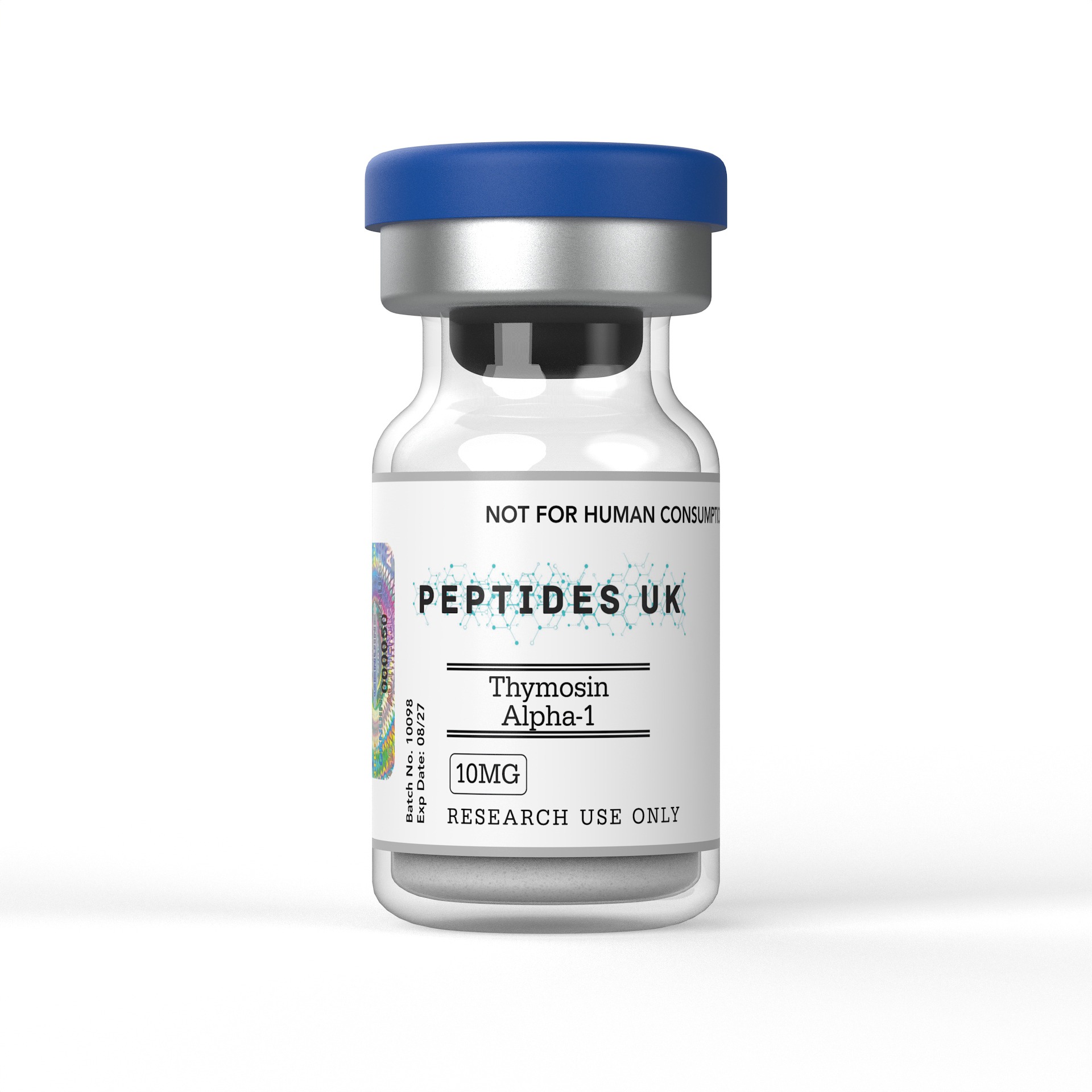
Thymosin Alpha-1 Peptide USA – Buy Online | In Stock & Ready to Ship
Buy Thymosin Alpha-1 in the USA with fast domestic shipping and guaranteed ≥99% purity — fully verified with COA and HPLC documentation. A trusted choice for USA research teams studying immune modulation, T-cell activity and antiviral response pathways, Thymosin Alpha-1 is available in multiple formats to suit varying project needs. No international delays — just reliable, domestically sourced peptides USA researchers can count on.
For research use only. Not intended for human or veterinary use.

Thymosin Alpha-1 is a naturally occurring 28-amino acid thymic peptide studied for its pleiotropic immune modulating properties — influencing T-cell function, dendritic cell signaling, cytokine regulation, and innate immune activation — making it one of the most extensively researched immunomodulatory peptides available to USA-based research programs today.
Researchers, labs, and institutions across the United States can source verified, research-grade Thymosin Alpha-1 with fast dispatch, full documentation, and third-party verified purity.
Available Sizes: 5mg | 10mg
✅ ≥99% Purity — HPLC & Mass Spectrometry Verified ✅ Batch-Specific Certificate of Analysis (CoA) Included ✅ Third-Party Tested | GMP Manufactured ✅ Fast Dispatch to USA — Tracked Shipping Available
Thymosin Alpha-1 — abbreviated Tα1 or TA1, and marketed pharmaceutically as Thymalfasin (brand name Zadaxin) — is a 28-amino acid peptide naturally produced by thymic epithelial cells and derived from the N-terminal region of the larger precursor protein Prothymosin-α (ProTα). It was first isolated from thymic tissue by Dr. Allan Goldstein and colleagues in 1972, making it one of the earliest thymic peptides to be characterized and one of the most extensively studied immunomodulatory compounds in biomedical research.
Thymosin Alpha-1 is distributed not only in thymic tissue but also in the spleen, heart, lungs, liver, kidneys, and other organs — consistent with a broad immune regulatory role across multiple organ systems. Serum levels of Tα1 naturally decline with aging in parallel with thymic involution, which has positioned it as a research compound of significant interest in immunosenescence and age-related immune dysfunction studies.
Three-dimensional structural analysis has identified Thymosin Alpha-1 as having a distorted helical configuration with two stable regions: an alpha-helix from residues 14 to 26, and two double turns in the β-region at the N-terminal site — a structure that underlies its interaction with toll-like receptors and downstream immune signaling cascades.
Thymalfasin (the synthetic analogue of Thymosin Alpha-1) is approved as a pharmaceutical agent in over 35 countries for conditions including hepatitis B, hepatitis C, and as an immunostimulant in cancer treatment protocols. It is not approved by the FDA for therapeutic use in the United States and is supplied here exclusively for licensed laboratory research purposes.
In research settings, Thymosin Alpha-1 is studied as a pleiotropic immunomodulatory peptide with context-dependent effects across both innate and adaptive immune systems. Studies have explored its influence on:
Thymosin Alpha-1 is a research compound only and is not approved for human therapeutic use in the United States.
Thymosin Alpha-1 has been utilized in research exploring immunocompromised states and malignancies, as an enhancer of vaccine response, and as a means of curbing morbidity and mortality in sepsis and numerous infections. Its research body spans preclinical models, randomized clinical trials, and systematic reviews across immunology, oncology, virology, and critical care medicine.
Immune Modulation and T-Cell Research Thymosin Alpha-1 has a pleiotropic mechanism of action, affecting multiple immune cell subsets involved in immune suppression. It acts through Toll-like receptors in both myeloid and plasmacytoid dendritic cells, leading to activation and stimulation of signaling pathways and initiation of production of immune-related cytokines. Research has demonstrated consistent improvements in CD4+ T-lymphocyte levels and the CD4+/CD8+ ratio across multiple disease models — markers widely used in immunology research to assess cellular immune competence.
Dendritic Cell Biology Research Thymosin Alpha-1’s central role in modulating dendritic cell function has been a major focus of research. Studies have shown that Tα1 primes DCs for antifungal Th1 resistance through TLR/MyD88-dependent signaling — establishing dendritic cells as the primary cellular mediator of Tα1’s broad immune effects and providing a mechanistic explanation for its context-dependent activity across different immune microenvironments.
Cancer Immunotherapy Research Thymosin Alpha-1 stimulates both innate and adaptive immune responses, and its regulation of innate and adaptive immune cells varies under different disease conditions. For treatment of malignancies, the combination of Tα1 and chemotherapy has a strong synergistic effect by enhancing the anti-tumor immune response. Research has examined Tα1 across multiple tumor histotypes, with the most consistent data coming from hepatocellular carcinoma, non-small cell lung cancer, and melanoma models. Studies in animal models and human patients have shown promising results in different malignancies, especially when Tα1 was used in combination with other chemo- and immune therapies. More recently, research has investigated Tα1’s potential as an adjunct to immune checkpoint inhibitor (ICI) therapy — with in vitro data suggesting Tα1 may amplify the effector activity of CD8+ T cells whose function is enhanced by anti-CTLA4/PD1 treatments.
Sepsis and Critical Illness Research Thymosin Alpha-1 has been studied in sepsis models for its ability to restore immune function in the context of sepsis-induced immunoparalysis — the immune suppression phase that follows the initial hyperinflammatory response in severe sepsis. Research examining Tα1 in septic patients found improvements in T-cell function, monocyte HLA-DR expression, and clinical outcome markers, contributing to its approved use for sepsis management in several Asian countries.
Severe Acute Pancreatitis Research (Meta-Analysis, 2025) A systematic review and meta-analysis published in Frontiers in Immunology in 2025, encompassing five randomized controlled trials with 706 patients with severe acute pancreatitis (SAP), found that Tα1 may improve immune regulation in SAP patients — elevating CD4+ T lymphocyte levels and the CD4+/CD8+ ratio, thereby enhancing immune function. Researchers identified Tα1’s restoration of immune cell balance as relevant to the complex immunoinflammatory dysregulation that characterizes severe pancreatitis progression.
Vaccine Adjuvant Research Multiple studies have examined Tα1 as a co-adjuvant for influenza and hepatitis B vaccines — particularly in elderly and immunocompromised research populations where vaccine response is suboptimal. Research findings showed that Tα1 co-administration improved antibody titers, T-cell responses, and overall vaccine efficacy compared to vaccination alone — a consistent finding across multiple vaccine adjuvant studies.
Autoimmune and Inflammatory Disease Research Studies examining serum Tα1 levels in patients with chronic inflammatory autoimmune diseases — including psoriatic arthritis, rheumatoid arthritis, and systemic lupus erythematosus — found that Tα1 is a powerful modulator of immunity and inflammation with context-dependent effects across different autoimmune phenotypes. These findings have stimulated interest in using Tα1 as a research tool for studying immune balance and tolerance mechanisms in autoimmune disease models.
Hepatitis Research Thymalfasin (synthetic Tα1) has been studied in controlled clinical trials for chronic hepatitis B and C. Randomized trial data in hepatitis B showed improved rates of sustained virological response when Tα1 was combined with interferon therapy compared to interferon alone. In hepatitis C research, Tα1 has been examined both as monotherapy and as combination therapy, with clinical trial programs that include Phase III US trials contributing to its extensive clinical data package — though no FDA approval has resulted.
All referenced findings are from pre-clinical studies or clinical trials conducted in approved research contexts. Thymosin Alpha-1 (Thymalfasin) is not FDA-approved for therapeutic use in the United States and is supplied here for licensed laboratory research purposes only.
When you buy Thymosin Alpha-1 in the USA through our platform, every order includes:
We supply USA research peptides to licensed researchers, universities, and institutions — with cold-chain compliant packaging designed to maintain peptide integrity throughout transit.
| Parameter | Specification |
|---|---|
| Purity | ≥99% (HPLC & MS Verified) |
| Also Known As | Tα1, TA1, Thymalfasin, Zadaxin |
| Amino Acids | 28 |
| Origin | Thymic epithelial cells (naturally occurring) |
| Molecular Weight | 3,108.37 g/mol |
| Structure | Acetylated N-terminus; distorted helical configuration |
| Primary Receptor Targets | TLR2, TLR9 (dendritic cells) |
| Form | White Lyophilized Powder |
| Solubility | Sterile water / PBS |
| Storage (powder) | -20°C, stable 24+ months |
| Storage (reconstituted) | 2–8°C, use within 2–4 weeks |
| Available Sizes | 5mg |
Allow the vial to reach room temperature before opening. Add sterile water or PBS slowly down the inside wall of the vial and swirl gently — do not shake. A typical working concentration is 1–2 mg/mL. Aliquot and store at -80°C for longer-term stability. Avoid repeated freeze-thaw cycles, as these can degrade the peptide over time.
| Feature | Thymosin Alpha-1 | VIP | KPV |
|---|---|---|---|
| Origin | Thymic epithelial cells | Gut / nervous system | Alpha-MSH fragment |
| Amino Acids | 28 | 28 | 3 |
| Primary Mechanism | TLR2/9 activation / DC modulation | VPAC1/2 receptor agonism | NF-κB inhibition |
| T-Cell Research | Extensively studied | Studied | Limited |
| Dendritic Cell Research | Primary cellular target | Secondary | Limited |
| Anti-tumor Research | Extensively studied | Limited | Limited |
| Vaccine Adjuvant Research | Yes | No | No |
| Approved Outside USA | Yes (35+ countries) | No | No |
| Human Clinical Trials | Extensive | Limited | None |
Can I buy Thymosin Alpha-1 in the USA? Yes. We supply research-grade Thymosin Alpha-1 with fast tracked dispatch across the United States for licensed laboratory research use. All orders include full purity documentation and integrity-maintained packaging.
What is the difference between Thymosin Alpha-1 and Thymalfasin? Thymalfasin is the International Nonproprietary Name (INN) for synthetic Thymosin Alpha-1 — the pharmaceutical-grade synthetic version of the naturally occurring peptide. Zadaxin is the brand name under which Thymalfasin is marketed by SciClone Pharmaceuticals in Asia and Europe. For research purposes, the terms Thymosin Alpha-1, Tα1, and Thymalfasin are used interchangeably, as they refer to the same 28-amino acid sequence.
Is Thymosin Alpha-1 FDA approved? No. Thymosin Alpha-1 (Thymalfasin / Zadaxin) is not currently approved by the FDA for any therapeutic indication in the United States. It is approved as a pharmaceutical agent in over 35 countries globally for hepatitis B, hepatitis C, and as an immunostimulant adjunct in cancer protocols. US clinical trials have been conducted (Phase III for hepatitis C; Phase II for hepatitis B), but no FDA approval has been granted. It is supplied here exclusively for licensed research use.
What is the difference between Thymosin Alpha-1 and Thymosin Beta-4 (TB-500)? Despite sharing the name “Thymosin,” Thymosin Alpha-1 and Thymosin Beta-4 are structurally and functionally distinct peptides from different protein families. Thymosin Alpha-1 is an immunomodulatory peptide derived from Prothymosin-α, primarily studied for its effects on T-cell and dendritic cell function. Thymosin Beta-4 (and its research fragment TB-500) is an actin-binding peptide involved in cell migration and tissue repair, with no significant immunomodulatory TLR activity. The two are frequently confused due to their shared name but represent entirely different research tools with non-overlapping mechanisms.
How does Thymosin Alpha-1 modulate immunity? Thymosin Alpha-1’s primary mechanism is activation of Toll-like receptors 2 and 9 (TLR2/TLR9) on myeloid and plasmacytoid dendritic cells — the immune system’s primary antigen-presenting and response-coordinating cells. TLR activation triggers downstream MyD88/NF-κB signaling, leading to cytokine production, Th1 immune priming, and enhanced antigen presentation to T-cells. Through this dendritic cell-centered mechanism, Tα1 orchestrates a coordinated shift toward effective cellular immunity rather than directly stimulating T-cells or NK cells in isolation.
What purity level should research-grade Thymosin Alpha-1 be? ≥98% is the accepted minimum for research-grade immunomodulatory peptides, though ≥99% is preferred for TLR signaling, T-cell function, and cytokine assay work. All of our USA research peptides — including Thymosin Alpha-1 — are HPLC and mass spectrometry verified to ≥99%.
How quickly is Thymosin Alpha-1 delivered in the USA? Orders are dispatched promptly with tracked shipping. Most USA orders arrive within 3–5 business days.
Where can I find Thymosin Alpha-1 for sale in the USA? We offer research-grade Thymosin Alpha-1 (Tα1 / Thymalfasin) for sale in the USA exclusively for licensed research use, with full documentation and verified purity included as standard with every order.
Research Disclaimer: Thymosin Alpha-1 (Thymalfasin) is supplied exclusively for legitimate scientific research purposes in licensed laboratory environments. This product is not FDA-approved and is not intended for human consumption, self-administration, or therapeutic use of any kind in the United States. It must be handled by qualified researchers in accordance with all applicable US federal and state regulations and institutional ethics guidelines. By purchasing, you confirm that this compound will be used solely for approved in-vitro or pre-clinical research.
WhatsApp us
Receive News