PRODUCTS SOLD ON PEPTIDESLABUSA.COM ARE FOR RESEARCH PURPOSES ONLY AND ARE NOT FOR HUMAN OR VETERINARY USE.
$63.00
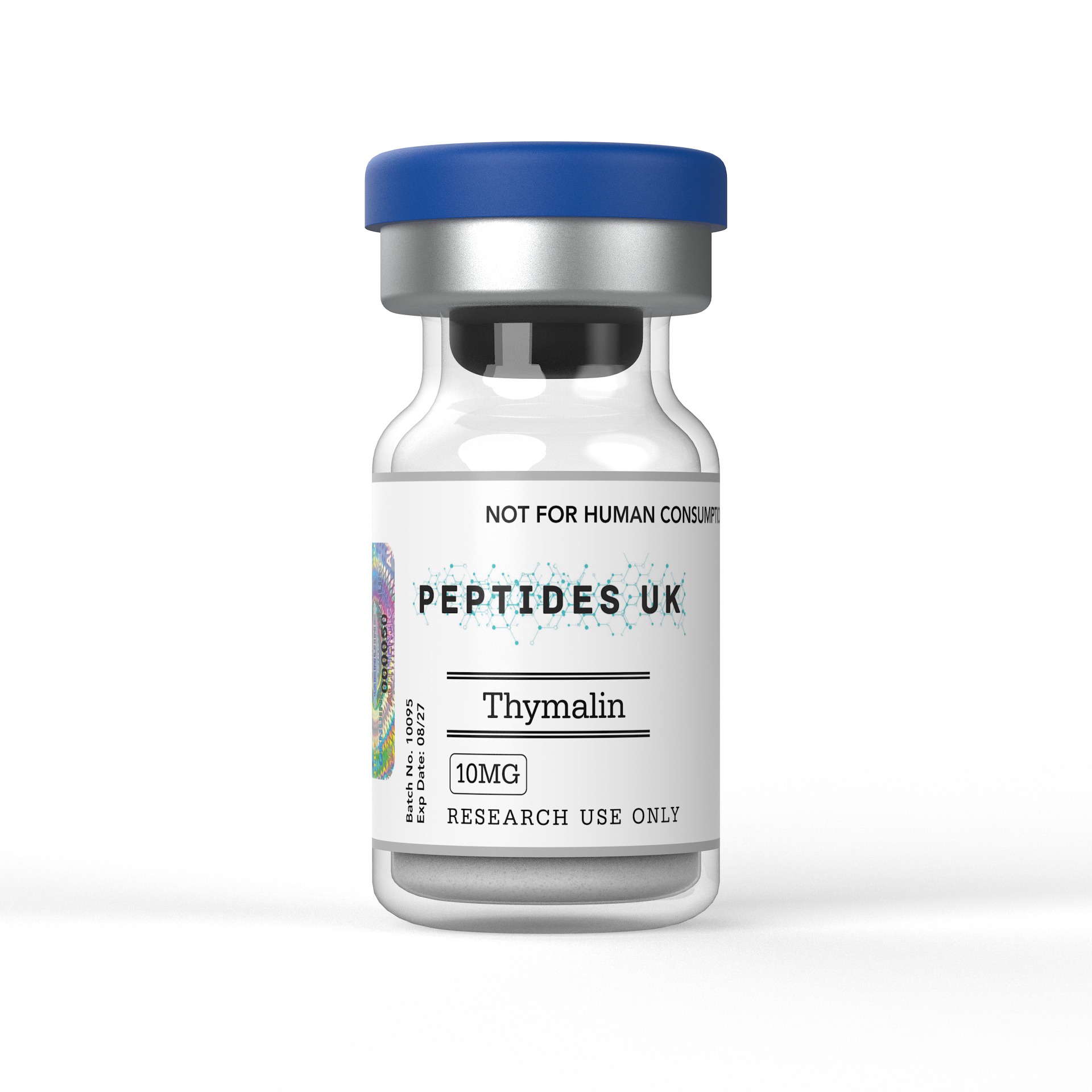
Thymalin Peptide USA – Buy Online | In Stock & Ready to Ship
Buy Thymalin in the USA with fast domestic shipping and guaranteed ≥99% purity — fully verified with COA and HPLC documentation. A trusted choice for USA research teams studying thymic function, immune restoration and neuroendocrine regulation, Thymalin is available in multiple formats to suit varying project needs. No international delays — just reliable, domestically sourced peptides USA researchers can count on.
For research use only. Not intended for human or veterinary use.

Thymalin is a naturally derived thymic polypeptide complex — extracted and purified from the thymus glands of young calves — studied for its role in T-cell differentiation, immune system restoration, hematopoiesis, and geroprotection, making it one of the most extensively researched thymic peptide preparations available to USA-based research programs today.
Researchers, labs, and institutions across the United States can source verified, research-grade Thymalin with fast dispatch, full documentation, and third-party verified purity.
✅ ≥99% Purity — HPLC & Mass Spectrometry Verified
✅ Batch-Specific Certificate of Analysis (CoA) Included
✅ Third-Party Tested | GMP Manufactured
✅ Fast Dispatch to USA — Tracked Shipping Available
Thymalin is a polypeptide complex derived from the thymus glands of young calves, containing a mixture of short peptides — predominantly 2–8 amino acids in length — that are studied for their role in regulating gene expression in immune and hematopoietic cells. Originally developed in the 1970s at the USSR Institute of Gerontology by Professor Vladimir Morozov and Professor Vladimir Khavinson, Thymalin has since accumulated over four decades of research across immunology, gerontology, oncology, and infectious disease biology — primarily in Eastern European and Russian research institutions, with growing interest from USA-based longevity and immunology research programs.
The biological basis for Thymalin’s research profile lies in the thymus gland itself — a small organ that sits behind the sternum and is the primary site of T-lymphocyte maturation. The thymus reaches peak output in adolescence and undergoes progressive involution (functional decline) with age — a process directly linked to the phenomenon of immunosenescence. Research shows that the output of new T-cells falls from roughly 20% in youth to less than 1% after age 50, meaning the body produces far fewer fresh immune cells to replace the ones that naturally wear out over time. Thymalin is studied as a tool for investigating whether thymic peptide supplementation can partially restore T-cell differentiation capacity in aging and immunocompromised research models.
Three short peptides — EW (Glu-Trp), KE (Lys-Glu), and EDP (Glu-Asp-Pro) — have been identified as the primary active components in Thymalin’s composition. These short peptides can specifically bind to double-stranded DNA and/or histone proteins and regulate gene expression, synthesis of immune system proteins, activity of gerontogenes, and stimulate stem cell differentiation. This epigenetic mechanism of action at the chromatin level distinguishes Thymalin from single-target immunostimulants and places it within the broader category of peptide bioregulators — a class of compounds studied for their ability to act as endogenous signaling molecules at the gene regulation level.
Thymalin is approved as a pharmaceutical agent in Russia and several Eastern European countries for conditions including immune deficiency states, post-chemotherapy immune restoration, chronic infections, and age-related immune dysfunction. It is not approved by the FDA for therapeutic use in the United States and is supplied here exclusively for licensed laboratory research purposes.
In research settings, Thymalin is studied as a multi-component thymic peptide bioregulator with broad effects across immune cell differentiation, hematopoiesis, and age-related gene expression. Studies have explored its influence on:
Thymalin is a research compound only and is not approved for human therapeutic use in the United States.
Thymalin’s research body is among the most historically extensive of any thymic peptide compound — spanning over four decades of clinical observation, randomized trials, and mechanistic studies, primarily from Russian and Eastern European research programs, with increasing citation in Western longevity and immunology literature.
Landmark Geroprotection Study — 6–8 Year Longitudinal Research The most cited long-term research on Thymalin is a landmark longitudinal study conducted by researchers at the St. Petersburg Institute of Bioregulation and Gerontology, examining 266 elderly participants over 6–8 years. The obtained results convincingly confirmed the ability of the bioregulators to normalize the basic functions of the human organism — improving the indices of the cardiovascular, endocrine, immune, and nervous systems, homeostasis, and metabolism. The restoration of homeostasis in the patients was accompanied by a 2.0–2.4-fold decrease in acute respiratory disease incidence, reduced incidence of ischemic heart disease clinical manifestations, hypertension, deforming osteoarthrosis, and osteoporosis. Mortality data from the study showed a 2.0–2.1-fold decrease in mortality among Thymalin-treated patients compared to controls — and in a subgroup treated annually with both Thymalin and Epithalamin combined, a 4.1-fold mortality decrease was recorded. These findings represent some of the most extensive longitudinal geroprotection data published for any thymic peptide compound.
Immunosenescence and T-Cell Research Thymalin has been studied extensively as a model intervention in immunosenescence research. Studies examining T-cell populations in aged and immunocompromised models have shown normalization of CD4+ levels, CD4+/CD8+ ratios, and T-cell diversity markers following Thymalin administration. Thymalin and its constituent short peptides induce differentiation of hematopoietic stem cells into T-lymphocytes, which contributes to normalization of T-cell immunity function. These findings position Thymalin as a practical research tool for studying the cellular mechanisms of immune aging.
Epigenetic Mechanism Research Peptides EW, KE, EDP, which comprise the medicinal drug Thymalin, are able to penetrate into the cell nucleus and nucleolus and complementarily bind to certain DNA sequences and/or histone proteins. This binding results in a change in gene expression and synthesis of heat shock proteins, cytokines, fibrinolysis system proteins, gerontogenes, and proteins involved in the differentiation, proliferation, and apoptosis of immune cells. This epigenetic-level mechanism — operating through chromatin-level gene regulation rather than surface receptor binding — has attracted significant research interest as a potential explanation for Thymalin’s sustained and broad-spectrum effects observed in longitudinal studies.
COVID-19 and Severe Respiratory Illness Research A PMC-indexed randomized, controlled study examined Thymalin in older patients with severe COVID-19 and significant lymphocytopenia. A faster reversal of lymphopenia was observed in the Thymalin group, with a remarkable recovery in the blood levels of platelets/lymphocytes ratio, CD4+, CD3+HLA-DR+, B- and NK-cell subpopulations. Researchers noted the outcomes were consistent with Thymalin’s established immunoprotective and geroprotective properties. A separate published case report documented a patient with severe SARS-CoV-2 pneumonia who had failed Lopinavir/Ritonavir and hydroxychloroquine treatment showing impressive clinical and laboratory improvement following Thymalin administration — leading to the initiation of a randomized controlled trial to further evaluate these findings.
Oncology and Hematopoiesis Research Research indicates potential benefits in infection management, hematopoietic recovery, and enhancement of immune surveillance during cancer treatment — with a mechanism involving protection of bone marrow function and acceleration of hematopoietic recovery. Studies in patients with gastrointestinal and non-Hodgkin’s lymphoma cancer types found improvements in lymphocyte counts and cellular immunity markers when thymic peptide therapy was combined with standard oncology protocols, though researchers note these findings require validation in larger controlled trials in Western research contexts.
Thymalin + Epithalamin Combination Research The combination of Thymalin (thymic bioregulator) and Epithalamin (pineal bioregulator) represents one of the most studied dual peptide research protocols in Russian gerontology literature. Thymalin primarily supports T-cell differentiation and thymic function, while Epithalon helps normalize immune activity under oxidative and age-related stress. Together, they are known to enhance immune resilience in aging models. The landmark 6–8 year study specifically noted the greatest mortality reduction in the combined treatment group — a 4.1-fold decrease — compared to either compound alone, supporting a synergistic multi-system geroprotection research model.
All referenced findings are from pre-clinical studies or clinical research conducted primarily in Eastern European and Russian research contexts. Thymalin is not FDA-approved and is supplied here for licensed laboratory research purposes only. All longevity and mortality data should be interpreted within the context of their study designs and research populations.
When you buy Thymalin in the USA through our platform, every order includes:
We supply USA research peptides to licensed researchers, universities, and institutions — with cold-chain compliant packaging designed to maintain peptide integrity throughout transit.
| Parameter | Specification |
|---|---|
| Purity | ≥99% (HPLC & MS Verified) |
| Classification | Thymic polypeptide bioregulator complex |
| Source | Calf thymus gland (purified extract) |
| Active Peptide Components | EW (Glu-Trp), KE (Lys-Glu), EDP (Glu-Asp-Pro) + additional short peptides |
| Peptide Size Range | 2–8 amino acids |
| Form | Lyophilized Powder |
| Solubility | Sterile water / PBS |
| Storage (powder) | -20°C, stable 24+ months |
| Storage (reconstituted) | 2–8°C, use within 2–4 weeks |
| Available Sizes | 10mg |
Allow the vial to reach room temperature before opening. Add sterile water or PBS slowly down the inside wall of the vial and swirl gently — do not shake. A typical working concentration is 1–2 mg/mL. Aliquot and store at -80°C for longer-term stability. Avoid repeated freeze-thaw cycles to preserve peptide integrity across the complex mixture.
| Feature | Thymalin | Thymosin Alpha-1 | Thymogen |
|---|---|---|---|
| Type | Multi-peptide thymic complex | Single 28-AA synthetic peptide | Synthetic dipeptide (Glu-Trp) |
| Origin | Calf thymus extract | Prothymosin-α derived | Synthetic EW fragment |
| Mechanism | Epigenetic gene regulation (EW, KE, EDP) | TLR2/9 activation / DC modulation | Thymosin-related T-cell signaling |
| Primary Research Focus | Broad immune restoration / geroprotection | T-cell activation / antiviral / anti-tumor | Targeted T-cell modulation |
| Longitudinal Research | Yes (6–8 year study, 266 subjects) | Extensive | Limited |
| Approved Outside USA | Yes (Russia, Eastern Europe) | Yes (35+ countries) | Limited |
| Human Clinical Data | Extensive (Eastern Europe) | Extensive (global) | Moderate |
| Epigenetic Mechanism | Yes (histone/DNA binding) | No | Limited |
Can I buy Thymalin in the USA? Yes. We supply research-grade Thymalin with fast tracked dispatch across the United States for licensed laboratory research use. All orders include full purity documentation and integrity-maintained packaging.
What is the difference between Thymalin and Thymosin Alpha-1? Both are thymic immunomodulatory research peptides, but they are structurally and mechanistically distinct. Thymosin Alpha-1 is a single, precisely defined 28-amino acid synthetic peptide that acts primarily through TLR2/TLR9 on dendritic cells, driving Th1 immune priming. Thymalin is a multi-peptide complex derived from calf thymus extract, containing short peptides (EW, KE, EDP) that act through epigenetic gene regulation — binding directly to DNA and histone proteins to modulate transcription of immune system proteins. Thymosin Alpha-1 is better suited to targeted, mechanistically defined immunology research; Thymalin is better suited to broad-spectrum immune restoration and geroprotection research models.
What is the difference between Thymalin and Thymogen? Thymogen (Glu-Trp, or EW dipeptide) is a single synthetic dipeptide that represents one of the primary active short peptides found within the Thymalin complex. Thymalin contains Thymogen (EW) alongside KE and EDP peptides and additional thymic peptide fractions, making it a broader multi-component preparation. Researchers who want to study the isolated EW dipeptide mechanism specifically may prefer Thymogen; those studying the full thymic bioregulator complex use Thymalin.
Is Thymalin FDA approved? No. Thymalin is not approved by the FDA for any therapeutic use in the United States. It is approved as a pharmaceutical preparation in Russia and several Eastern European countries for immune deficiency states, post-chemotherapy immune restoration, and age-related immune decline. It is supplied here exclusively for licensed laboratory research use.
What are the active peptides inside Thymalin? The primary active peptide components identified in Thymalin are three short oligopeptides: EW (Glu-Trp), KE (Lys-Glu), and EDP (Glu-Asp-Pro). These peptides are capable of entering the cell nucleus and binding to DNA and histone proteins to modulate gene expression in immune and hematopoietic cells. Thymalin also contains additional short peptides from the calf thymus extraction process whose full molecular identities have not been completely characterized.
How is Thymalin related to Epithalamin / Epithalon? Thymalin and Epithalamin (the precursor to the synthetic peptide Epithalon) are two complementary peptide bioregulators developed by the same research group — Professors Khavinson and Morozov — at the St. Petersburg Institute of Bioregulation and Gerontology. Thymalin acts through the thymic-immune axis; Epithalamin/Epithalon acts through the pineal-neuroendocrine axis. The two are often studied in combination in Russian geroprotection research, with the landmark 6–8 year study showing the greatest mortality reduction in the combined treatment group.
What purity level should research-grade Thymalin be? For a multi-peptide complex like Thymalin, purity is assessed by HPLC verification of the peptide content profile and absence of major contaminants. Our Thymalin is manufactured to ≥99% purity with full endotoxin and sterility verification included with every order.
How quickly is Thymalin delivered in the USA? Orders are dispatched promptly with tracked shipping. Most USA orders arrive within 3–5 business days.
Where can I find Thymalin peptide for sale in the USA? We offer research-grade Thymalin for sale in the USA exclusively for licensed laboratory research use, with full documentation and verified purity included as standard with every order.
Research Disclaimer: Thymalin is supplied exclusively for legitimate scientific research purposes in licensed laboratory environments. This product is not FDA-approved and is not intended for human consumption, self-administration, or therapeutic use of any kind in the United States. It must be handled by qualified researchers in accordance with all applicable US federal and state regulations and institutional ethics guidelines. The longevity and mortality data referenced on this page are from historical clinical studies conducted in Eastern European research contexts and should be interpreted within the constraints of their original study designs. By purchasing, you confirm that this compound will be used solely for approved in-vitro or pre-clinical research.
WhatsApp us
Receive News