PRODUCTS SOLD ON PEPTIDESLABUSA.COM ARE FOR RESEARCH PURPOSES ONLY AND ARE NOT FOR HUMAN OR VETERINARY USE.
$214.00
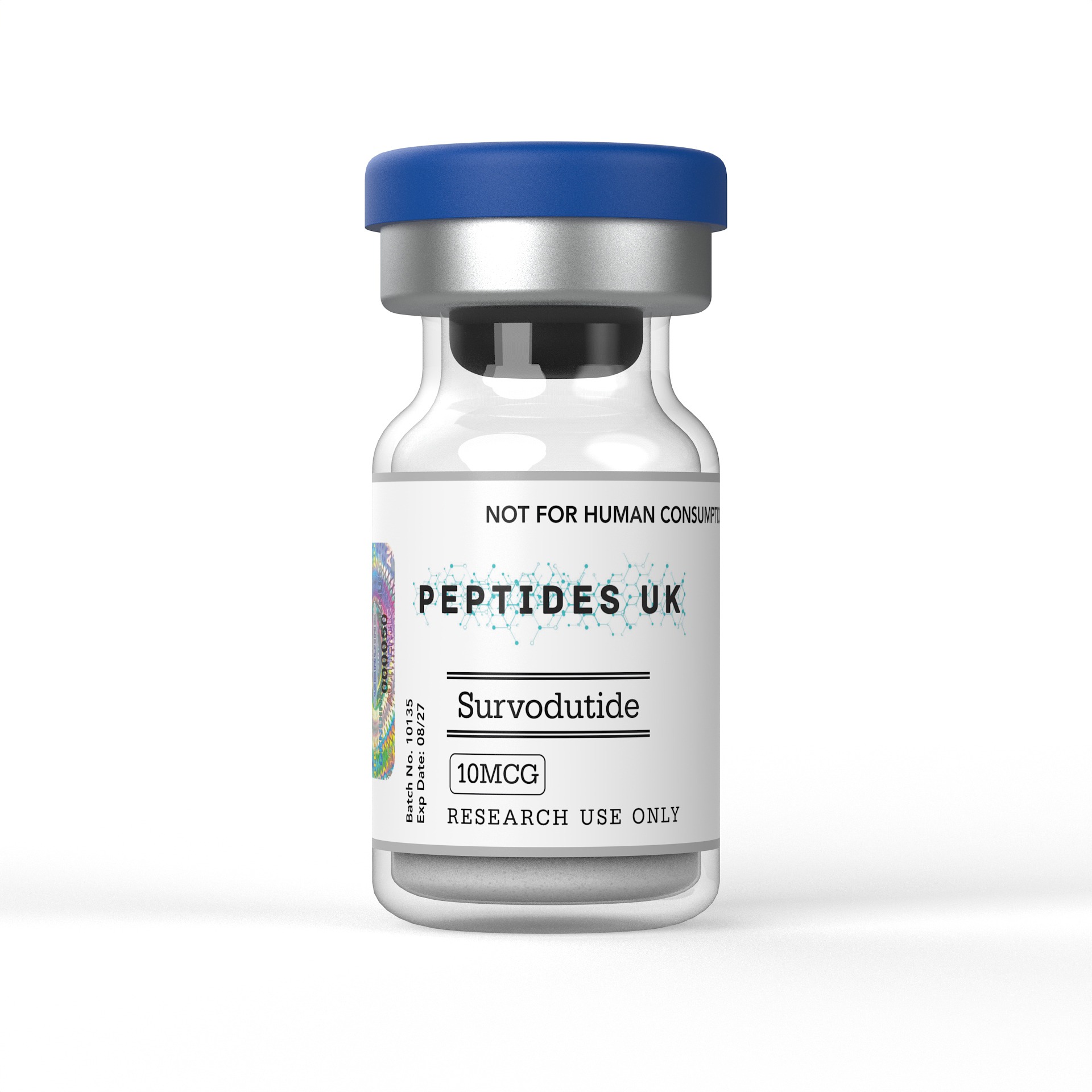
Survodutide Peptide USA – Buy Online | In Stock & Ready to Ship
Buy Survodutide in the USA with fast domestic shipping and guaranteed ≥99% purity — fully verified with COA and HPLC documentation. A trusted choice for USA research teams studying glucagon and GLP-1 dual receptor agonism, hepatic fat reduction and metabolic dysfunction-associated liver disease pathways, Survodutide is available in multiple formats to suit varying project needs. No international delays — just reliable, domestically sourced peptides USA researchers can count on.
For research use only. Not intended for human or veterinary use.

Survodutide (BI 456906) is a synthetic acylated 29-amino acid glucagon-derived dual agonist peptide — engineered by Boehringer Ingelheim to simultaneously activate the glucagon receptor (GCGR) and the glucagon-like peptide-1 receptor (GLP-1R) through a single molecularly optimised scaffold — incorporating targeted amino acid substitutions from the glucagon backbone at positions 16, 18, 20, and 23 to introduce GLP-1 receptor engagement, a non-coded Ac4c residue at position 2 to block DPP-4 proteolysis, a C-terminal amide for metabolic stability, and a C18 fatty diacid moiety conjugated through a hydrophilic glycine-serine linker at lysine position 24 to enable high-degree albumin binding and once-weekly dosing pharmacokinetics — studied extensively across metabolic obesity research, dual incretin pharmacology, GCGR/GLP-1R signal transduction biology, liver steatohepatitis and MASH research, adipose tissue lipolysis, hepatic energy metabolism, brown adipose thermogenesis, type 2 diabetes and insulin secretion biology, hypothalamic appetite circuit research, and comparative multi-agonist pharmacology — currently in Phase III clinical trials under the SYNCHRONIZE programme and distinguished among the next generation of metabolic peptide therapeutics by its glucagon-backbone derivation, its superior weight-loss efficacy over maximally dosed semaglutide in pre-clinical models, and its documented MASH histological resolution activity that pure GLP-1R agonists cannot replicate — making it one of the most mechanistically distinctive, clinically advanced, and research-rich dual receptor agonist peptides in the rapidly evolving field of incretin and metabolic neuropeptide pharmacology. Researchers and institutions across the USA can source verified, research-grade Survodutide 2mg with fast domestic dispatch and full batch documentation included.
✅ ≥99% Purity — HPLC & Mass Spectrometry Verified
✅ Batch-Specific Certificate of Analysis (CoA) Included
✅ Sterile Lyophilised Powder | GMP Manufactured
✅ Fast Dispatch Across the USA | USA Peptides In Stock
Survodutide (BI 456906; CAS 2805997-46-8) is a synthetic 29-amino acid acylated peptide dual agonist — carrying the sequence H-{Ac4c}-QGTFTSDYSKYLDERAAKDFIK-{GGSGSG-γE-C18 diacid}-WLESA-NH₂ — engineered as a glucagon analogue rather than as an oxyntomodulin analogue, which distinguishes it structurally and pharmacologically from other GCGR/GLP-1R dual agonists in research and clinical development. The peptide backbone retains the 29-amino acid glucagon sequence as its primary scaffold but incorporates four critical position-specific amino acid swaps — residues at positions 16 (from glutamine to glutamate, as in exendin-4), 18, 20, and 23 (swapped from glucagon residues to their GLP-1 counterparts) — that introduce the GLP-1R binding determinants necessary for dual receptor agonism while preserving the GCGR-engaging N-terminal glucagon helix. This sequence engineering approach is distinct from oxyntomodulin-derived dual agonists, which start from the weaker endogenous dual agonist scaffold, and produces a compound with deliberately balanced but not equivalent receptor potencies at the two target receptors.
Survodutide incorporates three independent structural modifications designed to address the pharmacokinetic limitations of native glucagon peptides. First, at position 2, the native alanine is replaced with the non-coded amino acid 1-aminocyclobutane-1-carboxylic acid (Ac4c) — a conformationally constrained cyclobutane amino acid that blocks the position-2 N-terminal cleavage site targeted by dipeptidyl peptidase-4 (DPP-4), the enzyme responsible for the rapid inactivation of native glucagon and GLP-1. Second, the C-terminus is amidated (–NH₂ rather than free carboxylic acid), a modification that prevents carboxypeptidase degradation and is well-established in the synthetic peptide pharmacology literature as a metabolic stabilisation strategy. Third — and most consequential for pharmacokinetic profile — a C18 fatty diacid moiety is conjugated to the ε-amino group of lysine at position 24 through a hydrophilic glycine-serine spacer (GGSGSG) and a γ-glutamate linker, following the albumin-binding half-life extension strategy pioneered by semaglutide. This C18 diacid mediates high-affinity, reversible binding to human serum albumin in the circulation — dramatically slowing renal filtration and proteolytic degradation — producing mean residence times of approximately 140 hours in pre-clinical pharmacokinetic studies and supporting once-weekly subcutaneous dosing in humans.
At the receptor level, Survodutide engages both GCGR and GLP-1R as class B1 secretin-family GPCRs that couple primarily to the Gαs pathway, activating adenylyl cyclase, elevating intracellular cAMP, and engaging PKA and downstream MAPK/ERK cascades in target tissues. Cryo-EM structural studies have resolved the binding poses of Survodutide at both receptors — confirming similar N-terminal helix-in-pocket binding modes to other peptide agonists — and have characterised the molecular basis for Survodutide’s relative receptor potencies: in cAMP assays, Survodutide is approximately four-fold less potent than native GLP-1 at GLP-1R (EC50 ~20 pM vs ~5 pM), and approximately 22-fold less potent than native glucagon at GCGR (EC50 ~108 pM vs ~5 pM). The C18 diacid lipidation at position 24 reduces intrinsic receptor potency — with the deacylated backbone showing approximately 10-fold higher potency at GLP-1R and approximately five-fold higher potency at GCGR — confirming that the albumin-binding moiety imposes a steric potency cost that is more than offset by the pharmacokinetic half-life extension it provides. In human clinical studies, Survodutide shows full GLP-1R activation and partial GCGR activation, a deliberate receptor balance designed to capture GCGR-mediated energy expenditure and hepatic lipid metabolism benefits while avoiding the hyperglycaemia risk that full pharmacological glucagon receptor agonism would carry in isolation.
The biological rationale for GCGR/GLP-1R dual agonism is mechanistically grounded in the biology of oxyntomodulin — the naturally occurring 37-amino acid proglucagon-derived peptide that is a weak endogenous agonist at both receptors and has been shown in human studies to reduce body weight by simultaneously reducing food intake (GLP-1R mechanism) and increasing energy expenditure (GCGR mechanism). Survodutide extends this dual-mechanism principle into a potent, half-life-extended, pharmacokinetically optimised research and therapeutic tool that cleanly dissects the relative contributions of GLP-1R and GCGR signalling to metabolic outcomes — something the weaker endogenous oxyntomodulin cannot achieve at pharmacologically meaningful resolution.
Developed by Boehringer Ingelheim and selected from a 19-compound GCGR/GLP-1R dual agonist series through systematic in vitro and in vivo pharmacological profiling, Survodutide is currently in Phase III clinical trials under the SYNCHRONIZE programme — SYNCHRONIZE-1 in obesity without type 2 diabetes and SYNCHRONIZE-2 in obesity with type 2 diabetes — and has completed a Phase II MASH trial published in the New England Journal of Medicine in 2024, establishing the richest and most current clinical dataset of any GCGR/GLP-1R dual agonist in advanced development.
As one of the most mechanistically distinctive, most clinically characterised, and most actively investigated dual incretin receptor agonist peptides in metabolic research, Survodutide 2mg research vials are in active demand across obesity pharmacology, incretin biology, MASH and liver metabolism research, adipose tissue biology, energy expenditure mechanistic research, and type 2 diabetes programs at research institutions nationwide.
In controlled pre-clinical and laboratory settings, Survodutide has been studied across an exceptionally wide range of metabolic, hepatic, cardiovascular, and neuroendocrine research applications:
GCGR/GLP-1R Dual Receptor Pharmacology Research Survodutide’s primary research application is as a balanced GCGR/GLP-1R dual agonist reference compound — used in cAMP production assays, receptor binding studies, CHO-K1 cell functional agonism characterisation, comparative potency profiling against native glucagon and GLP-1, and cryo-EM-informed receptor structural pharmacology research. Studies have characterised Survodutide’s EC50 values at human GCGR (0.52 nM) and GLP-1R (0.33 nM) in CHO-K1 overexpression systems, and at endogenous mouse GLP-1R in insulinoma MIN6 cells (0.36 nM) — with concurrent receptor-specific biomarker studies using plasma FGF-21 elevation, liver NNMT mRNA upregulation, plasma amino acid reduction, and glucose tolerance improvement as in vivo pharmacodynamic readouts of GCGR and GLP-1R engagement respectively. Survodutide serves as the clinical-stage reference standard for dual GCGR/GLP-1R pharmacology research.
Obesity and Body Weight Biology Research Survodutide is the most clinically advanced compound in GCGR/GLP-1R dual agonist obesity research — with pre-clinical studies in diet-induced obese (DIO) mice documenting dose-dependent bodyweight reductions exceeding those achieved by maximally effective doses of semaglutide across multiple dosing regimens, and Phase II clinical data in adults with obesity documenting mean bodyweight reductions of up to approximately 14.9% at 46 weeks versus 2.8% on placebo. Studies have established that Survodutide’s superior weight-loss efficacy relative to selective GLP-1R agonists is mechanistically attributable to the additive contribution of GCGR-mediated energy expenditure increases — including hepatic gluconeogenesis and glycogenolysis, adipose tissue lipolysis, and brown adipose thermogenesis activation — on top of the food intake reduction and gastric emptying delay mediated by GLP-1R engagement. Phase III SYNCHRONIZE trials are ongoing to characterise the full 76-week weight loss profile.
GLP-1R Signalling and Incretin Biology Research Research has characterised Survodutide’s GLP-1R engagement profile — documenting its stimulation of insulin secretion in isolated mouse, rat, and perifused human pancreatic islets, its improvement of oral glucose tolerance in pre-clinical models, its slowing of gastric emptying, and its dose-dependent reduction of acute food intake in wild-type but not GLP-1R knockout mice. Studies have confirmed that GLP-1R-mediated appetite suppression is the primary anorectic mechanism of Survodutide — with food intake reduction accounting for the majority of weight loss in the acute dosing window, and energy expenditure (GCGR-mediated) contributing meaningfully over longer time periods. These pharmacodynamic dissection studies establish Survodutide as a precise research tool for examining the independent and combined contributions of GLP-1R and GCGR to metabolic outcomes.
Glucagon Receptor Biology and Hepatic Metabolism Research Research examining Survodutide’s GCGR engagement in hepatic metabolism has used the FGF-21 plasma elevation and liver NNMT mRNA upregulation as mechanistic biomarkers of hepatic glucagon receptor activation — documenting dose-dependent GCGR engagement in the liver following Survodutide administration, and characterising the downstream transcriptional and metabolic changes including activation of gluconeogenesis, glycogenolysis, and fatty acid oxidation pathways. Gene cluster analyses comparing Survodutide-treated DIO mice with NAFLD fibrosis transcriptomics datasets have identified significant overlap between the gene expression changes driven by GCGR activation and the gene expression changes normalised in resolving NAFLD — providing mechanistic insight into why GCGR agonism contributes to liver disease resolution beyond the weight-loss effects shared with GLP-1R agonism.
MASH and Liver Fibrosis Research Survodutide has produced the most compelling pre-clinical and clinical data of any dual GCGR/GLP-1R agonist in metabolic dysfunction-associated steatohepatitis (MASH) research. The Phase II NEJM-published trial documented MASH histological improvement with no worsening of fibrosis in 47–62% of survodutide recipients versus 14% of placebo recipients, a reduction in liver fat content of ≥30% in 57–67% of treated subjects versus 14% on placebo, and fibrosis improvement of at least one stage in 34–36% versus 22%. Research has examined the mechanistic contribution of GCGR-mediated hepatic lipid oxidation and transcriptional remodelling — with evidence that glucagon receptor activation in the liver drives the resolution of NAFLD-associated gene expression patterns — providing the rationale for why dual GCGR/GLP-1R agonism may offer superior MASH activity to pure GLP-1R agonism, which lacks direct hepatic GCGR-mediated lipid metabolism engagement.
Adipose Tissue Lipolysis and Lipid Metabolism Research Research has examined Survodutide’s effects on adipose tissue biology — documenting GCGR-mediated stimulation of lipolysis in white and brown adipose tissue and characterising how concurrent GLP-1R engagement modifies the glycaemic consequences of glucagon-driven hepatic glucose production. Studies have probed the mechanisms by which Survodutide reduces body fat mass — including changes in adipocyte lipid mobilisation, adipokine profiles, visceral versus subcutaneous adipose partitioning, and thermogenic gene expression in brown adipose tissue — and have compared the adipose phenotype of Survodutide-treated models with selective GLP-1R agonist-treated counterparts to isolate the GCGR-specific contribution to adipose biology.
Energy Expenditure and Brown Adipose Thermogenesis Research A mechanistically distinctive research application of Survodutide is the examination of GCGR-mediated increases in energy expenditure — a mechanism that is absent in selective GLP-1R agonists and that provides the additive weight-loss efficacy of dual agonism. Studies in DIO mice using indirect calorimetry have documented significantly greater energy expenditure with Survodutide than with equi-effective doses of selective GLP-1R agonists — and transcriptomic analyses have examined how GCGR activation in liver and adipose tissue drives the catabolic gene expression programmes, including upregulation of fatty acid oxidation enzymes and thermogenic uncoupling protein (UCP1) expression, that mechanistically underlie this energy expenditure increase. These studies establish Survodutide as a precision pharmacological tool for dissecting the brown adipose and hepatic energy expenditure biology that represents the key mechanistic differentiator of dual GCGR/GLP-1R agonism.
Type 2 Diabetes and Glycaemic Control Research Research in type 2 diabetes models has characterised Survodutide’s glycaemic pharmacology — documenting meaningful HbA1c reductions alongside bodyweight loss, greater glucose lowering than semaglutide 1.0 mg at matched doses in Phase II T2D trials, and the pharmacological balance that prevents the hyperglycaemia that isolated GCGR agonism would cause by coupling hepatic glucose production stimulation with concurrent GLP-1R-mediated insulin secretion enhancement and food intake reduction. Studies have also used Survodutide to probe the relative contributions of GLP-1R-mediated incretin insulin secretion and GCGR-mediated hepatic glucose output to net glycaemic outcomes — mechanistic pharmacodynamic dissections enabled by the compound’s balanced dual receptor engagement.
DPP-4 Resistance and Peptide Metabolic Stability Research Survodutide’s Ac4c substitution at position 2 is a research-characterised DPP-4 cleavage site block — and studies examining Survodutide’s proteolytic stability profile have compared its resistance to DPP-4-mediated N-terminal degradation with native glucagon and native GLP-1, confirming that the Ac4c modification eliminates the major DPP-4 proteolytic vulnerability while the C18 diacid albumin-binding moiety provides the long-circulating half-life. These metabolic stability studies contribute to the broader understanding of how non-coded amino acid substitutions and fatty acid conjugation strategies can be combined to engineer pharmacokinetically optimised peptide dual agonists — providing mechanistic data of research value for the peptide engineering and pharmaceutical chemistry fields beyond the specific metabolic pharmacology applications.
Hypothalamic Appetite Circuit and CNS Research Emerging research has examined Survodutide’s engagement of central nervous system appetite regulation — with studies documenting activation of neuronal regions associated with appetite regulation via circumventricular organs that allow access to peripheral peptide signals. Research has compared the central versus peripheral mechanisms of GLP-1R-mediated appetite suppression with the hepatic GCGR-mediated energy expenditure pathway, and has probed the relative CNS and peripheral receptor contributions to Survodutide’s anorectic effects using receptor knockout models and central administration studies. These studies contribute to the understanding of how dual receptor agonists engage both central appetite circuitry and peripheral metabolic organs to produce their integrated anti-obesity phenotype.
Comparative Multi-Agonist Pharmacology Research Survodutide serves as the pre-eminent GCGR/GLP-1R dual agonist comparator in the rapidly growing field of multi-receptor incretin pharmacology — enabling systematic research comparisons with selective GLP-1R agonists (semaglutide, liraglutide), GIP/GLP-1 dual agonists (tirzepatide), and triple agonists targeting GIP, GLP-1, and glucagon receptors (retatrutide). Studies using side-by-side comparisons in DIO models, islet biology assays, and hepatic gene expression analyses have used Survodutide as the GCGR/GLP-1R reference standard to dissect the independent metabolic contributions of GCGR, GLP-1R, and GIPR activation — making it an essential tool in the pharmacological mapping of incretin receptor biology that is informing the next generation of metabolic disease therapeutics.
All applications are for research purposes only. Survodutide as supplied is not intended for human therapeutic use.
Survodutide has accumulated the most extensive and clinically current research dataset of any GCGR/GLP-1R dual agonist:
Obesity and Weight Loss: Phase II clinical data in adults with obesity documented dose-dependent bodyweight reductions up to approximately 14.9% at 46 weeks, with over 50% of the highest-dose group achieving ≥15% bodyweight reduction. Pre-clinical data in DIO mice confirmed superior weight-loss efficacy to maximally effective semaglutide, establishing the mechanistic case for dual GCGR/GLP-1R agonism as an advance over selective GLP-1R monotherapy. Phase III SYNCHRONIZE trials are ongoing with 76-week primary endpoints.
MASH and Liver Disease: The Phase II NEJM trial established Survodutide as the first GCGR/GLP-1R dual agonist with prospectively validated MASH histological resolution data — with significant superiority over placebo across the primary endpoint (MASH improvement without fibrosis worsening, 47–62% vs 14%) and secondary endpoints including liver fat reduction and fibrosis stage improvement. These data represent the most compelling MASH dataset for any drug in this mechanistic class.
Type 2 Diabetes: Phase II trials documented greater mean bodyweight reductions than semaglutide 1.0 mg weekly in T2D patients, along with clinically meaningful HbA1c reductions — validating the therapeutic relevance of dual GCGR/GLP-1R agonism for the combined metabolic burden of obesity and T2D, where both energy expenditure enhancement (GCGR) and incretin-mediated glucose control (GLP-1R) are simultaneously required.
Receptor Pharmacology: In vitro characterisation studies across CHO-K1, MIN6, and primary hepatocyte systems have precisely quantified Survodutide’s EC50 values at human and murine GCGR and GLP-1R, characterised the potency impact of C18 diacid lipidation, and cryo-EM structural data have mapped the molecular binding determinants at both receptors — establishing the most structurally and pharmacologically detailed characterisation of any GCGR/GLP-1R dual agonist currently in advanced development.
Energy Expenditure Mechanism: Pre-clinical studies have confirmed that GCGR engagement is the mechanistic basis for Survodutide’s energy expenditure superiority over selective GLP-1R agonists, with indirect calorimetry data, transcriptomic profiling, and receptor knockout studies collectively establishing increased hepatic and adipose catabolism as the additional weight-loss mechanism that GLP-1R agonism alone cannot provide.
| Feature | Survodutide (BI 456906) | Semaglutide | Tirzepatide | Retatrutide |
|---|---|---|---|---|
| Type | Acylated 29AA glucagon-derived dual agonist peptide | Acylated 31AA GLP-1 analogue | Acylated 39AA GIP/GLP-1 dual agonist | Acylated GIP/GLP-1/glucagon triple agonist |
| Receptor Targets | GCGR + GLP-1R | GLP-1R only | GIPR + GLP-1R | GIPR + GLP-1R + GCGR |
| Backbone Origin | Glucagon sequence (positions 16, 18, 20, 23 swapped to GLP-1 residues) | GLP-1 analogue — position-8 Aib, position-34 Arg | GIP analogue scaffold with GLP-1 residues | GIP analogue with GLP-1 and glucagon residues |
| DPP-4 Protection | Position-2 Ac4c (non-coded amino acid — DPP-4 block) | Position-8 Aib substitution | Position-2 Aib substitution | Position-2 Aib substitution |
| Half-Life Extension | C18 diacid via GGSGSG-γE linker at Lys24 — albumin binding | C18 diacid via mini-PEG linker at Lys26 — albumin binding | C18 diacid via linker at Lys26 — albumin binding | C18 diacid — albumin binding |
| Dosing Frequency | Once weekly (subcutaneous) | Once weekly (subcutaneous) | Once weekly (subcutaneous) | Once weekly (subcutaneous) |
| Key Mechanistic Differentiator | GCGR agonism adds hepatic energy expenditure, lipolysis, and MASH activity beyond GLP-1R alone | Gold-standard GLP-1R reference — food intake reduction + glucose control; no energy expenditure increase | GIPR agonism reduces GLP-1R side effects and enhances weight loss vs GLP-1R alone; no hepatic GCGR activity | Triple agonism — broadest receptor coverage; GCGR adds energy expenditure as in Survodutide |
| Phase of Development | Phase III (SYNCHRONIZE-1 and -2) | Approved (Ozempic, Wegovy) — clinical reference | Approved (Mounjaro, Zepbound) | Phase III |
| Primary Research Use | GCGR/GLP-1R dual pharmacology / MASH / obesity energy expenditure / comparative incretin research | GLP-1R reference / glycaemic biology / selective incretin mechanism | GIPR/GLP-1R dual pharmacology / comparative incretin | Triple incretin receptor pharmacology / comparative multi-agonist |
| Parameter | Specification |
|---|---|
| Full Name | Survodutide (BI 456906) |
| CAS Number | 2805997-46-8 |
| Molecular Weight | ~4,231 g/mol (free base, acetate salt form) |
| Peptide Length | 29 Amino Acids — linear, acylated |
| Backbone Origin | Glucagon-derived sequence (not oxyntomodulin-derived) |
| Position-Specific GLP-1 Substitutions | Positions 16, 18, 20, 23 — swapped from glucagon to GLP-1 residues |
| DPP-4 Resistance Modification | Position 2: Ac4c (1-aminocyclobutane-1-carboxylic acid) replaces native Ala |
| C-Terminal Modification | Amidation (–NH₂) — carboxypeptidase protection |
| Half-Life Extension Moiety | C18 fatty diacid via GGSGSG-γE linker at Lys24 — albumin binding |
| Primary Receptor Targets | GCGR (EC50 0.52 nM) and GLP-1R (EC50 0.33 nM) — CHO-K1 cells |
| Receptor Signal Transduction | Gαs → adenylyl cyclase → cAMP → PKA → MAPK/ERK |
| Human Receptor Profile | Full GLP-1R activation; partial GCGR activation |
| Key GCGR-Mediated Biomarkers | Plasma FGF-21 elevation; liver NNMT mRNA upregulation; plasma serine and glutamine reduction |
| Key GLP-1R-Mediated Biomarkers | Improved oral glucose tolerance; reduced food intake; slowed gastric emptying; insulin secretion |
| Mean Residence Time (pre-clinical) | ~140 hours (mice, subcutaneous) |
| Clinical Dosing | Once weekly subcutaneous — up to 6.0 mg (Phase III doses) |
| Development Stage | Phase III (SYNCHRONIZE-1 and SYNCHRONIZE-2) |
| Developer | Boehringer Ingelheim |
| Vial Size | 2mg |
| Purity | ≥99% (HPLC & MS Verified) |
| Form | Sterile Lyophilised Powder |
| Solubility | Sterile water, bacteriostatic water, PBS, DMSO |
| Storage (Powder) | -20°C or below, protect from light and moisture |
| Storage (Reconstituted) | 2–8°C, use within 28 days with bacteriostatic water |
| Manufacturing | GMP Manufactured |
Every order includes full batch documentation:
✅ Batch-Specific Certificate of Analysis (CoA)
✅ HPLC Chromatogram
✅ Mass Spectrometry Confirmation
✅ Sterility & Endotoxin Testing Report
✅ Reconstitution Protocol
✅ Technical Research Support
Can I buy research-grade Survodutide in the USA? Yes. We supply research-grade Survodutide 2mg to researchers and institutions across the United States. All orders include full batch documentation and are packaged to maintain peptide integrity during transit. This compound is supplied strictly for laboratory research use only.
Why is Survodutide described as a glucagon analogue rather than an oxyntomodulin analogue, and why does this distinction matter for research? Most GCGR/GLP-1R dual agonists in earlier research were engineered starting from oxyntomodulin — the naturally occurring 37-amino acid proglucagon fragment that is a weak endogenous agonist at both receptors. Survodutide takes a fundamentally different engineering approach: it starts from the 29-amino acid glucagon sequence — a potent, selective GCGR agonist — and introduces targeted amino acid substitutions from GLP-1 (at positions 16, 18, 20, and 23) to add GLP-1R engagement. This approach begins from a position of strong GCGR potency and introduces calibrated GLP-1R activity, in contrast to oxyntomodulin-derived approaches that begin from weak activity at both receptors and attempt to potentiate both simultaneously. The consequence for research is that Survodutide carries a structurally and pharmacologically distinct dual agonism profile — with the GCGR-oriented glucagon backbone providing stronger hepatic metabolic engagement and a more precisely controllable GCGR/GLP-1R ratio — making it a more mechanistically informative research tool than oxyntomodulin-derived compounds for dissecting the independent receptor contributions to metabolic phenotypes.
What is the mechanistic basis for Survodutide’s superior weight-loss efficacy compared to selective GLP-1R agonists? Selective GLP-1R agonists such as semaglutide produce weight loss predominantly through two mechanisms: reduction of food intake via central and peripheral GLP-1R-mediated appetite suppression, and slowing of gastric emptying that reduces caloric absorption rate. These mechanisms reduce energy input but do not substantially increase energy expenditure. Survodutide adds a third mechanistic dimension through GCGR engagement: glucagon receptor activation in the liver stimulates hepatic gluconeogenesis, glycogenolysis, and fatty acid oxidation, driving increased caloric energy expenditure in the liver; GCGR activation in adipose tissue stimulates lipolysis and free fatty acid mobilisation; and emerging evidence from brown adipose tissue suggests GCGR activation enhances thermogenic uncoupling protein expression. The combination of reduced energy intake (GLP-1R) and increased energy expenditure (GCGR) produces greater net weight loss than either mechanism alone — with pre-clinical studies confirming that Survodutide achieves bodyweight reductions exceeding those of maximally dosed semaglutide in DIO mouse models, and Phase II clinical data confirming dose-dependent weight loss up to approximately 14.9% at 46 weeks.
Why does Survodutide have strong MASH activity when selective GLP-1R agonists have more modest liver effects? The MASH activity of Survodutide is mechanistically attributable in significant part to its GCGR component — glucagon receptor activation drives direct hepatic lipid oxidation, fatty acid catabolism, and transcriptional remodelling of liver metabolism that addresses the underlying lipotoxic and inflammatory pathology of MASH at the hepatocellular level. Gene cluster analyses have documented that the transcriptional changes induced by GCGR activation in the liver significantly overlap with the gene expression changes that normalise during NAFLD/MASH resolution — providing molecular-level evidence that hepatic GCGR pharmacology targets the biological programmes directly driving liver disease pathology. Selective GLP-1R agonists can improve MASH through weight loss-mediated reductions in hepatic lipid accumulation and systemic metabolic stress, but lack the direct GCGR-mediated hepatic lipid oxidation mechanism. Survodutide’s Phase II NEJM trial data — documenting 47–62% MASH histological improvement rates versus 14% on placebo, and 57–67% achieving ≥30% liver fat reduction — provide the most robust clinical evidence that dual GCGR/GLP-1R agonism offers superior MASH efficacy to GLP-1R monotherapy.
What is the significance of the Ac4c substitution at position 2 in Survodutide’s design? Dipeptidyl peptidase-4 (DPP-4) is a serine protease that cleaves dipeptides from the N-terminus of peptides bearing a penultimate proline or alanine at position 2. Both native glucagon (Ala at position 2) and native GLP-1 (Ala at position 2) are DPP-4 substrates — native GLP-1 is cleaved with a plasma half-life of under two minutes in vivo, severely limiting its pharmacological utility without structural protection. In Survodutide, the native alanine at position 2 is replaced with 1-aminocyclobutane-1-carboxylic acid (Ac4c) — a conformationally constrained non-coded cyclobutane amino acid that is too sterically bulky for DPP-4’s active site to accommodate, completely blocking N-terminal cleavage at this position. This modification is the primary proteolytic stability mechanism protecting Survodutide from plasma DPP-4 degradation, and is complemented by the albumin binding from the C18 diacid moiety which further protects the intact peptide from enzymatic access. Together these modifications transform a rapidly degraded native peptide sequence into a compound with a plasma half-life sufficient for once-weekly clinical dosing — a pharmacokinetic engineering achievement that is of fundamental research significance for the peptide pharmaceutical chemistry field.
What purity is required for Survodutide research? ≥98% is considered research-grade for acylated peptides of this complexity, but ≥99% purity is strongly preferred for GCGR and GLP-1R cAMP assays, receptor-selective pharmacodynamic biomarker studies, DIO mouse efficacy experiments, MASH model histology studies, and islet biology research where compound purity and correct acylation integrity directly affect receptor binding fidelity, half-life, and experimental reproducibility. Mass spectrometry verification confirming correct molecular weight — incorporating the full C18 diacid conjugation at lysine-24 — is an equally critical quality parameter alongside overall purity percentage, as the acyl moiety is essential for albumin binding and pharmacokinetic profile. All Survodutide supplied for USA researchers is independently verified to ≥99% with mass spectrometry confirmation of the correct acylated molecular weight.
How is Survodutide reconstituted for lab use? Allow the vial to reach room temperature before opening. Survodutide is soluble in sterile water, bacteriostatic water, PBS, and DMSO. For aqueous reconstitution, add sterile water or bacteriostatic water slowly down the vial wall and swirl gently — do not vortex or sonicate, as the acylated peptide structure benefits from gentle handling to minimise aggregation of the lipid-modified termini. Stock solutions should be prepared at higher concentrations and diluted to working concentrations with the appropriate biological buffer. For cell-based assays requiring low concentrations, addition of 0.1% BSA can reduce non-specific adsorption of the acylated moiety to plasticware. For multi-use protocols, bacteriostatic water extends the usable life of reconstituted solution to 28 days when stored at 2–8°C. For long-term storage of working solutions, aliquot and store at -80°C to preserve Survodutide’s dual receptor binding activity and acylation integrity. Avoid repeated freeze-thaw cycles and protect from prolonged light exposure. Storage at or below -20°C is recommended for lyophilised powder prior to reconstitution.
Survodutide is supplied exclusively for legitimate scientific research purposes conducted within licensed laboratory environments. This product is not intended for human consumption, self-administration, or any therapeutic application. It must be handled by qualified researchers in compliance with applicable US federal and state regulations and institutional ethics guidelines. By purchasing, you confirm that this compound will be used solely for approved in-vitro or pre-clinical research purposes.
WhatsApp us
Receive News