PRODUCTS SOLD ON PEPTIDESLABUSA.COM ARE FOR RESEARCH PURPOSES ONLY AND ARE NOT FOR HUMAN OR VETERINARY USE.
$92.50
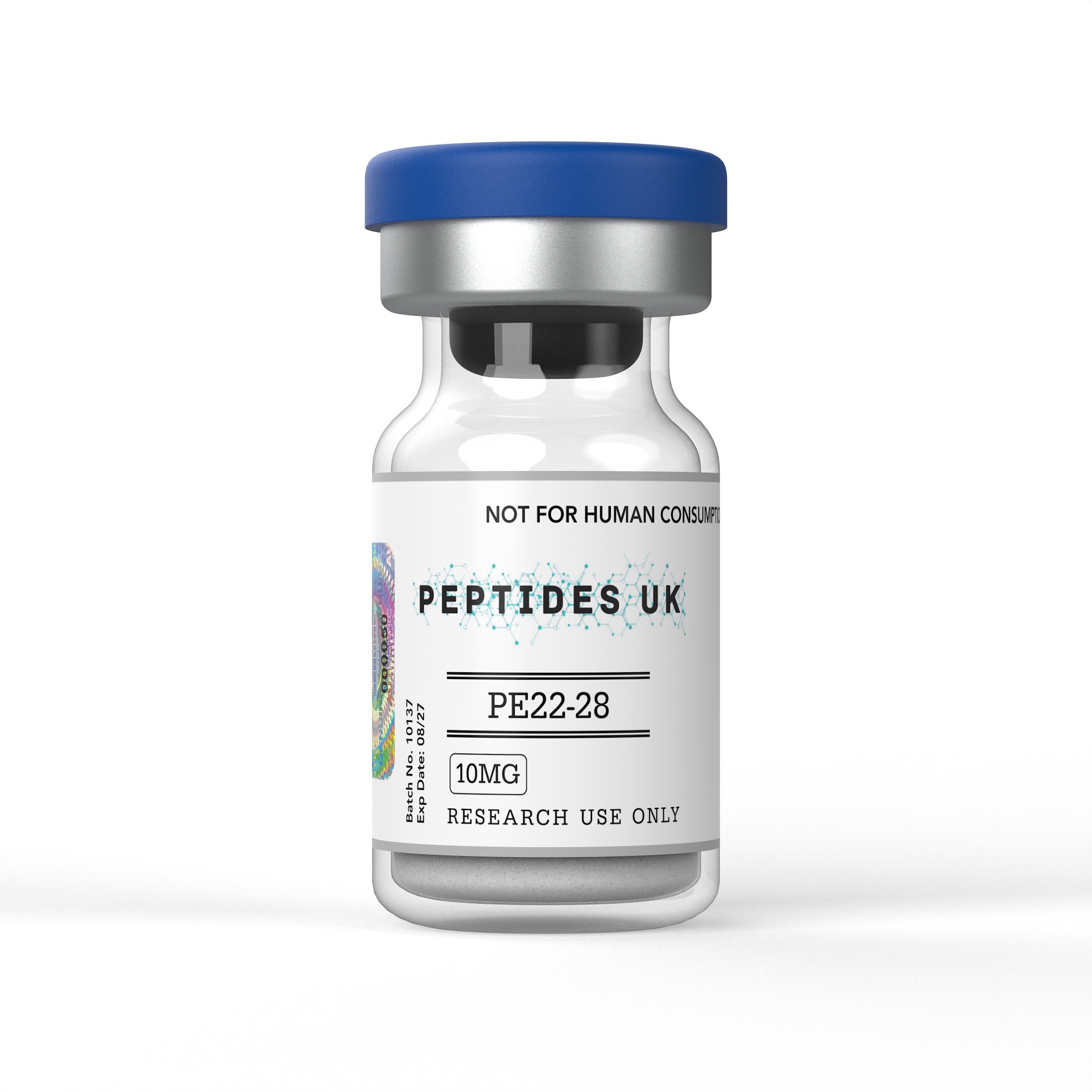
PE22-28 Peptide USA – Buy Online | In Stock & Ready to Ship
Buy PE22-28 in the USA with fast domestic shipping and guaranteed ≥99% purity — fully verified with COA and HPLC documentation. A trusted choice for USA research teams studying antidepressant mechanisms, BDNF signaling and synaptic plasticity pathways, PE22-28 is available in multiple formats to suit varying project needs. No international delays — just reliable, domestically sourced peptides USA researchers can count on.
For research use only. Not intended for human or veterinary use.

PE22-28 is a synthetic truncated fragment of spadin, itself a peptide derived from the propeptide of the TREK-1 potassium channel sortilin receptor, studied extensively across neuroscience, antidepressant biology, neuroplasticity research, and TREK-1 channel pharmacology for its potent and selective inhibition of the TREK-1 two-pore domain potassium channel, its influence on serotonergic signalling, and its rapidly acting neurobiological effects in pre-clinical models of depression and stress — making it one of the most targeted and mechanistically distinctive TREK-1 channel research peptides in modern neuropharmacology and antidepressant biology research. Researchers and institutions across the USA can source verified, research-grade PE22-28 with fast domestic dispatch and full batch documentation included.
✅ ≥99% Purity — HPLC & Mass Spectrometry Verified
✅ Batch-Specific Certificate of Analysis (CoA) Included
✅ Sterile Lyophilised Powder | GMP Manufactured
✅ Fast Dispatch Across the USA | USA Peptides In Stock
PE22-28 is a synthetic seven-amino acid peptide representing residues 22 to 28 of spadin — a 17-amino acid peptide derived from the propeptide region of sortilin, a member of the Vps10 domain receptor family that serves as a sorting receptor for multiple neurotrophic factors and neuropeptides in the central nervous system. The designation PE22-28 reflects its position within the spadin sequence, and it represents the minimal active fragment of spadin that retains full TREK-1 inhibitory activity — making it a more pharmacologically efficient research tool than the full-length spadin peptide for studying TREK-1 channel biology.
TREK-1 (TWIK-Related K+ Channel 1) is a member of the two-pore domain potassium channel (K2P) family — a class of background potassium channels that set the resting membrane potential and regulate neuronal excitability across a broad range of neuronal cell types in the central and peripheral nervous systems. Unlike voltage-gated potassium channels that open and close in response to membrane potential changes, TREK-1 is a leak channel that is constitutively active under resting conditions and is modulated by a wide range of physical and chemical signals including membrane stretch, temperature, lipids, volatile anaesthetics, and neurotransmitter receptor signalling.
TREK-1’s expression is particularly high in the prefrontal cortex, hippocampus, hypothalamus, and other limbic regions — brain areas critically involved in mood regulation, stress responses, and emotional processing. Research has established TREK-1 as a significant negative regulator of serotonergic neurotransmission — with studies showing that TREK-1 knockout mice display antidepressant-like phenotypes and enhanced serotonergic signalling, positioning TREK-1 inhibition as a mechanistically distinct approach to modulating the serotonergic system compared to conventional monoamine reuptake inhibition.
PE22-28’s mechanism of action is the selective inhibition of TREK-1 channel activity — blocking the constitutive potassium leak current that TREK-1 mediates, increasing neuronal excitability in TREK-1-expressing neurons, and consequently enhancing serotonergic neurotransmission in brain regions where TREK-1 is co-expressed with serotonergic system components. This selective TREK-1 inhibition mechanism makes PE22-28 a uniquely valuable and mechanistically distinctive research tool for studying TREK-1 channel pharmacology, serotonergic system modulation, and the neurobiology of mood-related brain circuits.
PE22-28 is one of the most targeted and pharmacologically distinctive neuroscience research peptides available to buy in the USA, with growing demand from neuropharmacology, antidepressant biology, ion channel research, and neuroplasticity science programs at research institutions nationwide.
In controlled pre-clinical and laboratory settings, PE22-28 has been studied across a wide range of neurobiological, pharmacological, and neuroscience research applications:
TREK-1 Channel Inhibition Research PE22-28’s primary and defining research application is its selective inhibition of the TREK-1 two-pore domain potassium channel. Studies have examined how PE22-28 blocks TREK-1 channel conductance, affects resting membrane potential in TREK-1-expressing neurons, and how its inhibitory potency compares to other TREK-1 modulators — establishing it as one of the most selective and potent peptide-based TREK-1 inhibitors available for channel pharmacology research.
Serotonergic System Research TREK-1 inhibition by PE22-28 enhances serotonergic neurotransmission in pre-clinical models. Research has examined how TREK-1 channel blockade affects serotonin release dynamics, serotonin receptor activation, and serotonergic signalling in brain regions including the dorsal raphe nucleus and hippocampus — contributing to the understanding of how K2P channel activity regulates monoaminergic neurotransmitter systems.
Antidepressant Biology Research PE22-28 has been studied extensively in pre-clinical models of depression and stress — examining its effects on depressive-like behaviours, stress responses, and mood-related neurobiological parameters in animal models. Research has documented rapidly acting antidepressant-like effects in pre-clinical behavioural models, with a notably faster onset compared to conventional monoamine-based research compounds — making rapid-onset antidepressant mechanism research one of the most active areas of PE22-28 investigation.
Neuroplasticity Research Studies have examined PE22-28’s influence on neuroplasticity parameters in pre-clinical models — including hippocampal neurogenesis, BDNF (Brain-Derived Neurotrophic Factor) expression, synaptic plasticity markers, and dendritic spine dynamics — exploring how TREK-1 inhibition affects the structural and functional plasticity of mood-relevant brain circuits.
BDNF Signalling Research Research has examined PE22-28’s effects on BDNF expression and TrkB receptor signalling in pre-clinical models — with studies documenting BDNF upregulation following TREK-1 inhibition in hippocampal and cortical models, connecting TREK-1 channel pharmacology to neurotrophic factor biology and the neuroplasticity mechanisms associated with antidepressant responses.
Hippocampal Biology Research The hippocampus is a key brain region in mood regulation and stress biology, and expresses high levels of TREK-1. Research has examined PE22-28’s influence on hippocampal neuronal excitability, synaptic transmission, neurogenesis, and stress-related gene expression — contributing to the understanding of how TREK-1 channel activity regulates hippocampal biology in the context of stress and mood-related neuroscience.
K2P Channel Pharmacology Research PE22-28 is used as a selective TREK-1 inhibitor in two-pore domain potassium channel pharmacology research — enabling researchers to study the specific contribution of TREK-1 channel activity to neuronal excitability, membrane potential regulation, and neurotransmitter release across different neuronal populations and brain regions.
Stress Biology Research TREK-1 expression is regulated by stress-related signalling, and research has examined how PE22-28-mediated TREK-1 inhibition affects stress response biology in pre-clinical models — including HPA axis activity, stress-induced behavioural changes, and the neurobiological adaptations associated with chronic stress exposure.
Rapid-Onset Antidepressant Mechanism Research One of the most distinctive research features of PE22-28 is its rapid onset of antidepressant-like effects in pre-clinical models compared to conventional monoamine reuptake inhibitors. Research has examined the mechanisms underlying this rapid onset — exploring how TREK-1 inhibition produces faster neurobiological changes than reuptake inhibition and what this reveals about the neurobiology of rapid antidepressant action.
Spadin Fragment Structure-Activity Research PE22-28 is used alongside full-length spadin and other spadin fragments in structure-activity relationship studies — examining how peptide length and sequence affect TREK-1 inhibitory potency, receptor selectivity, and in vivo biological activity, providing pharmacological insight into the minimal active sequence requirements for spadin-derived TREK-1 inhibitors.
All applications are for research purposes only. PE22-28 as supplied is not intended for human therapeutic use.
PE22-28 has generated a focused and scientifically significant research profile in TREK-1 channel pharmacology and antidepressant neurobiology:
TREK-1 Selectivity: Research has characterised PE22-28 as a highly selective TREK-1 channel inhibitor — documenting its inhibitory activity at TREK-1 with minimal activity at other K2P family members including TREK-2 and TRAAK, establishing it as the most selective spadin-derived peptide for TREK-1-specific channel pharmacology research and a significant advance over full-length spadin in terms of research tool precision.
Antidepressant-Like Effects: Pre-clinical studies have reported antidepressant-like effects of PE22-28 in established rodent models of depression — including forced swim test and tail suspension test paradigms — with research documenting behavioural effects at lower doses and with faster onset than those reported for full-length spadin, establishing PE22-28 as a more potent and efficient TREK-1-targeting research tool for antidepressant biology studies.
Serotonergic Enhancement: Studies have documented PE22-28’s enhancement of serotonergic neurotransmission in pre-clinical models following TREK-1 inhibition — with research reporting increased serotonin availability and serotonin receptor activation in mood-relevant brain regions, providing mechanistic support for the serotonergic pathway as a mediator of PE22-28’s antidepressant-like biological effects.
Neuroplasticity and BDNF: Research has reported PE22-28’s effects on hippocampal neurogenesis and BDNF expression in pre-clinical models — with studies documenting increased BDNF levels and neuroplasticity markers following TREK-1 inhibition, connecting K2P channel pharmacology to neurotrophic factor biology and the structural plasticity changes associated with antidepressant neuroscience research.
Rapid Onset Profile: Studies have highlighted PE22-28’s notably rapid onset of antidepressant-like biological effects in pre-clinical models compared to conventional monoamine reuptake inhibitor research compounds — generating significant research interest in TREK-1 inhibition as a mechanistically distinct pathway for studying rapid-onset antidepressant neurobiology and what this reveals about the timeline of antidepressant neurobiological action.
Spadin Fragment Optimisation: Research comparing PE22-28 to full-length spadin and other fragment lengths has confirmed PE22-28 as the minimal active fragment retaining full TREK-1 inhibitory potency — providing fundamental structure-activity relationship data on spadin-derived peptide pharmacology and establishing PE22-28 as the preferred research compound within the spadin fragment series for TREK-1 biology studies.
| Feature | PE22-28 | Spadin (full length) | Ketamine | Fluoxetine |
|---|---|---|---|---|
| Type | Synthetic spadin fragment peptide (7AA) | Sortilin propeptide-derived peptide (17AA) | NMDA receptor antagonist | SSRI — serotonin reuptake inhibitor |
| Mechanism | Selective TREK-1 K2P channel inhibition | TREK-1 K2P channel inhibition | NMDA receptor blockade | Serotonin transporter (SERT) inhibition |
| Primary Research Target | TREK-1 two-pore domain potassium channel | TREK-1 two-pore domain potassium channel | NMDA glutamate receptor | Serotonin transporter |
| Onset of Action in Models | Rapid — faster than conventional compounds | Moderate | Rapid | Slow — weeks in pre-clinical models |
| Selectivity | High — TREK-1 selective over TREK-2/TRAAK | Moderate — less selective than PE22-28 | Broad — multiple receptor effects | Selective for SERT |
| Best For | TREK-1 selective pharmacology / antidepressant mechanism / serotonergic research | Full-length spadin TREK-1 biology / SAR studies | NMDA receptor / rapid antidepressant mechanism research | SERT pharmacology / monoamine reuptake research |
| Parameter | Specification |
|---|---|
| Full Name | PE22-28 (Spadin fragment, residues 22–28) |
| Peptide Length | 7 Amino Acids |
| Type | Synthetic truncated spadin fragment — TREK-1 inhibitor |
| Primary Target | TREK-1 (TWIK-Related K+ Channel 1) |
| Mechanism | Selective K2P channel inhibition |
| Purity | ≥99% (HPLC & MS Verified) |
| Form | Sterile Lyophilised Powder |
| Solubility | Sterile water, bacteriostatic water, PBS |
| Storage (Powder) | -20°C, protect from light |
| Storage (Reconstituted) | 2–8°C, use promptly |
| Manufacturing | GMP Manufactured |
Every order includes full batch documentation:
✅ Batch-Specific Certificate of Analysis (CoA)
✅ HPLC Chromatogram
✅ Mass Spectrometry Confirmation
✅ Sterility & Endotoxin Testing Report
✅ Reconstitution Protocol
✅ Technical Research Support
Can I buy research-grade PE22-28 in the USA? Yes. We supply research-grade PE22-28 to researchers and institutions across the United States. All orders include full batch documentation and are packaged to maintain peptide integrity during transit. This compound is supplied strictly for laboratory research use only.
What is PE22-28 and where does it come from? PE22-28 is a seven-amino acid synthetic peptide representing residues 22 to 28 of spadin — a 17-amino acid peptide derived from the propeptide region of sortilin, a sorting receptor in the central nervous system. Research identified PE22-28 as the minimal active fragment of spadin that retains full TREK-1 inhibitory activity — making it a more pharmacologically efficient TREK-1 research tool than full-length spadin, with higher potency and greater TREK-1 selectivity over related K2P channels including TREK-2 and TRAAK.
What is TREK-1 and why is it important in PE22-28 research? TREK-1 is a two-pore domain background potassium channel (K2P family) that is constitutively active at resting membrane potentials and plays a key role in setting neuronal excitability across multiple brain regions — particularly in the prefrontal cortex, hippocampus, and hypothalamus. Its research importance in the context of PE22-28 stems from its established role as a negative regulator of serotonergic neurotransmission — TREK-1 knockout studies have shown antidepressant-like phenotypes and enhanced serotonergic signalling, positioning TREK-1 as a mechanistically distinct target for studying serotonergic system modulation. PE22-28’s selective TREK-1 inhibition makes it the primary pharmacological tool for studying this channel’s role in mood-relevant neurobiology.
What makes PE22-28 different from conventional antidepressant research compounds? The key distinction is mechanism and onset. Conventional antidepressant research compounds such as SSRIs work by inhibiting serotonin reuptake transporters — increasing synaptic serotonin availability by blocking its removal. PE22-28 works upstream at the level of neuronal excitability — inhibiting TREK-1 potassium channels to increase the excitability of serotonergic neurons, which indirectly enhances serotonin release and signalling. This mechanistic distinction is significant for research because TREK-1 inhibition produces antidepressant-like effects with a notably faster onset in pre-clinical models than SERT inhibition — making PE22-28 a valuable tool for studying the neurobiology of rapid-onset antidepressant action and what distinguishes fast-acting from slow-acting antidepressant mechanisms.
What purity is required for PE22-28 research? ≥98% is considered research-grade, but ≥99% purity is strongly preferred for TREK-1 channel inhibition assays, serotonergic neurotransmission studies, neuroplasticity research, and behavioural neuroscience experiments where compound purity directly affects biological activity measurements and experimental accuracy. All PE22-28 supplied for USA researchers is independently verified to ≥99%.
How is PE22-28 reconstituted for lab use? Allow the vial to reach room temperature before opening. Add sterile water, bacteriostatic water, or PBS slowly down the vial wall and swirl gently — do not shake. PE22-28 is generally well soluble in aqueous solvents. Use promptly after reconstitution, or aliquot and store at -80°C to preserve peptide activity across multiple experimental uses. Avoid repeated freeze-thaw cycles. For in vitro electrophysiology and channel pharmacology experiments, dissolve in the appropriate extracellular recording buffer for direct application to neuronal preparations.
PE22-28 is supplied exclusively for legitimate scientific research purposes conducted within licensed laboratory environments. This product is not intended for human consumption, self-administration, or any therapeutic application. It must be handled by qualified researchers in compliance with applicable US federal and state regulations and institutional ethics guidelines. By purchasing, you confirm that this compound will be used solely for approved in-vitro or pre-clinical research purposes.

WhatsApp us
Receive News