PRODUCTS SOLD ON PEPTIDESLABUSA.COM ARE FOR RESEARCH PURPOSES ONLY AND ARE NOT FOR HUMAN OR VETERINARY USE.
$373.00 Original price was: $373.00.$199.50Current price is: $199.50.
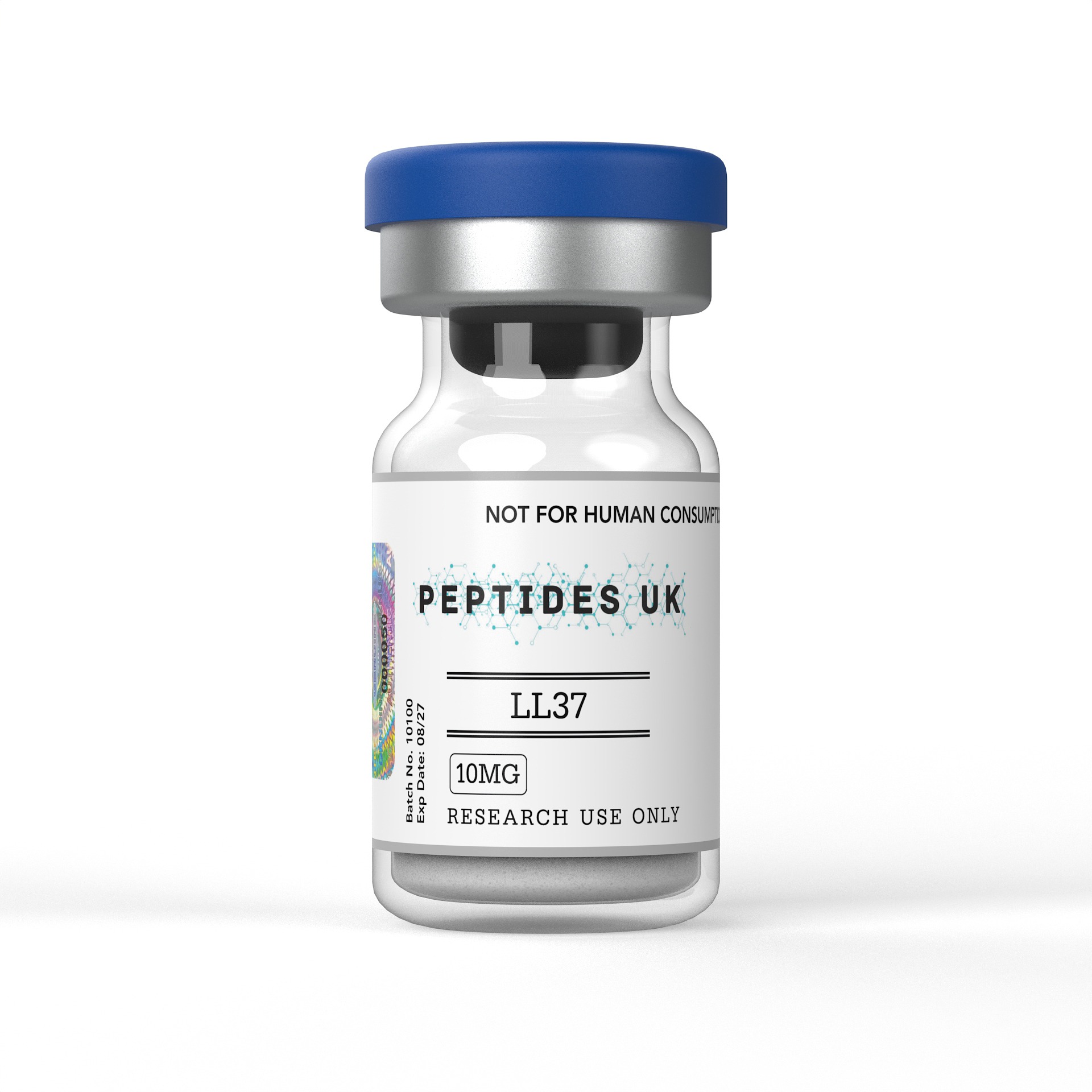
LL-37 Peptide USA – Buy Online | In Stock & Ready to Ship
Buy LL-37 in the USA with fast domestic shipping and guaranteed ≥99% purity — fully verified with COA and HPLC documentation. A trusted choice for USA research teams studying antimicrobial activity, immune modulation and wound healing pathways, LL-37 is available in multiple formats to suit varying project needs. No international delays — just reliable, domestically sourced peptides USA researchers can count on.
For research use only. Not intended for human or veterinary use.

LL-37 is a naturally occurring human cathelicidin antimicrobial peptide derived from the C-terminal fragment of the human CAP18 protein, studied extensively across immunology, antimicrobial biology, wound healing, inflammation research, and cancer biology for its broad influence on innate immune signalling, direct antimicrobial activity, immune cell modulation, and tissue repair promotion — making it the only known human cathelicidin peptide and one of the most multifunctional and actively researched host defence peptides in modern immunology and regenerative science. Researchers and institutions across the USA can source verified, research-grade LL-37 with fast domestic dispatch and full batch documentation included.
✅ ≥99% Purity — HPLC & Mass Spectrometry Verified
✅ Batch-Specific Certificate of Analysis (CoA) Included
✅ Sterile Lyophilised Powder | GMP Manufactured
✅ Fast Dispatch Across the USA | USA Peptides In Stock
LL-37 is a 37-amino acid cationic amphipathic peptide that represents the sole human cathelicidin — a class of host defence peptides that form a critical component of the innate immune system. The name LL-37 derives from its structure: it begins with two leucine (L) residues and consists of 37 amino acids in total. It is produced primarily by neutrophils, macrophages, epithelial cells, and keratinocytes, and is cleaved from its precursor protein hCAP18 (human Cationic Antimicrobial Protein 18) by the enzyme proteinase 3.
What makes LL-37 uniquely valuable as a research compound is the exceptional breadth of its biological activity. Unlike conventional antimicrobial peptides that act primarily through membrane disruption, LL-37 functions simultaneously as a direct antimicrobial agent, an immune signalling molecule, a chemotactic factor for immune cells, a modulator of inflammation, a promoter of wound healing and angiogenesis, and an influencer of cancer cell biology — making it one of the most multifunctional endogenous peptides in human biology.
LL-37’s cationic and amphipathic structure — featuring a positively charged face that interacts with negatively charged bacterial membranes and a hydrophobic face that enables membrane insertion — underpins its direct antimicrobial mechanism, while its interactions with toll-like receptors (TLRs), formyl peptide receptor-like 1 (FPRL1), purinergic receptors, and epidermal growth factor receptor (EGFR) underpin its broad immunomodulatory and tissue biology effects.
As the only human cathelicidin, LL-37 occupies a unique and irreplaceable position in innate immunity research, and is one of the most sought-after host defence peptide research compounds available to buy in the USA — with active demand across immunology, microbiology, wound healing, dermatology, and cancer biology research programs nationwide.
In controlled pre-clinical and laboratory settings, LL-37 has been studied across an exceptionally wide range of immunological, microbiological, and biological research applications:
Antimicrobial Activity Research LL-37’s most established research application is its direct antimicrobial activity against a broad spectrum of pathogens. Studies have examined LL-37’s mechanism of action against gram-positive bacteria, gram-negative bacteria, fungi, and enveloped viruses — with research documenting its cationic amphipathic membrane disruption mechanism, its activity against biofilm-forming organisms, and how its antimicrobial potency compares across pathogen types and experimental conditions.
Innate Immunity and Host Defence Research As the sole human cathelicidin, LL-37 is a primary research tool for studying human innate immune defence mechanisms. Studies have examined how LL-37 expression is regulated in immune and epithelial cells, how it is processed from hCAP18, and how it functions as a first-line defence molecule at epithelial barrier surfaces including skin, lung, and gut tissue in pre-clinical models.
Immunomodulation Research Beyond direct antimicrobial killing, LL-37 exerts broad immunomodulatory effects on innate immune cells. Research has examined how LL-37 modulates macrophage activation, neutrophil function, dendritic cell maturation, and mast cell responses — exploring its role as an immune signalling molecule that shapes the inflammatory environment during infection and tissue injury.
Toll-Like Receptor (TLR) Research LL-37 has complex interactions with toll-like receptor signalling — both modulating TLR activation and acting as a TLR ligand itself under certain conditions. Studies have examined how LL-37 influences TLR2, TLR4, TLR7, and TLR9 signalling in immune cell models, contributing to research on pattern recognition receptor biology and innate immune activation thresholds.
Wound Healing and Tissue Repair Research Research has examined LL-37’s influence across multiple phases of wound healing in pre-clinical models — including its effects on keratinocyte migration and proliferation, fibroblast activity, angiogenesis promotion, and re-epithelialisation — establishing it as a significant research tool at the intersection of innate immunity and tissue repair biology.
Angiogenesis Research Studies have documented LL-37’s pro-angiogenic properties, with research examining how it promotes endothelial cell migration, tube formation, and new blood vessel development in wound healing and tissue repair models — via mechanisms including FPRL1 receptor activation and VEGF pathway modulation.
Inflammation Research LL-37 has complex, context-dependent effects on inflammation — acting as both a pro-inflammatory and anti-inflammatory signal depending on the biological environment. Research has examined how LL-37 influences cytokine production, NF-κB signalling, inflammasome activation, and the resolution of inflammation in immune cell and tissue models.
Biofilm Research LL-37 has been studied for its activity against bacterial biofilms — structured microbial communities that are significantly more resistant to conventional antimicrobial agents than planktonic bacteria. Research has examined how LL-37 disrupts biofilm formation, penetrates established biofilms, and reduces biofilm viability across clinically relevant bacterial species in pre-clinical models.
Cancer Biology Research LL-37 has complex and context-dependent effects in cancer biology — with research reporting both tumour-suppressive and tumour-promoting effects depending on cancer type, concentration, and microenvironment. Studies have examined LL-37’s influence on cancer cell proliferation, apoptosis, migration, and invasion across multiple cancer cell line models — making it an active area of oncology research interest.
Dermatology and Skin Immunology Research LL-37 is highly expressed in skin and plays a central role in cutaneous innate immunity. Research has examined its role in skin barrier defence, its dysregulation in inflammatory skin conditions such as rosacea and psoriasis in pre-clinical models, and its influence on keratinocyte biology and skin immune responses — making dermatological research one of the most active LL-37 research areas.
Respiratory Biology Research LL-37 is expressed in the respiratory epithelium and airways, and research has examined its role in pulmonary host defence, airway epithelial cell biology, and lung immune responses in pre-clinical respiratory models — reflecting its importance as a first-line defence molecule at the respiratory mucosal barrier.
All applications are for research purposes only. LL-37 as supplied is not intended for human therapeutic use.
LL-37 has accumulated one of the most diverse and rapidly expanding research profiles of any endogenous host defence peptide in modern biomedical science:
Antimicrobial Spectrum: Research has documented LL-37’s broad-spectrum antimicrobial activity across gram-positive bacteria, gram-negative bacteria, fungi, and enveloped viruses in pre-clinical models — with studies characterising its cationic membrane disruption mechanism, its minimum inhibitory concentrations across pathogen species, and its retained activity against antibiotic-resistant bacterial strains — generating significant research interest in its utility as a model for novel antimicrobial compound development.
Innate Immunity: Research has established LL-37 as a central mediator of human innate immune defence, with studies documenting its expression patterns across immune and epithelial cell types, its processing from hCAP18, and its multifunctional role at the interface of direct antimicrobial defence and immune signalling — cementing its status as the most important human cathelicidin research compound.
Immunomodulation: Studies have characterised LL-37’s broad immunomodulatory activity across macrophages, neutrophils, dendritic cells, and mast cells — with research documenting how it modulates cytokine production, immune cell chemotaxis, and TLR signalling in ways that shape both the initiation and resolution of immune responses.
Wound Healing: A growing body of pre-clinical wound healing research has reported LL-37’s promotion of keratinocyte migration, fibroblast activity, and angiogenesis in skin injury models — establishing it as a significant research tool at the intersection of innate immunity and tissue repair, and driving research interest in host defence peptides as wound healing biology tools.
Biofilm Activity: Research has reported LL-37’s activity against bacterial biofilms across multiple clinically relevant species in pre-clinical models, with studies documenting disruption of biofilm structure, reduction in biofilm viability, and synergistic activity with conventional antimicrobial agents — making biofilm biology one of the most active current areas of LL-37 antimicrobial research.
Cancer Biology: Research has reported complex, cancer-type-dependent effects of LL-37 on tumour cell biology — with studies documenting tumour-suppressive effects in some cancer models and tumour-promoting effects in others — driving sustained research interest in understanding how host defence peptide biology intersects with cancer cell signalling and the tumour microenvironment.
Skin Disease Models: Pre-clinical dermatological research has examined LL-37’s dysregulation in inflammatory skin conditions, with studies reporting altered LL-37 expression patterns in rosacea and psoriasis models and exploring the mechanistic connections between cathelicidin biology and inflammatory skin disease pathophysiology.
| Feature | LL-37 | Defensin HNP-1 | Magainin 2 | BPC 157 |
|---|---|---|---|---|
| Type | Human cathelicidin | Human alpha-defensin | Amphibian antimicrobial peptide | Synthetic gastric-derived peptide |
| Origin | Human (hCAP18 derived) | Human (neutrophil derived) | Xenopus laevis skin | Synthetic — human gastric protein derived |
| Primary Research Focus | Innate immunity, antimicrobial, immunomodulation, wound healing | Innate immunity, antimicrobial, antiviral | Antimicrobial membrane disruption research | Tissue repair, GI protection, neuroprotection |
| Mechanism | Membrane disruption + multi-receptor immunomodulation | Beta-sheet membrane disruption | Alpha-helical membrane pore formation | Multi-pathway — NO system, VEGFR2, FAK-paxillin |
| Unique Research Value | Only human cathelicidin — broadest innate immunity research relevance | Primary human defensin research tool | Non-human antimicrobial membrane model | Broadest multi-tissue repair research tool |
| Best For | Human innate immunity / antimicrobial / wound healing / skin research | Human defensin / antiviral / innate immunity research | Membrane disruption mechanism studies | Tissue repair / GI / neuro pre-clinical studies |
| Parameter | Specification |
|---|---|
| Full Name | LL-37 (Human Cathelicidin Antimicrobial Peptide) |
| Peptide Length | 37 Amino Acids |
| Type | Naturally occurring human cathelicidin — hCAP18 derived |
| Key Receptors | FPRL1, TLRs, EGFR, Purinergic receptors |
| Purity | ≥99% (HPLC & MS Verified) |
| Form | Sterile Lyophilised Powder |
| Solubility | Sterile water, bacteriostatic water, PBS, dilute acetic acid |
| Storage (Powder) | -20°C, protect from light |
| Storage (Reconstituted) | 2–8°C, use promptly |
| Manufacturing | GMP Manufactured |
Every order includes full batch documentation:
✅ Batch-Specific Certificate of Analysis (CoA)
✅ HPLC Chromatogram
✅ Mass Spectrometry Confirmation
✅ Sterility & Endotoxin Testing Report
✅ Reconstitution Protocol
✅ Technical Research Support
Can I buy research-grade LL-37 in the USA? Yes. We supply research-grade LL-37 to researchers and institutions across the United States. All orders include full batch documentation and are packaged to maintain peptide integrity during transit. This compound is supplied strictly for laboratory research use only.
What does LL-37 stand for? LL-37 refers to both the structure and length of the peptide. The “LL” designates the two leucine residues at its N-terminus, and “37” refers to the total number of amino acids in the peptide chain. It is derived from the C-terminal region of the human precursor protein hCAP18 (human Cationic Antimicrobial Protein 18) following cleavage by the enzyme proteinase 3 — and is the only cathelicidin peptide encoded in the human genome.
What makes LL-37 unique compared to other antimicrobial peptides? LL-37 is unique for two primary reasons. First, it is the only human cathelicidin — the sole member of this important host defence peptide class encoded in the human genome — giving it unmatched relevance for human innate immunity research compared to antimicrobial peptides derived from other species. Second, its biological activity extends far beyond direct antimicrobial killing to encompass broad immunomodulation, wound healing promotion, angiogenesis, TLR signalling modulation, and cancer cell biology — making it one of the most multifunctional endogenous peptides in human biology and a uniquely versatile research tool.
What is the difference between LL-37 and defensins in antimicrobial research? Both LL-37 and defensins are human host defence peptides that form part of the innate immune system, but they belong to different peptide families with distinct structures and mechanisms. LL-37 is a cathelicidin — a single human family member — with an alpha-helical structure and broad immunomodulatory activity extending well beyond antimicrobial killing. Defensins (including alpha-defensins like HNP-1 and beta-defensins) are a larger family of beta-sheet structured antimicrobial peptides with somewhat narrower primary research focus on direct antimicrobial and antiviral activity. Researchers use LL-37 when studying cathelicidin biology, immunomodulation, and the full breadth of host defence peptide activity, and defensins when focusing specifically on the defensin family’s distinct structural and antimicrobial biology.
What purity is required for LL-37 research? ≥98% is considered research-grade, but ≥99% purity is strongly preferred for antimicrobial activity assays, immunomodulation studies, TLR signalling research, and wound healing experiments where compound purity directly affects biological activity measurements and experimental accuracy. All LL-37 supplied for USA researchers is independently verified to ≥99%.
How is LL-37 reconstituted for lab use? Allow the vial to reach room temperature before opening. LL-37 can be reconstituted in sterile water, bacteriostatic water, or PBS — add the solvent slowly down the vial wall and swirl gently without shaking. If solubility is challenging at neutral pH, dilute acetic acid can assist initial dissolution before dilution to working concentration with an appropriate buffer. Due to LL-37’s cationic nature, avoid prolonged contact with negatively charged surfaces such as glass — use low-binding polypropylene tubes where possible. Aliquot promptly after reconstitution and store at -80°C to preserve antimicrobial and immunomodulatory activity across multiple experimental uses.
LL-37 is supplied exclusively for legitimate scientific research purposes conducted within licensed laboratory environments. This product is not intended for human consumption, self-administration, or any therapeutic application. It must be handled by qualified researchers in compliance with applicable US federal and state regulations and institutional ethics guidelines. By purchasing, you confirm that this compound will be used solely for approved in-vitro or pre-clinical research purposes.
WhatsApp us
Receive News