PRODUCTS SOLD ON PEPTIDESLABUSA.COM ARE FOR RESEARCH PURPOSES ONLY AND ARE NOT FOR HUMAN OR VETERINARY USE.
$69.50
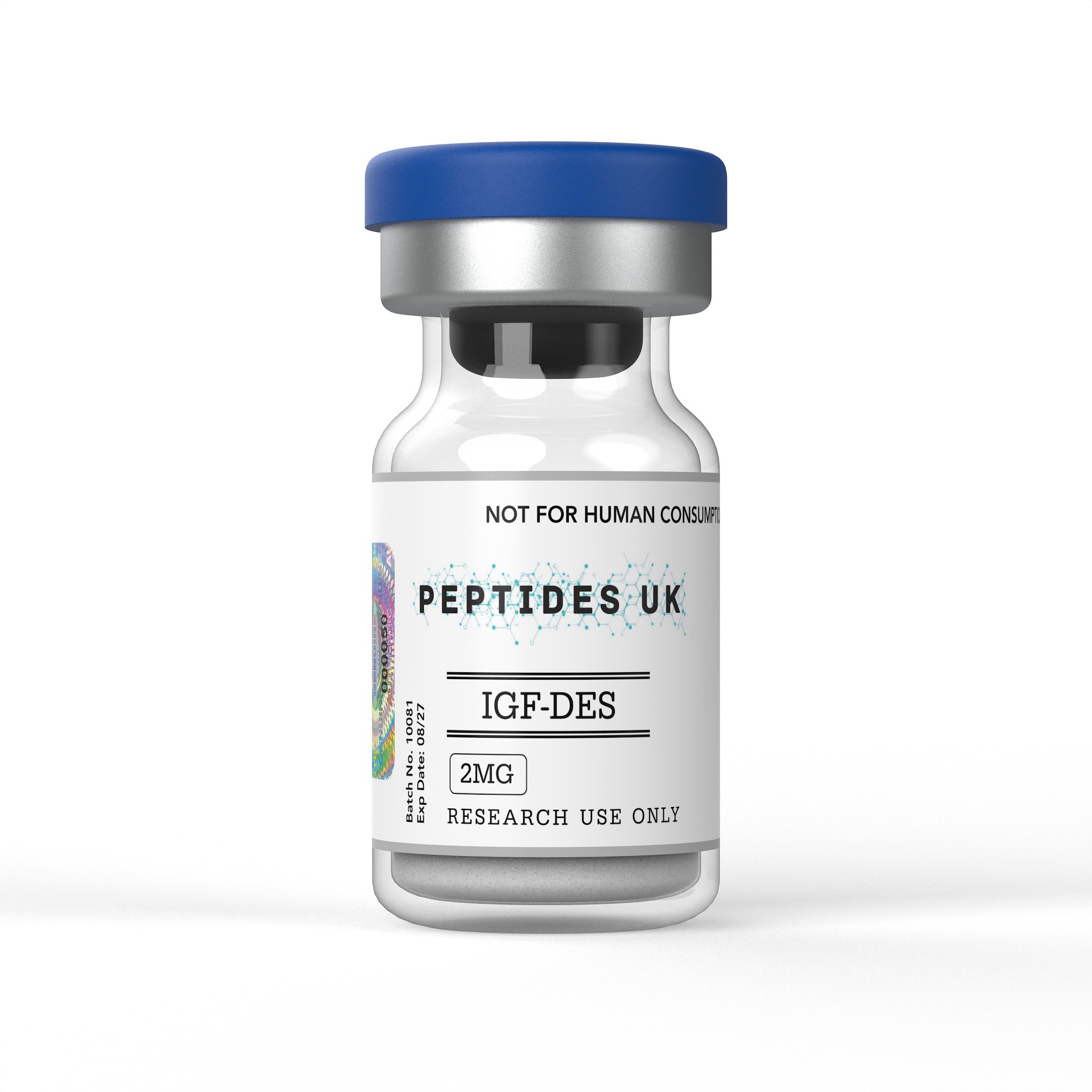
IGF DES Peptide USA – Buy Online | In Stock & Ready to Ship
Buy IGF DES in the USA with fast domestic shipping and guaranteed ≥99% purity — fully verified with COA and HPLC documentation. A trusted choice for USA research teams studying truncated insulin-like growth factor signaling, localised muscle cell proliferation and tissue growth pathways, IGF DES is available in multiple formats to suit varying project needs. No international delays — just reliable, domestically sourced peptides USA researchers can count on.
For research use only. Not intended for human or veterinary use.

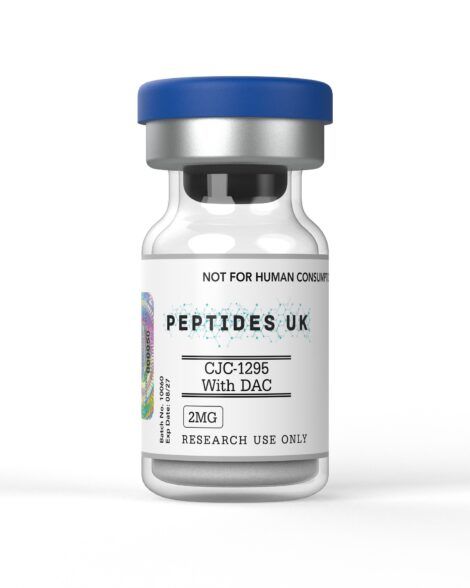
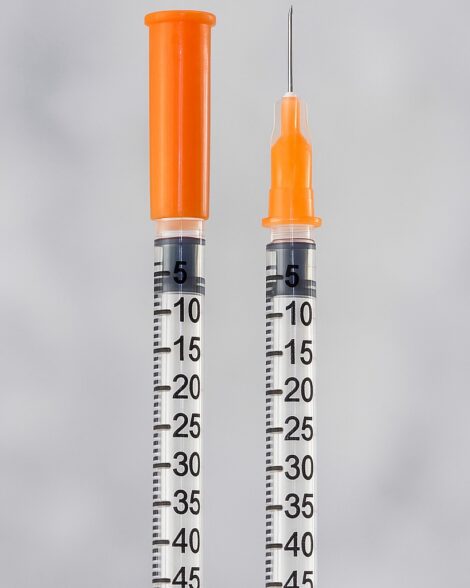
IGF-DES (Des(1-3)IGF-1) is a naturally occurring truncated variant of Insulin-Like Growth Factor 1, formed by the removal of the first three N-terminal amino acids from the full-length IGF-1 sequence, studied extensively across cell biology, muscle research, neuroprotection, tissue repair, and metabolic science for its significantly enhanced receptor binding potency, reduced IGF binding protein affinity, and superior tissue-level bioavailability compared to standard IGF-1 — making it the most potent naturally occurring IGF-1 variant and a uniquely powerful research tool for studying IGF-1 receptor biology at the cellular and tissue level. Researchers and institutions across the USA can source verified, research-grade IGF-DES with fast domestic dispatch and full batch documentation included.
✅ ≥99% Purity — HPLC & Mass Spectrometry Verified
✅ Batch-Specific Certificate of Analysis (CoA) Included
✅ Sterile Lyophilised Powder | GMP Manufactured
✅ Fast Dispatch Across the USA | USA Peptides In Stock
IGF-DES — formally known as Des(1-3)IGF-1 — is a truncated variant of full-length IGF-1 (Insulin-Like Growth Factor 1) in which the first three amino acids of the N-terminal sequence have been removed, leaving a 67-amino acid peptide compared to the standard 70-amino acid IGF-1 sequence. This structural difference produces a profoundly altered pharmacological profile that makes IGF-DES one of the most distinctive and research-valuable IGF-1 variants available to buy in the USA.
The removal of the three N-terminal amino acids has two critical pharmacological consequences that define IGF-DES’s research value. First, it dramatically reduces the peptide’s affinity for IGF binding proteins (IGFBPs) — the family of carrier proteins that bind the majority of circulating IGF-1 in biological systems, sequestering it and limiting its availability to activate IGF-1 receptors on target cells. Standard IGF-1 has high IGFBP affinity, meaning much of its biological activity is modulated and limited by binding protein sequestration. IGF-DES, by contrast, has greatly reduced IGFBP affinity — allowing it to reach and activate IGF-1 receptors far more efficiently in tissue environments where IGFBPs are present.
Second, despite losing three N-terminal amino acids, IGF-DES retains full binding affinity for the IGF-1 receptor (IGF-1R) — and in many research models displays significantly greater potency at IGF-1R than full-length IGF-1, precisely because its reduced IGFBP sequestration allows a greater proportion of the peptide to engage receptors directly. This combination — reduced binding protein interference plus retained receptor affinity — makes IGF-DES approximately three to ten times more potent than standard IGF-1 in tissue-level research models where IGFBPs are present.
IGF-DES is naturally produced in the brain and gut, where local IGF-1 truncation occurs as part of tissue-specific IGF processing — giving it genuine biological relevance beyond its utility as a research tool. It is one of the most potent and pharmacologically distinctive IGF-1 research compounds available to buy in the USA, with active demand across cell biology, muscle research, neuroprotection, and metabolic science programs nationwide.
In controlled pre-clinical and laboratory settings, IGF-DES has been studied across a wide range of cellular, physiological, and metabolic research applications:
IGF-1 Receptor (IGF-1R) Signalling Research IGF-DES is used to study IGF-1 receptor activation and downstream signalling with reduced IGFBP interference compared to full-length IGF-1. Research has examined how IGF-DES activates IGF-1R, drives PI3K-AKT and MAPK-ERK signalling cascades, and how the absence of IGFBP sequestration affects the magnitude and duration of receptor-level signalling in cell and tissue models.
IGFBP Biology Research IGF-DES’s dramatically reduced affinity for IGF binding proteins makes it a key research tool for studying IGFBP biology. By comparing the effects of standard IGF-1 and IGF-DES in the same experimental system, researchers can isolate the contribution of IGFBP modulation to IGF-1 signalling outcomes — providing direct insight into how binding proteins regulate IGF-1 bioavailability and receptor access in different tissue environments.
Muscle Cell Biology Research IGF-DES has been studied extensively in skeletal muscle cell models, with research examining its effects on myoblast proliferation, myocyte differentiation, protein synthesis signalling, and muscle cell survival — reflecting strong research interest in how locally produced IGFBP-resistant IGF-1 variants regulate muscle biology at the tissue level.
Neuroprotection and Brain Biology Research IGF-DES is naturally produced in the brain, and research has examined its neuroprotective properties in neuronal cell models and pre-clinical CNS injury models — including its influence on neuronal survival, neurite outgrowth, synaptic biology, and protection against neurotoxic challenges. Its natural brain expression and IGFBP-resistant profile make it a particularly relevant research tool for studying local IGF-1 signalling in CNS tissue.
Cell Proliferation Research Studies have examined IGF-DES’s influence on cell proliferation across multiple cell types — including muscle cells, epithelial cells, and neuronal cells — with research documenting how its enhanced tissue bioavailability compared to standard IGF-1 affects proliferative signalling responses in IGFBP-rich experimental environments.
Tissue Repair and Regeneration Research Research has examined IGF-DES in tissue repair models, exploring how its reduced IGFBP sequestration and enhanced local receptor availability affect repair signalling, cell migration, and tissue regeneration parameters — with particular interest in how locally acting IGFBP-resistant IGF-1 variants contribute to tissue-level repair biology.
Gut Biology Research IGF-DES is naturally produced in the gastrointestinal tract, and research has examined its role in intestinal epithelial cell biology, gut mucosal repair, and GI tissue regeneration — reflecting its natural production site and the relevance of locally acting IGFBP-resistant IGF-1 to gastrointestinal biology research.
Metabolic Research Studies have examined IGF-DES’s influence on metabolic parameters in pre-clinical models — including glucose metabolism, insulin sensitivity, and protein synthesis — reflecting the broad metabolic role of IGF-1R signalling and research interest in how IGFBP-resistant IGF-1 variants affect systemic metabolic regulation.
Cancer Biology Research IGF-1R signalling is actively studied in the context of cancer cell biology, and IGF-DES has been examined in cancer cell models for its influence on tumour cell proliferation, survival signalling, and IGF-1R pathway activation — with research interest in how IGFBP-resistant IGF-1 variants interact with IGF-1R in the tumour microenvironment.
IGF-DES vs Standard IGF-1 Comparative Research One of IGF-DES’s most important research applications is direct comparison with full-length IGF-1 in matched experimental systems — allowing researchers to isolate the specific contribution of IGFBP sequestration to IGF-1 signalling outcomes, quantify the potency difference between the two variants, and understand how N-terminal truncation affects the full spectrum of IGF-1R-mediated biological responses.
All applications are for research purposes only. IGF-DES as supplied is not intended for human therapeutic use.
IGF-DES has accumulated a well-established and distinctive research profile across cell biology, neuroprotection, and metabolic science:
Enhanced Potency: Research has consistently documented IGF-DES’s superior potency compared to full-length IGF-1 in tissue and cell models where IGFBPs are present — with studies reporting approximately three to ten times greater biological activity at equivalent concentrations, attributed directly to the reduced IGFBP sequestration produced by N-terminal truncation.
IGFBP Resistance: Studies have thoroughly characterised IGF-DES’s dramatically reduced affinity for IGF binding proteins compared to standard IGF-1 — confirming that N-terminal truncation is sufficient to substantially alter IGFBP interaction while preserving full IGF-1R binding capacity, a key pharmacological insight with broad implications for understanding how IGFBPs regulate IGF-1 bioavailability in biological systems.
Receptor Binding: Research has confirmed that despite losing three N-terminal amino acids, IGF-DES retains full binding affinity for IGF-1R — establishing that the N-terminal tripeptide removed in DES formation is not required for receptor binding, and that the enhanced potency of IGF-DES in tissue models is attributable to IGFBP resistance rather than intrinsically higher receptor affinity.
Neuroprotection: Pre-clinical neurological research has reported neuroprotective effects of IGF-DES in neuronal injury and neurotoxicity models, with studies documenting protective effects on neuronal survival and function — consistent with its natural production in the brain and its role as a locally acting IGFBP-resistant IGF-1 variant in CNS tissue.
Muscle Biology: Studies in skeletal muscle cell models have reported IGF-DES’s influence on myoblast proliferation, differentiation signalling, and protein synthesis pathways — with research documenting enhanced potency compared to standard IGF-1 in IGFBP-rich muscle cell environments, contributing foundational data to the understanding of local IGF-1 variant biology in muscle tissue.
Gut Biology: Research has examined IGF-DES’s natural production in gastrointestinal tissue and its influence on intestinal epithelial cell biology and gut mucosal repair — establishing the biological relevance of locally produced IGFBP-resistant IGF-1 variants to gastrointestinal tissue homeostasis and repair research.
| Feature | IGF-DES | IGF-1 LR3 | Standard IGF-1 | HGH 191AA |
|---|---|---|---|---|
| Type | Truncated natural IGF-1 variant (67AA) | Long-arginine synthetic IGF-1 analogue (83AA) | Full-length endogenous IGF-1 (70AA) | Recombinant GH protein (191AA) |
| IGFBP Affinity | Very low — IGFBP resistant | Very low — IGFBP resistant | High — heavily IGFBP sequestered | N/A — acts upstream of IGF-1 |
| IGF-1R Affinity | Full — equivalent to standard IGF-1 | Full — equivalent to standard IGF-1 | Full | N/A — activates GHR not IGF-1R |
| Relative Potency vs IGF-1 | ~3–10x more potent in tissue models | ~2–3x more potent in tissue models | Reference standard | Upstream GH signal |
| Half-Life | Short — minutes in circulation | ~20–30 hours | Short — minutes | ~20–30 minutes |
| Natural Occurrence | Yes — brain and gut | No — synthetic analogue | Yes — primary circulating form | No — recombinant |
| Best For | Local tissue IGF-1R signalling / IGFBP biology / neuroprotection | Sustained IGF-1R activation / systemic studies | IGF-1R reference ligand / standard studies | Direct GHR signalling / GH-IGF-1 axis research |
| Parameter | Specification |
|---|---|
| Full Name | Des(1-3)IGF-1 (IGF-DES) |
| Peptide Length | 67 Amino Acids |
| Type | Truncated natural IGF-1 variant — N-terminal tripeptide removed |
| Receptor Target | IGF-1R (Insulin-Like Growth Factor 1 Receptor) |
| IGFBP Affinity | Greatly reduced vs standard IGF-1 |
| Purity | ≥99% (HPLC & MS Verified) |
| Form | Sterile Lyophilised Powder |
| Solubility | Sterile water, bacteriostatic water, dilute acetic acid |
| Storage (Powder) | -20°C, protect from light |
| Storage (Reconstituted) | 2–8°C, use promptly |
| Manufacturing | GMP Manufactured |
Every order includes full batch documentation:
✅ Batch-Specific Certificate of Analysis (CoA)
✅ HPLC Chromatogram
✅ Mass Spectrometry Confirmation
✅ Sterility & Endotoxin Testing Report
✅ Reconstitution Protocol
✅ Technical Research Support
Can I buy research-grade IGF-DES in the USA? Yes. We supply research-grade IGF-DES to researchers and institutions across the United States. All orders include full batch documentation and are packaged to maintain peptide integrity during transit. This compound is supplied strictly for laboratory research use only.
What does DES mean in IGF-DES? DES stands for Des(1-3) — referring to the removal of the first three amino acids from the N-terminal sequence of full-length IGF-1. The three amino acids removed are glutamate, asparagine, and threonine at positions 1, 2, and 3 of the standard IGF-1 sequence. This truncation produces a 67-amino acid peptide versus the standard 70-amino acid full-length IGF-1, and dramatically alters the peptide’s pharmacological profile by reducing its affinity for IGF binding proteins while preserving full IGF-1 receptor binding activity.
What is the difference between IGF-DES and standard IGF-1 in research? The key pharmacological difference is IGFBP affinity. Standard IGF-1 has high affinity for IGF binding proteins, which sequester a large proportion of IGF-1 in biological systems and limit its availability to activate IGF-1 receptors on target cells. IGF-DES has greatly reduced IGFBP affinity due to its N-terminal truncation — allowing far more of the peptide to reach and activate IGF-1R directly in tissue environments where binding proteins are present. Both peptides have equivalent IGF-1R binding affinity, but IGF-DES is approximately three to ten times more potent than standard IGF-1 in tissue models where IGFBPs are present — making it the preferred research compound when studying local, tissue-level IGF-1R signalling with minimal binding protein interference.
What is the difference between IGF-DES and IGF-1 LR3 in research? Both IGF-DES and IGF-1 LR3 are IGFBP-resistant IGF-1 variants with enhanced tissue potency compared to standard IGF-1, but they differ significantly in structure, origin, and half-life. IGF-DES is a naturally occurring truncated variant produced in the brain and gut — it is short-acting and best suited to studying local, acute IGF-1R signalling in IGFBP-rich tissue environments. IGF-1 LR3 is a synthetic analogue with an extended 83-amino acid sequence and a significantly longer half-life of approximately 20–30 hours — making it better suited to sustained IGF-1R activation studies and longer-duration research protocols. Researchers use IGF-DES for acute local signalling and IGFBP biology research, and IGF-1 LR3 when prolonged receptor activation is required.
What purity is required for IGF-DES research? ≥98% is considered research-grade, but ≥99% purity is strongly preferred for IGF-1R binding assays, IGFBP competition studies, cell proliferation research, and neuroprotection experiments where compound purity directly affects biological activity measurements and experimental accuracy. All IGF-DES supplied for USA researchers is independently verified to ≥99%.
How is IGF-DES reconstituted for lab use? Allow the vial to reach room temperature before opening. IGF-DES can be reconstituted in sterile water or bacteriostatic water — add the solvent slowly down the vial wall and swirl gently without shaking. If solubility is challenging at neutral pH, dilute acetic acid can assist initial dissolution before further dilution to working concentration with an appropriate buffer or media. Use promptly after reconstitution, or aliquot and store at -80°C to preserve peptide activity across multiple experimental uses. Avoid repeated freeze-thaw cycles.
IGF-DES (Des(1-3)IGF-1) is supplied exclusively for legitimate scientific research purposes conducted within licensed laboratory environments. This product is not intended for human consumption, self-administration, or any therapeutic application. It must be handled by qualified researchers in compliance with applicable US federal and state regulations and institutional ethics guidelines. By purchasing, you confirm that this compound will be used solely for approved in-vitro or pre-clinical research purposes.
WhatsApp us
Receive News