PRODUCTS SOLD ON PEPTIDESLABUSA.COM ARE FOR RESEARCH PURPOSES ONLY AND ARE NOT FOR HUMAN OR VETERINARY USE.
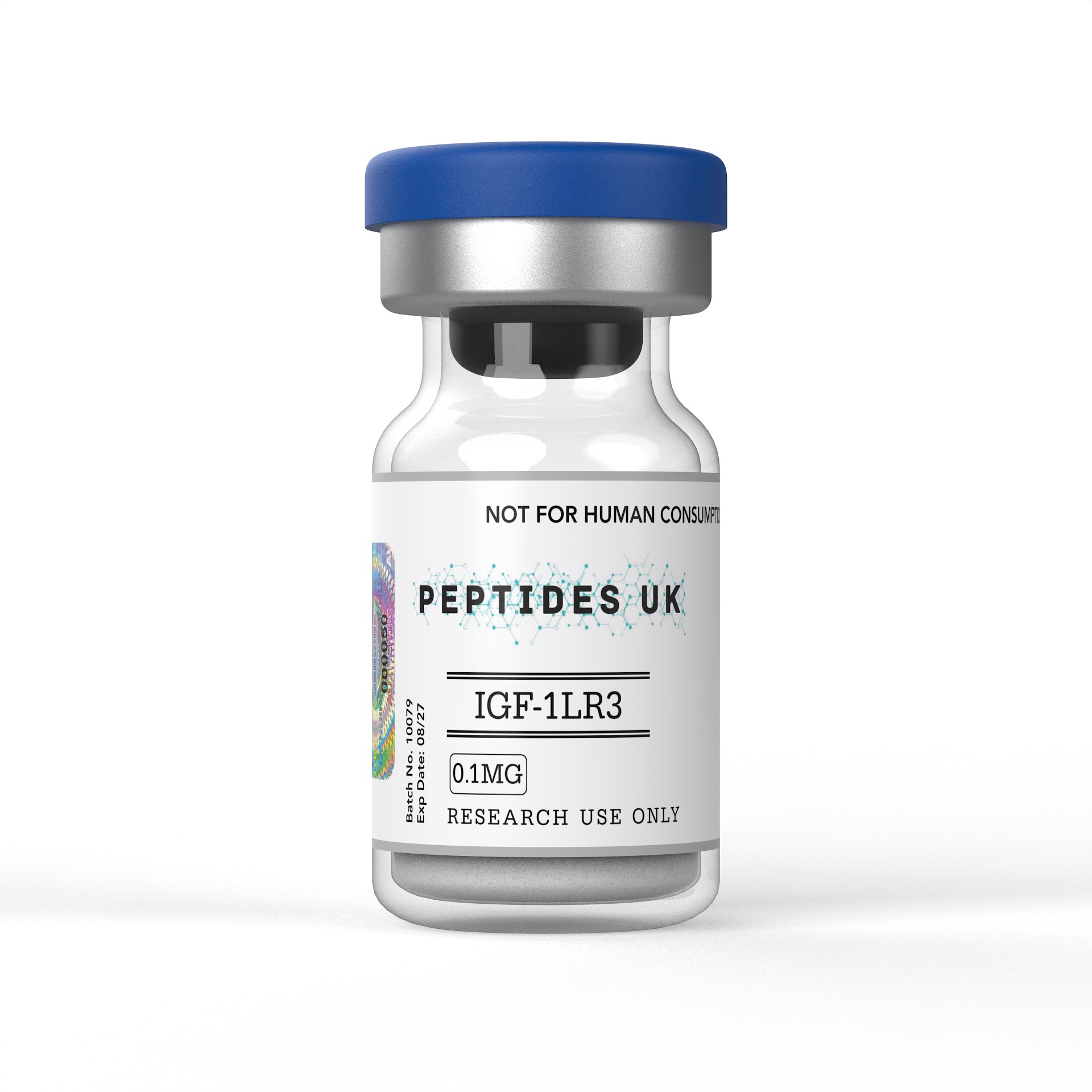
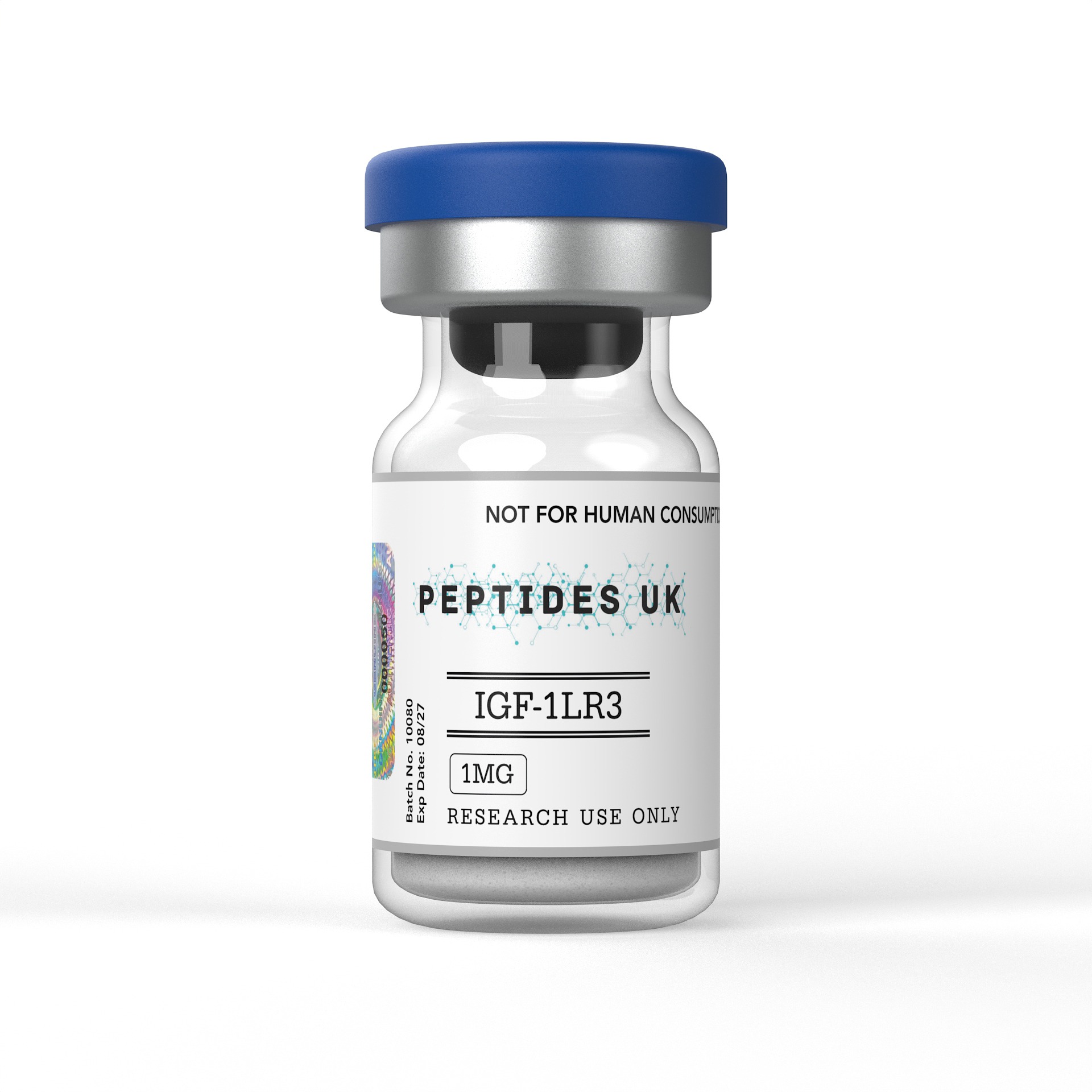
$53.50 – $187.50Price range: $53.50 through $187.50
IGF-1 LR3 Peptide USA – Buy Online | In Stock & Ready to Ship
Buy IGF-1 LR3 in the USA with fast domestic shipping and guaranteed ≥99% purity — fully verified with COA and HPLC documentation. A trusted choice for USA research teams studying insulin-like growth factor signaling, muscle cell proliferation and anabolic pathway activation, IGF-1 LR3 is available in multiple formats to suit varying project needs. No international delays — just reliable, domestically sourced peptides USA researchers can count on.
For research use only. Not intended for human or veterinary use.


IGF-1 LR3 — Long Arginine 3 Insulin-Like Growth Factor-1 — is a synthetic 83-amino acid analogue of human IGF-1, engineered for dramatically reduced binding to IGF-binding proteins and a significantly extended half-life, making it one of the most widely used growth factor research tools available in the USA today.
Researchers, labs, and institutions across the United States can source verified, research-grade IGF-1 LR3 with fast dispatch, full documentation, and third-party verified purity.
✅ ≥99% Purity — HPLC & Mass Spectrometry Verified
✅ Batch-Specific Certificate of Analysis (CoA) Included
✅ Third-Party Tested | GMP Manufactured
✅ Fast Dispatch to USA — Tracked Shipping Available
IGF-1 LR3 — formally Long Arginine 3 Insulin-Like Growth Factor-1, also written as LR3-IGF-1 — is a synthetic recombinant analogue of human insulin-like growth factor-1 (IGF-1). It was specifically engineered to overcome two major limitations of native IGF-1 as a research tool: rapid sequestration by IGF-binding proteins (IGFBPs) and a relatively short active half-life.
Two structural modifications distinguish IGF-1 LR3 from its parent molecule:
Together, these modifications produce a research tool with approximately three times the potency of native IGF-1 and a dramatically extended half-life of approximately 20–30 hours — compared to native IGF-1’s half-life of 12–15 hours. This extended receptor engagement window makes IGF-1 LR3 significantly more practical for sustained signaling studies and cell culture applications than the native molecule.
IGF-1 LR3 retains the pharmacological activity of IGF-1 as an agonist of the IGF-1 receptor, has very low affinity for the insulin-like growth factor-binding proteins (IGFBPs), and has improved metabolic stability.
IGF-1 LR3 is a research compound only and is not approved for human therapeutic use in the United States.
In research settings, IGF-1 LR3 is studied as a highly potent, long-acting IGF-1 receptor (IGF-1R) agonist and as a practical tool for interrogating growth factor signaling pathways without the confounding effects of IGFBP sequestration. Studies have explored its role in:
IGF-1 LR3 is a research compound only and is not approved for human therapeutic use.
IGF-1 LR3’s research history spans its original development as a biopharmaceutical cell culture reagent through to its extensive use as a mechanistic research probe across multiple biological disciplines.
Receptor Binding and IGFBP Research The defining research advantage of IGF-1 LR3 is its minimal interaction with IGF-binding proteins. In biological systems, the six IGFBPs bind approximately 98% of all circulating native IGF-1 — severely limiting its availability for receptor engagement in experimental models. IGF-1 LR3’s modified N-terminus and R3 substitution reduce this IGFBP binding dramatically, making it the preferred tool compound for research specifically examining receptor-level IGF-1R signaling uncomplicated by binding protein dynamics. Published biochemical assays have confirmed limited cross-interaction with the insulin receptor, providing additional context for comparative receptor specificity studies.
PI3K/Akt and MAPK/ERK Signaling Research IGF-1 LR3 activates IGF-1R-dependent signaling cascades including the PI3K/Akt and MAPK/ERK pathways. Research has characterized these downstream phosphorylation profiles extensively in both cell-based models and preclinical in vivo systems — establishing IGF-1 LR3 as a reference tool for studying how growth factor receptor engagement translates to transcriptional regulation of cell cycle progression, apoptosis suppression, and differentiation signaling.
Skeletal Muscle and Myostatin Research Preclinical literature describes interactions between IGF-1 signaling and myostatin-regulated pathways, with downstream effects on MyoD-associated transcription in skeletal muscle models. These interactions are studied to understand the regulatory balance between growth-promoting IGF-1R signaling and the growth-inhibitory myostatin pathway — an area of significant interest in skeletal muscle biology research in the USA. Studies examining amino acid uptake and protein synthesis in muscle cell models have consistently demonstrated IGF-1 LR3’s utility as a sustained anabolic signaling probe in myocyte research.
Metabolic and Glucose Regulation Research IGF-1 LR3’s activation of PI3K/Akt signaling promotes GLUT4 translocation and glucose uptake in metabolic cell models. Research has examined metabolic signaling interactions between IGF-1R and insulin receptor pathways — particularly in studies examining glucose transport, lipid metabolism regulation, and energy-balance signaling. The structural overlap between IGF-1 and insulin receptors makes IGF-1 LR3 a practical tool for comparative receptor biology studies relevant to metabolic syndrome and insulin sensitivity research.
Cancer Biology Research — Complex Evidence Base IGF-1 axis biology intersects extensively with cancer research. IGF-1R signaling promotes cell survival, proliferation, and resistance to apoptosis across multiple tumor cell types in vitro, and IGF-1R has been identified as a therapeutic target in oncology drug discovery. A PMC-indexed preclinical study in rats bearing mammary adenocarcinoma found that LR3-IGF-I infusion increased tumor growth more substantially than native IGF-1 in vivo, while simultaneously failing to promote host muscle protein accretion — findings that underscore the importance of careful experimental design when using IGF-1 LR3 in cancer-adjacent research contexts. Researchers should account for this tumor growth-promoting potential in relevant experimental systems.
Biopharmaceutical Cell Culture Applications IGF-1 LR3 was originally developed as a cell culture supplement to support the growth of recombinant mammalian cells in large-scale biopharmaceutical manufacturing — a context where its extended half-life and IGFBP-free activity are directly advantageous. This industrial research origin means IGF-1 LR3 is one of the most extensively quality-characterized research peptides available in the USA, with well-established in vitro performance benchmarks including cell proliferation assays using MCF-7 cells confirming specific activity levels.
GH/IGF-1 Axis and Body Composition Research Research examining the GH/IGF-1 axis in body composition studies has explored IGF-1 and its analogues for effects on lean mass, fat mass, and metabolic rate. A 12-week randomized double-blind study in postmenopausal women found the combined GH plus IGF-1 group achieved the largest weight reduction of all treatment groups — though five participants withdrew due to side effects including edema. This research contributes to understanding the role of the somatotropic axis in body composition regulation while highlighting that IGF-1 axis modulation requires careful monitoring in research designs.
All referenced findings are from pre-clinical studies or clinical research contexts. IGF-1 LR3 is not approved for human therapeutic use in the United States.
When you buy IGF-1 LR3 in the USA through our platform, every order includes:
We supply USA research peptides to licensed researchers, universities, and institutions — with cold-chain compliant packaging designed to maintain peptide integrity throughout transit.
| Parameter | Specification |
|---|---|
| Purity | ≥99% (HPLC & MS Verified) |
| Full Name | Long Arginine 3 Insulin-Like Growth Factor-1 |
| Synonyms | LR3-IGF-1, Long R3 IGF-1, IGF1-LR3 |
| Amino Acids | 83 (70 native IGF-1 + 13 N-terminal extension) |
| Key Modification 1 | 13-AA N-terminal extension (MFPAMPLSSLFVN) |
| Key Modification 2 | Glu → Arg substitution at position 3 |
| Molecular Weight | ~9,117 g/mol |
| CAS Number | 946870-92-4 |
| Half-Life | ~20–30 hours (vs ~12–15 hours for native IGF-1) |
| Relative Potency | ~3× native IGF-1 |
| Production | Recombinant E. coli expression + purification |
| Form | White Lyophilized Powder |
| Solubility | Sterile water / 0.1% acetic acid |
| Storage (powder) | -20°C, stable 24+ months |
| Storage (reconstituted) | 2–8°C, use within 2–4 weeks |
| Available Sizes | 1mg |
Allow the vial to reach room temperature before opening. Add sterile water or 0.1% acetic acid slowly down the inside wall of the vial and swirl gently — do not shake. A typical stock concentration is 100 µg/mL, which can be further diluted into aqueous assay buffers as required. For long-term storage of reconstituted stock, adding a carrier protein (0.1% HSA or BSA) and storing at -80°C is recommended to prevent peptide adsorption to vial surfaces and degradation. Avoid repeated freeze-thaw cycles.
| Feature | IGF-1 LR3 | Native IGF-1 | IGF-1 DES |
|---|---|---|---|
| Amino Acids | 83 | 70 | 67 |
| N-terminal Modification | 13-AA extension | None | Truncated (lacks first 3 AA) |
| IGFBP Affinity | Very low | High (~98% bound in serum) | Very low |
| Relative Potency | ~3× IGF-1 | Reference (1×) | ~10× IGF-1 (in vivo) |
| Half-Life | ~20–30 hours | ~12–15 hours | Short (local action) |
| Primary Research Use | Sustained receptor signaling studies | Reference / physiological model | Local tissue signaling research |
| Cell Culture Use | Yes (original application) | Limited | Limited |
| Metabolic Research | Yes | Yes | Limited |
Can I buy IGF-1 LR3 in the USA? Yes. We supply research-grade IGF-1 LR3 with fast tracked dispatch across the United States for licensed laboratory research use. All orders include full purity documentation and integrity-maintained packaging.
What does “LR3” mean in IGF-1 LR3? “Long” refers to the 13-amino acid N-terminal extension added to the native IGF-1 sequence — extending the total length from 70 to 83 amino acids. “R3” refers to the arginine (R) substitution at position 3, replacing the glutamic acid found in native IGF-1. Together these modifications reduce binding to IGF-binding proteins (IGFBPs) and extend the compound’s half-life — making it a more stable and potent research tool than unmodified IGF-1.
What is the difference between IGF-1 LR3 and native IGF-1? Native IGF-1 is rapidly sequestered in biological systems — approximately 98% of circulating IGF-1 is bound to IGFBPs, leaving very little available for receptor engagement in experimental models. IGF-1 LR3’s structural modifications reduce this IGFBP binding dramatically, making far more of the peptide available for direct IGF-1R activation. The result is approximately three times the potency of native IGF-1 and a half-life of 20–30 hours versus 12–15 hours. For research applications requiring sustained, quantifiable IGF-1R activation, IGF-1 LR3 is the more reproducible and practical tool compound.
What is the difference between IGF-1 LR3 and IGF-1 DES? Both IGF-1 LR3 and IGF-1 DES (des[1-3] IGF-1) have reduced IGFBP affinity compared to native IGF-1, but they differ in structure and research application. IGF-1 DES lacks the first three N-terminal amino acids of native IGF-1, resulting in very high local potency (~10× native IGF-1 in vivo) but a short half-life suited to studying local tissue-level signaling. IGF-1 LR3 has an extended N-terminus and a long half-life (~20–30 hours), making it better suited for sustained systemic receptor studies, cell culture applications, and experiments requiring prolonged pathway activation.
Is IGF-1 LR3 banned in sports? Yes. IGF-1 and all its analogues — including IGF-1 LR3 — are prohibited in competitive sport by the World Anti-Doping Agency (WADA) under the category of peptide hormones and growth factors. This product is supplied exclusively for licensed laboratory research use and is not provided for any sporting, performance, or non-research purpose.
What purity level should research-grade IGF-1 LR3 be? ≥98% is the accepted minimum for research-grade growth factor peptides, though ≥99% is preferred for receptor binding, signaling pathway, and cell proliferation assays. All of our USA research peptides — including IGF-1 LR3 — are HPLC and mass spectrometry verified to ≥99%.
How quickly is IGF-1 LR3 delivered in the USA? Orders are dispatched promptly with tracked shipping. Most USA orders arrive within 3–5 business days.
Where can I find IGF-1 LR3 for sale in the USA? We offer research-grade IGF-1 LR3 (Long R3 IGF-1) for sale in the USA exclusively for licensed laboratory research use, with full documentation and verified purity included as standard with every order.
Research Disclaimer: IGF-1 LR3 is supplied exclusively for legitimate scientific research purposes in licensed laboratory environments. This product is not intended for human consumption, self-administration, performance enhancement, or therapeutic use of any kind. IGF-1 and its analogues are prohibited in competitive sport under WADA regulations. It must be handled by qualified researchers in accordance with all applicable US federal and state regulations and institutional ethics guidelines. By purchasing, you confirm that this compound will be used solely for approved in-vitro or pre-clinical research.
WhatsApp us
Receive News