GLP-1 Peptide USA | Buy Research-Grade GLP-1 | ≥99% Purity
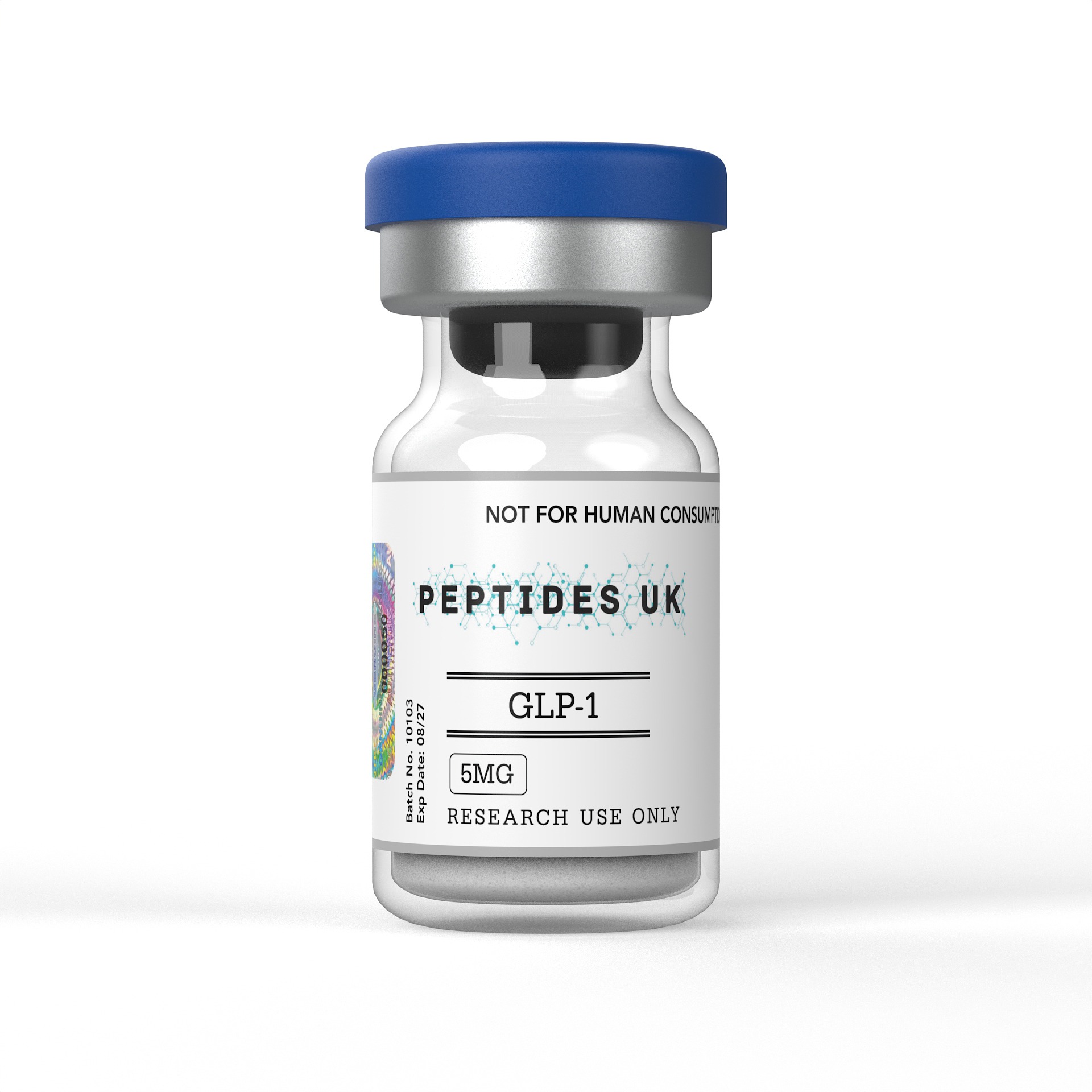
GLP-1 (Glucagon-Like Peptide-1) is a naturally occurring incretin hormone used in metabolic and endocrinology research — available to buy in the USA as research-grade lyophilised peptide with ≥99% purity, verified by HPLC and mass spectrometry, with fast USA dispatch.
✅ ≥99% Purity — HPLC & Mass Spectrometry Verified
✅ Batch-Specific Certificate of Analysis (CoA) Included
✅ Sterile Lyophilised Powder | GMP Manufactured
✅ Fast Dispatch Across the USA | USA Peptides In Stock
What Is GLP-1 Peptide?
GLP-1 is a 30-amino acid incretin peptide produced naturally by L-cells in the small intestine in response to food intake. It’s derived from the proglucagon gene and acts as a key hormonal signal coordinating the body’s metabolic response after eating. Once released, GLP-1 travels through the bloodstream to target tissues including the pancreas, brain, stomach, and heart, where it activates the GLP-1 receptor (GLP-1R).
One of the most distinctive features of native GLP-1 is its very short half-life — typically under two minutes — due to rapid breakdown by the enzyme DPP-4. This makes it a particularly valuable reference compound for receptor pharmacology and acute incretin signalling studies, while longer-acting synthetic analogues like Semaglutide are used when sustained GLP-1R activation is needed.
GLP-1 is one of the most researched metabolic peptides available to buy in the USA, with demand growing steadily across universities, biotech firms, and research institutions nationwide.
What Does GLP-1 Peptide Do in Research?
In controlled pre-clinical and laboratory settings, GLP-1 has been studied across a wide range of metabolic and physiological research applications:
Insulin Secretion Research GLP-1’s most well-documented function is its glucose-dependent stimulation of insulin release from pancreatic beta cells. Researchers use native GLP-1 to examine GLP-1R-mediated insulin secretion mechanisms and incretin-driven signalling pathways.
Glucose Homeostasis Studies Studies have investigated GLP-1’s role in postprandial glucose regulation — including its effects on insulin secretion, glucagon suppression, and gastric emptying — to understand how the incretin system maintains blood glucose balance after meals.
Pancreatic Beta Cell Biology Research has examined GLP-1’s influence on beta cell survival, proliferation, and function in cellular models, including how GLP-1R activation affects beta cell response to metabolic stress.
Glucagon Suppression Research GLP-1 suppresses glucagon secretion from pancreatic alpha cells in a glucose-dependent manner — a key component of how it helps regulate overall glucose balance alongside its insulin-stimulating effects.
Appetite and Satiety Signalling Studies have explored GLP-1’s influence on appetite-regulating centres in the hypothalamus and brainstem, examining how peripheral GLP-1 release signals satiety to the central nervous system in pre-clinical models.
Cardiovascular Research GLP-1 receptors are expressed in cardiac tissue, and studies have examined GLP-1’s influence on heart rate, cardiac function, and vascular biology — a growing area of incretin research interest.
GLP-1 Receptor Pharmacology Native GLP-1 serves as the reference ligand in GLP-1R binding assays, helping researchers characterise synthetic analogues, agonists, and antagonists relative to the endogenous peptide’s pharmacological profile.
DPP-4 Enzyme Research GLP-1’s rapid degradation by DPP-4 makes it a useful tool for studying DPP-4 enzyme kinetics, inhibitor pharmacology, and how DPP-4 inhibition affects incretin bioavailability in pre-clinical metabolic models.
Neuroprotection Studies GLP-1 receptors are expressed in the brain, and research has examined GLP-1’s role in neuronal survival, neuroinflammation, and neuroprotective signalling — a rapidly expanding area of incretin neuroscience.
All applications are for research purposes only. GLP-1 as supplied is not intended for human therapeutic use.
What Do Studies Say About GLP-1?
GLP-1 has one of the most extensive research profiles of any metabolic peptide in modern science:
Incretin Biology: Decades of research have established GLP-1 as a primary coordinator of postprandial metabolic responses, consistently documenting its glucose-dependent insulin secretion, glucagon suppression, and gastric motility effects across cellular and animal models.
Beta Cell Research: A large body of work has examined GLP-1’s trophic effects on pancreatic beta cells — including influences on proliferation, apoptosis resistance, and insulin gene expression — sustaining strong interest in GLP-1R signalling as a metabolic research target.
Appetite Research: Pre-clinical studies have documented GLP-1’s central nervous system effects, examining how peripheral and central GLP-1 signalling interact to regulate food intake — contributing foundational knowledge to GLP-1R agonist research tool development.
Cardiovascular Research: Studies have reported cardioprotective properties of GLP-1 in pre-clinical models, examining heart rate effects, myocardial function, and vascular biology outcomes under GLP-1R stimulation.
Neurological Research: GLP-1R signalling has been studied in models of neurodegeneration and neuroinflammation, with studies exploring how incretin pathway activation influences neuronal survival and inflammatory markers in brain tissue models.
Foundational Pharmacology: The entire class of GLP-1 receptor agonist research compounds — including Semaglutide, Liraglutide, and Tirzepatide — is built on the pharmacology established through native GLP-1 research, making it one of the most consequential peptides in metabolic science.
GLP-1 vs GLP-1 Receptor Agonist Research Compounds
| Feature |
Native GLP-1 |
Semaglutide |
Liraglutide |
Tirzepatide |
| Type |
Endogenous incretin |
Synthetic GLP-1 analogue |
Synthetic GLP-1 analogue |
GLP-1/GIP dual agonist |
| Half-Life |
~2 minutes |
~7 days |
~13 hours |
~5 days |
| DPP-4 Resistance |
No |
Yes |
Yes |
Yes |
| Receptor Target |
GLP-1R only |
GLP-1R only |
GLP-1R only |
GLP-1R + GIPR |
| Best For |
Acute signalling / receptor pharmacology |
Long-duration metabolic studies |
Intermediate duration studies |
Multi-receptor research |
Product Specifications
| Parameter |
Specification |
| Full Name |
Glucagon-Like Peptide-1 (GLP-1) |
| Peptide Length |
30 Amino Acids |
| Purity |
≥99% (HPLC & MS Verified) |
| Form |
Sterile Lyophilised Powder |
| Solubility |
Sterile water, bacteriostatic water, PBS |
| Storage (Powder) |
-20°C, protect from light |
| Storage (Reconstituted) |
2–8°C, use promptly |
| Manufacturing |
GMP Manufactured |
Buy GLP-1 in the USA — What’s Included
Every order includes full batch documentation:
✅ Batch-Specific Certificate of Analysis (CoA)
✅ HPLC Chromatogram
✅ Mass Spectrometry Confirmation
✅ Sterility & Endotoxin Testing Report
✅ Reconstitution Protocol
✅ Technical Research Support
Frequently Asked Questions — GLP-1 USA
Can I buy research-grade GLP-1 in the USA? Yes. We supply research-grade GLP-1 (Glucagon-Like Peptide-1) to researchers and institutions across the United States. All orders include full batch documentation and are packaged to maintain peptide integrity during transit. This compound is supplied strictly for laboratory research use only.
What is the difference between native GLP-1 and Semaglutide? Native GLP-1 is the endogenous incretin hormone with a half-life of around two minutes, making it ideal for acute receptor pharmacology and short-duration signalling studies. Semaglutide is a synthetic GLP-1 analogue engineered to resist DPP-4 degradation, with a half-life of approximately seven days — suited to sustained GLP-1R activation studies. Native GLP-1 is the reference ligand against which all synthetic analogues are characterised.
Why does GLP-1 have such a short half-life? GLP-1 is rapidly broken down by the enzyme DPP-4, which is present throughout the body. This short half-life is intentional — GLP-1 acts as a rapid postprandial signal rather than a sustained circulating hormone. In research, this makes native GLP-1 ideal for acute studies, while DPP-4-resistant analogues are used when sustained receptor activation is required.
What purity is needed for GLP-1 receptor research? ≥98% is considered research-grade, but ≥99% is strongly preferred for receptor binding assays, insulin secretion studies, and incretin signalling experiments where purity directly affects pharmacological accuracy. All GLP-1 supplied for USA researchers is independently verified to ≥99%.
How is GLP-1 reconstituted for lab use? Allow the vial to reach room temperature before opening. Add sterile water, bacteriostatic water, or PBS slowly down the vial wall and swirl gently — do not shake. Use promptly after reconstitution, or aliquot and store at -80°C to preserve activity across multiple experiments.
Research Disclaimer
GLP-1 (Glucagon-Like Peptide-1) is supplied exclusively for legitimate scientific research purposes conducted within licensed laboratory environments. This product is not intended for human consumption, self-administration, or any therapeutic application. It must be handled by qualified researchers in compliance with applicable US federal and state regulations and institutional ethics guidelines. By purchasing, you confirm that this compound will be used solely for approved in-vitro or pre-clinical research purposes.