PRODUCTS SOLD ON PEPTIDESLABUSA.COM ARE FOR RESEARCH PURPOSES ONLY AND ARE NOT FOR HUMAN OR VETERINARY USE.
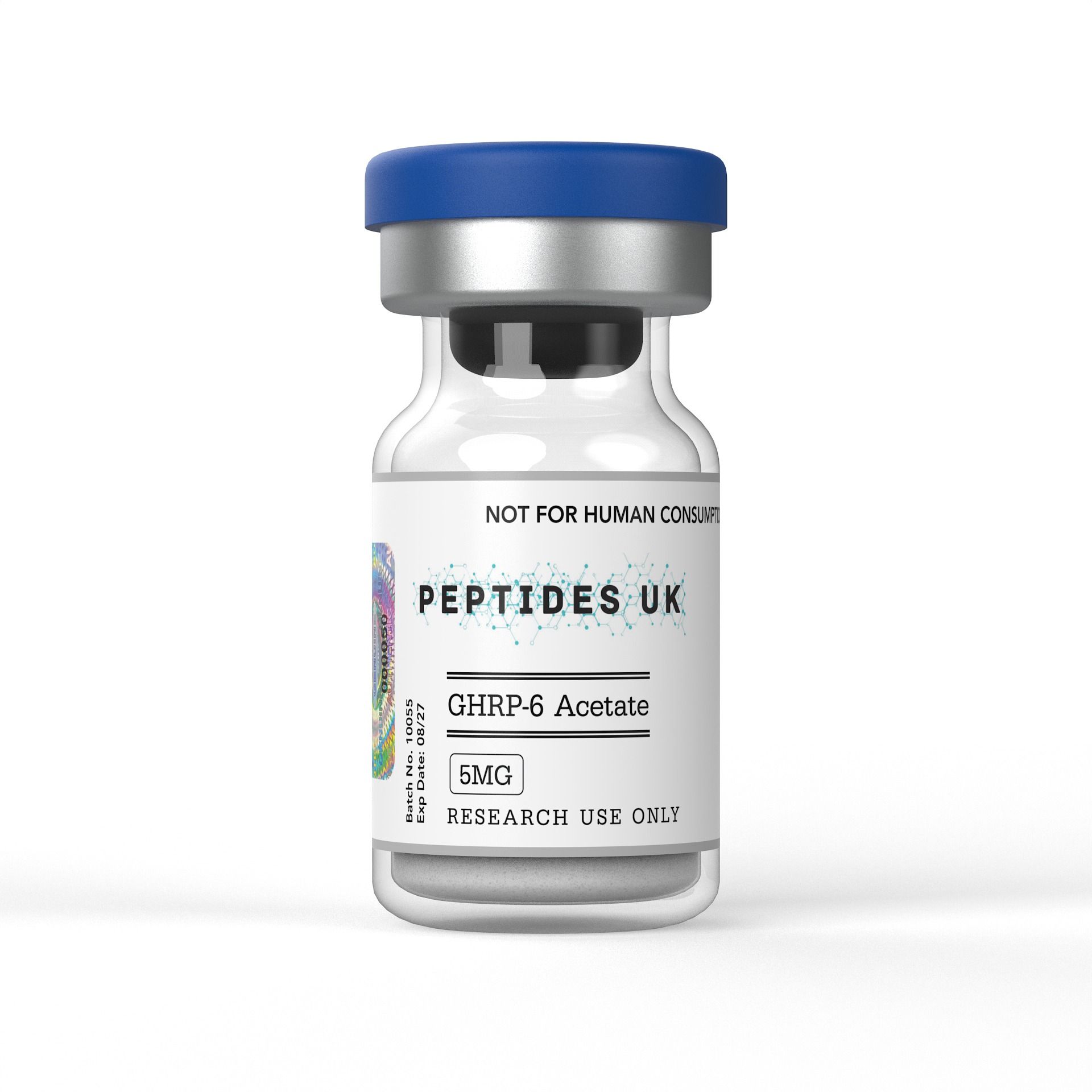
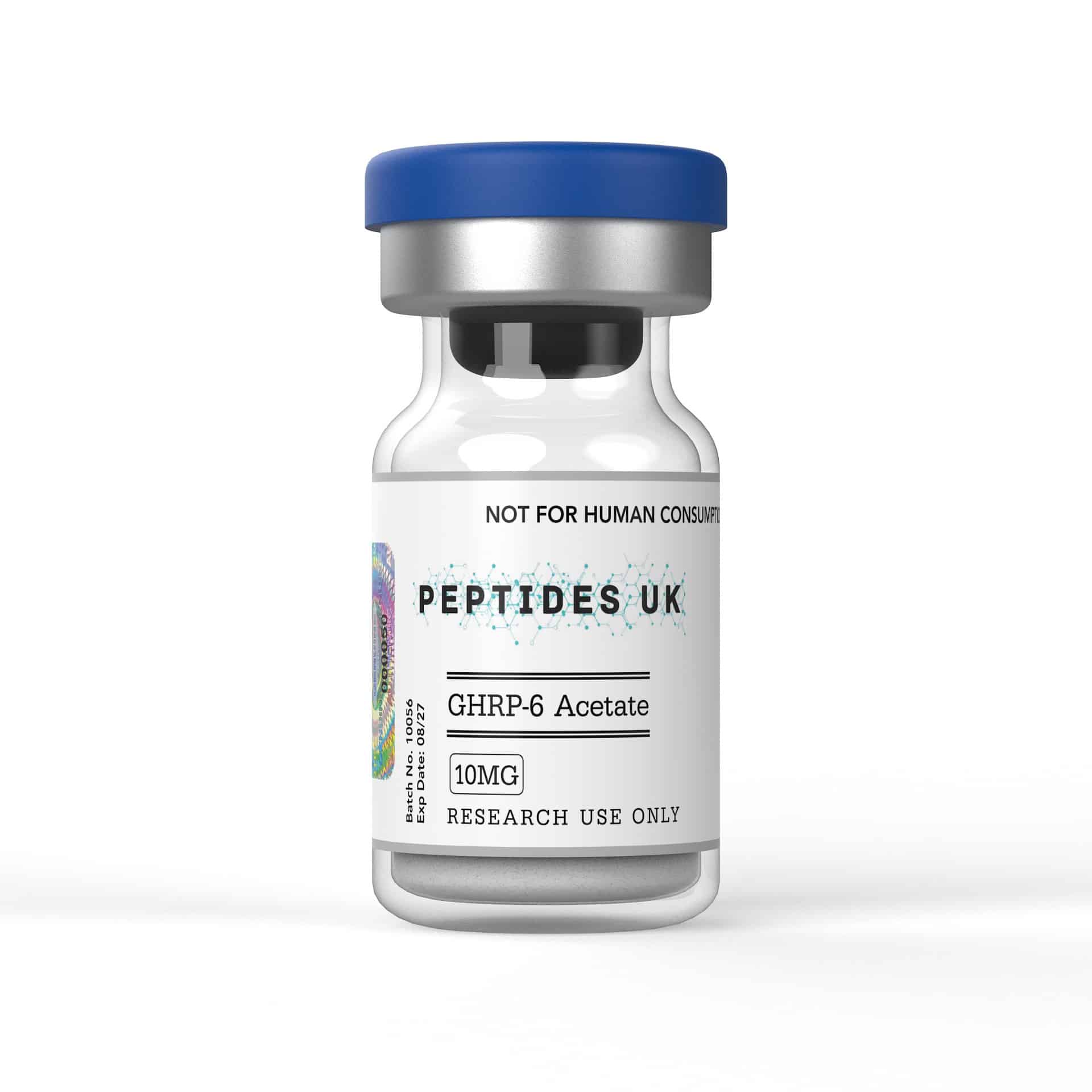
$31.00 – $51.00Price range: $31.00 through $51.00
GHRP-6 Peptide USA – Buy Online | In Stock & Ready to Ship
Buy GHRP-6 in the USA with fast domestic shipping and guaranteed ≥99% purity — fully verified with COA and HPLC documentation. A trusted choice for USA research teams studying growth hormone secretagogue activity, ghrelin receptor stimulation and appetite regulation pathways, GHRP-6 is available in multiple formats to suit varying project needs. No international delays — just reliable, domestically sourced peptides USA researchers can count on.
For research use only. Not intended for human or veterinary use.

GHRP-6 (Growth Hormone-Releasing Peptide-6; His-D-Trp-Ala-Trp-D-Phe-Lys-NH₂) is a synthetic hexapeptide growth hormone secretagogue — the founding member of the growth hormone-releasing peptide (GHRP) family and the first synthetic compound identified to specifically elicit dose-dependent growth hormone release both in vitro and in vivo — derived by systematic chemical modification of met-enkephalin and developed by American endocrinologist Cyril Bowers at Tulane University in 1984, and studied extensively across GHS-R1a and CD36 receptor pharmacology, hypothalamic-pituitary somatotropic axis biology, pulsatile GH secretion research, IGF-1 and anabolic axis biology, ghrelin system pharmacology, appetite and orexigenic signalling research, cardiovascular and cardioprotective biology, ischaemia-reperfusion injury research, wound healing and anti-fibrotic biology, skeletal muscle and sarcopenia research, neuroprotection and Parkinson’s disease biology, hepatoprotection and renal cytoprotection, doxorubicin-induced cardiotoxicity research, glucose and lipid metabolism, and sexual behaviour neuroscience — distinguished from all subsequent GHRPs and ghrelin analogues as the original reference hexapeptide secretagogue whose unexpectedly broad pharmacological profile — spanning GH-dependent anabolic biology, GH-independent cytoprotection, and CD36-mediated anti-fibrotic and anti-atherosclerotic biology — established the GHRP family as a pharmacological class of far greater mechanistic scope than their original somatotropic identity suggested, and whose discovery preceded and ultimately led to the identification of ghrelin as the endogenous GHS-R1a ligand in 1999. Researchers and institutions across the USA can source verified, research-grade GHRP-6 5mg with fast domestic dispatch and full batch documentation included.
✅ ≥99% Purity — HPLC & Mass Spectrometry Verified
✅ Batch-Specific Certificate of Analysis (CoA) Included
✅ Sterile Lyophilised Powder | GMP Manufactured
✅ Fast Dispatch Across the USA | USA Peptides In Stock
GHRP-6 (CAS 87616-84-0) is a synthetic hexapeptide — carrying the six-amino acid sequence His-D-Trp-Ala-Trp-D-Phe-Lys-NH₂ (conventionally abbreviated HwAWfK-NH₂ using lowercase to denote D-amino acid residues) — with a molecular formula of C₄₆H₅₆N₁₂O₆ and a molecular weight of 873.0 g/mol. The peptide incorporates two D-amino acid residues — D-tryptophan at position 2 and D-phenylalanine at position 5 — that confer resistance to aminopeptidase and endopeptidase degradation and orient the indole and phenyl aromatic side chains into the spatial configuration required for high-affinity GHS-R1a engagement. The C-terminal lysine is amidated (–NH₂) providing carboxypeptidase resistance. This combination of D-residue proteolytic stabilisation, C-terminal amidation, and compact hexapeptide backbone produces a metabolically robust research tool compound with a plasma half-life of approximately 20–30 minutes following subcutaneous administration.
The discovery of GHRP-6 began not with growth hormone research but with opioid pharmacology. In 1976, Cyril Bowers and colleagues at Tulane University observed that certain chemical analogues of met-enkephalin — the endogenous opioid pentapeptide (Tyr-Gly-Gly-Phe-Met) — exhibited unexpected growth hormone-releasing activity in rat pituitary cell cultures, completely independent of their opioid receptor binding properties. The key structural observation was that replacement of the second glycine of met-enkephalin with a D-tryptophan residue produced a compound with selective GH-releasing activity and minimal opioid activity — establishing that GH secretagogue and opioid receptor activities could be pharmacologically dissociated through stereochemical modification. After eight years of systematic structure-activity optimisation incorporating conformational energy calculations, D-amino acid scanning, and biological activity assay — GHRP-6 emerged in 1984 as the first synthetic hexapeptide to specifically elicit dose-dependent, reproducible GH release in vitro and in vivo across multiple species. GHRP-6 thus represents the founding compound that proved a distinct, non-GHRH pathway for pharmacological GH release existed — a finding that precipitated the search for the endogenous receptor and its ligand, ultimately resolved in 1996 with the cloning of GHS-R1a and in 1999 with ghrelin’s identification from stomach extracts by Kojima and Kangawa.
GHRP-6 exerts its somatotropic effects through the growth hormone secretagogue receptor type 1a (GHS-R1a) — a 366-amino acid class A GPCR expressed prominently on somatotroph cells of the anterior pituitary and on hypothalamic neurons of the arcuate and ventromedial nuclei, and also broadly distributed across the CNS, heart, vasculature, adrenal glands, testis, liver, kidney, skeletal muscle, and immune cells. GHS-R1a has the unusual property of high constitutive activity — approximately 50% of maximal signalling in the absence of any ligand — a feature that has implications for the interpretation of pharmacological experiments using GHS-R1a agonists and inverse agonists. Upon GHRP-6 binding, GHS-R1a engages a primary signalling cascade through the Gαq/11 pathway — activating phospholipase C, generating IP3 and diacylglycerol, mobilising intracellular calcium from the ER and activating voltage-gated calcium channels, and driving PKC activation and downstream ERK1/2 and MAPK phosphorylation. In pituitary somatotrophs, this calcium mobilisation is the direct trigger for growth hormone secretory granule exocytosis — producing the characteristic pulsatile GH release spike observable within 15–30 minutes of GHRP-6 administration. GHS-R1a additionally couples to Gαi/o pathways in a cell-context-dependent manner and forms functionally significant homodimers and heterodimers with other GPCRs — including dopamine D1 receptor, serotonin 5-HT₂C receptor, and melanocortin MC3R — producing receptor-level signal integration that underlies GHS-R1a’s involvement in reward, feeding, memory, and sexual behaviour circuits that extend far beyond its classical somatotropic identity.
Critically, GHRP-6 also binds a second structurally unrelated receptor — CD36 (cluster of differentiation 36), a multifunctional type B scavenger receptor expressed on monocytes, macrophages, microvascular endothelium, platelets, adipocytes, and cardiomyocytes. CD36 was identified as a GHRP binding site through photoaffinity cross-linking studies that confirmed specific and saturable GHRP binding to the CD36 ectodomain. CD36-mediated GHRP-6 biology is entirely distinct from GHS-R1a signalling and underlies a spectrum of non-GH-dependent pharmacological effects: CD36 activation by GHRP-6 drives fatty acid mobilisation in adipocytes toward mitochondrial oxidative phosphorylation, modulates oxLDL scavenging and macrophage foam cell formation relevant to atherosclerosis biology, stimulates coronary perfusion pressure in perfused hearts, activates PPARγ-dependent transcriptional programmes in adipose tissue, and mediates the wound healing and anti-fibrotic biology that represents one of GHRP-6’s most extensively studied non-somatotropic research applications.
The GH-independent, dual-receptor cytoprotective profile of GHRP-6 — operating through both GHS-R1a and CD36 to protect cardiomyocytes, hepatocytes, renal tubular cells, bronchial epithelium, intestinal epithelium, neurons, and skeletal muscle cells from ischaemic, oxidative, and pharmacotoxic injury through anti-apoptotic, anti-inflammatory, antioxidant, and anti-fibrotic mechanisms — has transformed GHRP-6’s research identity from a pure somatotropic secretagogue into the foundational research tool for a broad cytoprotective pharmacological class whose full biological scope is still being characterised.
As the founding member of the GHRP family, the original reference compound that established the GHS-R1a pharmacological target, and the most extensively published peptide in the GHRP/ghrelin mimetic research literature across cardiovascular, wound healing, metabolic, and neuroprotective biology, GHRP-6 5mg research vials are in active demand across endocrinology, somatotropic axis pharmacology, cardiovascular biology, wound healing and fibrosis research, neuroprotection, and metabolic disease programs at research institutions nationwide.
In controlled pre-clinical and laboratory settings, GHRP-6 has been studied across an exceptionally wide range of endocrine, cardiovascular, metabolic, neurological, and cytoprotective research applications:
GHS-R1a Receptor Pharmacology and Reference Ligand Research GHRP-6’s primary research application is as the original reference peptide ligand for GHS-R1a — used in competitive radioligand binding assays, Gαq/11-PLC-IP3-calcium signalling characterisation, constitutive activity studies, receptor heterodimerisation biology, and GHS-R1a structure-activity relationship research. Studies employing GHRP-6 and the non-peptide GHS-R1a agonist MK-0677 identified Glu124 in transmembrane domain III as a key electrostatic interaction residue — with Glu124 to Gln substitution eliminating receptor function — providing foundational GHS-R1a structural pharmacology data. GHRP-6’s established binding kinetics, pharmacodynamic time course, and dose-response relationship at GHS-R1a make it the definitive reference hexapeptide against which all subsequent ghrelin analogues, GHS-R1a agonists, and inverse agonists are benchmarked in receptor pharmacology studies.
Growth Hormone Secretion and Somatotropic Axis Research GHRP-6 is the most extensively studied synthetic secretagogue for pituitary GH release — with studies across multiple species including rats, pigs, sheep, monkeys, and humans documenting dose-dependent GH release peaks within 15–30 minutes of subcutaneous or intravenous administration. Research has characterised GHRP-6’s mechanism of GH release as distinct from and complementary to the GHRH pathway — GHRP-6 acts through GHS-R1a on both hypothalamic neurons (stimulating GHRH release) and directly on pituitary somatotrophs (stimulating GH secretory granule exocytosis), while GHRH acts through a separate receptor on somatotrophs alone. Studies have established that simultaneous GHRP-6 and GHRH administration produces a synergistic GH release exceeding the sum of individual responses — a finding of fundamental importance for understanding how the hypothalamic GHRH-somatostatin-ghrelin system coordinates pulsatile GH secretion. The potentiating effect of insulin co-administration on GHRP-6-evoked GH release has also been characterised, along with the blunting of GH response by dietary carbohydrates and fats — establishing the metabolic regulatory inputs that modulate GHRP-6-accessible somatotroph biology.
Ghrelin System Pharmacology Research GHRP-6’s historical role as the orphan receptor tool that preceded ghrelin’s discovery has given it an enduring importance in ghrelin system research — with studies using GHRP-6 alongside ghrelin and des-acyl ghrelin to dissect the receptor binding determinants of acylated versus non-acylated ghrelin, to characterise GHS-R1a homodimer and heterodimer pharmacology, and to probe the constitutive GHS-R1a activity that produces approximately 50% of maximal signalling without any ligand. Research has further used GHRP-6 as the reference synthetic ghrelin mimetic against which natural ghrelin’s GH-releasing, orexigenic, and cardiovascular activities are pharmacologically calibrated — establishing a research continuum from the 1984 synthetic peptide to the 1999 endogenous hormone discovery that GHRP-6 made possible.
IGF-1 Axis and Anabolic Biology Research GHRP-6-stimulated GH release drives hepatic IGF-1 production through GH receptor-mediated JAK2-STAT5 signalling in the liver — and research has characterised the downstream anabolic consequences of GHRP-6-evoked GH/IGF-1 elevation, including IGF-1-Akt-mTOR pathway-mediated protein synthesis promotion, muscle fibre hypertrophy, satellite cell activation, and anti-catabolic effects in skeletal muscle models. Studies using GHRP-6-biotin conjugates in cultured myoblasts documented that GHRP-6 induced expression of myogenic proteins and increased IGF-1 levels to concentrations comparable to those produced by energy metabolite supplementation — establishing a research basis for GHRP-6 as a tool for sarcopenia and cardiac cachexia biology. Research has also examined how the GHRP-6/IGF-1/Akt axis modulates cell survival through prevention of apoptosis and promotion of cell proliferation across multiple tissue types.
Appetite, Orexigenic Signalling, and Feeding Biology Research GHS-R1a’s role as the receptor for ghrelin — the stomach-derived appetite-stimulating peptide — means GHRP-6 activates the same hypothalamic orexigenic circuits as endogenous ghrelin, producing a pronounced and well-characterised increase in food intake and appetite motivation. Research using GHRP-6 to probe feeding behaviour has characterised the arcuate nucleus NPY/AgRP and POMC circuit modulation downstream of GHS-R1a activation, the hypothalamic calcium signalling that drives hunger signals, and the interaction between GHS-R1a-mediated orexigenic tone and the melanocortin system — with GHS-R1a heterodimers with MC3R of particular mechanistic interest. Studies have also documented the distinct orexigenic profile of GHRP-6 compared to GHRP-2 — GHRP-6 producing a more pronounced appetite stimulation effect than GHRP-2, attributed in part to differences in hypothalamic GHS-R1a engagement kinetics. This orexigenic biology makes GHRP-6 a research tool of direct relevance to appetite regulation, metabolic syndrome, and anorexia/cachexia disease models.
Cardiovascular and Cardioprotective Research GHRP-6 has been studied more extensively in cardiovascular research than any other GHRP family member — with studies establishing a comprehensive cardioprotective pharmacological profile that operates through both GHS-R1a and CD36. Research in porcine models of acute myocardial infarction documented that intravenous GHRP-6 reduced myocardial necrosis by more than 70% through prevention of oxidant cytotoxicity and enhancement of endogenous antioxidant defences including superoxide dismutase activity — effects achieved at doses producing no mortality in the GHRP-6 group compared to approximately 50% mortality in vehicle-treated controls. Echocardiography studies confirmed GHRP-6’s positive inotropic effects — with 15–20% elevation of ejection fraction and shortening fraction following intravenous bolus administration in both healthy and infarcted rabbits. The cardiotropic mechanism involves calcium influx elevation through voltage-gated calcium channels and calcium release from thapsigargin-sensitive intracellular stores, producing positive inotropy without chronotropy — a pharmacologically important distinction. Research has further characterised GHRP-6-mediated reduction of doxorubicin-induced cardiotoxicity, preventing dilated cardiomyopathy, cardiomyocyte apoptosis, and extracardiac organ damage in models of anthracycline chemotherapy toxicity.
CD36 Receptor Biology and Anti-Atherosclerotic Research GHRP-6’s identification as a CD36 ligand — confirmed through photoaffinity cross-linking studies that mapped the GHRP binding site to the CD36 ectodomain between residues Asn132 and Glu177 — established a mechanistic basis for pharmacological effects that could not be attributed to GHS-R1a alone. CD36-mediated GHRP-6 biology includes competitive inhibition of oxLDL binding to macrophage CD36 — thereby reducing foam cell formation and the first step in atherosclerotic plaque development — activation of PPARγ-dependent gene expression in adipocytes promoting mitochondrial fatty acid oxidation, and coronary perfusion pressure increases in perfused hearts through CD36-dependent vascular signalling. Research in apoE-deficient mice fed a high-fat high-cholesterol diet confirmed that long-term GHRP administration significantly reduced atherosclerotic lesion development in a CD36-dependent manner — establishing the translational relevance of this receptor for cardiovascular disease biology.
Ischaemia-Reperfusion Injury and Systemic Cytoprotection Research Research has documented GHRP-6’s broad cytoprotective profile across multiple organ I/R models — with studies showing significant protection of liver, kidney, lung, and intestine alongside cardiac tissue in models of systemic ischaemia/reperfusion and shock, with GHRP-6 treatment attenuating respiratory distress syndrome-like pulmonary changes, intestinal transmural infarct, and acute tubular necrosis in kidneys alongside reduced liver damage. These results established for the first time a systemic cytoprotective profile for a peptide GH secretagogue — suggesting utility for controlling the systemic inflammatory response syndrome associated with acute I/R injury and multi-organ damage. The mechanism of cytoprotection involves anti-apoptotic signalling through the IGF-1/Akt/mTOR pathway, reduction of oxidative stress through ROS scavenging and antioxidant enzyme upregulation, suppression of pro-inflammatory cytokines including TNF-α, IL-1β, and IL-6, and reduction of NF-κB pathway activation.
Wound Healing and Anti-Fibrotic Research Studies using topical GHRP-6 in rat excisional full-thickness wound models documented that CD36-mediated GHRP-6 pharmacodynamics produced accelerated wound closure, improved extracellular matrix protein organisation, reduction of immunoinflammatory mediators and their effector cells, reduced expression of fibrosis-inducing cytokines including TGF-β1 and its downstream effector CTGF, and prevention of hypertrophic scar formation in rabbit ear models. Research in liver fibrosis models documented GHRP-6-mediated reduction of hepatic fibrotic induration and transcriptional deactivation of pro-fibrogenic pathways — with PPARG upregulation counteracting TGF-β1-associated fibrogenesis. These anti-fibrotic studies across cutaneous, hepatic, renal, and cardiac contexts — all mechanistically attributable to CD36 engagement — establish GHRP-6 as a uniquely broad-spectrum anti-fibrotic research tool whose mechanism operates through a scavenger receptor pathway entirely distinct from conventional anti-fibrotic approaches targeting TGF-β receptors directly.
Neuroprotection and Parkinson’s Disease Research Research in animal models of stroke demonstrated that GHRP-6 not only protected brain tissue during acute ischaemia but could rescue memory deficits following stroke when administered in a timely manner — with the GHS-R1a-mediated mechanism involving inhibition of neuronal apoptosis, reduction of neuroinflammation, and preservation of synaptic function in peri-ischaemic tissue. A 2018 study identifying GHS-R1a expression in the substantia nigra — a brain region specifically and progressively destroyed in Parkinson’s disease — and documenting reduced ghrelin receptor expression on substantia nigra neurons in individuals with known genetic Parkinson’s risk, established GHRP-6 as a research tool for examining the neuroprotective pharmacology of GHS-R1a in Parkinson’s disease biology. Research using GHRP-6 combined with epidermal growth factor in a rat model of experimental autoimmune encephalomyelitis — a proxy for multiple sclerosis — documented improved motor function and reduced neuroinflammation, further expanding GHRP-6’s CNS research relevance beyond stroke and into neuro-autoimmune biology.
Glucose and Lipid Metabolism Research Research has examined GHRP-6’s effects on glucose and lipid metabolism — with studies documenting significant differences in glucose metabolism and body composition in mice administered GHRP-6 compared to controls, and characterising how GHS-R1a activation in hypothalamic and peripheral tissues modulates insulin sensitivity, lipolysis, lipid partitioning, and nutrient utilisation. CD36-mediated activation of fatty acid mobilisation toward mitochondrial oxidative phosphorylation in adipocytes — confirmed by electron microscopy of hexarelin-treated adipocytes showing highly organised mitochondria and upregulated fatty acid oxidation gene networks — provides a PPARγ-dependent metabolic mechanism through which GHRP-6 influences lipid metabolism independently of its GH-releasing activity. These metabolic biology studies establish GHRP-6 as a tool for examining the intersection of ghrelin system pharmacology and metabolic disease biology.
Sexual Behaviour and Reward Circuit Research Research has documented that GHS-R1a in specific brain regions modulates sex behaviour and reward-seeking behaviour — with studies using GHRP-6 and GHRP-6 receptor antagonists to probe ghrelin receptor contributions to sexual motivation and the dopaminergic reward circuits that mediate both feeding motivation and sexual drive. GHS-R1a’s heterodimerisation with dopamine D1 receptor — functionally attenuating dopamine signalling when the heterodimer is formed — provides a receptor-level mechanism through which GHRP-6 can modulate dopaminergic reward biology, establishing mechanistic connections between the ghrelin/GHS-R1a system and the broader dopamine-dependent reward pharmacology field.
Sarcopenia and Skeletal Muscle Biology Research Research has examined GHRP-6’s anti-sarcopenic properties across both GH-dependent (IGF-1/Akt/mTOR protein synthesis) and GH-independent (direct GHS-R1a and CD36 signalling in skeletal muscle) mechanisms — with GHRP-6-biotin conjugate studies in myoblasts confirming induction of myogenic protein expression and IGF-1 elevation. Studies in aged pre-clinical models have examined how GHRP-6-driven GH/IGF-1 axis restoration counteracts age-related muscle mass decline, and research has probed the anti-catabolic effects of GHRP-6 in cancer cachexia and chemotherapy-associated muscle wasting contexts — establishing sarcopenia and muscle wasting as clinically relevant translational research dimensions of the broader GHRP-6 biology.
All applications are for research purposes only. GHRP-6 as supplied is not intended for human therapeutic use.
GHRP-6 has accumulated the most extensive and historically deep research record of any synthetic growth hormone secretagogue, spanning over 40 years of published research:
GH Secretion: Studies across multiple species confirmed GHRP-6 as a potent, dose-dependent, reproducible GH secretagogue acting through a mechanism entirely distinct from GHRH — with synergistic GH elevation on combined GHRP-6 and GHRH administration establishing the complementarity of the two release pathways. Human pharmacokinetic studies confirmed peak plasma GH within 15–30 minutes of subcutaneous administration and a short active half-life of approximately 20–30 minutes — consistent with its hexapeptide structure and D-amino acid-conferred proteolytic resistance.
Cardioprotection: Pre-clinical studies in porcine AMI models documented over 70% infarct size reduction following GHRP-6 administration through oxidant cytotoxicity prevention and superoxide dismutase activity enhancement — with survival studies showing 100% survival in GHRP-6-treated groups versus approximately 50% in vehicle controls. The 15–20% ejection fraction improvement in echocardiography studies of healthy and infarcted rabbits, and the detailed characterisation of GHRP-6’s calcium channel-mediated positive inotropic without chronotropic mechanism, establish the most comprehensive cardioprotective dataset for any synthetic GH secretagogue peptide.
Wound Healing and Anti-Fibrosis: Controlled wound healing studies in rats and rabbit hypertrophic scar models confirmed GHRP-6-mediated acceleration of wound closure, reduction of fibrotic cytokines, and prevention of hypertrophic scarring — with the mechanism attributed to CD36-mediated TGF-β1/CTGF transcriptional suppression and PPARG upregulation. These represent the first documented evidence of a GH secretagogue producing wound healing benefits through scavenger receptor biology.
Systemic Cytoprotection: Studies documenting GHRP-6’s multi-organ cytoprotective effects in I/R models — spanning liver, kidney, lung, intestine, and heart — established a systemic cytoprotective profile not previously documented for any peptide GH secretagogue, fundamentally broadening the research identity of the GHRP class from somatotropic peptides to broad cytoprotective agents.
Neuroprotection: Animal stroke model data confirming both acute neural protection and post-stroke memory rescue, combined with substantia nigra GHS-R1a expression data and Parkinson’s genetic risk correlation findings, have positioned GHRP-6 as a research-relevant tool for CNS disease models that extend the ghrelin/GHS-R1a biology well beyond its classical hypothalamic-pituitary somatotropic territory.
| Feature | GHRP-6 | GHRP-2 | Ipamorelin | Hexarelin |
|---|---|---|---|---|
| Type | Synthetic hexapeptide — met-enkephalin derived | Synthetic hexapeptide — second-generation GHRP | Synthetic pentapeptide — selective GHS-R1a agonist | Synthetic hexapeptide — methylated Trp analogue of GHRP-6 |
| Sequence | His-D-Trp-Ala-Trp-D-Phe-Lys-NH₂ | D-Ala-D-β-Nal-Ala-Trp-D-Phe-Lys-NH₂ | Aib-His-D-2-Nal-D-Phe-Lys-NH₂ | His-D-2-Me-Trp-Ala-Trp-D-Phe-Lys-NH₂ |
| GHS-R1a Potency | Moderate-strong — original reference hexapeptide | Higher than GHRP-6 — up to 3-fold greater GH release in pre-clinical models | Moderate — selective; no cortisol/prolactin elevation | Highest in class — most potent GH-releasing GHRP |
| CD36 Binding | Yes — confirmed; mediates anti-fibrotic, anti-atherosclerotic, wound healing biology | Yes — confirmed; similar CD36-mediated biology | Minimal — more GHS-R1a selective; reduced CD36 activity | Yes — prototype CD36 ligand; CD36 photoaffinity studies used hexarelin as reference |
| Cortisol/Prolactin Elevation | Moderate — documented elevations in clinical studies | Moderate | Minimal — key selectivity advantage for pure GH research | Significant — most pronounced ACTH/cortisol stimulation in class |
| Orexigenic Effect | Strong — most pronounced appetite stimulation in class | Moderate | Minimal | Moderate |
| Half-Life | ~20 minutes (subcutaneous) | ~30 minutes | ~2 hours | ~30 minutes |
| Primary Research Use | GHS-R1a reference pharmacology / cardioprotection / wound healing / anti-fibrosis / systemic cytoprotection / broad GHRP biology | Higher-potency GH secretion research / comparative GHRP pharmacology / anabolic biology | GH pulse simulation without HPA axis confounding / clean GHS-R1a pharmacology | CD36 receptor pharmacology reference / cardioprotection / atherosclerosis / fatty acid metabolism |
| Best For | Original reference GHRP / broadest dual GHS-R1a + CD36 biology / cardiac I/R / wound healing / full-spectrum GHRP research | Maximum GH release experiments / comparative secretagogue potency / sustained GH pulsatility | Selective GHS-R1a studies without cortisol/appetite confounds / clean somatotropic research | CD36 biology reference / anti-atherosclerotic research / most potent cardioprotection |
| Parameter | Specification |
|---|---|
| Full Name | GHRP-6 (Growth Hormone-Releasing Peptide-6) |
| Sequence | His-D-Trp-Ala-Trp-D-Phe-Lys-NH₂ (HwAWfK-NH₂) |
| CAS Number | 87616-84-0 |
| Molecular Formula | C₄₆H₅₆N₁₂O₆ |
| Molecular Weight | 873.0 g/mol |
| Peptide Length | 6 Amino Acids (Hexapeptide) — linear |
| D-Amino Acid Residues | D-Trp at position 2; D-Phe at position 5 — proteolytic stability and receptor orientation |
| C-Terminal Modification | Amide (–NH₂) — carboxypeptidase resistance |
| Origin | Met-enkephalin (Tyr-Gly-Gly-Phe-Met) — systematic modification, C. Bowers, 1984 |
| Discovery Significance | First synthetic peptide to specifically elicit dose-dependent GH release in vitro and in vivo |
| Type | Synthetic GH secretagogue — ghrelin mimetic |
| Primary Receptor | GHS-R1a (growth hormone secretagogue receptor type 1a) — Gαq/11 GPCR; also Gαi/o coupling; high constitutive activity |
| Secondary Receptor | CD36 — type B scavenger receptor; mediates non-GH cytoprotective, anti-fibrotic, anti-atherosclerotic biology |
| Key Downstream Signalling (GHS-R1a) | PLCβ → IP3 + DAG → intracellular Ca²⁺ + PKC → GH exocytosis; ERK1/2; Akt; mTOR |
| Key Downstream Signalling (CD36) | PPARγ transcriptional activation; TGF-β1 suppression; fatty acid oxidation gene upregulation |
| Peak GH Response | 15–30 minutes post-subcutaneous administration |
| Plasma Half-Life | ~20–30 minutes |
| GH Release Mechanism | Distinct from GHRH pathway; synergistic with GHRH on co-administration |
| Notable Side Effects (research models) | Appetite stimulation (orexigenic); moderate cortisol and prolactin elevations; insulin sensitisation |
| Vial Size | 5mg |
| Purity | ≥99% (HPLC & MS Verified) |
| Form | Sterile Lyophilised Powder |
| Solubility | Sterile water, bacteriostatic water, PBS, saline — readily soluble |
| Storage (Powder) | -20°C, protect from light and moisture |
| Storage (Reconstituted) | 2–8°C, use within 28 days with bacteriostatic water |
| Manufacturing | GMP Manufactured |
Every order includes full batch documentation:
✅ Batch-Specific Certificate of Analysis (CoA)
✅ HPLC Chromatogram
✅ Mass Spectrometry Confirmation
✅ Sterility & Endotoxin Testing Report
✅ Reconstitution Protocol
✅ Technical Research Support
Can I buy research-grade GHRP-6 in the USA? Yes. We supply research-grade GHRP-6 5mg to researchers and institutions across the United States. All orders include full batch documentation and are packaged to maintain peptide integrity during transit. This compound is supplied strictly for laboratory research use only.
What is the structural relationship between GHRP-6 and met-enkephalin, and what does the D-amino acid incorporation contribute? GHRP-6’s lineage traces directly to met-enkephalin — the endogenous opioid pentapeptide Tyr-Gly-Gly-Phe-Met. The discovery pathway began with the observation that replacement of the second glycine of met-enkephalin with D-tryptophan produced selective GH-releasing activity. GHRP-6 represents the culmination of eight years of systematic structure-activity optimisation on this enkephalin-derived scaffold, retaining aromatic residues critical for GHS-R1a engagement while eliminating opioid receptor activity through stereochemical and structural modifications. The two D-amino acid residues in GHRP-6 — D-Trp at position 2 and D-Phe at position 5 — contribute two distinct pharmacological benefits. Metabolically, the D-configuration at these positions confers substantial resistance to the aminopeptidases and endopeptidases that rapidly degrade L-amino acid peptides — accounting for GHRP-6’s plasma half-life of approximately 20–30 minutes versus the seconds-to-minutes half-lives of native GH-releasing hormones. Pharmacodynamically, the D-amino acid stereochemistry orients the indole ring of D-Trp and the phenyl ring of D-Phe into the spatial configurations that permit productive interactions with the GHS-R1a binding pocket — with structure-activity studies confirming that replacement of either D-amino acid with its L-counterpart dramatically reduces GHS-R1a binding affinity, establishing their D-configuration as essential for receptor recognition.
What is CD36 and why is its identification as a GHRP-6 receptor pharmacologically significant? CD36 is a type B scavenger receptor — a multifunctional transmembrane glycoprotein expressed on monocytes, macrophages, platelets, microvascular endothelial cells, cardiomyocytes, adipocytes, and retinal pigment epithelium — whose characterised ligands include oxidised LDL, long-chain fatty acids, thrombospondin-1, collagen, apoptotic cells, and Plasmodium falciparum-infected erythrocytes. Its identification as a GHRP binding site — confirmed by photoaffinity cross-linking studies mapping the binding region to CD36’s ectodomain between residues Asn132 and Glu177 — was pharmacologically significant for several reasons. First, it provided a mechanistic basis for GHRP-6 biological effects that could not be explained by GHS-R1a signalling alone, including anti-fibrotic activity, anti-atherosclerotic activity, wound healing effects, and certain cardiovascular effects in tissues lacking detectable GHS-R1a expression. Second, it established that GHRP-6 is a pharmacologically dual-target compound — a property shared by other GHRP family members but not by the endogenous GHS-R1a ligand ghrelin, which shows lower-affinity CD36 binding than the synthetic GHRPs. Third, it opened a parallel research dimension in which GHRP-6’s utility extends to probing CD36 biology — scavenger receptor pharmacology, oxLDL metabolism, macrophage activation, and PPARγ-dependent adipocyte gene networks — entirely independently of its somatotropic properties.
How does GHRP-6 differ from GHRP-2 and ipamorelin, and when should each be used in research? GHRP-6, GHRP-2, and ipamorelin are all GHS-R1a agonists that stimulate pulsatile GH release, but they differ in potency, receptor selectivity, side effect profile, and structural scaffold in ways that are relevant to research design. GHRP-2 is a second-generation hexapeptide incorporating D-β-naphthylalanine (D-β-Nal) at position 2 — a bulkier aromatic substitution than GHRP-6’s D-Trp — that produces up to three times greater GH release and a slightly longer half-life of approximately 30 minutes, alongside moderate cortisol and prolactin elevations. GHRP-2 is preferred in research where maximum GH secretagogue potency is the priority. Ipamorelin is a synthetic pentapeptide — the most receptor-selective GHRP — whose key research advantage is the near absence of cortisol, ACTH, and prolactin elevation despite potent GH release, producing a cleaner somatotropic signal without HPA axis confounding. Ipamorelin is preferred in research requiring isolated GH pharmacology without neuroendocrine side effects. GHRP-6 is the preferred tool when broad GHRP biology is required — including dual GHS-R1a plus CD36 engagement, pronounced appetite stimulation, wound healing and anti-fibrotic biology, and the full-spectrum cytoprotective pharmacology that has been most extensively characterised for GHRP-6 specifically. As the original reference hexapeptide, GHRP-6 also remains the most appropriate benchmark compound for any study positioned in relation to the historical GHRP literature.
Why does co-administration of GHRP-6 with GHRH produce synergistic rather than additive GH release? The synergism between GHRP-6 and GHRH at the pituitary reflects their engagement of two distinct and complementary mechanisms at the somatotroph level. GHRH acts through its specific receptor (GHRHR) on somatotrophs to activate the Gαs–adenylyl cyclase–cAMP–PKA pathway, increasing intracellular cAMP and driving transcription of GH and somatotroph sensitivity maintenance genes — a mechanism that increases the amplitude of GH secretory responses. GHRP-6 acts through GHS-R1a to activate Gαq/11-PLC-IP3-calcium mobilisation and voltage-gated calcium channel opening — a mechanism that directly triggers secretory granule exocytosis and that also, via hypothalamic GHS-R1a, increases GHRH release into the portal circulation. The convergence of GHRH-evoked cAMP/PKA priming with GHRP-6-evoked calcium-driven exocytosis at the same somatotroph produces a GH response exceeding what either pathway can achieve independently — the biochemical basis of synergism rather than simple additivity. This mechanism is research-relevant because it explains how the endogenous ghrelin/GHRH system coordinates GH pulse amplitude and frequency, and it establishes GHRP-6 as a pharmacological probe for examining this cross-pathway integration at the pituitary level.
What purity is required for GHRP-6 research? ≥98% is considered research-grade for hexapeptide GH secretagogues, but ≥99% purity is strongly preferred for GHS-R1a binding assays, calcium signalling studies, pituitary cell GH secretion experiments, CD36 binding and anti-fibrotic biology studies, cardiovascular I/R protection models, wound healing studies, and any in vivo pharmacology research where compound identity and freedom from related sequence impurities — particularly des-D-Trp and des-D-Phe analogues with reduced receptor activity — directly affect GHS-R1a activation fidelity and biological reproducibility. Mass spectrometry confirmation verifying both D-amino acid residues are present — confirmed indirectly by correct molecular weight with no mass shift indicating D-to-L amino acid interconversion — is an important quality parameter alongside overall purity percentage. All GHRP-6 supplied for USA researchers is independently verified to ≥99%.
How is GHRP-6 reconstituted for lab use? Allow the vial to reach room temperature before opening. Add sterile water, bacteriostatic water, or physiological saline slowly down the vial wall and swirl gently — do not vortex. GHRP-6 is a small, water-soluble hexapeptide that dissolves readily in standard aqueous buffers. PBS is suitable for cell culture applications. For low-concentration working solutions in receptor binding or cell-based assays, addition of 0.1% BSA can reduce non-specific adsorption to plasticware. GHRP-6 contains two tryptophan residues — one L-Trp at position 4 and one D-Trp at position 2 — that are susceptible to photo-oxidation; protect reconstituted solutions from light exposure and prepare fresh aliquots from frozen stocks where possible for optimal assay reproducibility. For multi-use protocols, bacteriostatic water extends usable solution life to 28 days at 2–8°C. For long-term storage of reconstituted stock solutions, aliquot and store at -80°C and avoid repeated freeze-thaw cycles. The lyophilised powder should be stored at -20°C protected from light and moisture.
GHRP-6 is supplied exclusively for legitimate scientific research purposes conducted within licensed laboratory environments. This product is not intended for human consumption, self-administration, or any therapeutic application. It must be handled by qualified researchers in compliance with applicable US federal and state regulations and institutional ethics guidelines. By purchasing, you confirm that this compound will be used solely for approved in-vitro or pre-clinical research purposes.
WhatsApp us
Receive News