PRODUCTS SOLD ON PEPTIDESLABUSA.COM ARE FOR RESEARCH PURPOSES ONLY AND ARE NOT FOR HUMAN OR VETERINARY USE.
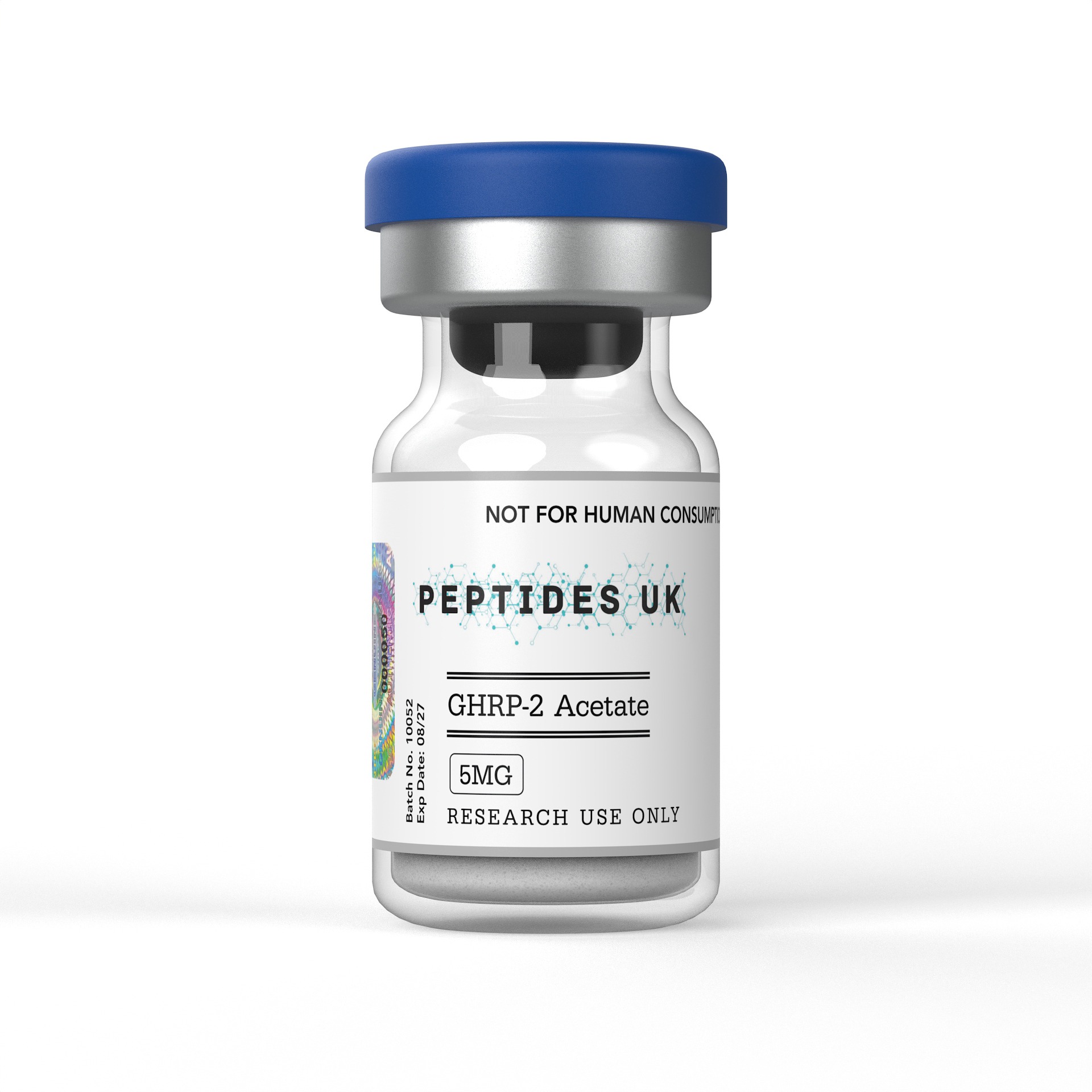
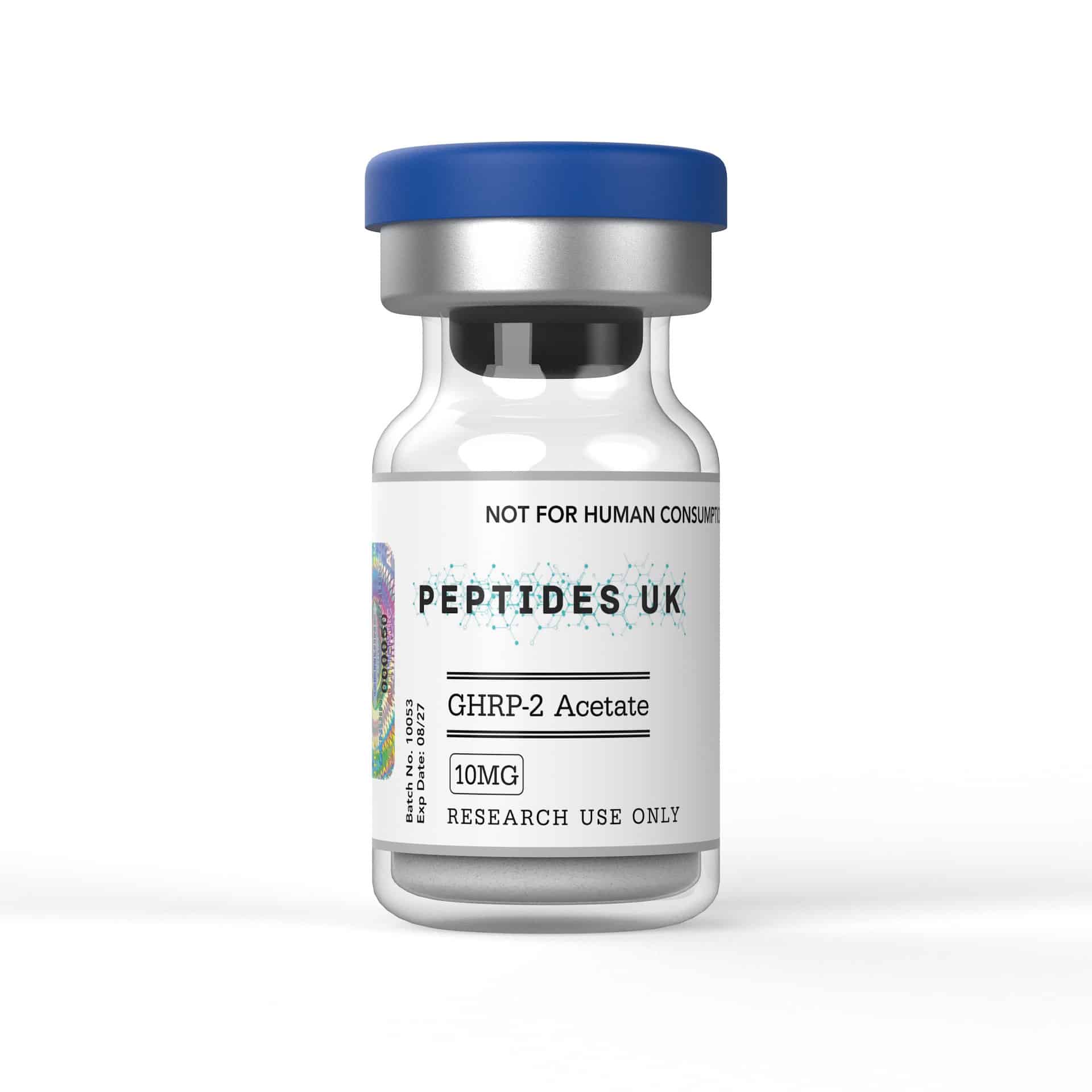
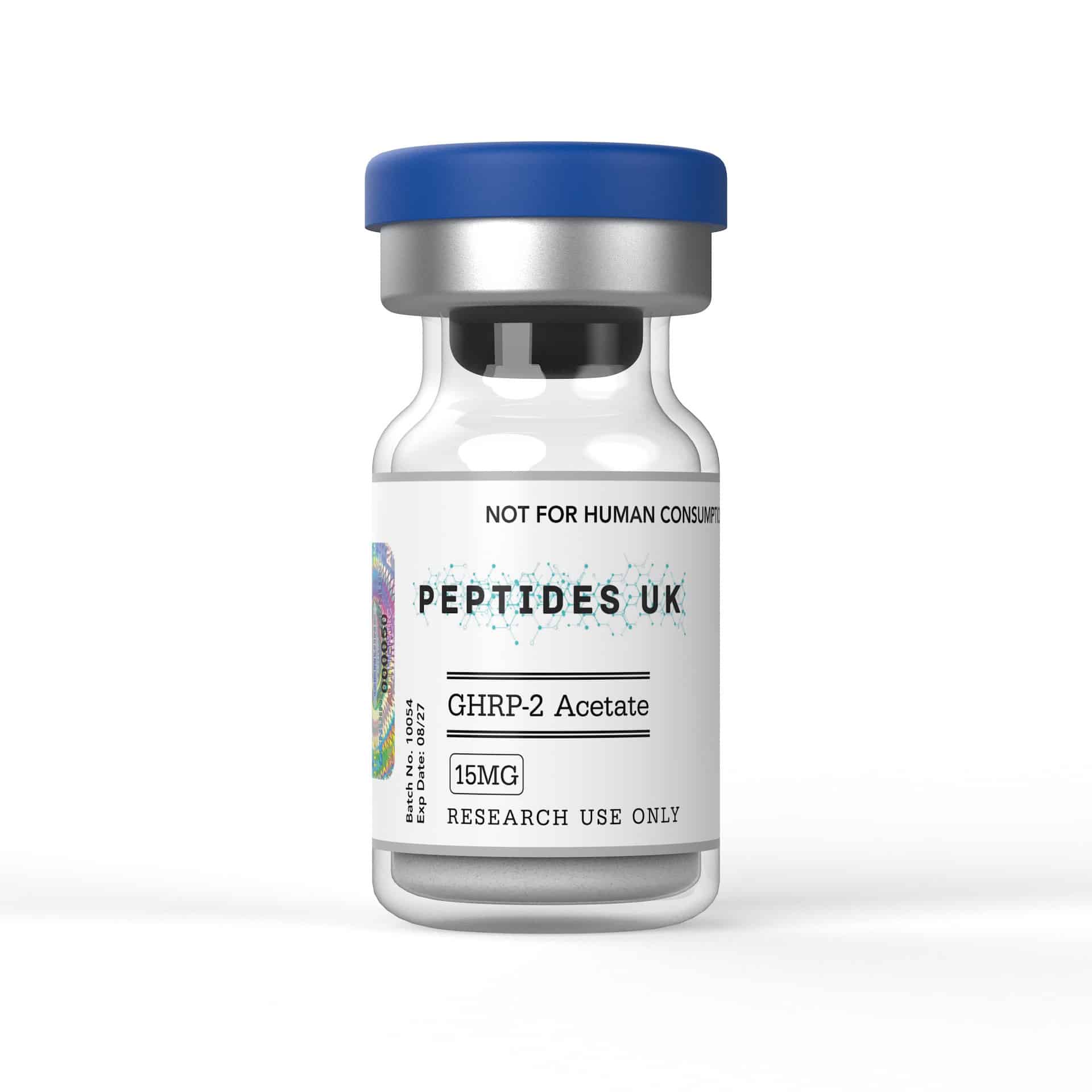
$40.50 – $106.00Price range: $40.50 through $106.00
GHRP-2 Peptide USA – Buy Online | In Stock & Ready to Ship
Buy GHRP-2 in the USA with fast domestic shipping and guaranteed ≥99% purity — fully verified with COA and HPLC documentation. A trusted choice for USA research teams studying growth hormone releasing peptide activity, pituitary stimulation and ghrelin receptor binding pathways, GHRP-2 is available in multiple formats to suit varying project needs. No international delays — just reliable, domestically sourced peptides USA researchers can count on.
For research use only. Not intended for human or veterinary use.

GHRP-2 (Growth Hormone-Releasing Peptide-2) is a synthetic research peptide and the highest-potency canonical hexapeptide in the GHRP family — producing up to three times greater growth hormone release than GHRP-6 in pre-clinical models, and one of the most widely used GH secretagogue reference compounds in research today.
Available for US researchers and institutions with fast domestic dispatch, full batch documentation, and verified ≥99% purity on every vial.
✅ ≥99% Purity — HPLC & Mass Spectrometry Verified
✅ Batch-Specific Certificate of Analysis (CoA) Included
✅ Sterile Lyophilised Powder | GMP Manufactured
✅ Fast Dispatch Across the USA | USA Peptides In Stock
GHRP-2 is a synthetic six-amino acid research peptide developed as a second-generation optimisation of GHRP-6 — the founding compound of the GHRP family. Where GHRP-6 established that a synthetic peptide could stimulate growth hormone release through a non-GHRH pathway, GHRP-2 was designed to do it more potently. The key structural change was replacing D-tryptophan at position 2 with D-β-naphthylalanine (D-β-Nal) — a larger aromatic residue that fits deeper into the GHS-R1a receptor binding pocket, producing significantly greater receptor activation and GH release.
The peptide sequence is D-Ala-D-β-Nal-Ala-Trp-D-Phe-Lys-NH₂, with a molecular weight of 817.99 g/mol (CAS 158861-67-7). It incorporates three D-amino acid residues — more than GHRP-6 — giving it excellent stability against enzymatic breakdown and a plasma half-life of approximately 25–30 minutes following subcutaneous administration.
Like GHRP-6, GHRP-2 acts on two receptors: GHS-R1a, the primary growth hormone secretagogue receptor, and CD36, a scavenger receptor linked to cardiovascular, metabolic, and cytoprotective biology. This dual-receptor profile gives GHRP-2 a research scope broader than pure GH secretion — though its defining characteristic, and the reason most researchers choose it, is its superior GH-releasing potency within the hexapeptide GHRP series.
In laboratory and pre-clinical research settings, GHRP-2 has been studied across a wide range of biological areas:
Growth Hormone Release
GHRP-2 is the highest-potency synthetic hexapeptide GH secretagogue, producing GH peaks within 15–30 minutes of administration across multiple species including rats, pigs, and humans. Pre-clinical comparative studies have documented up to three times greater GH release versus equimolar doses of GHRP-6. Like other GHRP family compounds, it works through a mechanism entirely separate from GHRH — acting on GHS-R1a both at the hypothalamus (stimulating GHRH release and suppressing somatostatin) and directly at pituitary somatotroph cells (triggering GH secretory granule release via calcium mobilisation). When combined with GHRH, GHRP-2 produces a synergistic GH response significantly exceeding either compound alone.
HPA Axis Research
One characteristic that sets GHRP-2 apart within the GHRP family is its well-documented co-stimulation of ACTH and cortisol alongside GH — more pronounced than GHRP-6 and substantially more than ipamorelin. This is mediated through GHS-R1a on pituitary corticotroph cells and hypothalamic CRH neurons. For research specifically examining the relationship between the ghrelin/GHS-R1a system and the HPA stress axis — including stress responsiveness, glucocorticoid biology, and nutritional status signalling — GHRP-2’s reproducible cortisol response makes it the reference compound of choice. For research requiring clean GH pharmacology without HPA axis effects, ipamorelin is the preferred alternative.
IGF-1 and Anabolic Signalling
GHRP-2-driven GH release stimulates hepatic IGF-1 production via JAK2-STAT5 signalling. The downstream IGF-1/Akt/mTOR cascade — involved in muscle protein synthesis, satellite cell activation, and anti-catabolic signalling — is proportionally more activated with GHRP-2 than with GHRP-6 at equivalent doses, reflecting its greater GH output. Research has examined GHRP-2’s anabolic and anti-catabolic effects in sarcopenia models, cancer cachexia, and chemotherapy-associated muscle wasting, with GH/IGF-1 axis restoration identified as the primary mechanism.
Cardiovascular and Cardioprotective Research
GHRP-2 has a well-characterised cardioprotective profile in pre-clinical models — reducing infarct size, attenuating cardiomyocyte apoptosis, improving post-ischaemic ejection fraction, and reducing oxidative stress markers in cardiac I/R models. The mechanism involves both GHS-R1a-mediated calcium channel activation and CD36 signalling in cardiac tissue. Research has also documented GHRP-2-mediated reduction of doxorubicin-induced cardiotoxicity — reducing anthracycline chemotherapy-associated cardiomyopathy and cardiac functional impairment in pre-clinical models.
CD36 and Lipid Metabolism Research
GHRP-2 binds CD36 and shares the scavenger receptor biology characterised more extensively for GHRP-6 and hexarelin — including competitive inhibition of oxLDL binding to macrophage CD36 (relevant to atherosclerosis research), PPARγ-dependent gene expression activation in adipocytes, and promotion of mitochondrial fatty acid oxidation. These CD36-mediated effects are independent of GH release and extend GHRP-2’s research utility into lipid metabolism and cardiovascular disease biology.
Cytoprotection Research
Pre-clinical studies have documented GHRP-2’s protective effects across cardiac, hepatic, renal, and pulmonary tissue in ischaemia-reperfusion models — with the mechanism involving anti-apoptotic Akt/mTOR signalling, antioxidant enzyme upregulation, and suppression of pro-inflammatory cytokines including TNF-α, IL-1β, and IL-6. Hepatoprotection has been specifically characterised, with reduced transaminase elevations and histological necrosis documented in surgically induced hepatic I/R models.
Appetite and Feeding Research
GHRP-2 activates hypothalamic GHS-R1a orexigenic circuits, producing moderate appetite stimulation in pre-clinical models — less pronounced than GHRP-6 but present and measurable. Research has used GHRP-2 to probe arcuate nucleus NPY/AgRP pathway modulation and the interaction between GHS-R1a orexigenic signalling and melanocortin system counter-regulation.
Neuroprotection Research
GHS-R1a expression across the hippocampus, cortex, striatum, and substantia nigra provides a mechanistic basis for GHRP-2’s neuroprotective effects documented in oxidative stress and excitotoxicity models. Studies have examined GHRP-2-mediated hippocampal neuron protection and cognitive function preservation in aged pre-clinical models, with GH/IGF-1 axis restoration and direct GHS-R1a signalling both contributing.
Skeletal Muscle and Sarcopenia Research
Research in aged animal models and cancer cachexia contexts has examined GHRP-2’s ability to preserve lean body mass and muscle protein content — with IGF-1/Akt/mTOR anabolic signalling as the primary mechanism alongside direct GHS-R1a effects on skeletal muscle satellite cells. GHRP-2’s superior GH output relative to GHRP-6 translates into proportionally greater IGF-1 elevation and downstream anabolic signal amplitude in comparative studies.
All applications listed are for pre-clinical and laboratory research use only.
GHRP-2 has more than 30 years of published pre-clinical and clinical research behind it across endocrinology, cardiology, metabolism, and neuroprotection.
On GH release: Human clinical studies confirmed GHRP-2 produces significantly higher GH peaks than GHRP-6 at equivalent doses — establishing it as the preferred hexapeptide where maximum GH pulse amplitude is the research objective. Combined GHRP-2 and GHRH administration consistently produces synergistic GH responses across species, with the mechanism attributed to Gαq/11-calcium (GHRP-2) and Gαs-cAMP-PKA (GHRH) pathway convergence at the pituitary somatotroph.
On HPA axis: Clinical studies consistently documented reproducible and dose-dependent ACTH and cortisol co-elevation alongside GH following GHRP-2 administration — establishing it as the reference hexapeptide for human studies examining ghrelin system-HPA axis interactions, and distinguishing it clearly from the minimal-cortisol profile of ipamorelin.
On cardioprotection: Animal cardiac I/R studies documented significant infarct size reduction, improved post-ischaemic ejection fraction, reduced cardiomyocyte apoptosis, and attenuated oxidative stress following GHRP-2 treatment — with the mechanistic profile consistent with GHS-R1a and CD36 signalling. Doxorubicin cardiotoxicity protection has also been confirmed, establishing overlap with GHRP-6’s well-characterised cardioprotective dataset.
On anabolic biology: Studies in sarcopenic and cachectic animal models confirmed GHRP-2-mediated preservation of lean body mass and muscle protein content — with GH/IGF-1/Akt/mTOR signalling the primary driver and satellite cell activation contributing to muscle regenerative responses.
On cytoprotection: Multi-organ I/R studies confirmed hepatic, renal, and pulmonary protective effects alongside cardiac protection — with anti-apoptotic and anti-inflammatory mechanisms consistent across organ systems and attributable to GHS-R1a and CD36 signalling in each tissue type.
| GHRP-2 | GHRP-6 | Ipamorelin | Hexarelin | |
|---|---|---|---|---|
| GHS-R1a Potency | Highest canonical hexapeptide — up to 3× GHRP-6 | Moderate-strong — original reference | Moderate — highly selective | Highest in class overall |
| CD36 Activity | Yes — confirmed | Yes — anti-fibrotic, wound healing, cardio | Minimal | Yes — prototype CD36 ligand |
| Cortisol Elevation | Moderate-to-significant — most in hexapeptide series | Moderate | Minimal | Significant |
| Appetite Stimulation | Moderate | Strong — most pronounced in class | Minimal | Moderate |
| Half-Life | ~25–30 min | ~20 min | ~2 hours | ~30 min |
| Best For | Maximum GH release / HPA axis research / anabolic biology / highest-potency hexapeptide work | Full-spectrum GHRP research / wound healing / cardioprotection / reference compound | Clean GH pharmacology without HPA confounds | CD36 reference / atherosclerosis / fatty acid metabolism |
| Parameter | Detail |
|---|---|
| Full Name | GHRP-2 (Growth Hormone-Releasing Peptide-2) |
| Sequence | D-Ala-D-β-Nal-Ala-Trp-D-Phe-Lys-NH₂ |
| CAS Number | 158861-67-7 |
| Molecular Formula | C₄₅H₅₅N₉O₆ |
| Molecular Weight | 817.99 g/mol |
| Peptide Length | Hexapeptide (6 amino acids) |
| Primary Receptor | GHS-R1a |
| Secondary Receptor | CD36 |
| Peak GH Response | 15–30 minutes post-administration |
| Plasma Half-Life | ~25–30 minutes |
| Vial Size | 5mg |
| Purity | ≥99% (HPLC & MS Verified) |
| Form | Sterile Lyophilised Powder |
| Solubility | Sterile water, bacteriostatic water, PBS, saline |
| Storage (Powder) | -20°C, protect from light and moisture |
| Storage (Reconstituted) | 2–8°C, use within 28 days (bacteriostatic water) |
| Manufacturing | GMP Manufactured |
Every order of GHRP-2 peptide USA includes full batch documentation:
✅ Batch-Specific Certificate of Analysis (CoA)
✅ HPLC Chromatogram
✅ Mass Spectrometry Confirmation
✅ Sterility & Endotoxin Testing Report
✅ Reconstitution Protocol
✅ Technical Research Support
Can I buy GHRP-2 in the USA?
Yes. We supply research-grade GHRP-2 5mg to researchers and licensed institutions across the United States. All orders ship domestically with full batch documentation included. This compound is supplied strictly for laboratory research use only.
What is GHRP-2 used for in research?
GHRP-2 is used primarily as a high-potency GHS-R1a agonist and growth hormone secretagogue in pre-clinical research. Its research applications include GH secretion biology, HPA axis neuroendocrinology, IGF-1 and anabolic signalling, cardiovascular protection, cytoprotection, sarcopenia and cachexia models, appetite regulation, neuroprotection, and lipid metabolism research. It is the preferred hexapeptide compound where maximum GH-releasing potency is the research priority.
How does GHRP-2 differ from GHRP-6?
Both are synthetic hexapeptide GHS-R1a agonists with dual GHS-R1a and CD36 receptor profiles, but GHRP-2 produces up to three times more GH release than GHRP-6 at equivalent doses — due to its D-β-naphthylalanine residue at position 2, which engages GHS-R1a more deeply than GHRP-6’s D-tryptophan. GHRP-2 also has a more pronounced cortisol co-stimulation. GHRP-6 has stronger appetite stimulation and a more extensive wound healing and anti-fibrotic research dataset through CD36. Choose GHRP-2 for maximum GH output; choose GHRP-6 for broader full-spectrum GHRP biology.
How does GHRP-2 differ from Ipamorelin?
GHRP-2 and ipamorelin both stimulate GH release via GHS-R1a, but differ significantly in selectivity and side effect profile. Ipamorelin produces minimal cortisol, ACTH, or appetite effects — making it the cleanest GH secretagogue for isolated somatotropic research. GHRP-2 produces higher GH peaks with moderate-to-significant cortisol co-stimulation and moderate appetite effects. GHRP-2 is preferred when maximum GH amplitude or HPA axis interaction research is the goal; ipamorelin is preferred when cortisol and appetite confounds need to be minimised.
Why does GHRP-2 combined with GHRH produce synergistic GH release?
GHRH and GHRP-2 act through entirely different intracellular pathways at the pituitary. GHRH activates cAMP/PKA signalling, priming somatotroph cells for secretion, while GHRP-2 activates calcium mobilisation and directly triggers GH secretory granule exocytosis. When both are present together, these pathways converge and produce a GH response greater than either compound achieves alone — synergism rather than simple addition.
What purity should GHRP-2 have for research?
≥98% is the minimum accepted threshold, but ≥99% is strongly recommended for GHS-R1a binding assays, GH secretion experiments, HPA axis studies, cardiovascular models, and in vivo pharmacology work — where impurities such as epimerised D-amino acid variants or truncated sequences can reduce GHS-R1a activation fidelity and compromise the high-potency response that defines GHRP-2. All GHRP-2 supplied for USA researchers is independently verified to ≥99% by HPLC and mass spectrometry.
How do I reconstitute GHRP-2?
Allow the vial to reach room temperature before opening. Add sterile or bacteriostatic water slowly down the vial wall and swirl gently — do not vortex. GHRP-2 dissolves readily in standard aqueous buffers. PBS works well for cell culture applications. Adding 0.1% BSA to working solutions can reduce non-specific adsorption to plasticware at low concentrations. Protect reconstituted solutions from light. With bacteriostatic water, solutions are stable at 2–8°C for up to 28 days. For longer storage, aliquot and freeze at -80°C and avoid repeated freeze-thaw cycles.
GHRP-2 is supplied exclusively for legitimate scientific research purposes conducted within licensed laboratory environments. This product is not intended for human consumption, self-administration, or any therapeutic application. It must be handled by qualified researchers in compliance with all applicable US federal and state regulations and institutional guidelines. By purchasing, you confirm this compound will be used solely for approved in-vitro or pre-clinical research purposes.
WhatsApp us
Receive News