PRODUCTS SOLD ON PEPTIDESLABUSA.COM ARE FOR RESEARCH PURPOSES ONLY AND ARE NOT FOR HUMAN OR VETERINARY USE.
$261.00
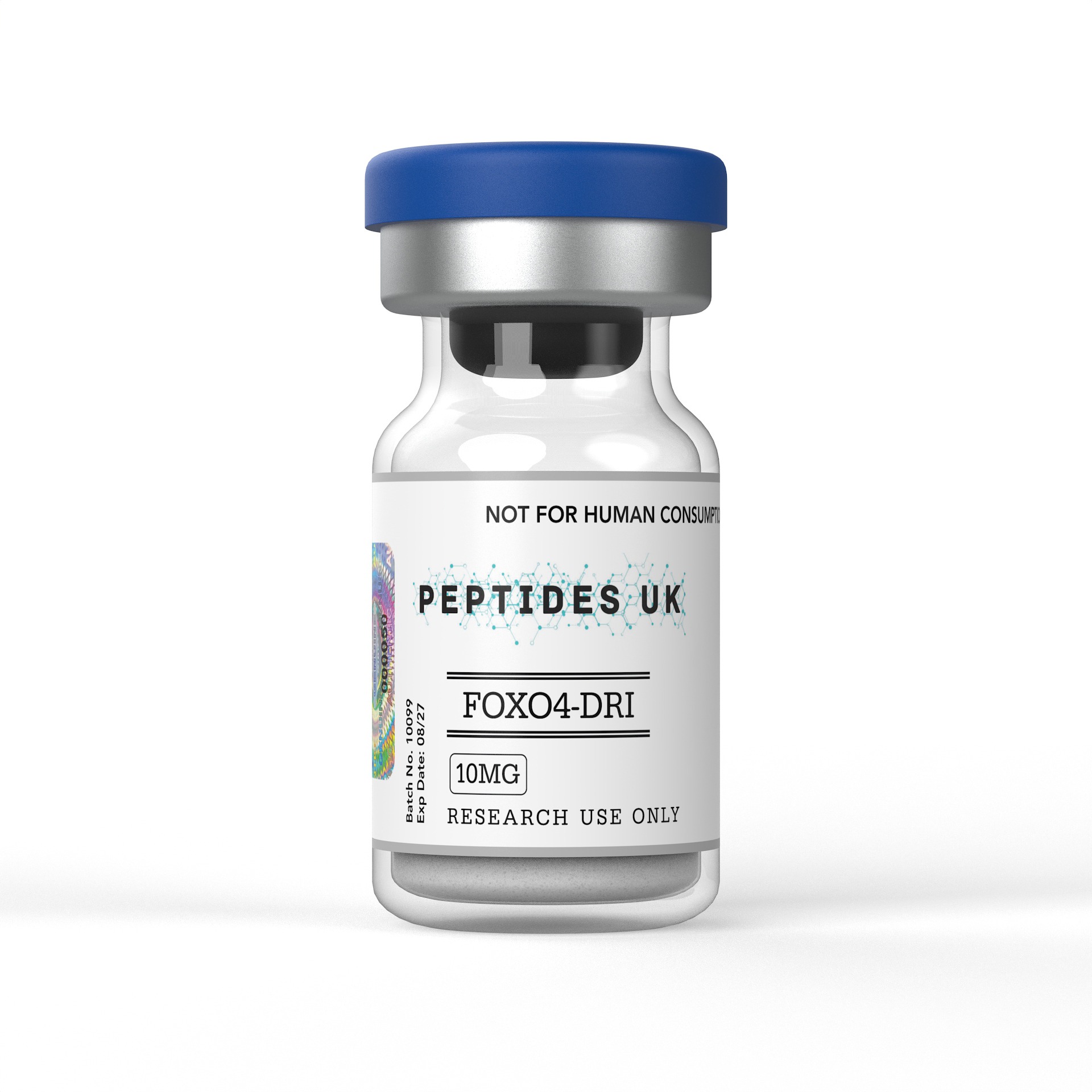
FOXO4-DRI Peptide USA – Buy Online | In Stock & Ready to Ship
Buy FOXO4-DRI in the USA with fast domestic shipping and guaranteed ≥99% purity — fully verified with COA and HPLC documentation. A trusted choice for USA research teams studying senescent cell clearance, apoptosis signaling and cellular rejuvenation pathways, FOXO4-DRI is available in multiple formats to suit varying project needs. No international delays — just reliable, domestically sourced peptides USA researchers can count on.
For research use only. Not intended for human or veterinary use.

FOXO4-DRI is a synthetic D-amino acid retro-inverso peptide designed to interfere with the interaction between the FOXO4 transcription factor and p53, studied extensively across senescence biology, ageing research, cellular apoptosis, and longevity science for its selective induction of apoptosis in senescent cells while leaving healthy non-senescent cells unaffected — making it one of the most targeted and mechanistically precise senolytic research compounds in modern ageing biology and cellular senescence science. Researchers and institutions across the USA can source verified, research-grade FOXO4-DRI with fast domestic dispatch and full batch documentation included.
✅ ≥99% Purity — HPLC & Mass Spectrometry Verified
✅ Batch-Specific Certificate of Analysis (CoA) Included
✅ Sterile Lyophilised Powder | GMP Manufactured
✅ Fast Dispatch Across the USA | USA Peptides In Stock
FOXO4-DRI is a synthetic 18-amino acid peptide constructed entirely from D-amino acids in a retro-inverso configuration — meaning its amino acid sequence is both reversed and composed of the mirror-image D-form rather than the naturally occurring L-form amino acids found in endogenous proteins. This retro-inverso design is a deliberate pharmacological strategy that confers exceptional resistance to proteolytic degradation, dramatically extending the peptide’s stability in biological environments compared to conventional L-amino acid peptides while preserving the peptide’s ability to mimic the structural conformation of its target sequence.
The biological target of FOXO4-DRI is the interaction between FOXO4 — a forkhead transcription factor that plays a central role in senescent cell survival — and p53, the tumour suppressor protein that governs cellular apoptosis decisions. In senescent cells, FOXO4 actively sequesters p53 in the nucleus and prevents it from translocating to the mitochondria to initiate the apoptotic cascade — effectively keeping senescent cells alive despite the accumulated damage and dysfunction that would otherwise trigger cell death. This FOXO4-p53 interaction is a key survival mechanism that allows senescent cells to persist in tissues, secreting pro-inflammatory cytokines and other factors that collectively constitute the Senescence-Associated Secretory Phenotype (SASP) — a major driver of age-related tissue dysfunction and inflammation.
FOXO4-DRI is designed to competitively interfere with this FOXO4-p53 interaction. By mimicking the FOXO4 binding domain that interacts with p53, FOXO4-DRI disrupts the FOXO4-p53 complex — freeing p53 to translocate to mitochondria and initiate the intrinsic apoptotic pathway selectively in senescent cells. The critical research finding that has made FOXO4-DRI one of the most significant senolytic compounds is its observed selectivity — studies have reported that FOXO4-DRI induces apoptosis preferentially in senescent cells while largely sparing healthy, non-senescent cells, attributed to the fact that FOXO4-p53 nuclear co-localisation is a feature specific to senescent cell biology rather than normal cellular physiology.
FOXO4-DRI is one of the most scientifically significant and rapidly growing senolytic peptide research compounds available to buy in the USA, with active demand across ageing biology, longevity research, senescence science, and age-related disease research programs at universities, biotech institutions, and research centres nationwide.
In controlled pre-clinical and laboratory settings, FOXO4-DRI has been studied across a wide range of cellular, biological, and ageing research applications:
Cellular Senescence Research FOXO4-DRI’s primary research application is the study of cellular senescence biology. Researchers use FOXO4-DRI to examine the FOXO4-p53 survival axis in senescent cells, characterise senescent cell populations in tissue models, and study how selective disruption of senescent cell survival signalling affects cellular and tissue biology — making it a foundational tool for mechanistic senescence research.
Senolytic Biology Research FOXO4-DRI is one of the most mechanistically precise senolytic compounds available for research — compounds that selectively eliminate senescent cells. Studies have examined its senolytic activity across multiple senescent cell types, comparing its selectivity profile to other senolytic approaches, and characterising the molecular events between FOXO4-p53 disruption and apoptotic execution in senescent cell models.
FOXO4-p53 Interaction Research A key research application of FOXO4-DRI is studying the molecular interaction between FOXO4 and p53 in senescent cell survival. Research has examined how FOXO4 sequesters p53 in senescent cell nuclei, how FOXO4-DRI competitively disrupts this interaction, and the downstream consequences of p53 liberation for mitochondrial apoptosis pathway activation — contributing mechanistic insight into a novel senescent cell survival axis.
p53 Biology and Apoptosis Research FOXO4-DRI provides a tool for studying p53-mediated apoptosis in the specific context of senescent cell biology. Research has examined how freed p53 initiates the intrinsic mitochondrial apoptotic pathway in senescent cells following FOXO4-DRI treatment — including cytochrome c release, caspase activation, and the molecular events of senescent cell apoptotic execution.
Senescence-Associated Secretory Phenotype (SASP) Research Senescent cells are characterised by the SASP — a pro-inflammatory secretory program involving cytokines, chemokines, and matrix-remodelling factors that drive tissue dysfunction and chronic inflammation. Research has examined how FOXO4-DRI-mediated senescent cell clearance affects SASP marker expression, local inflammatory environments, and tissue-level biology — exploring whether selective senolysis can reduce senescence-driven inflammation in pre-clinical models.
Ageing Biology Research Studies have examined FOXO4-DRI in the context of age-related senescent cell accumulation in pre-clinical ageing models — exploring how selective clearance of senescent cells affects physical parameters, tissue function, organ biology, and healthspan-related markers in aged animal models — making ageing biology one of the most active and high-profile areas of FOXO4-DRI research.
Tissue Regeneration Research Senescent cell accumulation in tissues is associated with impaired regenerative capacity. Research has examined how FOXO4-DRI-mediated senolysis affects tissue repair and regeneration parameters in pre-clinical models — exploring whether clearance of senescent cells from damaged or aged tissues improves regenerative outcomes and stem cell niche biology.
Cancer Biology and Therapy Resistance Research Therapy-induced senescence — where cancer cells enter a senescent state following chemotherapy or radiation rather than undergoing apoptosis — is an active area of oncology research. Studies have examined FOXO4-DRI as a tool for studying therapy-induced senescence and exploring whether senolytic clearance of therapy-senescent cancer cells affects tumour recurrence and treatment resistance biology in pre-clinical cancer models.
Liver Biology Research Pre-clinical studies have examined FOXO4-DRI’s senolytic activity in liver tissue models — exploring how senescent hepatocyte clearance affects liver function parameters, fibrosis markers, and tissue regeneration biology — reflecting research interest in the role of hepatic senescence in age-related liver dysfunction and metabolic disease.
Skin and Dermal Senescence Research Senescent cells accumulate in skin with age, contributing to reduced wound healing capacity and dermal dysfunction. Research has examined FOXO4-DRI in skin biology models, exploring how senescent dermal fibroblast clearance affects skin tissue biology, extracellular matrix composition, and wound healing parameters — an emerging area of senolytic research interest.
Selectivity and Off-Target Research One of the most important ongoing areas of FOXO4-DRI research is characterising its selectivity profile — examining which cell types are susceptible to FOXO4-DRI-induced apoptosis, which are spared, and what molecular features determine differential sensitivity — providing fundamental pharmacological insight into the mechanism underpinning selective senolytic activity.
All applications are for research purposes only. FOXO4-DRI as supplied is not intended for human therapeutic use.
FOXO4-DRI has generated one of the most significant and rapidly cited research profiles in the emerging field of senolytic biology:
Selective Senolytic Activity: The landmark study introducing FOXO4-DRI reported selective induction of apoptosis in senescent cells across multiple senescent cell types while largely sparing non-senescent healthy cells — a finding that established FOXO4-DRI as a mechanistically distinct and highly selective senolytic tool and generated enormous research interest in the FOXO4-p53 axis as a targetable senescent cell survival mechanism.
FOXO4-p53 Mechanism: Research has characterised the molecular mechanism of FOXO4-DRI action — documenting its disruption of FOXO4-p53 nuclear co-localisation, the subsequent cytoplasmic and mitochondrial translocation of freed p53, and the activation of the intrinsic apoptotic cascade in senescent cells — providing mechanistic depth to senolytic biology beyond the broader first-generation senolytic approaches.
Pre-Clinical Ageing Models: Studies in aged mouse models have reported improvements in physical parameters including fitness markers, fur density, and organ biology following FOXO4-DRI treatment — with research documenting selective reduction of senescent cell burden in multiple tissues and corresponding changes in SASP marker expression, generating significant interest in the functional consequences of targeted senolytic intervention in aged pre-clinical models.
Therapy-Induced Senescence: Research has examined FOXO4-DRI’s activity against therapy-induced senescent cancer cells in pre-clinical models — with studies reporting senolytic activity against chemotherapy-senescent tumour cells, contributing to the understanding of how senolytic compounds might be used as research tools to study therapy-induced senescence biology in oncology models.
Retro-Inverso Stability: Studies have confirmed FOXO4-DRI’s exceptional proteolytic stability compared to conventional L-amino acid peptides — documenting its resistance to enzymatic degradation in biological environments, which is attributed to its all-D-amino acid retro-inverso structure, and establishing this as a key pharmacological advantage for in vivo pre-clinical research applications.
SASP Modulation: Research examining FOXO4-DRI’s effects on SASP biology has documented reductions in pro-inflammatory cytokine expression in models where senescent cell burden is reduced following treatment — contributing to the understanding of how targeted senolytic clearance affects the chronic low-grade inflammatory environment associated with senescent cell accumulation in aged tissues.
| Feature | FOXO4-DRI | Navitoclax (ABT-263) | Dasatinib + Quercetin | Piperlongumine |
|---|---|---|---|---|
| Type | Retro-inverso D-peptide senolytic | BCL-2/BCL-XL inhibitor | Kinase inhibitor + flavonoid combination | Natural alkaloid senolytic |
| Mechanism | FOXO4-p53 interaction disruption | BCL-2 family pro-survival protein inhibition | Broad kinase / SASP pathway inhibition | ROS elevation / pro-apoptotic signalling |
| Selectivity | High — targets FOXO4-p53 senescent survival axis | Moderate — also affects platelets and other cells | Moderate — broad pathway effects | Moderate — preferential but not exclusive |
| Proteolytic Stability | Very high — all D-amino acid retro-inverso structure | N/A — small molecule | N/A — small molecules | N/A — natural compound |
| Primary Research Strength | Mechanistically precise FOXO4-p53 senolytic research | BCL-2 family senescence survival research | Broad senolytic combination studies | Natural compound senolytic mechanism research |
| Best For | FOXO4-p53 axis / selective senolysis / ageing biology | BCL-family senescent survival / haematological senescence | Multi-pathway senolytic combination research | Natural senolytic / ROS-mediated apoptosis studies |
| Parameter | Specification |
|---|---|
| Full Name | FOXO4-DRI (FOXO4 D-amino acid Retro-Inverso peptide) |
| Peptide Length | 18 Amino Acids |
| Amino Acid Configuration | All D-amino acids — retro-inverso design |
| Type | Synthetic senolytic peptide — FOXO4-p53 interaction disruptor |
| Mechanism | Competitive disruption of FOXO4-p53 nuclear interaction |
| Purity | ≥99% (HPLC & MS Verified) |
| Form | Sterile Lyophilised Powder |
| Solubility | Sterile water, bacteriostatic water, DMSO |
| Storage (Powder) | -20°C, protect from light |
| Storage (Reconstituted) | 2–8°C, use promptly |
| Manufacturing | GMP Manufactured |
Every order includes full batch documentation:
✅ Batch-Specific Certificate of Analysis (CoA)
✅ HPLC Chromatogram
✅ Mass Spectrometry Confirmation
✅ Sterility & Endotoxin Testing Report
✅ Reconstitution Protocol
✅ Technical Research Support
Can I buy research-grade FOXO4-DRI in the USA? Yes. We supply research-grade FOXO4-DRI to researchers and institutions across the United States. All orders include full batch documentation and are packaged to maintain peptide integrity during transit. This compound is supplied strictly for laboratory research use only.
What does DRI mean in FOXO4-DRI? DRI stands for D-amino acid Retro-Inverso — describing the two key structural features that define this peptide. D-amino acids are the mirror-image forms of the naturally occurring L-amino acids found in endogenous proteins. Retro-inverso refers to the reversal of the peptide’s amino acid sequence combined with the use of D-amino acids — a design strategy that produces a peptide with a similar three-dimensional shape to its target sequence but with dramatically enhanced resistance to proteolytic degradation compared to conventional L-amino acid peptides, making it far more stable in biological environments for pre-clinical research applications.
What is cellular senescence and why is FOXO4-DRI important for senescence research? Cellular senescence is a state of stable, irreversible cell cycle arrest that cells enter in response to various stresses — including DNA damage, oncogene activation, and telomere shortening. While senescence initially serves protective functions, the accumulation of senescent cells in tissues over time is associated with chronic inflammation via the SASP, impaired tissue regeneration, and age-related dysfunction. FOXO4-DRI is important for senescence research because it provides a mechanistically precise tool for selectively eliminating senescent cells by targeting the FOXO4-p53 survival interaction that keeps them alive — allowing researchers to study the consequences of senescent cell clearance on tissue biology, inflammation, and ageing-related parameters in pre-clinical models.
What makes FOXO4-DRI different from other senolytic compounds in research? The key distinction is mechanistic precision and selectivity. First-generation senolytics such as Dasatinib + Quercetin and Navitoclax work through relatively broad pathway inhibition — targeting BCL-2 family proteins or kinase signalling networks that are involved in senescent cell survival but are not exclusively senescence-specific. FOXO4-DRI targets a highly specific molecular interaction — the FOXO4-p53 nuclear co-localisation that is a characteristic feature of senescent cell biology — providing a more mechanistically defined and selective approach to senescent cell research. Additionally, its all-D-amino acid retro-inverso structure gives it exceptional proteolytic stability advantages over conventional peptide research tools.
What purity is required for FOXO4-DRI research? ≥98% is considered research-grade, but ≥99% purity is strongly preferred for senescent cell apoptosis assays, FOXO4-p53 interaction studies, SASP marker research, and ageing biology experiments where compound purity directly affects senolytic activity measurements and experimental accuracy. All FOXO4-DRI supplied for USA researchers is independently verified to ≥99%.
How is FOXO4-DRI reconstituted for lab use? Allow the vial to reach room temperature before opening. FOXO4-DRI can be reconstituted in sterile water or bacteriostatic water — add the solvent slowly down the vial wall and swirl gently without shaking. If aqueous solubility is challenging, DMSO can be used as an initial dissolution vehicle before dilution to working concentration with appropriate aqueous buffer or cell culture media — keep DMSO concentration below 0.1% in final working solutions for cell-based assays to minimise solvent cytotoxicity. Use promptly after reconstitution or aliquot and store at -80°C to preserve peptide activity. Given its all-D-amino acid structure, FOXO4-DRI has exceptional proteolytic stability — but standard peptide storage best practices should still be followed to maintain activity across multiple experimental uses.
FOXO4-DRI is supplied exclusively for legitimate scientific research purposes conducted within licensed laboratory environments. This product is not intended for human consumption, self-administration, or any therapeutic application. It must be handled by qualified researchers in compliance with applicable US federal and state regulations and institutional ethics guidelines. By purchasing, you confirm that this compound will be used solely for approved in-vitro or pre-clinical research purposes.
WhatsApp us
Receive News