PRODUCTS SOLD ON PEPTIDESLABUSA.COM ARE FOR RESEARCH PURPOSES ONLY AND ARE NOT FOR HUMAN OR VETERINARY USE.
$199.50
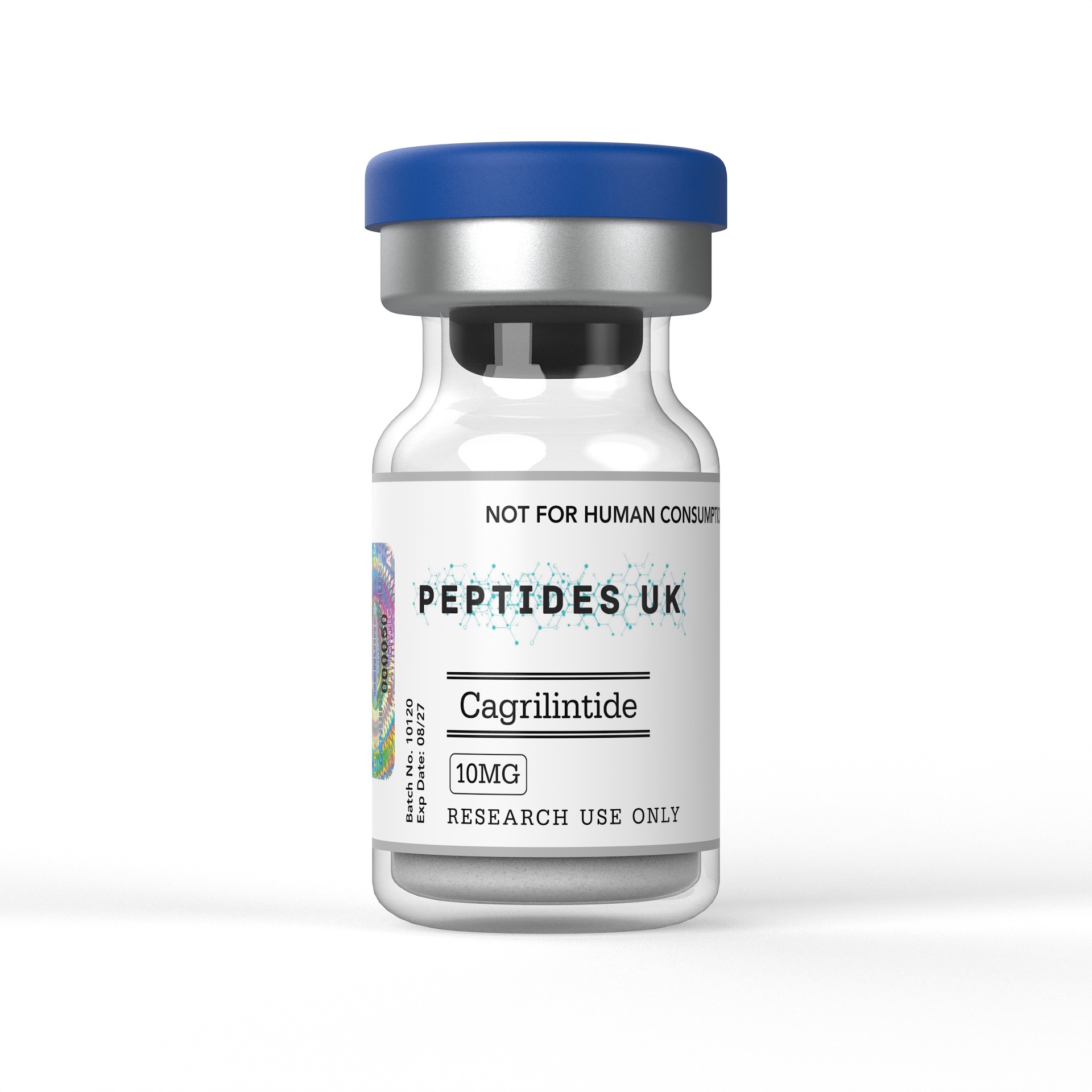
Cagrilintide Peptide USA – Buy Online | In Stock & Ready to Ship
Buy Cagrilintide in the USA with fast domestic shipping and guaranteed ≥99% purity — fully verified with COA and HPLC documentation. A trusted choice for USA research teams studying amylin receptor agonism, appetite suppression and long-acting metabolic regulation pathways, Cagrilintide is available in multiple formats to suit varying project needs. No international delays — just reliable, domestically sourced peptides USA researchers can count on.
For research use only. Not intended for human or veterinary use.

Cagrilintide is a long-acting synthetic analogue of human amylin — a 37-amino acid pancreatic peptide hormone co-secreted with insulin from pancreatic beta cells — studied extensively across metabolic biology, obesity research, appetite regulation science, glucose homeostasis, and cardiovascular metabolic research for its potent and sustained activation of amylin receptors producing profound effects on satiety signalling, gastric emptying, glucagon suppression, and body weight regulation — and for its combinatorial research synergy with GLP-1 receptor agonists, most notably Semaglutide in the CagriSema combination — making it one of the most pharmacologically significant and actively investigated next-generation amylin analogue research compounds in modern metabolic and obesity science. Researchers and institutions across the USA can source verified, research-grade Cagrilintide with fast domestic dispatch and full batch documentation included.
✅ ≥99% Purity — HPLC & Mass Spectrometry Verified
✅ Batch-Specific Certificate of Analysis (CoA) Included
✅ Sterile Lyophilised Powder | GMP Manufactured
✅ Fast Dispatch Across the USA | USA Peptides In Stock
Cagrilintide is a long-acting synthetic amylin analogue developed through multiple structural modifications to the native human amylin (islet amyloid polypeptide / IAPP) sequence — a 37-amino acid peptide hormone produced by pancreatic beta cells and co-secreted with insulin in response to nutrient ingestion. Native amylin acts as a satiety hormone — signalling through amylin receptors (AMY receptors, which are calcitonin receptor / RAMP heterodimers) in the area postrema, nucleus tractus solitarius, and hypothalamus to reduce food intake, slow gastric emptying, suppress postprandial glucagon secretion, and regulate blood glucose excursions following meals. Despite this important physiological role, native human amylin has severe limitations as a research tool — it is highly amyloidogenic (forming toxic amyloid fibrils), has a very short half-life, and is prone to rapid enzymatic degradation.
Cagrilintide overcomes these limitations through a series of engineered structural modifications. The native amylin sequence is modified through amino acid substitutions that eliminate amyloidogenicity — replacing the residues responsible for amyloid fibril formation with proline substitutions and other structural changes that maintain amylin receptor agonist activity while producing a soluble, non-aggregating peptide. An additional key modification is the attachment of a C18 fatty diacid chain via a linker — mirroring the fatty acid acylation strategy used in long-acting GLP-1 analogues such as Semaglutide — enabling tight albumin binding in the circulation that dramatically extends Cagrilintide’s half-life to approximately one week, compared to minutes for native amylin.
The result is a potent, long-acting, non-amyloidogenic amylin receptor agonist with a pharmacological profile ideally suited for sustained pre-clinical metabolic research — activating the full complement of amylin receptor-mediated satiety, glucoregulatory, and body weight regulatory effects with a duration of action that enables once-weekly dosing in research protocols, closely mirroring the extended-action profile of the GLP-1 analogues with which it is most commonly studied in combination.
Cagrilintide’s most distinctive research dimension is its combinatorial biology with GLP-1 receptor agonists — particularly the CagriSema combination with Semaglutide, which has generated exceptional scientific interest due to the complementary and synergistic mechanisms through which amylin receptor activation and GLP-1 receptor activation jointly regulate appetite, energy intake, gastric emptying, and metabolic parameters — producing research outcomes in pre-clinical obesity and metabolic models that substantially exceed those achieved by either compound alone.
As one of the most scientifically significant and pharmacologically advanced amylin analogue research compounds available to buy in the USA, Cagrilintide is actively used across obesity biology, metabolic research, appetite neuroscience, and combination incretin research programs at institutions and biotech research organisations nationwide.
In controlled pre-clinical and laboratory settings, Cagrilintide has been studied across a wide range of metabolic, neurobiological, and cardiometabolic research applications:
Amylin Receptor Pharmacology Research Cagrilintide’s primary research application is as a long-acting amylin receptor agonist for studying AMY receptor biology. AMY receptors are heterodimeric complexes consisting of the calcitonin receptor (CTR) combined with receptor activity-modifying proteins (RAMP1, RAMP2, or RAMP3) — producing AMY1, AMY2, and AMY3 receptor subtypes with distinct expression profiles and pharmacological characteristics. Studies have examined Cagrilintide’s binding affinity across AMY receptor subtypes, downstream cAMP signalling activation, and receptor occupancy dynamics — establishing it as the primary long-acting pharmacological tool for sustained amylin receptor biology research.
Satiety and Appetite Regulation Research Amylin receptors are expressed in key appetite-regulating brain regions including the area postrema, nucleus tractus solitarius, and hypothalamic nuclei. Research has examined how Cagrilintide-driven amylin receptor activation affects satiety signalling, meal termination biology, food intake parameters, and the neurobiological mechanisms of appetite suppression in pre-clinical models — with studies documenting profound and sustained reductions in food intake following Cagrilintide treatment compared to native amylin or vehicle controls.
Gastric Emptying Research Amylin signalling slows gastric emptying — reducing the rate at which nutrients enter the small intestine and blunting postprandial glucose excursions. Research has examined how Cagrilintide’s sustained amylin receptor activation affects gastric emptying rate, nutrient absorption kinetics, and postprandial glucose dynamics in pre-clinical metabolic models — contributing to the understanding of how amylin receptor-mediated gastric motility regulation participates in metabolic control.
Glucagon Suppression Research Amylin suppresses postprandial glucagon secretion from pancreatic alpha cells — reducing hepatic glucose output and contributing to postprandial glucose control independently of insulin. Studies have examined how Cagrilintide affects glucagon secretion dynamics, alpha cell biology, and the glucoregulatory consequences of sustained amylin receptor-mediated glucagon suppression — contributing to the understanding of the amylin-glucagon axis in metabolic regulation research.
Body Weight and Obesity Research Cagrilintide’s sustained amylin receptor activation produces significant and dose-dependent reductions in body weight in pre-clinical obesity models. Research has examined the magnitude, timeline, and mechanisms of Cagrilintide-driven weight reduction — including contributions from reduced caloric intake, changes in energy expenditure, and alterations in body composition — establishing obesity biology as one of the most active and significant research areas for Cagrilintide investigation.
CagriSema Combination Research The most distinctive and scientifically significant research application of Cagrilintide is its combination with Semaglutide — the CagriSema combination — which has generated substantial scientific interest for its complementary dual amylin receptor / GLP-1 receptor biology. Research has examined how simultaneous amylin receptor activation and GLP-1 receptor activation affect satiety signalling, food intake, body weight, glucose metabolism, and metabolic parameters in pre-clinical models — with studies consistently reporting that the combination produces substantially greater effects on body weight and metabolic parameters than either compound alone, suggesting mechanistic synergy between the amylin and GLP-1 receptor pathways.
GLP-1 and Amylin Receptor Synergy Research Studies examining the mechanistic basis of CagriSema synergy have explored how amylin receptor and GLP-1 receptor activation complement each other at the neurobiological level — examining interactions in the brainstem, hypothalamus, and reward circuitry that may explain the additive or synergistic appetite suppression and weight reduction observed in combination protocols, contributing to the understanding of how multiple satiety signalling pathways interact in metabolic regulation.
Glucose Homeostasis Research Cagrilintide affects multiple aspects of glucose homeostasis through amylin receptor-mediated mechanisms — including gastric emptying slowing, glucagon suppression, and central effects on glucose sensing. Research has examined how Cagrilintide influences postprandial glucose excursions, glucose tolerance parameters, and insulin secretion dynamics in pre-clinical metabolic models — establishing glucose metabolism as a key research area within the broader Cagrilintide metabolic biology profile.
Cardiovascular Metabolic Research Emerging research has examined Cagrilintide’s influence on cardiometabolic parameters in pre-clinical models — including effects on blood pressure, lipid metabolism, vascular biology, and cardiac metabolic function — exploring the cardiometabolic dimensions of sustained amylin receptor activation beyond its primary satiety and glucoregulatory effects, reflecting research interest in the cardiovascular implications of next-generation obesity research compounds.
Amyloidogenicity Research The structural modifications that render Cagrilintide non-amyloidogenic — compared to native human amylin which forms toxic amyloid fibrils associated with beta cell damage in type 2 diabetes — have been studied in amyloid biology research contexts. Studies have examined how the proline substitutions and structural modifications in Cagrilintide prevent amyloid fibril formation while maintaining amylin receptor agonist activity — contributing to the understanding of the sequence determinants of amyloid formation in IAPP biology.
Long-Acting Peptide Formulation Research Cagrilintide’s fatty diacid albumin-binding modification strategy has been studied in the context of long-acting peptide formulation science — examining how C18 fatty diacid acylation via linker affects albumin binding kinetics, half-life extension, subcutaneous absorption, and the pharmacokinetic profile of amylin analogues — contributing to the broader understanding of fatty acid acylation as a half-life extension strategy in peptide research.
All applications are for research purposes only. Cagrilintide as supplied is not intended for human therapeutic use.
Cagrilintide has generated a rapidly expanding and scientifically significant research profile in metabolic biology and obesity science:
Amylin Receptor Agonism: Research has characterised Cagrilintide as a potent and selective amylin receptor agonist — documenting its binding profile across AMY1, AMY2, and AMY3 receptor subtypes, its downstream cAMP signalling activation, and its sustained receptor occupancy driven by the albumin-binding fatty diacid modification — establishing it as the most pharmacologically advanced long-acting amylin analogue available for sustained amylin receptor biology research.
Body Weight Reduction: Pre-clinical obesity studies have reported substantial and dose-dependent body weight reductions with Cagrilintide treatment — with research documenting reductions in food intake, body fat mass, and body weight parameters in obese animal models — establishing body weight regulation as the most clinically and scientifically significant outcome of sustained amylin receptor activation in pre-clinical metabolic research.
CagriSema Synergy: Research examining the CagriSema combination has consistently reported that the combination of Cagrilintide and Semaglutide produces substantially greater reductions in body weight and metabolic improvements than either compound alone in pre-clinical models — generating exceptional scientific interest in the mechanistic basis of amylin/GLP-1 receptor synergy and positioning CagriSema combination research as one of the most active and significant areas in contemporary obesity science.
Non-Amyloidogenicity: Studies have confirmed Cagrilintide’s non-amyloidogenic profile — documenting the absence of amyloid fibril formation under physiological conditions compared to native human amylin — validating the structural modification strategy and establishing Cagrilintide as a safe and stable amylin receptor research tool free from the amyloidogenic limitations that confound research with native IAPP.
Extended Half-Life: Pharmacokinetic research has characterised Cagrilintide’s approximately one-week half-life in pre-clinical models — confirming the effectiveness of the fatty diacid albumin-binding modification in dramatically extending the duration of action compared to native amylin, and establishing the once-weekly pharmacokinetic profile that enables sustained amylin receptor research protocols.
Glucoregulatory Effects: Studies have documented Cagrilintide’s glucoregulatory profile — including glucagon suppression, gastric emptying slowing, and postprandial glucose excursion reduction in pre-clinical metabolic models — confirming the full complement of amylin receptor-mediated glucose regulatory effects expected from sustained amylin receptor activation and contributing to the understanding of how amylin biology participates in metabolic regulation.
| Feature | Cagrilintide | Native Amylin (IAPP) | Semaglutide | Tirzepatide |
|---|---|---|---|---|
| Type | Long-acting synthetic amylin analogue | Endogenous pancreatic peptide hormone | Long-acting GLP-1R agonist | Dual GLP-1R/GIPR agonist |
| Receptor Target | AMY1/AMY2/AMY3 (CTR/RAMP heterodimers) | AMY1/AMY2/AMY3 | GLP-1R | GLP-1R + GIPR |
| Half-Life | ~1 week | Minutes | ~7 days | ~5 days |
| Amyloidogenic | No — engineered non-amyloidogenic | Yes — toxic amyloid fibril formation | N/A | N/A |
| Primary Research Mechanism | Sustained amylin receptor activation — satiety / gastric emptying / glucagon suppression | Amylin receptor — acute satiety / glucagon suppression | GLP-1R — insulin secretion / satiety / glucose homeostasis | Dual incretin — GLP-1R + GIPR co-activation |
| Key Research Distinction | Only long-acting non-amyloidogenic amylin agonist / CagriSema combination biology | Reference amylin receptor ligand / amyloidogenicity research | Gold standard GLP-1R agonist / CagriSema combination partner | Most advanced single-agent dual incretin research tool |
| Best For | Amylin receptor sustained pharmacology / obesity / CagriSema combination research | Native amylin biology / IAPP amyloidogenicity studies | GLP-1R pharmacology / glucose metabolism / CagriSema partner | Dual incretin receptor biology / obesity / beta cell research |
| Parameter | Specification |
|---|---|
| Full Name | Cagrilintide (long-acting amylin analogue) |
| Type | Synthetic long-acting amylin receptor agonist |
| Origin | Human amylin (IAPP) sequence — structurally modified |
| Key Modifications | Amyloidogenicity-eliminating substitutions + C18 fatty diacid albumin-binding acylation |
| Receptor Target | AMY1, AMY2, AMY3 (Calcitonin receptor / RAMP heterodimers) |
| Half-Life | ~1 week |
| Amyloidogenic | No |
| Purity | ≥99% (HPLC & MS Verified) |
| Form | Sterile Lyophilised Powder |
| Solubility | Sterile water, bacteriostatic water, PBS |
| Storage (Powder) | -20°C, protect from light |
| Storage (Reconstituted) | 2–8°C, use promptly |
| Manufacturing | GMP Manufactured |
Every order includes full batch documentation:
✅ Batch-Specific Certificate of Analysis (CoA)
✅ HPLC Chromatogram
✅ Mass Spectrometry Confirmation
✅ Sterility & Endotoxin Testing Report
✅ Reconstitution Protocol
✅ Technical Research Support
Can I buy research-grade Cagrilintide in the USA? Yes. We supply research-grade Cagrilintide to researchers and institutions across the United States. All orders include full batch documentation and are packaged to maintain peptide integrity during transit. This compound is supplied strictly for laboratory research use only.
What is Cagrilintide and how does it differ from native amylin? Cagrilintide is a long-acting synthetic analogue of human amylin (IAPP) — engineered through multiple structural modifications to overcome the key limitations of native amylin as a research tool. Native amylin has a very short half-life of only minutes, is highly amyloidogenic (forming toxic amyloid fibrils that damage beta cells), and is prone to rapid enzymatic degradation — all of which severely limit its utility for sustained metabolic research. Cagrilintide addresses these limitations through amino acid substitutions that eliminate amyloidogenicity while maintaining full amylin receptor agonist activity, plus a C18 fatty diacid acylation modification that enables tight albumin binding and extends its half-life to approximately one week — making it a stable, soluble, long-acting, and non-amyloidogenic amylin receptor research tool that native IAPP cannot provide.
What is the CagriSema combination and why is it important in research? CagriSema is the research combination of Cagrilintide and Semaglutide — pairing long-acting amylin receptor activation with long-acting GLP-1 receptor activation in a dual-mechanism metabolic research protocol. Its research importance stems from the observation that combining these two compounds produces substantially greater effects on body weight and metabolic parameters in pre-clinical models than either compound alone — suggesting mechanistic synergy between the amylin receptor and GLP-1 receptor pathways in metabolic regulation. The amylin and GLP-1 receptor systems regulate appetite and energy balance through partially complementary neurobiological mechanisms — with amylin acting primarily through brainstem area postrema circuits and GLP-1 acting through both brainstem and hypothalamic pathways — and their combination appears to engage appetite-regulatory neurobiology more comprehensively than either pathway alone. CagriSema research represents one of the most actively investigated combination approaches in contemporary obesity and metabolic science.
What are amylin receptors and how do they differ from GLP-1 receptors? Amylin receptors (AMY receptors) are heterodimeric receptor complexes consisting of the calcitonin receptor (CTR) combined with receptor activity-modifying proteins (RAMPs) — producing three subtypes: AMY1 (CTR + RAMP1), AMY2 (CTR + RAMP2), and AMY3 (CTR + RAMP3) — with distinct expression profiles across the brain and peripheral tissues. They are structurally and pharmacologically distinct from GLP-1 receptors (GLP-1R), which are single-subunit class B GPCRs. While both receptor systems regulate appetite and energy balance, they do so through partially distinct neuroanatomical circuits and signalling mechanisms — with amylin receptors particularly concentrated in the area postrema and nucleus tractus solitarius of the brainstem, and GLP-1 receptors expressed across both brainstem and hypothalamic appetite-regulatory regions. This neuroanatomical complementarity is considered a key basis for the synergistic effects observed when both receptor systems are simultaneously activated in combination research protocols.
What purity is required for Cagrilintide research? ≥98% is considered research-grade, but ≥99% purity is strongly preferred for amylin receptor binding assays, satiety neurobiology research, metabolic parameter studies, CagriSema combination experiments, and obesity model research where compound purity directly affects receptor activation accuracy and biological activity measurements. All Cagrilintide supplied for USA researchers is independently verified to ≥99%.
How is Cagrilintide reconstituted for lab use? Allow the vial to reach room temperature before opening. Add sterile water, bacteriostatic water, or PBS slowly down the vial wall and swirl gently — do not shake. Cagrilintide’s structural modifications — including the elimination of amyloidogenic sequences — provide good aqueous solubility compared to native amylin, which aggregates readily in solution. Use promptly after reconstitution, or aliquot and store at -80°C to preserve peptide activity across multiple experimental uses. Avoid repeated freeze-thaw cycles to maintain amylin receptor binding activity and peptide integrity.
Cagrilintide is supplied exclusively for legitimate scientific research purposes conducted within licensed laboratory environments. This product is not intended for human consumption, self-administration, or any therapeutic application. It must be handled by qualified researchers in compliance with applicable US federal and state regulations and institutional ethics guidelines. By purchasing, you confirm that this compound will be used solely for approved in-vitro or pre-clinical research purposes.
WhatsApp us
Receive News