PRODUCTS SOLD ON PEPTIDESLABUSA.COM ARE FOR RESEARCH PURPOSES ONLY AND ARE NOT FOR HUMAN OR VETERINARY USE.
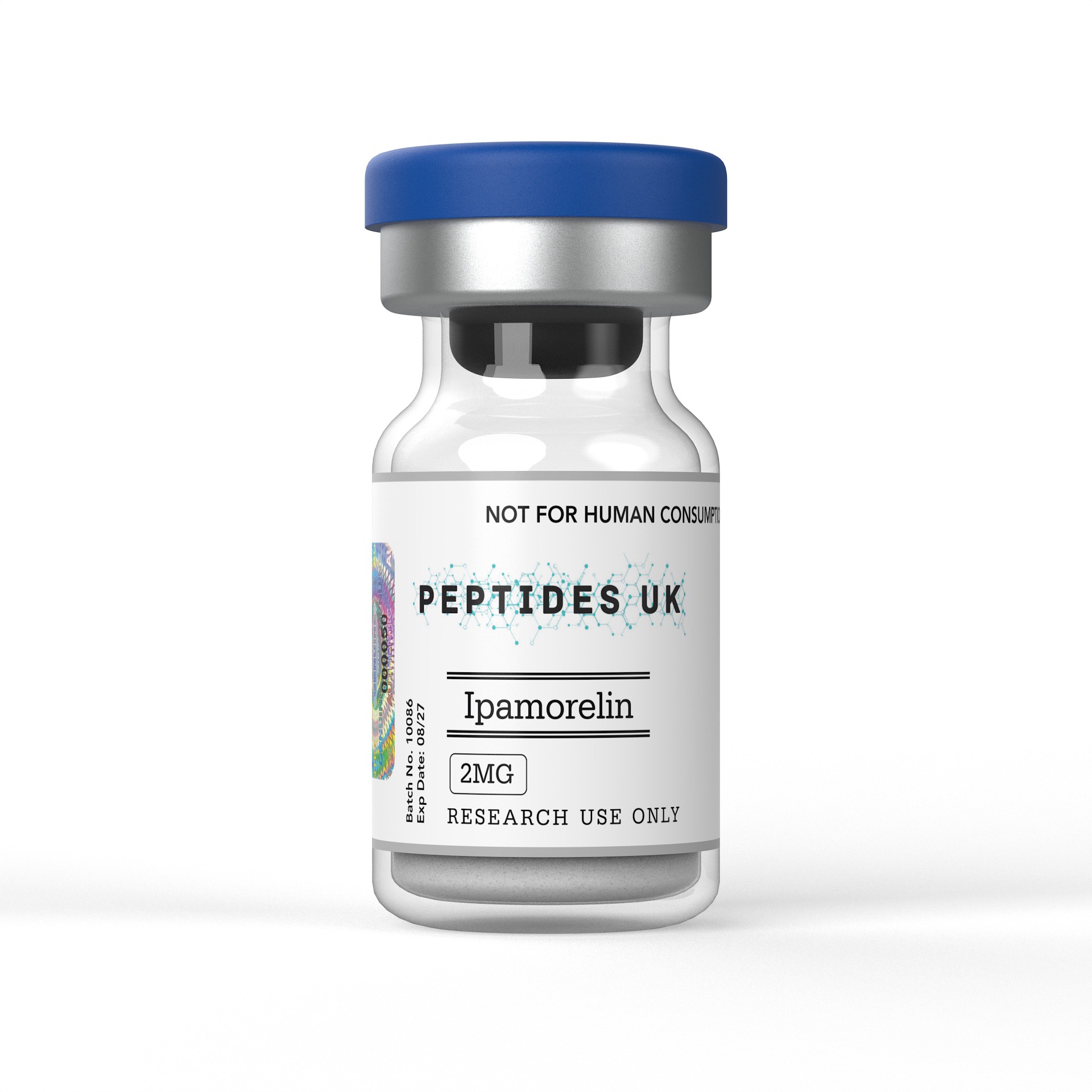
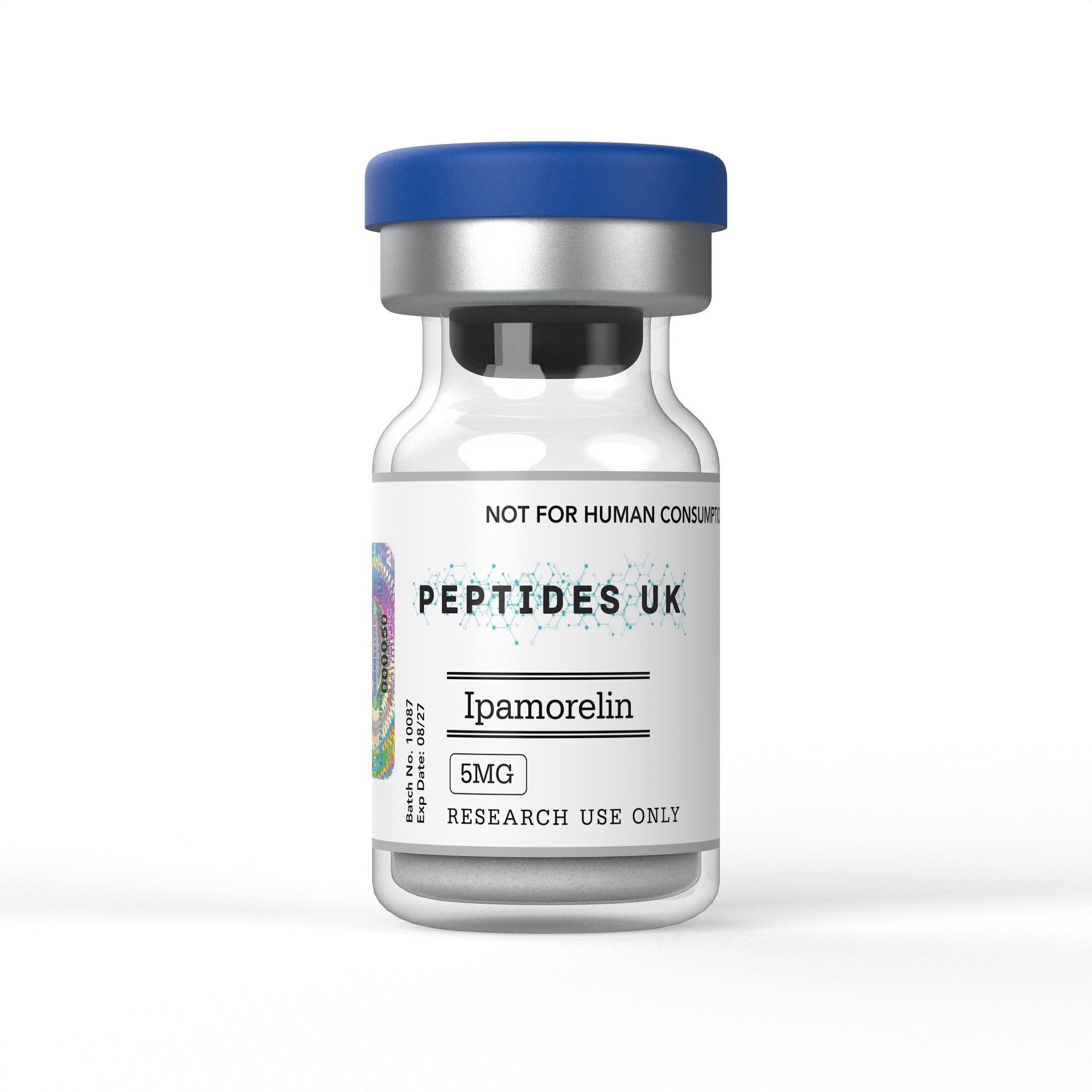
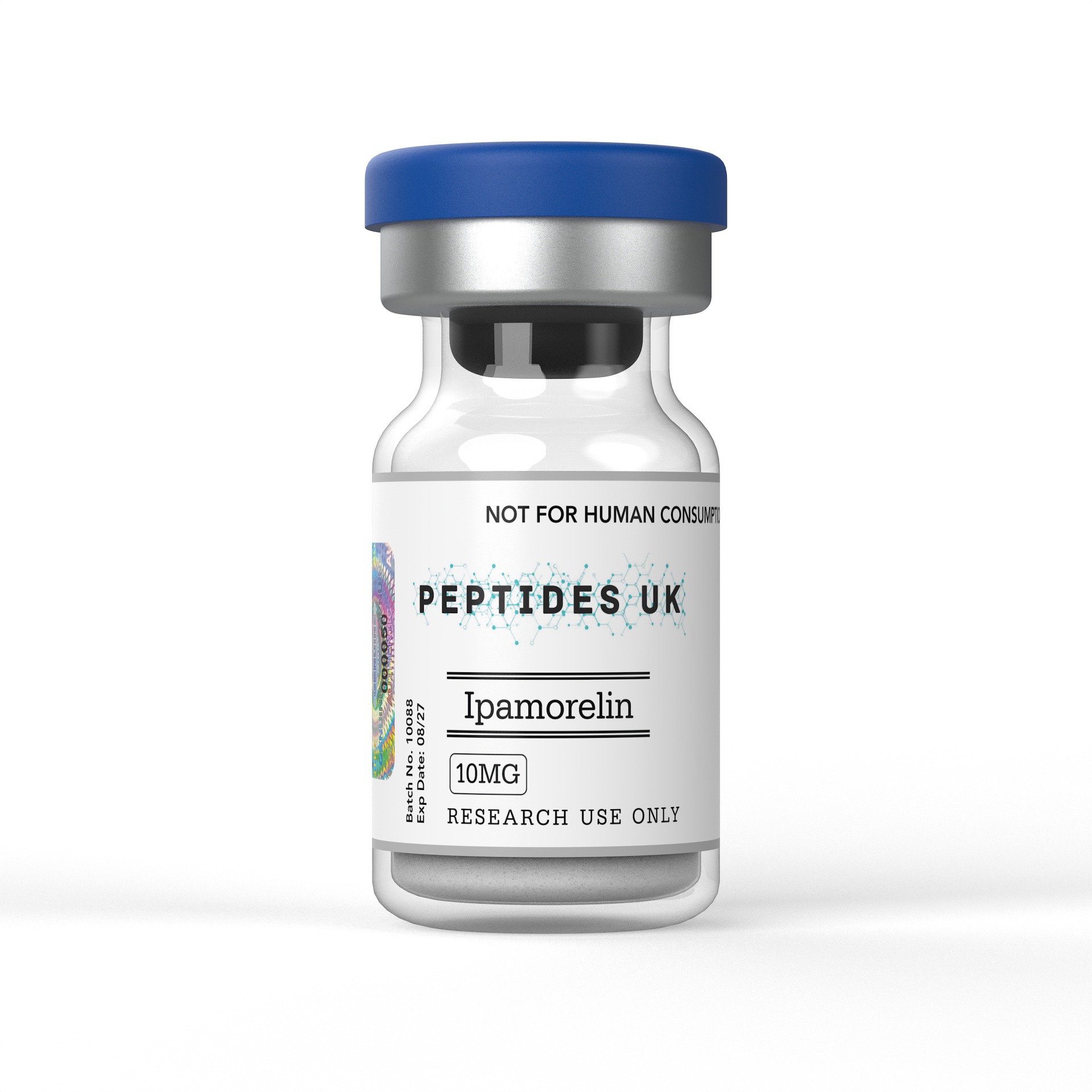
$29.50 – $107.00Price range: $29.50 through $107.00
Ipamorelin Peptide USA – Buy Online | In Stock & Ready to Ship
Buy Ipamorelin in the USA with fast domestic shipping and guaranteed ≥99% purity — fully verified with COA and HPLC documentation. A trusted choice for USA research teams studying growth hormone secretion, ghrelin receptor activity and pulsatile GH release pathways, Ipamorelin is available in multiple formats to suit varying project needs. No international delays — just reliable, domestically sourced peptides USA researchers can count on.
For research use only. Not intended for human or veterinary use.

Ipamorelin is a synthetic pentapeptide and selective growth hormone secretagogue receptor (GHS-R) agonist — the first GHRP-receptor agonist identified with a selectivity for GH release comparable to endogenous GHRH — studied for its highly specific stimulation of pituitary growth hormone release without activating cortisol, ACTH, prolactin, or other secondary hormone pathways, making it one of the most widely researched GH secretagogues available in the USA today.
Researchers, labs, and institutions across the United States can source verified, research-grade Ipamorelin with fast dispatch, full documentation, and third-party verified purity.
✅ ≥99% Purity — HPLC & Mass Spectrometry Verified
✅ Batch-Specific Certificate of Analysis (CoA) Included
✅ Third-Party Tested | GMP Manufactured
✅ Fast Dispatch to USA — Tracked Shipping Available
Ipamorelin is a synthetic pentapeptide with the amino acid sequence Aib-His-D-2-Nal-D-Phe-Lys-NH₂, originally developed by Novo Nordisk through a major medicinal chemistry program in the late 1990s. It belongs to the class of growth hormone-releasing peptides (GHRPs) — synthetic peptides that stimulate growth hormone secretion by binding to the growth hormone secretagogue receptor (GHS-R1a), the same receptor that is natively activated by the hunger hormone ghrelin.
Ipamorelin emerged from a systematic effort to improve upon earlier GHRPs — specifically GHRP-1, GHRP-2, and GHRP-6 — which stimulated GH release effectively but also activated secondary hormone pathways including cortisol, ACTH, and prolactin. By redesigning the peptide sequence to remove the central Ala-Trp dipeptide from GHRP-1, researchers at Novo Nordisk identified ipamorelin as a compound with GH-releasing potency and efficacy comparable to GHRP-6, but with a dramatically cleaner hormone selectivity profile — making it, at the time of its 1998 publication in the European Journal of Endocrinology, the first GHRP-receptor agonist to achieve a GH release selectivity comparable to that of endogenous growth hormone-releasing hormone (GHRH).
Unlike GHRH analogues (such as sermorelin or CJC-1295), which mimic the hypothalamic peptide GHRH and act on the GHRH receptor, ipamorelin acts on an entirely separate receptor — the GHS-R1a (ghrelin receptor) — through a distinct intracellular signaling mechanism. This mechanistic difference makes ipamorelin a complementary tool to GHRH analogues in research, and the ipamorelin + CJC-1295 combination is among the most studied dual GH secretagogue pairings in USA-based research programs.
Ipamorelin is a research compound only and is not approved by the FDA for human therapeutic use.
In research settings, ipamorelin is studied as a highly selective GHS-R1a agonist for interrogating GH secretagogue signaling, somatotropic axis regulation, and downstream growth hormone effects across multiple tissue types. Studies have explored its role in:
Ipamorelin is a research compound only and is not approved for human therapeutic use in the United States.
Ipamorelin’s research body spans its foundational 1998 pharmacological characterization through to randomized clinical trial data in postoperative ileus — one of the broadest translational research profiles of any GHRP in the USA peptide research catalog.
Foundational Selectivity Research — European Journal of Endocrinology (1998) The defining publication on ipamorelin — Raun et al., European Journal of Endocrinology, 1998 — established that ipamorelin released GH from primary rat pituitary cells with potency and efficacy similar to GHRP-6, with an EC₅₀ of 1.3 ± 0.4 nmol/L and an Emax of 85 ± 5%. In conscious swine, GH was released with an ED50 of 2.3 ± 0.03 nmol/kg and an Emax of 65 ± 0.2 ng GH/mL plasma — comparable to GHRP-6. Critically, neither ACTH nor cortisol plasma levels were significantly elevated following ipamorelin administration, even at doses more than 200-fold higher than the ED50 for GH release. This clean selectivity profile — matching GHRH for hormone specificity while using an entirely different receptor mechanism — was the finding that established ipamorelin as the most selective GHRP identified at the time and the primary reference compound for GHS-R1a agonism research.
Postoperative Ileus — Randomized Clinical Trial Data Ipamorelin is the only pentapeptide GHRP to have undergone randomized, controlled clinical trials in humans for a specific indication. A prospective, randomized, controlled proof-of-concept study published in the International Journal of Colorectal Disease examined ipamorelin for the management of postoperative ileus (POI) following bowel resection surgery. GI motility restoration is dependent in part on GHS-R1a signaling in the gut, and ipamorelin’s activation of this receptor was studied for its ability to accelerate GI tract recovery. The trial demonstrated ipamorelin’s ability to improve gastrointestinal recovery endpoints compared to placebo — contributing to the most clinically advanced translational research data set for any GHRP compound. This POI research remains the most significant human clinical data available for ipamorelin.
Bone Biology Research A study published in the Journal of Endocrinology examined the effects of ipamorelin and GHRP-6 on bone mineral content in adult female rats. Ipamorelin treatment was associated with increased bone mineral content compared to controls — findings attributed to GHS-R1a-mediated GH/IGF-1 elevation and downstream effects on bone formation markers. These findings position ipamorelin as a relevant research tool in skeletal biology studies alongside its more commonly studied metabolic applications.
Gastrointestinal Motility Research — Preclinical Models Greenwood-Van Meerveld et al. examined ipamorelin’s effects in rodent models with induced postoperative ileus, finding a dose-dependent improvement in gastric emptying that reversed POI-induced delayed GI transit compared to controls. GHS-R1a expression throughout the enteric nervous system and GI smooth muscle provides the mechanistic basis for these effects — making ipamorelin one of the few research peptides with a well-characterized research profile spanning both pituitary endocrine and GI motility biology.
Synergistic GH Release — Ipamorelin + CJC-1295 Research The combination of ipamorelin (GHS-R1a agonist) with CJC-1295 (GHRH receptor agonist) activates two independent receptor systems in the pituitary, producing synergistic GH release that exceeds either compound administered alone. Research has characterized this combination as the most pharmacodynamically efficient dual GH secretagogue protocol available for studying somatotropic axis stimulation in research models — with GH pulse amplitudes reported to exceed those achieved with either compound alone by a significant margin. This combination pairing is one of the most actively searched research peptide topics in the USA.
Body Composition and Metabolic Research Review A PMC-indexed review published in Translational Andrology and Urology examined the role of GHS in the management of body composition in hypogonadal and eugonadal males with metabolic syndrome. The review identified ipamorelin as a selective GHS-R1a agonist with a favorable safety profile and cited evidence that GH secretagogues as a class can increase serum GH and IGF-1 levels to those observed with recombinant GH therapy, with comparable reported effects on fat mass and lean mass in research models — while demonstrating none of the adverse side effects or regulatory concerns associated with exogenous GH administration. The authors noted that clinical evidence for GHS in body composition management remains limited, with most data derived from small-scale, short-term studies.
All referenced findings are from pre-clinical studies or clinical research. Ipamorelin is not approved for human therapeutic use in the United States.
When you buy Ipamorelin in the USA through our platform, every order includes:
We supply USA research peptides to licensed researchers, universities, and institutions — with cold-chain compliant packaging designed to maintain peptide integrity throughout transit.
| Parameter | Specification |
|---|---|
| Purity | ≥99% (HPLC & MS Verified) |
| Sequence | Aib-His-D-2-Nal-D-Phe-Lys-NH₂ |
| Classification | Pentapeptide GHS-R1a (ghrelin receptor) agonist |
| Amino Acids | 5 |
| Molecular Weight | 711.87 g/mol |
| Developed By | Novo Nordisk (1990s) |
| GH Release Selectivity | Yes — ACTH/cortisol not significantly elevated |
| GH Release ED50 (swine) | 2.3 ± 0.03 nmol/kg |
| Form | White Lyophilized Powder |
| Solubility | Sterile water / 0.1% acetic acid |
| Storage (powder) | -20°C, stable 24+ months |
| Storage (reconstituted) | 2–8°C, use within 2–4 weeks |
| Available Sizes | 2mg |
Allow the vial to reach room temperature before opening. Add sterile water or 0.1% acetic acid slowly down the inside wall of the vial and swirl gently — do not shake. A typical working concentration is 1–2 mg/mL. Aliquot and store at -80°C for longer-term stability. Avoid repeated freeze-thaw cycles to preserve peptide activity.
| Feature | Ipamorelin | CJC-1295 | GHRP-6 | Sermorelin |
|---|---|---|---|---|
| Receptor Target | GHS-R1a (ghrelin receptor) | GHRH receptor | GHS-R1a | GHRH receptor |
| Peptide Length | 5 amino acids | 30 amino acids (modified) | 6 amino acids | 29 amino acids |
| ACTH/Cortisol Elevation | No (clean profile) | No | Yes | No |
| GH Release Selectivity | Highest in GHRP class | High | Moderate | High |
| Appetite Stimulation | Minimal | No | Yes (via ghrelin pathway) | No |
| Synergistic Pairing | Yes (with CJC-1295) | Yes (with ipamorelin) | Limited | Limited |
| GI Motility Research | Yes (POI clinical trial) | No | Limited | No |
| Bone Biology Research | Yes | Limited | No | Limited |
| Human Clinical Trials | Yes (POI) | Limited | No | Yes (GHD) |
Can I buy Ipamorelin in the USA? Yes. We supply research-grade Ipamorelin with fast tracked dispatch across the United States for licensed laboratory research use. All orders include full purity documentation and integrity-maintained packaging.
What is a growth hormone secretagogue? A growth hormone secretagogue (GHS) is a compound that stimulates the pituitary gland to release endogenous growth hormone — either by mimicking GHRH at the GHRH receptor, or by mimicking ghrelin at the GHS-R1a receptor. Ipamorelin belongs to the second category — it acts on the ghrelin receptor to trigger pituitary GH release without directly supplying exogenous GH. This is mechanistically distinct from growth hormone therapy (which provides exogenous HGH) and is studied specifically for its ability to stimulate the body’s own GH secretion axis through receptor-level signaling.
What is the difference between Ipamorelin and CJC-1295? Ipamorelin and CJC-1295 act through different receptors and are mechanistically complementary. Ipamorelin activates GHS-R1a (the ghrelin receptor) in the pituitary, increasing GH pulse amplitude. CJC-1295 activates the GHRH receptor, extending the duration of GH release and amplifying the basal secretion pattern. When used together in research, the two compounds produce synergistic GH release that exceeds either compound alone — making the ipamorelin + CJC-1295 combination one of the most studied dual GH secretagogue pairings in USA-based GH axis research.
Why is Ipamorelin considered more selective than other GHRPs? Most earlier GHRPs — including GHRP-2 and GHRP-6 — stimulate GH release effectively but also elevate ACTH and cortisol, which confounds research experiments studying GH-specific effects. Ipamorelin does not significantly raise ACTH or cortisol even at doses more than 200 times its GH-releasing threshold — a finding confirmed in the landmark 1998 European Journal of Endocrinology publication. This clean hormonal selectivity profile allows researchers to study GHS-R1a-mediated GH release in isolation, without the secondary glucocorticoid signaling that complicates results with other GHRPs.
Is Ipamorelin the same as ghrelin? No. Ipamorelin is a synthetic pentapeptide that activates the same receptor as ghrelin — GHS-R1a — but it is structurally distinct from ghrelin and produces a more selective pharmacological response. Ghrelin is a 28-amino acid acylated peptide that promotes both GH release and appetite stimulation through broad GHS-R1a activation. Ipamorelin activates GHS-R1a with greater selectivity for GH release and with minimal appetite-stimulating effects compared to ghrelin or GHRP-6 — making it a more precise research tool for GH axis studies where appetite pathway activation is an unwanted variable.
Is Ipamorelin banned in sports? Yes. Ipamorelin and all growth hormone secretagogues are prohibited under WADA regulations as peptide hormones and releasing factors. This product is supplied exclusively for licensed laboratory research use and is not provided for any sporting, performance enhancement, or non-research purpose.
What purity level should research-grade Ipamorelin be? ≥98% is the accepted minimum for research-grade GH secretagogue peptides, though ≥99% is preferred for GHS-R1a binding assays, pituitary cell culture studies, and in vivo GH release experiments. All of our USA research peptides — including Ipamorelin — are HPLC and mass spectrometry verified to ≥99%.
How quickly is Ipamorelin delivered in the USA? Orders are dispatched promptly with tracked shipping. Most USA orders arrive within 3–5 business days.
Where can I find Ipamorelin for sale in the USA? We offer research-grade Ipamorelin for sale in the USA exclusively for licensed laboratory research use, with full documentation and verified purity included as standard with every order.
Research Disclaimer: Ipamorelin is supplied exclusively for legitimate scientific research purposes in licensed laboratory environments. This product is not FDA-approved and is not intended for human consumption, self-administration, performance enhancement, or therapeutic use of any kind. Ipamorelin and all growth hormone secretagogues are prohibited in competitive sport under WADA regulations. It must be handled by qualified researchers in accordance with all applicable US federal and state regulations and institutional ethics guidelines. By purchasing, you confirm that this compound will be used solely for approved in-vitro or pre-clinical research.
WhatsApp us
Receive News