PRODUCTS SOLD ON PEPTIDESLABUSA.COM ARE FOR RESEARCH PURPOSES ONLY AND ARE NOT FOR HUMAN OR VETERINARY USE.
$174.00 Original price was: $174.00.$119.00Current price is: $119.00.
Glow Stack USA – Buy Online | In Stock & Ready to Ship
Buy Glow Stack — combining TB-500 and BPC-157 — in the USA with fast domestic shipping and guaranteed ≥99% purity — fully verified with COA and HPLC documentation. A trusted choice for USA research teams studying tissue repair, collagen synthesis and cellular regeneration, Glow Stack is available in multiple formats to suit varying project needs. No international delays — just reliable, domestically sourced peptides USA researchers can count on.
For research use only. Not intended for human or veterinary use.

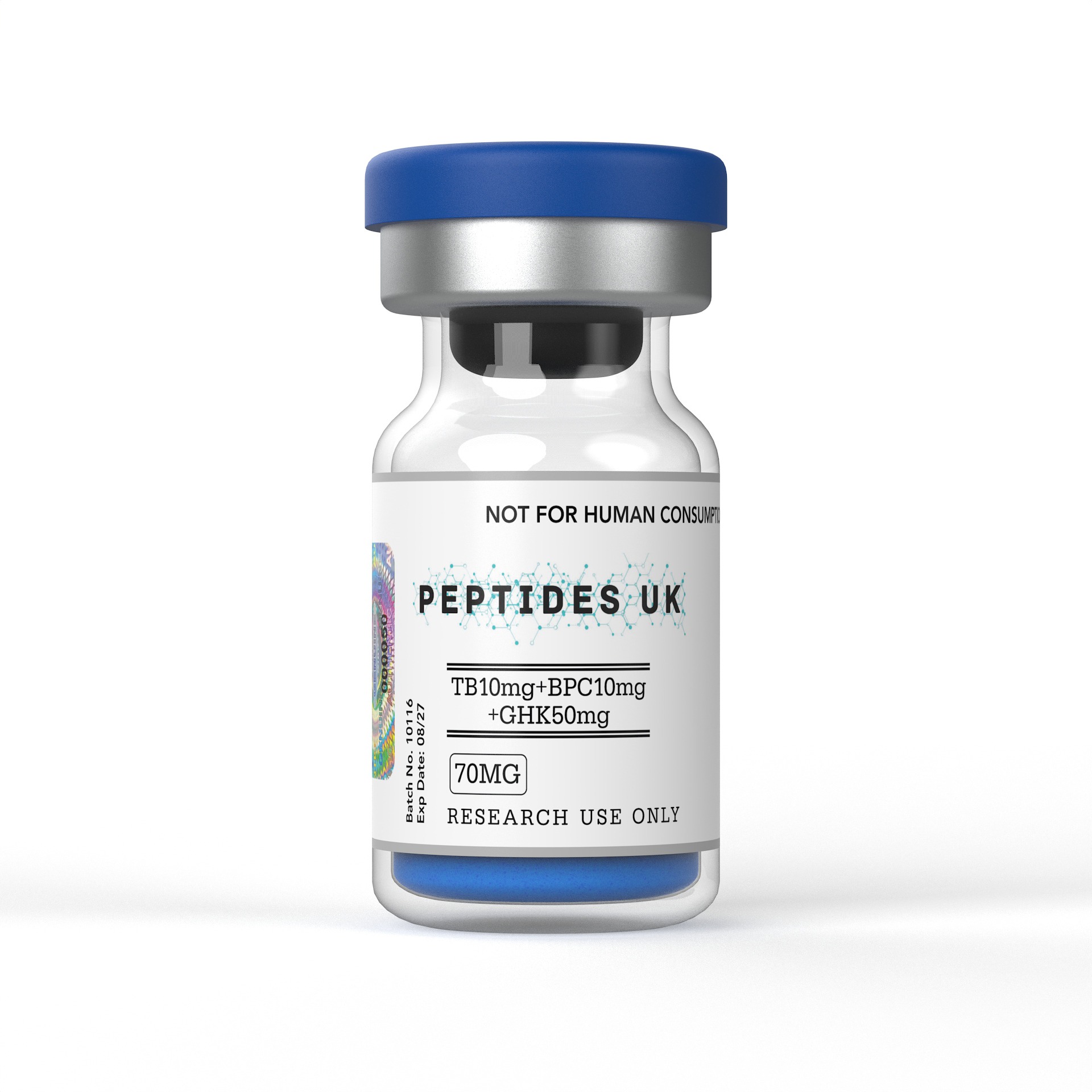
The Glow Stack is a three-peptide research bundle combining TB-500, BPC-157, and GHK-Cu — each studied independently for tissue repair, angiogenesis, and cellular regeneration — making it one of the most researched multi-peptide combinations available in the USA today.
Researchers, labs, and institutions across the United States can source the complete Glow Stack bundle with fast dispatch, full documentation, and third-party verified purity across all three compounds.
✅ ≥99% Purity — HPLC & Mass Spectrometry Verified
✅ Batch-Specific Certificate of Analysis (CoA) for Each Peptide
✅ Third-Party Tested | GMP Manufactured
✅ Fast Dispatch to USA — Tracked Shipping Available
The Glow Stack is a curated research bundle that brings together three of the most studied peptides in regenerative biology: TB-500 (a synthetic fragment of Thymosin Beta-4), BPC-157 (a 15-amino acid peptide derived from gastric juice), and GHK-Cu (a naturally occurring copper-binding tripeptide). Each compound targets a distinct but complementary set of molecular pathways involved in tissue repair, inflammation modulation, extracellular matrix remodeling, and angiogenesis.
The rationale behind studying these three peptides together lies in their non-overlapping mechanisms. Rather than duplicating each other’s effects, TB-500, BPC-157, and GHK-Cu are proposed to address different rate-limiting steps in the repair and regeneration process — making the combination a widely used multi-pathway research model in the USA peptide research community.
All three compounds are research tools only and are not approved for human therapeutic use.
TB-500 is a synthetic peptide fragment derived from Thymosin Beta-4 (Tβ4) — an endogenous protein naturally upregulated in response to tissue injury. TB-500 contains the key actin-binding domain of Tβ4, making it the primary active segment studied in regenerative research.
In research settings, TB-500 has been studied for its role in:
BPC-157 (Body Protection Compound-157) is a 15-amino acid pentadecapeptide originally derived from a cytoprotective protein found in human gastric juice. It is notable for its stability in biological environments and its broad distribution across tissues following administration in research models.
In research settings, BPC-157 has been studied for its role in:
GHK-Cu (Glycyl-L-histidyl-L-lysine copper) is a naturally occurring copper-binding tripeptide found in human plasma, saliva, and urine. Its plasma concentration is known to decline significantly with age — from approximately 200 ng/mL in young adults to below 80 ng/mL by age 60 — making it a key subject in aging and regenerative biology research.
In research settings, GHK-Cu has been studied for its role in:
Research examining the scientific rationale for combining TB-500, BPC-157, and GHK-Cu highlights the complementary — rather than redundant — nature of their mechanisms:
Synergistic Angiogenesis Research
Both TB-500 and GHK-Cu promote angiogenesis through distinct pathways — TB-500 via endothelial cell migration and actin dynamics, GHK-Cu via MMP regulation and capillary growth. BPC-157 adds VEGF-mediated vascular signaling to this picture. Together, studies propose the three compounds target different aspects of new vessel formation, providing broader angiogenic coverage than any single compound.
Multi-Stage Tissue Repair Modeling
Preclinical literature suggests the three peptides map to different phases of the repair process: BPC-157 is associated with early-phase vascular and cellular repair signaling; TB-500 supports cellular migration and structural reorganization in intermediate phases; GHK-Cu contributes to extracellular matrix remodeling, collagen quality, and oxidative stress management in later-stage tissue maintenance. This multi-stage coverage makes the combination a practical model for researchers studying the full arc of tissue repair biology.
Wound Healing and Dermal Research
The Glow Stack has been studied in preclinical skin and dermal repair models. GHK-Cu’s well-established role in fibroblast activation and collagen synthesis, combined with TB-500’s promotion of keratinocyte and endothelial cell migration and BPC-157’s vascular repair signaling, creates a multi-pathway model for wound closure and barrier restoration research.
Musculoskeletal and Connective Tissue Research
In tendon and connective tissue models, the combination has been examined for its potential to address multiple rate-limiting steps in repair — cellular recruitment (TB-500), fibroblast activity and granulation tissue formation (BPC-157), and matrix quality and remodeling (GHK-Cu). Published PMC reviews on therapeutic peptides in orthopaedics specifically highlight all three compounds as tools for studying angiogenesis, ECM remodeling, and fibroblast activation.
Anti-Inflammatory and Antioxidant Research
All three peptides have demonstrated anti-inflammatory properties in independent studies. TB-500 and BPC-157 both modulate cytokine signaling; GHK-Cu targets oxidative stress and inflammatory gene expression. Research suggests the combination addresses inflammation across both signaling and oxidative dimensions simultaneously.
All referenced findings are from pre-clinical or early-stage research. TB-500, BPC-157, and GHK-Cu are not approved for human therapeutic use.
When you buy the Glow Stack peptide bundle in the USA through our platform, every order includes:
We supply USA research peptides to licensed researchers, universities, and institutions — with cold-chain compliant packaging designed to maintain peptide integrity throughout transit.
| Parameter | TB-500 | BPC-157 | GHK-Cu |
|---|---|---|---|
| Size in Bundle | 10mg | 10mg | 50mg |
| Purity | ≥99% | ≥99% | ≥99% |
| Form | Lyophilized Powder | Lyophilized Powder | Lyophilized Powder |
| Origin | Thymosin Beta-4 fragment | Gastric cytoprotective protein | Human plasma tripeptide |
| Molecular Weight | ~2,174 g/mol | 1,419.53 g/mol | 340.38 g/mol (free acid) |
| Primary Mechanism | Actin sequestration / cell migration | NO signaling / VEGF pathways | MMP regulation / ECM remodeling |
| Solubility | Sterile water / PBS | Sterile water / 0.1% acetic acid | Sterile water |
| Storage (powder) | -20°C | -20°C | -20°C |
Allow each vial to reach room temperature before opening. Add the appropriate solvent slowly down the inside wall of the vial and swirl gently — do not shake or vortex. Recommended solvents and working concentrations:
For longer-term storage, aliquot all three peptides and store at -80°C. Reconstituted solutions should be kept at 2–8°C and used within 2–4 weeks.
| Feature | Glow Stack | BPC-157 + TB-500 Only | KLOW Stack (with KPV) |
|---|---|---|---|
| Peptides Included | 3 (TB-500, BPC-157, GHK-Cu) | 2 | 4 (adds KPV) |
| ECM / Collagen Research | Yes (GHK-Cu) | Limited | Yes |
| Inflammation Modulation | Yes (all three) | Yes | Yes (enhanced with KPV) |
| Angiogenesis Coverage | Broad (three pathways) | Moderate | Moderate |
| Skin / Dermal Research | Extensively supported | Limited | Moderate |
| Antioxidant Research | Yes (GHK-Cu) | Limited | Yes |
Can I buy the Glow Stack peptide bundle in the USA?
Yes. We supply the complete Glow Stack — TB-500 10mg, BPC-157 10mg, and GHK-Cu 50mg — as a research bundle with fast tracked dispatch across the United States. All orders include individual CoAs and full purity documentation for each compound.
Why is GHK-Cu included at a higher quantity (50mg) than TB-500 and BPC-157?
GHK-Cu is commonly used at higher concentrations in research settings due to its role in gene expression modulation and extracellular matrix work, where larger quantities are required for cell culture and tissue model applications. The 50mg size reflects standard research usage patterns for this compound.
Are TB-500 and BPC-157 the same peptide?
No. TB-500 and BPC-157 are distinct peptides with different structures, origins, and mechanisms. TB-500 is a fragment of Thymosin Beta-4 that primarily works through actin dynamics and cell migration. BPC-157 is derived from gastric juice and primarily modulates nitric oxide and VEGF signaling. Their mechanisms are complementary, not duplicative — which is the core rationale for studying them together.
What makes the Glow Stack different from buying these peptides separately?
The Glow Stack is bundled specifically for researchers studying multi-pathway regenerative biology. Purchasing as a bundle ensures lot-matched, verified compounds with a single documentation package — simplifying experimental setup and record-keeping for laboratory use.
What purity level should research-grade TB-500, BPC-157, and GHK-Cu be?
≥98% is the accepted minimum for research-grade peptides, though ≥99% is preferred for angiogenesis, wound healing, and ECM assays. All compounds in the Glow Stack are HPLC and mass spectrometry verified to ≥99%.
How quickly is the Glow Stack delivered in the USA?
Orders are dispatched promptly with tracked shipping. Most USA orders arrive within 3–5 business days.
Where can I find the Glow Stack peptide bundle for sale in the USA?
We offer the Glow Stack — TB-500, BPC-157, and GHK-Cu — for sale in the USA exclusively for licensed research use, with full individual documentation and verified purity included as standard with every order.
Research Disclaimer: TB-500, BPC-157, and GHK-Cu are supplied exclusively for legitimate scientific research purposes in licensed laboratory environments. These products are not intended for human consumption, self-administration, or therapeutic use of any kind. They must be handled by qualified researchers in accordance with all applicable US federal and state regulations and institutional ethics guidelines. By purchasing, you confirm that these compounds will be used solely for approved in-vitro or pre-clinical research.
WhatsApp us
Receive News