PRODUCTS SOLD ON PEPTIDESLABUSA.COM ARE FOR RESEARCH PURPOSES ONLY AND ARE NOT FOR HUMAN OR VETERINARY USE.
$226.00 Original price was: $226.00.$159.00Current price is: $159.00.
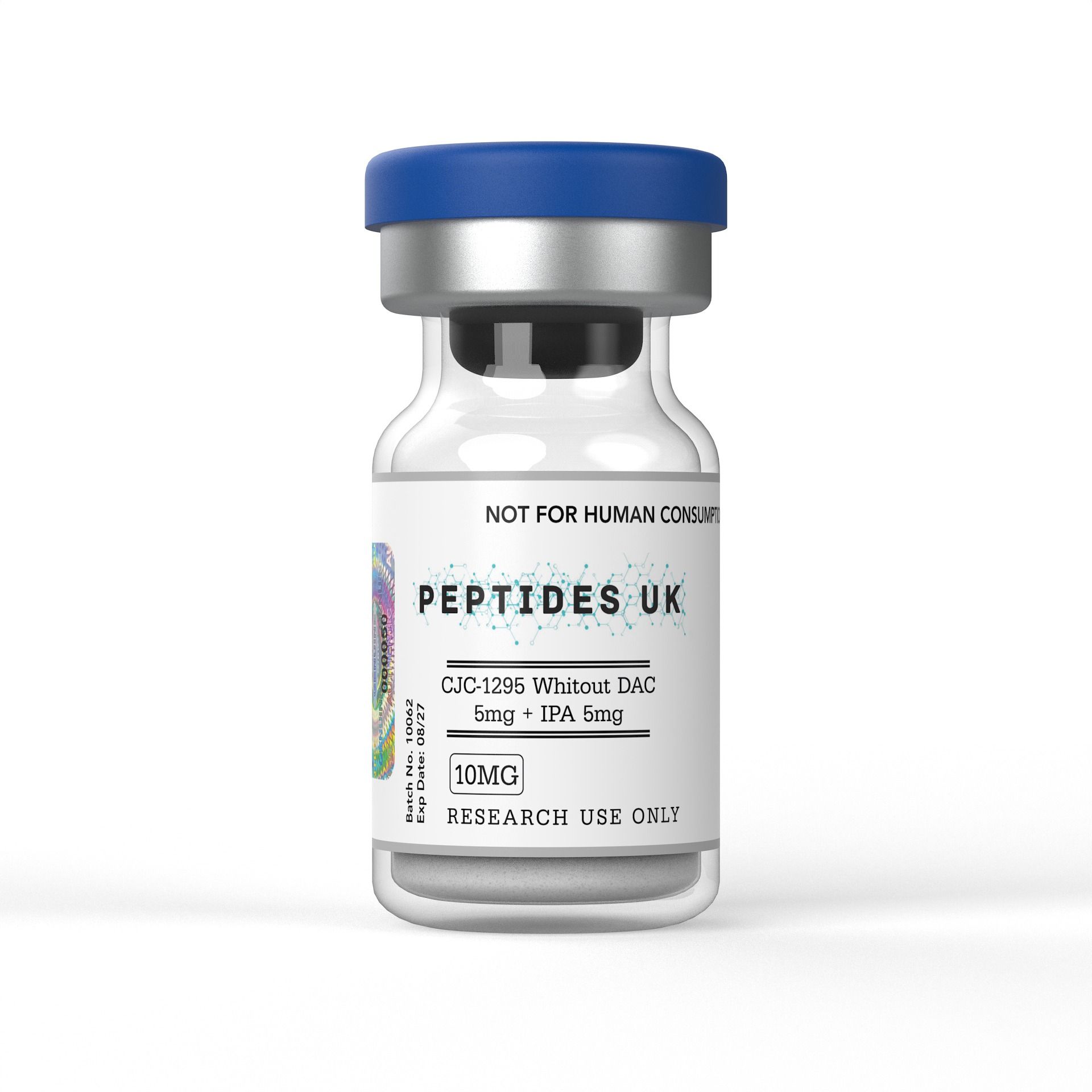
CJC-1295 Without DAC + Ipamorelin USA – Buy Online | In Stock & Ready to Ship
Buy CJC-1295 Without DAC + Ipamorelin in the USA with fast domestic shipping and guaranteed ≥99% purity — fully verified with COA and HPLC documentation. A trusted choice for USA research teams studying synergistic growth hormone release, pituitary stimulation and GH secretagogue pathways, this combination is available in multiple formats to suit varying project needs. No international delays — just reliable, domestically sourced peptides USA researchers can count on.
For research use only. Not intended for human or veterinary use.

CJC-1295 Without DAC + Ipamorelin is a synergistic dual-peptide research combination pairing a modified GHRH analogue with a selective ghrelin receptor agonist, studied extensively across endocrinology, growth hormone axis research, metabolic biology, and body composition science for its complementary and additive activation of both primary pituitary growth hormone release pathways simultaneously — making it the most widely researched dual-pathway GH secretagogue combination in modern endocrinology and growth hormone biology. Researchers and institutions across the USA can source verified, research-grade CJC-1295 Without DAC + Ipamorelin with fast domestic dispatch and full batch documentation included.
✅ ≥99% Purity — HPLC & Mass Spectrometry Verified
✅ Batch-Specific Certificate of Analysis (CoA) Included
✅ Sterile Lyophilised Powder | GMP Manufactured
✅ Fast Dispatch Across the USA | USA Peptides In Stock
CJC-1295 Without DAC + Ipamorelin is a research peptide combination consisting of two distinct compounds — CJC-1295 Without DAC (also known as Modified GRF 1-29 or Mod GRF 1-29) and Ipamorelin — that are studied together because they activate the two primary and complementary pituitary growth hormone release pathways simultaneously, producing synergistic GH secretion that exceeds what either compound can achieve alone.
CJC-1295 Without DAC is a modified 29-amino acid analogue of Growth Hormone-Releasing Hormone (GHRH 1-29) with four amino acid substitutions that enhance its stability and resistance to enzymatic degradation compared to native GHRH and unmodified Sermorelin — extending its half-life to approximately 30 minutes while preserving full GHRH receptor (GHRH-R) binding activity. It activates the GHRH receptor on anterior pituitary somatotrophs, stimulating GH synthesis and release through the GHRH pathway. The absence of the Drug Affinity Complex (DAC) — which is present in the longer-acting CJC-1295 With DAC form — means CJC-1295 Without DAC produces a more physiologically pulsatile GH release profile rather than the sustained GH elevation seen with the DAC-modified version.
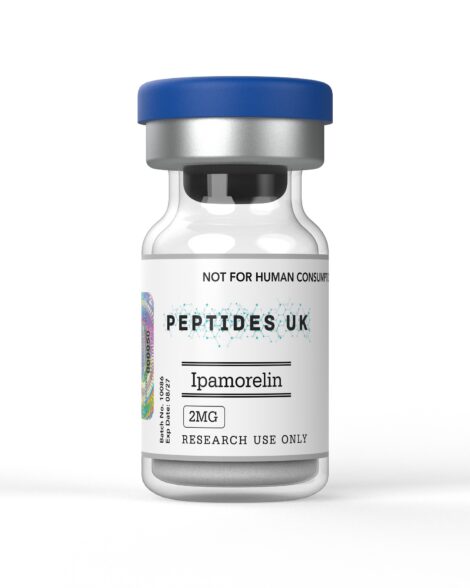
Ipamorelin is a synthetic pentapeptide growth hormone secretagogue that acts as a selective agonist at the ghrelin receptor (GHSR-1a) on pituitary somatotrophs — stimulating GH release through the ghrelin receptor pathway, which is entirely distinct from and complementary to the GHRH-R pathway activated by CJC-1295 Without DAC. Ipamorelin is widely regarded as the cleanest and most selective GH secretagogue in its class — producing GH release with minimal co-stimulation of cortisol, prolactin, or other pituitary hormones that are elevated by less selective GHS peptides such as GHRP-6.
The research rationale for combining these two peptides is well-established — GHRH-R activation and GHSR-1a activation represent two independent and additive pituitary GH release mechanisms, and research has consistently demonstrated that co-stimulation of both pathways produces synergistic GH output substantially greater than either pathway alone. This dual-pathway synergy, combined with Ipamorelin’s exceptional selectivity and CJC-1295 Without DAC’s physiologically pulsatile release profile, makes this combination one of the most extensively studied and pharmacologically rational GH research combinations available to buy in the USA.
In controlled pre-clinical and laboratory settings, the CJC-1295 Without DAC + Ipamorelin combination has been studied across a wide range of endocrinological, metabolic, and physiological research applications:
Dual-Pathway GH Secretion Research The combination’s defining research application is the simultaneous activation of both primary pituitary GH release pathways — GHRH-R via CJC-1295 Without DAC and GHSR-1a via Ipamorelin. Studies have examined how co-stimulation of both pathways affects GH pulse amplitude, pulse frequency, and overall GH output compared to either compound alone — consistently documenting synergistic GH release that exceeds the additive sum of each pathway’s individual contribution.
Hypothalamic-Pituitary-Somatotropic Axis Research The combination is used as a dual-pathway research tool for studying the complete hypothalamic-pituitary-somatotropic axis — examining how simultaneous GHRH-R and GHSR-1a activation interacts with somatostatin inhibitory tone, GH feedback regulation, and pituitary somatotroph biology to regulate overall GH secretion dynamics.
Pulsatile GH Release Research CJC-1295 Without DAC’s moderate half-life of approximately 30 minutes produces a GH release profile more closely mirroring physiological GH pulsatility than longer-acting DAC-modified compounds. Research has examined how the combination with Ipamorelin affects pulsatile GH release characteristics — including pulse shape, amplitude, and return to baseline — in the context of physiologically relevant GH secretion research.
IGF-1 Axis Research GH released in response to the combination stimulates hepatic IGF-1 production. Studies have examined the downstream IGF-1 signalling cascade — including IGF-1R activation, anabolic tissue responses, and metabolic effects — using the CJC-1295 Without DAC + Ipamorelin combination as the dual upstream pituitary stimulus to study the complete GHRH/GHSR — GH — IGF-1 signalling axis from dual receptor activation to end-organ response.
Selectivity Research Ipamorelin’s exceptional GH selectivity — its ability to stimulate GH release with minimal elevation of cortisol and prolactin — makes the combination particularly valuable for research designs where clean GH secretion without confounding hormonal co-stimulation is required. Studies have examined how Ipamorelin’s selectivity profile is maintained when combined with CJC-1295 Without DAC, confirming that the combination preserves the clean hormonal selectivity of Ipamorelin while adding the GHRH-R pathway’s contribution to GH output.
Body Composition Research Pre-clinical studies have examined how dual-pathway GH stimulation via the combination affects body composition parameters including lean mass, fat mass distribution, and metabolic rate in animal models — contributing to research on how synergistic GH secretagogue combinations influence body composition biology compared to single-pathway compounds.
Metabolic Research Studies have examined the combination’s downstream metabolic effects in pre-clinical models — including its influence on glucose metabolism, lipid oxidation, insulin sensitivity, and protein synthesis — reflecting the broad metabolic role of the GH/IGF-1 axis and research interest in how dual-pathway GH stimulation affects systemic metabolic regulation.
Ageing and Somatopause Research Research has examined the CJC-1295 Without DAC + Ipamorelin combination in the context of age-related GH decline, studying how dual-pathway stimulation affects GH pulse amplitude and frequency, IGF-1 levels, and metabolic parameters in aged animal models — with research interest in how synergistic GH secretagogue combinations address the blunted GH secretion characteristic of somatopause.
Receptor Pathway Interaction Research The combination is used as a dual-pathway pharmacological tool to study how GHRH-R and GHSR-1a signalling interact at the pituitary level — examining signal transduction crosstalk, receptor co-activation dynamics, and how simultaneous activation of cAMP-PKA (GHRH-R) and calcium/PKC (GHSR-1a) intracellular pathways produces synergistic GH secretion in pituitary somatotroph models.
CJC-1295 Without DAC vs With DAC Comparative Research The combination is often studied alongside the DAC-modified CJC-1295 + Ipamorelin to examine how GHRH analogue half-life affects the quality and characteristics of GH release when combined with Ipamorelin — providing direct pharmacological insight into how pulsatile versus sustained GHRH-R activation interacts with simultaneous GHSR-1a stimulation in dual-pathway GH research designs.
All applications are for research purposes only. CJC-1295 Without DAC + Ipamorelin as supplied is not intended for human therapeutic use.
The CJC-1295 Without DAC + Ipamorelin combination has a well-established research profile across endocrinology, pituitary biology, and GH axis science:
Dual-Pathway Synergy: Research has consistently documented synergistic GH release when GHRH-R and GHSR-1a are co-stimulated simultaneously — with studies confirming that combining a GHRH analogue with a ghrelin receptor agonist produces GH output substantially greater than either compound alone, establishing the pharmacological rationale for dual-pathway GH secretagogue combination research.
Ipamorelin Selectivity: Studies have thoroughly characterised Ipamorelin as the most selective GH secretagogue in the GHS peptide class — with research consistently demonstrating minimal cortisol and prolactin co-stimulation compared to less selective compounds such as GHRP-6 and Hexarelin, and confirming that this selectivity is maintained when Ipamorelin is used in combination with CJC-1295 Without DAC.
CJC-1295 Without DAC Pharmacology: Research has characterised the modified amino acid substitutions in CJC-1295 Without DAC that confer enhanced enzymatic stability compared to native GHRH and Sermorelin — documenting its extended half-life of approximately 30 minutes, full GHRH-R binding activity, and more physiologically pulsatile GH release profile compared to the DAC-modified long-acting form.
Pituitary Somatotroph Biology: Studies examining the combination at the pituitary level have documented how simultaneous GHRH-R and GHSR-1a activation engages complementary intracellular signalling cascades — cAMP-PKA via GHRH-R and calcium/PKC via GHSR-1a — providing mechanistic insight into how dual-pathway co-stimulation produces synergistic somatotroph GH secretion.
IGF-1 Axis: Research has documented corresponding IGF-1 increases following dual-pathway GH stimulation with the combination in pre-clinical models, with downstream anabolic and metabolic effects observed across multiple tissue types — confirming the combination’s utility for studying the complete dual-pathway GHRH/GHSR — GH — IGF-1 signalling cascade.
Ageing Models: Pre-clinical ageing studies have examined the combination’s ability to restore GH pulse amplitude and IGF-1 levels in aged animal models with blunted somatotropic axis activity — contributing to the understanding of how dual-pathway GH secretagogue combinations address the physiological GH decline associated with somatopause.
| Feature | CJC-1295 No DAC + Ipamorelin | CJC-1295 With DAC + Ipamorelin | Sermorelin + Ipamorelin | HGH 191AA |
|---|---|---|---|---|
| GHRH Component | CJC-1295 No DAC (Mod GRF 1-29) | CJC-1295 With DAC | Sermorelin (GHRH 1-29) | N/A — direct GH |
| GHRH Half-Life | ~30 minutes | ~7 days | ~10–20 minutes | N/A |
| GH Release Profile | Pulsatile — physiologically mimicking | Sustained — prolonged GH elevation | Acute pulsatile | Direct — bypasses pituitary |
| GHS Component | Ipamorelin (GHSR-1a) | Ipamorelin (GHSR-1a) | Ipamorelin (GHSR-1a) | N/A |
| Pathway Coverage | GHRH-R + GHSR-1a | GHRH-R + GHSR-1a | GHRH-R + GHSR-1a | GHR direct |
| Best For | Pulsatile dual-pathway GH studies / physiological GH research | Sustained dual-pathway GH elevation studies | Acute short-duration dual-pathway studies | Direct GHR signalling / downstream GH effects |
CJC-1295 Without DAC (Mod GRF 1-29)
| Parameter | Specification |
|---|---|
| Full Name | CJC-1295 Without DAC (Modified GRF 1-29) |
| Peptide Length | 29 Amino Acids |
| Type | Modified GHRH analogue — 4 amino acid substitutions |
| Receptor Target | GHRH-R (Growth Hormone-Releasing Hormone Receptor) |
| Half-Life | ~30 minutes |
| Purity | ≥99% (HPLC & MS Verified) |
| Form | Sterile Lyophilised Powder |
Ipamorelin
| Parameter | Specification |
|---|---|
| Full Name | Ipamorelin |
| Peptide Length | 5 Amino Acids (Pentapeptide) |
| Type | Synthetic selective GH secretagogue — GHSR-1a agonist |
| Receptor Target | GHSR-1a (Ghrelin Receptor) |
| Half-Life | ~2 hours |
| Selectivity | Highly GH selective — minimal cortisol/prolactin |
| Purity | ≥99% (HPLC & MS Verified) |
| Form | Sterile Lyophilised Powder |
Every order includes full batch documentation for both peptides:
✅ Batch-Specific Certificate of Analysis (CoA) — Both Peptides
✅ HPLC Chromatogram — Both Peptides
✅ Mass Spectrometry Confirmation — Both Peptides
✅ Sterility & Endotoxin Testing Report
✅ Reconstitution Protocol
✅ Technical Research Support
Can I buy research-grade CJC-1295 Without DAC + Ipamorelin in the USA? Yes. We supply research-grade CJC-1295 Without DAC + Ipamorelin to researchers and institutions across the United States. All orders include full batch documentation for both peptides and are packaged to maintain peptide integrity during transit. This combination is supplied strictly for laboratory research use only.
What is the difference between CJC-1295 Without DAC and CJC-1295 With DAC? The key difference is the presence or absence of the Drug Affinity Complex (DAC) — a lysine-reactive chemical modification that enables CJC-1295 to covalently bind albumin in the bloodstream, extending its half-life from approximately 30 minutes to approximately seven days. CJC-1295 Without DAC (Mod GRF 1-29) has a half-life of around 30 minutes and produces a more physiologically pulsatile GH release profile. CJC-1295 With DAC produces sustained, prolonged GH elevation over days. Researchers choose Without DAC when studying physiologically pulsatile GH secretion and shorter-duration protocols, and With DAC when sustained GHRH-R activation and prolonged GH elevation are required.
Why is Ipamorelin considered the most selective GH secretagogue for research? Ipamorelin is regarded as the cleanest GH secretagogue in its class because it stimulates GH release via GHSR-1a activation with minimal co-stimulation of other pituitary hormones — particularly cortisol and prolactin — that are significantly elevated by less selective GHS peptides such as GHRP-6 and Hexarelin. This hormonal selectivity makes Ipamorelin the preferred GHS component in combination research designs where isolated GH pathway activation without confounding hormonal effects is the research priority.
Why are CJC-1295 Without DAC and Ipamorelin studied together? The two peptides activate entirely different and complementary pituitary GH release pathways — CJC-1295 Without DAC activates GHRH-R while Ipamorelin activates GHSR-1a. Research has established that co-stimulation of both pathways produces synergistic GH release substantially greater than either compound alone — because the two pathways engage different intracellular signalling cascades (cAMP-PKA for GHRH-R and calcium/PKC for GHSR-1a) that converge to produce additive somatotroph stimulation. This pharmacological synergy is the primary research rationale for studying the combination rather than either peptide in isolation.
What purity is required for CJC-1295 Without DAC + Ipamorelin research? ≥98% is considered research-grade for both peptides, but ≥99% purity is strongly preferred for dual-pathway GH secretion studies, pituitary receptor pharmacology research, and IGF-1 axis experiments where compound purity directly affects the accuracy of synergistic GH release measurements. All CJC-1295 Without DAC and Ipamorelin supplied for USA researchers are independently verified to ≥99%.
How are CJC-1295 Without DAC and Ipamorelin reconstituted for lab use? Each peptide should be reconstituted separately. Allow each vial to reach room temperature before opening. Add sterile water or bacteriostatic water slowly down the vial wall and swirl gently — do not shake. Both peptides are generally well soluble in aqueous solvents. Use promptly after reconstitution, or aliquot and store at -80°C to preserve peptide activity across multiple experimental uses. Avoid repeated freeze-thaw cycles. Reconstitution protocols for each peptide are included with every order.
CJC-1295 Without DAC + Ipamorelin are supplied exclusively for legitimate scientific research purposes conducted within licensed laboratory environments. These products are not intended for human consumption, self-administration, or any therapeutic application. They must be handled by qualified researchers in compliance with applicable US federal and state regulations and institutional ethics guidelines. By purchasing, you confirm that these compounds will be used solely for approved in-vitro or pre-clinical research purposes.
WhatsApp us
Receive News