PRODUCTS SOLD ON PEPTIDESLABUSA.COM ARE FOR RESEARCH PURPOSES ONLY AND ARE NOT FOR HUMAN OR VETERINARY USE.
$174.00
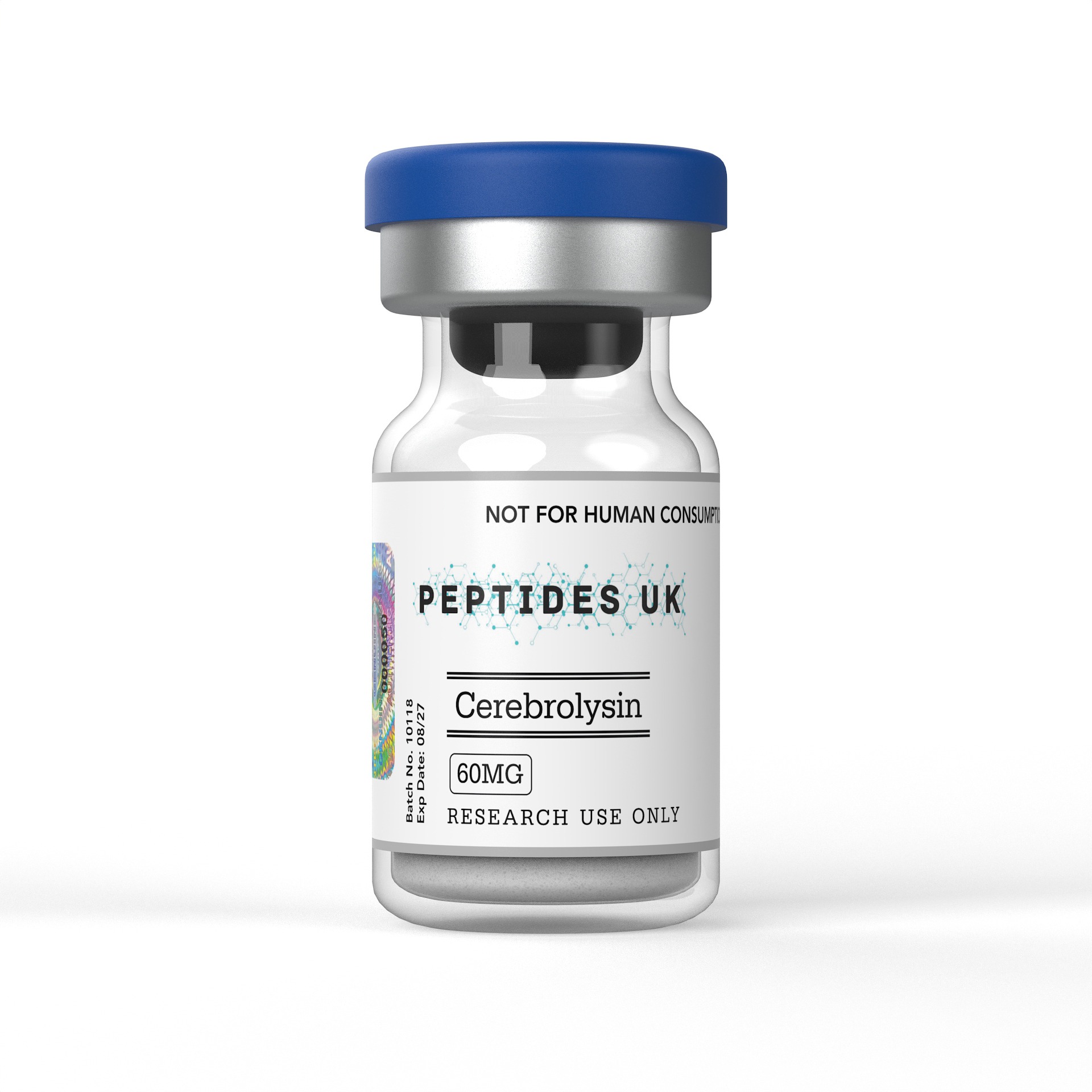
Cerebrolysin USA – Buy Online | In Stock & Ready to Ship
Buy Cerebrolysin in the USA with fast domestic shipping and guaranteed ≥99% purity — fully verified with COA and HPLC documentation. A trusted choice for USA research teams studying neuroprotection, cognitive enhancement and neurotrophic factor activity, Cerebrolysin is available in multiple formats to suit varying project needs. No international delays — just reliable, domestically sourced peptides USA researchers can count on.
For research use only. Not intended for human or veterinary use.

Cerebrolysin is a peptide-enriched neurotrophic preparation derived from porcine brain proteins — studied across decades of preclinical and clinical research for its neuroprotective, neurogenic, and neurotrophic properties, and one of the most extensively researched neuropeptide preparations available to USA-based research programs today.
Researchers, labs, and institutions across the United States can source verified, research-grade Cerebrolysin with fast dispatch, full documentation, and third-party verified purity.
✅ ≥99% Peptide Purity — HPLC Verified
✅ Batch-Specific Certificate of Analysis (CoA) Included
✅ Endotoxin Tested | GMP Manufactured
✅ Fast Dispatch to USA — Tracked Shipping Available
Cerebrolysin (developmental code FPF-1070) is a standardized mixture of low-molecular-weight neuropeptides and free amino acids produced by controlled enzymatic digestion of purified porcine brain proteins. Its peptide fraction — which accounts for approximately 25% of the preparation by weight — is composed predominantly of peptides below 10,000 Da molecular weight that are small enough to cross the blood-brain barrier (BBB) following systemic administration.
The neurotrophic components identified within Cerebrolysin include fragments of several endogenous brain growth factors — among them brain-derived neurotrophic factor (BDNF), glial cell line-derived neurotrophic factor (GDNF), nerve growth factor (NGF), and ciliary neurotrophic factor (CNTF) — alongside a complex profile of additional low-molecular-weight peptides whose full identities have not been completely characterized. This multi-component profile distinguishes Cerebrolysin fundamentally from single-compound research peptides: rather than targeting one receptor or pathway, Cerebrolysin acts on multiple neurotrophic signaling systems simultaneously.
Cerebrolysin is approved as a pharmaceutical agent in over 45 countries across Europe, Asia, and the Middle East for conditions including stroke, traumatic brain injury, and dementia. It is not approved by the FDA for therapeutic use in the United States and is supplied here exclusively for licensed laboratory research purposes.
In research settings, Cerebrolysin is studied as a broad-spectrum neurotrophic and neuroprotective research tool, with its multimodal mechanism making it relevant across a wider range of neurological research models than most single-peptide compounds. Studies have explored its role in:
Cerebrolysin is supplied here as a research compound only and is not approved for human therapeutic use in the USA.
Cerebrolysin has one of the largest clinical and preclinical research bodies of any neuropeptide preparation globally — spanning several decades, multiple research institutions, and clinical trials across dozens of countries. The research landscape is broad and includes both supportive and mixed findings depending on indication.
Alzheimer’s Disease Research
Cerebrolysin has been studied in multiple randomized, double-blind, placebo-controlled trials in Alzheimer’s disease patients. A PubMed-indexed review covering trials of up to 28 weeks found Cerebrolysin superior to placebo on global outcome and cognitive measures. A published meta-analysis of randomized controlled trials in mild-to-moderate AD concluded that Cerebrolysin showed statistically significant improvements compared to placebo across cognitive and global function scales. One randomized trial examining the combination of Cerebrolysin and donepezil reported a synergistic increase in serum BDNF levels in ApoE4 carriers alongside associated cognitive improvement — findings published in the International Journal of Neuropsychopharmacology. Across multiple AD trials, cognitive improvements achieved during Cerebrolysin treatment were maintained for up to three months after treatment ended, suggesting neuroplastic changes rather than purely symptomatic effects.
Alzheimer’s Disease Preclinical Model Research
In the 3xTg-AD transgenic mouse model, Cerebrolysin treatment was associated with reduced amyloid plaque size, decreased amyloid-beta production through modulation of amyloid precursor protein processing, and improved behavioral performance. Studies in tauopathy models demonstrated that Cerebrolysin supported mitochondrial structural regulation — a pathway relevant to tau-induced neuronal dysfunction. These preclinical findings are among the most reproducible in the Cerebrolysin literature and have contributed significantly to its continued investigation in AD-related research.
Stroke Research — Complex Evidence Base
Cerebrolysin’s evidence base in stroke research is more mixed and is important for researchers to understand accurately. Early clinical trials showed beneficial effects on motor and cognitive recovery in stroke patients, and Cerebrolysin is currently approved for stroke treatment in over 45 countries. However, the large 2012 CASTA Phase IV trial (n=1,070) did not demonstrate significant benefit over placebo on composite stroke outcome scores in Asian populations, and a subsequent meta-analysis found no significant effect on neurological outcomes in acute ischemic stroke. More recently, a Phase IV randomized controlled trial examining Cerebrolysin combined with standard rehabilitation therapy reported meaningful improvements in motor recovery and corticospinal tract plasticity in patients with severe motor impairment — suggesting that Cerebrolysin may offer benefit in specific, more severe patient subgroups or as a combination approach rather than monotherapy. For research purposes, Cerebrolysin remains one of the most studied neuroprotective compounds in experimental stroke models.
Traumatic Brain Injury (TBI) Research
Research in TBI models — both preclinical and clinical — has examined Cerebrolysin for its effects on neurological recovery, neurogenesis, and cognitive outcome. Preclinical studies using mouse closed head injury models showed reduced neuronal cell death and increased neurogenesis and brain function markers. Published clinical trial data includes a dose-response study where higher doses (50 ml daily for 10 days) produced superior 30-day neurological scores compared to lower doses — consistent with a genuine biological effect and the observation from animal studies that weight-adjusted effective doses may exceed those used in some earlier clinical trials.
Vascular Dementia Research
A large meta-analysis of multiple randomized clinical trials — lasting up to three years — concluded that Cerebrolysin treatment improved clinical symptoms of vascular dementia compared to placebo. These findings have contributed to regulatory approvals for vascular dementia treatment in several countries and represent some of the more consistent clinical data in the Cerebrolysin research body.
Neurogenesis and BDNF Pathway Research
Multiple preclinical studies have shown Cerebrolysin increases BDNF and NGF expression in brain tissue, reduces neuronal cell death after injury, and promotes hippocampal neurogenesis. Research published in Frontiers in Neuroscience examining Cerebrolysin in pilocarpine-induced seizure models found significant neuroprotective effects and increased neurogenesis markers in the hippocampus — extending Cerebrolysin’s research relevance to epilepsy-related neurological injury models.
Safety Profile
Cerebrolysin appears safe for short-term use in human clinical trial contexts, with dizziness and vertigo the most commonly reported adverse events. Long-term safety data covering up to three years of treatment have been published without major safety signals in clinical research populations. A 2023 Cochrane-level review noted that Cerebrolysin might be associated with a higher rate of spontaneous adverse events requiring hospitalization in acute ischemic stroke populations — a finding researchers should account for when designing and interpreting stroke model studies. All safety data referenced is from clinical research contexts in countries where Cerebrolysin is approved; Cerebrolysin is not approved for any therapeutic use in the USA.
All research findings referenced above are from published preclinical studies and clinical trials. Cerebrolysin is not FDA-approved and is not approved for human therapeutic use in the United States. It is supplied here for licensed laboratory research purposes only.
When you buy Cerebrolysin in the USA through our platform, every order includes:
We supply USA research peptides to licensed researchers, universities, and institutions — with cold-chain compliant packaging designed to maintain preparation integrity throughout transit.
| Parameter | Specification |
|---|---|
| Purity | ≥99% peptide purity (HPLC Verified) |
| Composition | Low-MW neuropeptides + free amino acids |
| Source | Purified porcine brain proteins (enzymatic digest) |
| Peptide Fraction | ~25% of preparation |
| Neurotrophic Components | BDNF, GDNF, NGF, CNTF fragments + additional low-MW peptides |
| Molecular Weight Range | Predominantly <10,000 Da |
| Form | Sterile solution for research use |
| Storage | 2–8°C; do not freeze |
| Available Sizes | 5ml |
| Feature | Cerebrolysin | P21 (P021) | Semax |
|---|---|---|---|
| Type | Multi-peptide preparation | Single synthetic tetrapeptide | Single synthetic hexapeptide |
| Mechanism | Multimodal — BDNF, NGF, GDNF, CNTF pathways | CNTF mimetic / LIF inhibition / BDNF upregulation | ACTH/melanocortin + BDNF signaling |
| BBB Penetration | Yes (small peptide components) | Yes (adamantane modification) | Yes |
| Human Clinical Trials | Yes — extensive (stroke, AD, VD, TBI) | None | Yes (clinical use in Russia) |
| FDA Approved (USA) | No | No | No |
| Alzheimer’s Model Research | Extensively studied | Extensively studied | Limited |
| Tau / Amyloid Research | Yes | Yes | No |
| Research Reproducibility | Variable (complex mixture) | High (single defined compound) | High |
Can I buy Cerebrolysin in the USA?
Yes. We supply research-grade Cerebrolysin with fast tracked dispatch across the United States for licensed laboratory research use. All orders include full documentation and integrity-maintained packaging.
Is Cerebrolysin FDA approved?
No. Cerebrolysin is not approved by the FDA for any therapeutic use in the United States. It is approved as a pharmaceutical agent in over 45 countries — including throughout Europe, Russia, China, and other Asian markets — for conditions including stroke, traumatic brain injury, and dementia. It is supplied here exclusively for licensed research use in the USA.
What is inside Cerebrolysin?
Cerebrolysin is a standardized enzymatic digest of purified porcine brain proteins. Its active fraction consists of low-molecular-weight neuropeptides — fragments associated with BDNF, NGF, GDNF, and CNTF biological activity — alongside free amino acids. The full peptide profile of Cerebrolysin has not been completely characterized at the molecular level, which distinguishes it from single-compound research peptides and contributes to variability in research reproducibility across different batches and studies.
How is Cerebrolysin different from P21?
P21 is a single, precisely defined synthetic tetrapeptide derived from one active region of CNTF. Cerebrolysin is a complex multi-component preparation containing fragments of multiple neurotrophic factors including CNTF alongside BDNF, NGF, and GDNF. Researchers choosing between the two typically favor P21 when experimental precision and defined mechanism are priorities, and Cerebrolysin when a broad multimodal neurotrophic research model more closely mirroring endogenous neurotrophic factor complexity is desired.
How should Cerebrolysin be stored?
Cerebrolysin solution should be stored at 2–8°C (refrigerator temperature). Unlike lyophilized peptides, Cerebrolysin should not be frozen — freezing can disrupt the peptide preparation. Opened vials should be used promptly. Always refer to the batch-specific CoA for confirmed storage conditions.
What purity standard applies to research-grade Cerebrolysin?
Purity in a complex multi-peptide preparation like Cerebrolysin is assessed differently from single-compound peptides. HPLC verification confirms the peptide content profile and the absence of major contaminants. Our Cerebrolysin is manufactured in GMP-compliant facilities with full endotoxin testing and sterility verification included with every order.
How quickly is Cerebrolysin delivered in the USA?
Orders are dispatched promptly with tracked, cold-chain compliant shipping. Most USA orders arrive within 3–5 business days.
Where can I find Cerebrolysin for sale in the USA?
We offer research-grade Cerebrolysin for sale in the USA exclusively for licensed laboratory research use, with full documentation and purity verification included as standard with every order.
Research Disclaimer: Cerebrolysin is supplied exclusively for legitimate scientific research purposes in licensed laboratory environments. This product is not FDA-approved and is not intended for human consumption, self-administration, or therapeutic use of any kind in the United States. It must be handled by qualified researchers in accordance with all applicable US federal and state regulations and institutional ethics guidelines. By purchasing, you confirm that this compound will be used solely for approved in-vitro or pre-clinical research.
WhatsApp us
Receive News