PRODUCTS SOLD ON PEPTIDESLABUSA.COM ARE FOR RESEARCH PURPOSES ONLY AND ARE NOT FOR HUMAN OR VETERINARY USE.
$107.00
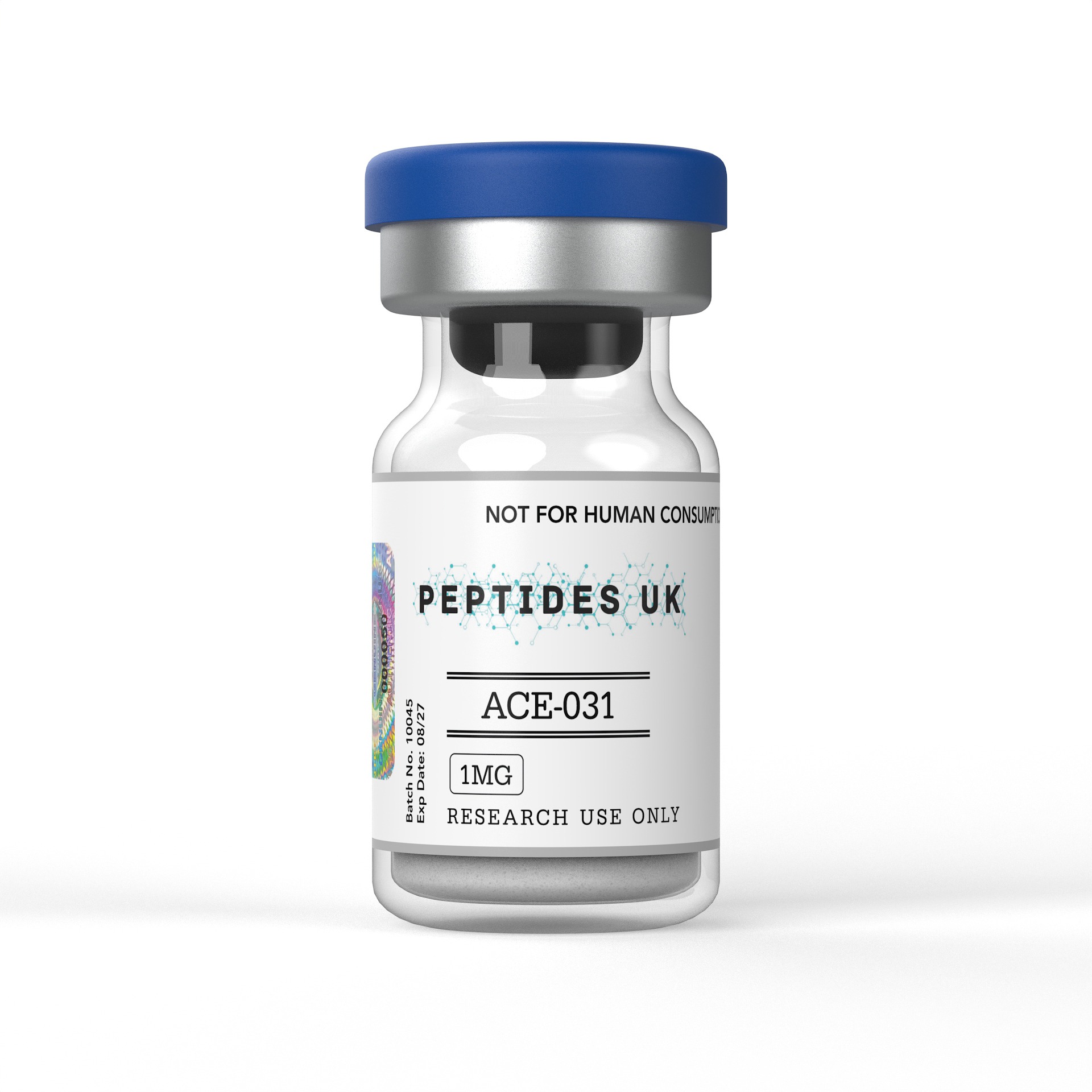
ACE-031 Peptide USA – Buy Online | In Stock & Ready to Ship
Buy ACE-031 in the USA with fast domestic shipping and guaranteed ≥99% purity — fully verified with COA and HPLC documentation. A trusted choice for USA research teams studying myostatin and activin pathway inhibition, muscle mass regulation and neuromuscular disease modeling, ACE-031 is available in multiple formats to suit varying project needs. No international delays — just reliable, domestically sourced peptides USA researchers can count on.
For research use only. Not intended for human or veterinary use.


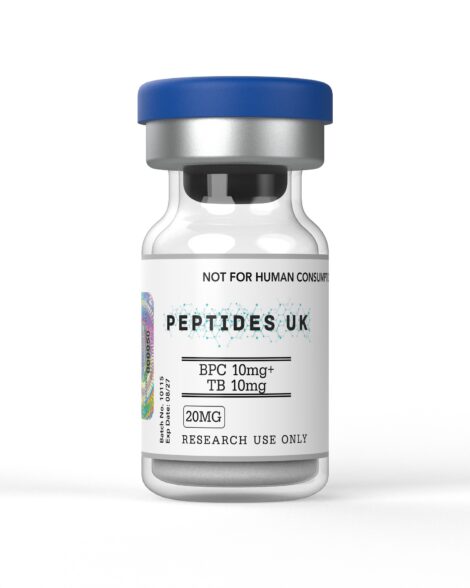
ACE-031 is a recombinant soluble fusion protein comprising the extracellular domain of the human activin receptor type IIB (ActRIIB / ACVR2B) linked to the Fc region of human immunoglobulin G1 (IgG1), engineered to function as a circulating decoy receptor that competitively sequesters myostatin (GDF-8) and related transforming growth factor-beta (TGF-β) superfamily ligands — studied extensively across skeletal muscle biology, neuromuscular disease research, bone metabolism, fat metabolism, cancer cachexia biology, and musculoskeletal systems pharmacology for its broad inhibitory profile spanning myostatin blockade, ActRIIB ligand sequestration, muscle hypertrophy signalling, osteogenic pathway modulation, and adipokine regulation — making it one of the most mechanistically versatile, biologically multifaceted, and actively researched ActRIIB-targeting biological constructs in modern musculoskeletal research and TGF-β superfamily biology. Researchers and institutions across the USA can source verified, research-grade ACE-031 1mg with fast domestic dispatch and full batch documentation included.
✅ ≥99% Purity — HPLC & Mass Spectrometry Verified
✅ Batch-Specific Certificate of Analysis (CoA) Included
✅ Sterile Lyophilised Powder | GMP Manufactured
✅ Fast Dispatch Across the USA | USA Research Biologics In Stock
ACE-031 (also known as Ramatercept, or ActRIIB-IgG1Fc) is a recombinant homodimeric fusion protein — a soluble decoy receptor construct in which the extracellular ligand-binding domain of human activin receptor type IIB (ActRIIB / ACVR2B) is fused to the hinge, CH2, and CH3 domains of the human IgG1 Fc region, yielding a 343-amino acid soluble receptor-antibody hybrid that circulates systemically and binds with high affinity to myostatin and a broad range of related TGF-β superfamily ligands before they can engage the endogenous membrane-bound ActRIIB receptor on target cells. ACE-031 contains three N-glycosylation sites and forms a stable homodimeric structure characteristic of Fc-fusion biologics, with pharmacokinetics reflecting the prolonged half-life of IgG1-class constructs.
The mechanism of ACE-031 is that of a competitive ligand trap: by presenting a soluble, high-affinity extracellular domain of ActRIIB in circulation, ACE-031 competitively sequesters myostatin (GDF-8) — the primary endogenous negative regulator of skeletal muscle mass — as well as a broader panel of ActRIIB-binding TGF-β superfamily members including GDF-11, activin A, activin B, and related growth differentiation factors, preventing these ligands from binding to and activating cell-surface ActRIIB and initiating downstream Smad2/3 signalling cascades that suppress muscle cell proliferation, differentiation, and hypertrophy.
ACE-031 is therefore distinct from selective anti-myostatin antibodies: rather than targeting myostatin alone, its mechanism of action reflects the broad ligand-binding selectivity of the native ActRIIB extracellular domain — engaging the full spectrum of negative regulators that signal through ActRIIB. This broader ligand trap profile underlies ACE-031’s observed effects not only on skeletal muscle hypertrophy but also on bone metabolism and adipose tissue biology, distinguishing it from more selective myostatin inhibitors in its research profile.
Developed by Acceleron Pharma, ACE-031 received FDA orphan drug designation in 2010 for the treatment of Duchenne Muscular Dystrophy (DMD) and was evaluated in Phase I and Phase II clinical trials examining its muscle-preserving and anabolic effects in both healthy volunteers and DMD patients — establishing a rich clinical and pre-clinical data profile that continues to inform musculoskeletal biology, TGF-β superfamily pharmacology, and muscle-wasting disease research.
As one of the most structurally distinctive, mechanistically broad, and research-characterised ActRIIB-targeting fusion proteins available to buy in the USA, ACE-031 1mg research vials are in active demand across skeletal muscle biology, neuromuscular disease research, bone metabolism, metabolic biology, and cancer cachexia research programs at research institutions nationwide.
In controlled pre-clinical and laboratory settings, ACE-031 has been studied across an exceptionally wide range of musculoskeletal, metabolic, oncological, and neuromuscular disease research applications:
ActRIIB Ligand Trap Pharmacology Research ACE-031’s primary research application is as a broad-spectrum ActRIIB decoy receptor — used in ligand binding assays, Smad2/3 signalling suppression studies, competitive inhibition experiments, and TGF-β superfamily receptor pharmacology research. Studies have characterised ACE-031’s binding kinetics against myostatin, GDF-11, activin A, activin B, and related ligands — establishing ACE-031 as the reference biological construct for broad-spectrum ActRIIB ligand trap biology and distinguishing its pharmacology from that of selective anti-GDF-8 antibodies.
Skeletal Muscle Hypertrophy and Mass Biology Research ACE-031 is one of the most studied ActRIIB-targeting constructs in skeletal muscle biology — with research examining its induction of myofibre hypertrophy, effects on satellite cell activation, promotion of muscle mass gains across both slow-twitch and fast-twitch fibre types, and modulation of downstream Smad2/3 muscle growth suppression cascades. Studies have established that ACE-031-mediated ActRIIB blockade promotes skeletal muscle hypertrophy independent of muscle fibre type — a pharmacologically significant distinction from more selective myostatin inhibitors that show fibre-type preferential effects.
Duchenne Muscular Dystrophy (DMD) Research ACE-031 is the most clinically and pre-clinically characterised ActRIIB ligand trap in Duchenne Muscular Dystrophy biology — with studies examining its effects on muscle mass preservation, functional muscle performance, 6-minute walk test outcomes, lean body mass maintenance, and dystrophic pathology attenuation in mdx mouse models and clinical DMD populations. Research has established the ActRIIB ligand trap approach as a mechanistically credible strategy for muscle preservation in DMD, with ACE-031 providing the foundational dataset for this biological rationale.
Neuromuscular Disease and Muscle-Wasting Biology Research Beyond DMD, research has examined ACE-031’s effects in broader muscle-wasting contexts — including cachexia, sarcopenia, and generalised neuromuscular disease models — with studies documenting its capacity to increase lean body mass, preserve muscle volume, and attenuate the signalling pathways driving muscle loss in disease states. Pre-clinical data in models of cancer cachexia and chemotherapy-associated muscle wasting have examined how ActRIIB blockade by ACE-031 prevents activation of ERK1/2-mediated muscle fibre apoptosis and preserves mitochondrial oxidative function in metabolically stressed muscle tissue.
Bone Metabolism and Osteogenic Biology Research A distinctive and extensively studied dimension of ACE-031’s biology is its osteogenic activity — an effect not consistently reproduced by selective anti-myostatin antibodies, implicating ACE-031’s broader ligand sequestration (particularly activin A and related TGF-β ligands that regulate osteoblast-osteoclast crosstalk) as the mechanistic basis. Studies in DMD mouse models have documented substantial increases in femoral bone volume, trabecular number, vertebral bone mass, and bone mineral density following ACE-031 treatment — with research reporting increased osteoblast marker gene expression and reduced osteoclast numbers consistent with a shift toward net bone formation. Serum biomarker studies in clinical research have further documented increases in bone-specific alkaline phosphatase and reductions in C-terminal telopeptide of type I collagen (CTX), consistent with enhanced osteoblast activity and attenuated bone resorption.
Fat Metabolism and Adipose Biology Research Research has examined ACE-031’s influence on fat metabolism and adipose tissue biology — with studies documenting reductions in fat mass, shifts in adipokine profiles including increases in adiponectin and decreases in leptin, and evidence of altered adipocyte metabolism consistent with reduced adipogenesis and enhanced lipolysis following ActRIIB ligand sequestration. Pre-clinical models have explored the mechanistic basis for ACE-031’s adipose effects — with research suggesting that blockade of TGF-β superfamily ligands that regulate mesenchymal precursor cell fate may redirect differentiation away from adipogenesis toward myogenesis and osteogenesis.
Muscle Energy Metabolism and Oxidative Capacity Research Research has examined ACE-031’s effects on skeletal muscle energy metabolism — with studies exploring how ActRIIB blockade modulates the expression of key metabolic regulators including PPARβ, PGC-1α, and PDK4, and examining how ACE-031 influences muscle oxidative capacity, mitochondrial function, and fatigue resistance. Pre-clinical data have established that ActRIIB signalling plays a regulatory role in muscle energy metabolism, with ACE-031-mediated blockade shown to improve muscle oxidative capacity and contractile force generation while modulating metabolic stress responses in dystrophic and healthy muscle models.
Muscle Force Generation and Contractile Function Research Pre-clinical research has examined ACE-031’s effects on the force-generating capacity of skeletal muscle tissue — with studies in animal models documenting improvements in maximum and total contractile force following ActRIIB blockade, attributed to preservation of muscle energy supply and a shift in muscle thermodynamics toward oxidative respiration. Research examining forward-pulling tension in mdx mice has confirmed functional muscle performance improvements consistent with the lean mass gains observed by DXA and MRI measurements.
Cancer Cachexia and Chemotherapy-Associated Muscle Wasting Research Research has examined ACE-031’s potential to attenuate cancer- and chemotherapy-associated muscle wasting — with cell culture and pre-clinical studies documenting how ActRIIB blockade prevents ERK1/2 pathway activation that drives muscle fibre death, preserves mitochondrial function in metabolically challenged muscle, and offsets the oxidative stress and energy deficit that characterise cancer cachexia biology. These studies establish ACE-031 as a relevant research tool for examining muscle preservation strategies in oncological research contexts.
Sarcopenia and Age-Related Muscle Loss Research Research examining the role of myostatin and ActRIIB ligands in age-related sarcopenia has used ACE-031 as a reference compound to probe how TGF-β superfamily signalling contributes to progressive muscle loss with ageing — with studies examining how ActRIIB ligand trap approaches affect the satellite cell biology, muscle regeneration capacity, and lean mass preservation that underlie sarcopenia research.
Metabolic Syndrome and Obesity-Related Biology Research Emerging research has examined the relationship between myostatin expression, ActRIIB signalling, and metabolic syndrome biology — with studies using ACE-031 to probe how myostatin inhibition in adipose and hepatic contexts affects insulin sensitivity, adipokine secretion, lipid metabolism, and the metabolic phenotype in pre-clinical obesity models. The documented effects of ACE-031 on adiponectin and leptin levels have generated research interest in ActRIIB ligand trap biology as a tool for metabolic disease research beyond its primary musculoskeletal applications.
All applications are for research purposes only. ACE-031 as supplied is not intended for human therapeutic use.
ACE-031 has accumulated a well-characterised and clinically informed research profile across muscle, bone, and metabolic biology:
Skeletal Muscle Biology: Research has established ACE-031 as a potent promoter of skeletal muscle hypertrophy in pre-clinical models — with studies consistently documenting fibre-type-independent muscle mass increases following ActRIIB ligand sequestration, and clinical Phase I data confirming statistically significant increases in total lean body mass and thigh muscle volume in human subjects at day 29 following a single administration. The documented capacity of ACE-031 to increase muscle mass beyond the ceiling achievable with selective myostatin inhibitors alone — including additional muscle mass gains in myostatin-null animals — has established the broader TGF-β ligand trap mechanism as mechanistically superior to selective myostatin blockade for maximal muscle anabolic effects.
Bone Metabolism: Studies have characterised ACE-031’s osteogenic activity as a distinctive and pharmacologically significant dimension of its biology — with pre-clinical data reporting substantial increases in femoral bone volume, trabecular architecture, and vertebral bone mineral density, and clinical biomarker data consistent with enhanced osteoblast activity and reduced osteoclast-mediated bone resorption. The bone density effects of ACE-031 — not reproduced by selective anti-myostatin antibodies — implicate activin A and related TGF-β ligands as mechanistically important regulators of osteoblast-osteoclast balance, and establish ACE-031 as a valuable research tool for examining the intersect between muscle and bone biology.
Fat and Metabolic Biology: Research has documented ACE-031’s influence on adipose tissue metabolism — with studies reporting reductions in fat mass alongside favourable shifts in adipokine profiles, including adiponectin elevation and leptin reduction, consistent with altered adipocyte differentiation and improved metabolic tone. These metabolic effects extend ACE-031’s research profile beyond classical musculoskeletal biology into metabolic disease and obesity research.
Muscle Energy and Oxidative Metabolism: Pre-clinical studies have established that ActRIIB signalling is an important regulator of skeletal muscle metabolic capacity — and that ACE-031’s ligand trap mechanism modulates the expression of key oxidative metabolism regulators, improves mitochondrial function, and enhances contractile force production in pre-clinical muscle models. These findings have contributed to the mechanistic understanding of how the TGF-β superfamily shapes skeletal muscle bioenergetics.
Neuromuscular Disease Research: The clinical trial data from ACE-031’s DMD programme — demonstrating trends for lean body mass preservation, bone mineral density improvements, fat mass reduction, and functional muscle performance maintenance — represent the most clinically characterised dataset for an ActRIIB ligand trap in a human neuromuscular disease context, and continue to inform the design of next-generation myostatin and activin pathway inhibitors in neuromuscular disease research.
| Feature | ACE-031 | Follistatin-344 | Myostatin Propeptide | BMP-7 |
|---|---|---|---|---|
| Type | ActRIIB-IgG1Fc recombinant fusion protein | Activin-binding glycoprotein | GDF-8 propeptide inhibitor | TGF-β superfamily osteogenic factor |
| Primary Mechanism | Broad ActRIIB ligand trap — sequesters myostatin, GDF-11, activins A/B | Broad TGF-β / activin sequestration — binds multiple superfamily members | Selective myostatin inhibition via propeptide binding | BMP receptor (BMPR) agonism — osteogenic / chondrogenic signalling |
| Ligand Selectivity | Broad — myostatin + GDF-11 + activin A + activin B + related GDFs | Broad — myostatin + activins + BMPs | Selective — myostatin / GDF-8 primary target | BMP-selective — BMP receptor pathway |
| Primary Research Focus | Muscle hypertrophy / neuromuscular disease / bone metabolism / fat metabolism | Muscle mass / follistatin-activin biology / reproductive biology | Selective myostatin inhibition / comparative pharmacology | Bone formation / osteoblast biology / cartilage research |
| Key Research Distinction | Broadest TGF-β ligand trap with documented osteogenic and metabolic effects beyond selective myostatin inhibitors | Non-receptor-based broad TGF-β sequestration — also modulates reproductive biology via activin A/B | Useful for selective GDF-8 biology vs broad ActRIIB research design | Osteogenic / bone formation research — not muscle-primary |
| Best For | ActRIIB pharmacology / muscle-wasting disease / bone-muscle interaction / metabolic biology research | Broad TGF-β / follistatin-activin axis / reproductive and muscle research | Selective myostatin biology / mechanistic comparison with ACE-031 | Bone biology / osteoblast differentiation / BMP pathway research |
| Parameter | Specification |
|---|---|
| Full Name | ACE-031 (Ramatercept / ActRIIB-IgG1Fc) |
| Vial Size | 1mg |
| Type | Recombinant ActRIIB-Fc fusion protein (homodimer) |
| Structure | Extracellular domain of human ActRIIB fused to human IgG1 Fc (hinge-CH2-CH3) |
| Amino Acids | 343 amino acids (monomer); homodimeric in native form |
| N-Glycosylation Sites | 3 |
| Primary Target | ActRIIB (ACVR2B) ligands — myostatin (GDF-8), GDF-11, activin A, activin B |
| Mechanism | Soluble decoy receptor / competitive ligand trap — prevents ActRIIB signalling |
| Downstream Pathway Inhibited | Smad2/3 — suppresses muscle growth inhibition cascade |
| Molecular Weight | ~78–80 kDa (monomer, glycosylated); ~150–160 kDa (homodimer) |
| Half-Life (in vivo, pre-clinical) | 10–15 days |
| Purity | ≥99% (HPLC & MS Verified) |
| Form | Sterile Lyophilised Powder |
| Solubility | Sterile water, bacteriostatic water, PBS |
| Storage (Powder) | -20°C, protect from light and moisture |
| Storage (Reconstituted) | 2–8°C, use within 28 days with bacteriostatic water |
| Manufacturing | GMP Manufactured |
| CAS Number | 1621169-52-5 |
Every order includes full batch documentation:
✅ Batch-Specific Certificate of Analysis (CoA)
✅ HPLC Chromatogram
✅ Mass Spectrometry Confirmation
✅ Sterility & Endotoxin Testing Report
✅ Reconstitution Protocol
✅ Technical Research Support
Can I buy research-grade ACE-031 in the USA? Yes. We supply research-grade ACE-031 1mg to researchers and institutions across the United States. All orders include full batch documentation and are packaged to maintain protein integrity during transit. This compound is supplied strictly for laboratory research use only.
What is the structural difference between ACE-031 and a selective anti-myostatin antibody? ACE-031 is an ActRIIB extracellular domain-Fc fusion protein that functions as a broad-spectrum ligand trap — engaging all high-affinity ActRIIB ligands including myostatin (GDF-8), GDF-11, activin A, and activin B. Selective anti-myostatin antibodies, by contrast, target GDF-8 specifically and do not sequester the other TGF-β family members that also signal through ActRIIB. This mechanistic distinction is of significant importance in research design: ACE-031’s broader ligand engagement profile underlies its documented osteogenic and adipose metabolic effects — effects not consistently reproduced by selective anti-myostatin antibodies — and means that ActRIIB biology research using ACE-031 reflects multi-ligand pathway suppression rather than isolated myostatin blockade. Researchers designing studies that require selective GDF-8 inhibition should consider this distinction carefully when choosing between ACE-031 and myostatin-selective inhibitors.
Why does ACE-031 affect bone density in addition to muscle mass? The osteogenic activity of ACE-031 is attributed to its broader ActRIIB ligand sequestration profile — specifically the sequestration of activin A and related TGF-β ligands that regulate osteoblast-osteoclast crosstalk in addition to myostatin. Activin A is considered a likely key mediator of ACE-031’s bone effects, as activin signalling through ActRIIB plays an important role in the balance between bone formation (osteoblast activity) and bone resorption (osteoclast activity). By sequestering activin A and related ligands, ACE-031 tips the osteogenic balance toward net bone formation — an effect evidenced pre-clinically by reduced osteoclast numbers and increased osteoblast marker gene expression, and clinically by serum biomarker shifts including elevated bone-specific alkaline phosphatase and reduced CTX. This bone biology is not reproduced by selective myostatin inhibitors, confirming activin pathway involvement.
What is the pharmacokinetic profile of ACE-031 relevant to research design? In Phase I clinical studies, ACE-031 exhibited linear pharmacokinetics with AUC and Cmax increasing proportionally with dose, and a mean terminal half-life of 10–15 days — consistent with the extended half-life conferred by its IgG1 Fc domain. This prolonged half-life has important implications for research design, as it means that even single-dose administration produces sustained ActRIIB ligand sequestration for an extended period — and that in multi-dose protocols, accumulation and duration of ligand suppression must be accounted for in study design. The long half-life is a key pharmacokinetic distinction between ACE-031 and shorter-acting peptide-based myostatin inhibitors and should be considered in experimental timelines.
What ligands does ACE-031 sequester beyond myostatin? ACE-031’s extracellular domain reflects the native ligand-binding profile of ActRIIB, which binds a broad range of TGF-β superfamily members in addition to myostatin (GDF-8). Ligands sequestered by ACE-031 include GDF-11, activin A, activin B, BMP-9, and BMP-10 — the latter two being important regulators of endothelial cell biology. The sequestration of BMP-9 and BMP-10 has been implicated in the vascular adverse effects — including epistaxis and telangiectasias — observed in ACE-031’s clinical programme, and represents an important mechanistic consideration in research design. Researchers examining specific ligand-pathway contributions to observed ACE-031 effects may require parallel experiments with selective inhibitors to deconvolute the contributions of individual TGF-β superfamily members.
What purity is required for ACE-031 research? ≥98% is considered research-grade for biologics of this type, but ≥99% purity is strongly preferred for ActRIIB ligand trap binding assays, Smad2/3 signalling inhibition studies, muscle hypertrophy biology experiments, bone metabolism research, and pharmacodynamic studies where protein purity and correct folding directly affect receptor binding fidelity and experimental reproducibility. All ACE-031 supplied for USA researchers is independently verified to ≥99%.
How is ACE-031 reconstituted for lab use? Allow the vial to reach room temperature before opening. Add sterile water or bacteriostatic water slowly down the vial wall and swirl gently — do not vortex or shake vigorously, as fusion proteins with Fc domains can be sensitive to mechanical agitation that promotes aggregation. ACE-031 is soluble in standard aqueous buffers including PBS; protein carrier addition (e.g. 0.1% BSA) may be considered for low-concentration working solutions to reduce non-specific adsorption to plasticware. For multi-use protocols, bacteriostatic water extends the usable life of reconstituted solution to 28 days when stored at 2–8°C. For long-term storage of working solutions, aliquot and store at -80°C to preserve fusion protein integrity and ActRIIB ligand-binding activity. Avoid repeated freeze-thaw cycles and do not expose to elevated temperatures, as this can promote protein aggregation and loss of biological activity.
ACE-031 is supplied exclusively for legitimate scientific research purposes conducted within licensed laboratory environments. This product is not intended for human consumption, self-administration, or any therapeutic application. It must be handled by qualified researchers in compliance with applicable US federal and state regulations and institutional ethics guidelines. By purchasing, you confirm that this compound will be used solely for approved in-vitro or pre-clinical research purposes.
WhatsApp us
Receive News