PRODUCTS SOLD ON PEPTIDESLABUSA.COM ARE FOR RESEARCH PURPOSES ONLY AND ARE NOT FOR HUMAN OR VETERINARY USE.
$240.50
Adipotide Peptide USA – Buy Online | In Stock & Ready to Ship
Buy Adipotide in the USA with fast domestic shipping and guaranteed ≥99% purity — fully verified with COA and HPLC documentation. A trusted choice for USA research teams studying targeted fat cell apoptosis, adipose tissue vasculature and obesity-related metabolic pathways, Adipotide is available in multiple formats to suit varying project needs. No international delays — just reliable, domestically sourced peptides USA researchers can count on.
For research use only. Not intended for human or veterinary use.


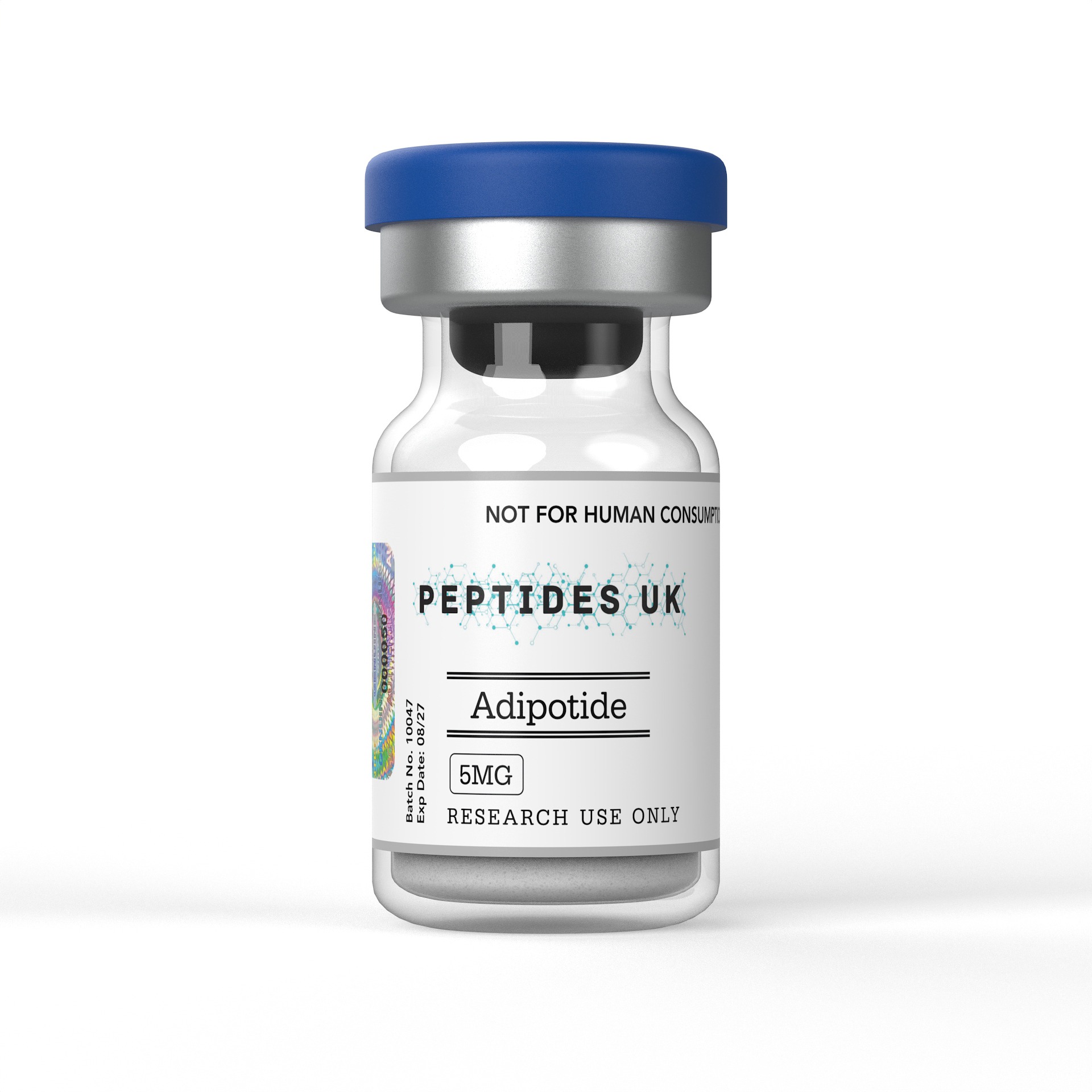
Adipotide (CKGGRAKDC-GG-D(KLAKLAK)2) is a synthetic proapoptotic targeting peptide engineered to selectively home to the vasculature supplying white adipose tissue and deliver a cell-killing domain specifically to adipose blood vessels — studied extensively across obesity biology, targeted vascular apoptosis research, white adipose tissue biology, and metabolic science for its unique capacity to selectively induce apoptosis in adipose tissue-specific blood vessels, producing targeted fat mass reduction through vascular disruption rather than conventional metabolic or appetite-based mechanisms — making it one of the most mechanistically distinctive and selectively targeted anti-obesity research peptides in modern adipose biology and vascular targeting science. Researchers and institutions across the USA can source verified, research-grade Adipotide with fast domestic dispatch and full batch documentation included.
✅ ≥99% Purity — HPLC & Mass Spectrometry Verified
✅ Batch-Specific Certificate of Analysis (CoA) Included
✅ Sterile Lyophilised Powder | GMP Manufactured
✅ Fast Dispatch Across the USA | USA Peptides In Stock
Adipotide — formally designated CKGGRAKDC-GG-D(KLAKLAK)2 — is a synthetic chimeric proapoptotic targeting peptide consisting of two functionally distinct domains connected by a glycine-glycine (GG) linker. The first domain is the targeting sequence CKGGRAKDC — a cyclic peptide that selectively homes to prohibitin, a protein expressed on the luminal surface of blood vessels specifically within white adipose tissue vasculature. The second domain is D(KLAKLAK)2 — a proapoptotic peptide consisting of D-amino acids in a (KLAKLAK)2 repeat sequence that disrupts mitochondrial membranes and induces apoptotic cell death upon intracellular delivery.
The biological rationale for Adipotide’s design exploits a fundamental vascular biology observation: the blood vessels supplying white adipose tissue express prohibitin on their luminal surface in a pattern that is largely specific to adipose vasculature — distinguishing adipose blood vessels from the vasculature of other tissues and providing a targetable molecular address for adipose-selective vascular intervention. By linking the CKGGRAKDC prohibitin-targeting domain to the D(KLAKLAK)2 proapoptotic domain, Adipotide is engineered to circulate systemically, home selectively to prohibitin-expressing adipose vasculature, internalise into adipose endothelial cells, deliver the mitochondria-disrupting proapoptotic payload, and induce apoptosis specifically in the blood vessels supplying white adipose tissue.
The downstream consequence of this targeted vascular apoptosis is the disruption of blood supply to white adipose tissue — triggering secondary apoptosis in the adipocytes that depend on the now-compromised vasculature for oxygen and nutrient delivery, resulting in targeted white adipose tissue mass reduction through a mechanism entirely distinct from appetite suppression, metabolic rate enhancement, or lipid oxidation approaches. This vascular targeting mechanism makes Adipotide one of the most mechanistically innovative and conceptually distinctive obesity research compounds in modern adipose biology — representing a fundamentally different research paradigm for studying fat mass regulation compared to the receptor-based metabolic approaches of GLP-1 analogues, amylin analogues, or other incretin-based research compounds.
The D-amino acid composition of the proapoptotic domain D(KLAKLAK)2 confers exceptional proteolytic stability — D-amino acid peptides are highly resistant to enzymatic degradation by proteases that cleave L-amino acid bonds — contributing to Adipotide’s stability in biological environments and its ability to remain intact long enough to home to adipose vasculature and deliver its cytotoxic payload following systemic administration in research models.
Adipotide is one of the most conceptually innovative and mechanistically distinctive obesity and adipose biology research peptides available to buy in the USA, with active demand from vascular biology, adipose tissue research, obesity science, and targeted vascular apoptosis research programs at institutions nationwide.
In controlled pre-clinical and laboratory settings, Adipotide has been studied across a wide range of adipose biology, vascular targeting, obesity, and metabolic research applications:
Prohibitin-Targeted Vascular Homing Research Adipotide’s primary mechanistic research application is studying prohibitin-mediated vascular homing — the selective targeting of the CKGGRAKDC domain to prohibitin expressed on the luminal surface of white adipose tissue blood vessels. Studies have examined how Adipotide homes to adipose vasculature following systemic administration, how prohibitin expression patterns differ between adipose and non-adipose vasculature, and what molecular features of the CKGGRAKDC sequence drive selective prohibitin binding — establishing prohibitin vascular targeting as a foundational research area in adipose-selective vascular biology.
Adipose Vascular Apoptosis Research Adipotide induces targeted apoptosis in the endothelial cells of white adipose tissue vasculature through D(KLAKLAK)2-mediated mitochondrial membrane disruption following internalisation. Studies have examined the kinetics of adipose vascular apoptosis, the morphological and biochemical characteristics of D(KLAKLAK)2-induced endothelial cell death, and the spatial distribution of vascular apoptosis within adipose tissue following Adipotide treatment — establishing targeted vascular apoptosis as the defining and most mechanistically distinctive research feature of Adipotide.
White Adipose Tissue Mass Reduction Research The downstream consequence of adipose vascular apoptosis is disruption of blood supply and secondary adipocyte death — producing targeted white adipose tissue mass reduction. Studies have examined the magnitude, timeline, and anatomical distribution of adipose tissue reduction following Adipotide treatment in pre-clinical obesity models — documenting significant reductions in white adipose tissue mass while examining specificity for adipose versus other tissue types.
Adipose Tissue Biology Research Adipotide provides a unique research tool for studying white adipose tissue biology — allowing researchers to examine how targeted disruption of adipose vasculature affects adipose tissue architecture, adipocyte biology, adipokine secretion profiles, and the metabolic consequences of selective white adipose tissue reduction in pre-clinical models, contributing to the understanding of adipose tissue as a metabolically active endocrine organ.
Prohibitin Vascular Biology Research Adipotide has been used to study the vascular biology of prohibitin — examining its expression patterns across adipose and non-adipose vasculature, its role as a cell surface receptor accessible from the vascular lumen, and how it differs from its intracellular mitochondrial function — contributing to the understanding of prohibitin’s dual role as both an intracellular chaperone protein and an adipose vascular surface marker with targetable properties.
Proapoptotic Peptide Delivery Research The D(KLAKLAK)2 domain is one of the most studied proapoptotic peptide sequences in targeted cell killing research — and Adipotide provides a model system for studying how proapoptotic peptide payloads can be delivered selectively to target cell populations through tissue-specific vascular homing sequences. Studies have examined the intracellular delivery, mitochondrial targeting, and apoptosis induction mechanisms of the D(KLAKLAK)2 domain in adipose endothelial cell models — contributing to the broader understanding of proapoptotic peptide payload delivery in targeted vascular research.
Obesity Metabolic Research Pre-clinical obesity research has examined Adipotide’s effects on metabolic parameters beyond fat mass reduction — including effects on insulin sensitivity, glucose metabolism, lipid profiles, and metabolic rate in pre-clinical obesity models — exploring the systemic metabolic consequences of targeted white adipose tissue reduction through vascular disruption, and how these compare to metabolic improvements produced by appetite-based obesity research compounds.
Kidney Function and Renal Biology Research Pre-clinical studies examining Adipotide’s effects have included assessment of renal function parameters — with research examining potential effects on kidney biology following treatment, reflecting the importance of characterising the specificity and off-target effects of vascular-targeting research compounds on renal vasculature and function.
Targeted Vascular Delivery Research Adipotide is used as a model compound for studying tissue-specific vascular targeting strategies — examining how peptide sequences identified through in vivo phage display can selectively home to the vasculature of specific tissues and how chimeric targeting-payload peptide architectures can achieve selective tissue cytotoxicity. This vascular targeting research contributes to the broader field of tissue-selective peptide delivery biology.
Vascular Zip Code Biology Research Adipotide’s design exploits the concept of vascular zip codes — the tissue-specific molecular address system of the vasculature in which different tissues express distinct surface markers on their blood vessel endothelium. Research using Adipotide has contributed to mapping the vascular zip code of adipose tissue — documenting the specific surface markers that distinguish adipose vasculature from other tissue vascular beds and how this molecular address system can be exploited for tissue-selective interventions in pre-clinical research models.
All applications are for research purposes only. Adipotide as supplied is not intended for human therapeutic use.
Adipotide has generated a focused, innovative, and scientifically distinctive research profile in adipose vascular biology and obesity science:
Adipose Vascular Targeting: Research has documented Adipotide’s selective homing to white adipose tissue vasculature following systemic administration in pre-clinical models — with studies confirming preferential accumulation in adipose tissue blood vessels compared to non-adipose vascular beds, validating the CKGGRAKDC-prohibitin targeting mechanism and establishing the tissue selectivity of Adipotide’s vascular homing biology.
White Adipose Tissue Reduction: Pre-clinical obesity studies have reported significant reductions in white adipose tissue mass following Adipotide treatment — with studies in obese rodent models documenting substantial fat mass reduction, decreased adipose depot weights, and improved body composition parameters through the targeted vascular disruption mechanism — establishing fat mass reduction through adipose vascular apoptosis as a pharmacologically distinct and effective obesity research approach.
Non-Human Primate Research: Adipotide has been studied in non-human primate obesity models — a particularly significant pre-clinical research step — with studies reporting reductions in body weight, visceral fat mass, and metabolic parameters including kidney function changes in obese primates following Adipotide treatment, making non-human primate research one of the most scientifically significant aspects of the Adipotide research profile.
Mechanistic Distinctiveness: Studies have confirmed that Adipotide’s mechanism of fat mass reduction — targeted vascular apoptosis and secondary adipocyte death — is fundamentally different from appetite-suppressing or metabolism-enhancing obesity research compounds, establishing Adipotide as a mechanistically unique research tool for studying alternative approaches to fat mass regulation in pre-clinical obesity models.
Prohibitin Surface Expression: Research has characterised prohibitin’s expression on the luminal surface of adipose vasculature — documenting its accessibility from the vascular lumen, its relative enrichment in adipose compared to non-adipose vascular beds, and its suitability as a molecular address for adipose-selective vascular targeting — contributing fundamental vascular biology insight into the molecular basis of adipose tissue-specific vascular identity.
D(KLAKLAK)2 Proapoptotic Activity: Studies have characterised the mitochondrial membrane disruption mechanism of the D(KLAKLAK)2 domain — documenting its internalisation into targeted endothelial cells, its mitochondrial membrane-disrupting activity, the resulting apoptotic signalling cascade, and the D-amino acid composition’s contribution to proteolytic resistance — establishing the proapoptotic payload mechanism of Adipotide’s cytotoxic biology.
| Feature | Adipotide | Cagrilintide | Semaglutide | AOD-9604 |
|---|---|---|---|---|
| Type | Chimeric proapoptotic targeting peptide | Long-acting amylin analogue | Long-acting GLP-1R agonist | GH fragment analogue |
| Mechanism | Prohibitin-targeted adipose vascular apoptosis | Amylin receptor activation — satiety / gastric emptying | GLP-1R activation — insulin secretion / satiety | Beta-3 adrenergic stimulation / lipolysis |
| Target | Adipose tissue vasculature — prohibitin | AMY1/2/3 receptors — brainstem / hypothalamus | GLP-1R — pancreas / brain / GI | Beta-3 adrenergic receptor / adipose tissue |
| Fat Reduction Mechanism | Direct vascular disruption → adipocyte death | Indirect — reduced caloric intake / appetite suppression | Indirect — reduced caloric intake / appetite suppression | Direct lipolysis stimulation in adipose tissue |
| Systemic Metabolic Effects | Secondary improvements via fat mass reduction | Glucagon suppression / gastric emptying / glucose homeostasis | Insulin secretion / glucose homeostasis / cardiovascular | Lipolysis / fat oxidation |
| Key Research Distinction | Only adipose vascular targeting / proapoptotic fat reduction research tool | Only long-acting non-amyloidogenic amylin agonist | Gold standard GLP-1R agonist | GH lipolytic fragment — receptor-independent of GH |
| Best For | Adipose vascular biology / prohibitin targeting / vascular zip code research | Amylin receptor pharmacology / obesity / CagriSema combination | GLP-1R pharmacology / glucose metabolism / incretin research | Lipolysis / fat oxidation / GH fragment biology |
| Parameter | Specification |
|---|---|
| Full Name | Adipotide (CKGGRAKDC-GG-D(KLAKLAK)2) |
| Type | Synthetic chimeric proapoptotic targeting peptide |
| Targeting Domain | CKGGRAKDC — prohibitin-binding adipose vascular homing sequence |
| Proapoptotic Domain | D(KLAKLAK)2 — D-amino acid mitochondrial membrane-disrupting sequence |
| Linker | GG (glycine-glycine) |
| Target | Prohibitin on white adipose tissue vascular endothelium |
| Mechanism | Adipose vascular homing → endothelial internalisation → mitochondrial disruption → apoptosis |
| Proteolytic Stability | High — D-amino acid proapoptotic domain |
| Purity | ≥99% (HPLC & MS Verified) |
| Form | Sterile Lyophilised Powder |
| Solubility | Sterile water, bacteriostatic water, PBS, DMSO |
| Storage (Powder) | -20°C, protect from light |
| Storage (Reconstituted) | 2–8°C, use promptly |
| Manufacturing | GMP Manufactured |
Every order includes full batch documentation:
✅ Batch-Specific Certificate of Analysis (CoA)
✅ HPLC Chromatogram
✅ Mass Spectrometry Confirmation
✅ Sterility & Endotoxin Testing Report
✅ Reconstitution Protocol
✅ Technical Research Support
Can I buy research-grade Adipotide in the USA? Yes. We supply research-grade Adipotide to researchers and institutions across the United States. All orders include full batch documentation and are packaged to maintain peptide integrity during transit. This compound is supplied strictly for laboratory research use only.
What is Adipotide and how does it work? Adipotide is a synthetic chimeric peptide consisting of two domains — a targeting sequence (CKGGRAKDC) that homes to prohibitin expressed on the luminal surface of white adipose tissue blood vessels, and a proapoptotic payload (D(KLAKLAK)2) that disrupts mitochondrial membranes and induces apoptosis upon intracellular delivery. Following systemic administration in pre-clinical models, Adipotide circulates and selectively binds to prohibitin on adipose vasculature endothelial cells, is internalised, delivers the proapoptotic domain to mitochondria, and induces targeted apoptosis in adipose blood vessels — disrupting the vascular supply to white adipose tissue and producing secondary adipocyte death and targeted fat mass reduction through a mechanism entirely distinct from appetite suppression or metabolic enhancement approaches.
What is prohibitin and why is it important in Adipotide research? Prohibitin is a protein with dual cellular roles — functioning intracellularly as a mitochondrial chaperone involved in mitochondrial biogenesis and cellular stress responses, and additionally being expressed on the luminal surface of blood vessels in white adipose tissue in a pattern that distinguishes adipose vasculature from the vascular beds of other tissues. This adipose vascular surface expression of prohibitin provides the molecular address — the vascular zip code — that Adipotide’s CKGGRAKDC targeting domain selectively binds. Research using Adipotide has contributed substantially to characterising prohibitin’s vascular surface expression biology, documenting its tissue-selective expression pattern, its accessibility from the vascular lumen, and its utility as a molecular target for adipose-selective vascular intervention research.
What makes Adipotide different from GLP-1 and amylin-based obesity research compounds? The fundamental difference is mechanism of fat mass reduction. GLP-1 agonists such as Semaglutide and amylin analogues such as Cagrilintide reduce fat mass indirectly — by suppressing appetite, reducing food intake, and thereby creating a caloric deficit that leads to fat loss over time. Adipotide reduces fat mass directly — by selectively destroying the blood vessels that supply white adipose tissue, causing adipocyte death through vascular disruption rather than caloric restriction. This mechanistic distinction makes Adipotide a unique research tool for studying fat mass regulation through a completely independent biological pathway — and for examining the systemic metabolic consequences of direct targeted fat mass reduction in pre-clinical models, independent of the appetite neurobiology and incretin receptor pharmacology that characterise GLP-1 and amylin-based obesity research.
What is the vascular zip code concept and how does it relate to Adipotide research? The vascular zip code concept proposes that the blood vessels of different tissues and organs express distinct surface molecular signatures — tissue-specific combinations of surface proteins that provide a molecular address system distinguishing the vasculature of one tissue from another. This concept was largely developed and validated through in vivo phage display experiments in which peptide libraries were screened for tissue-selective vascular homing in living animal models — identifying short peptide sequences that selectively home to the vasculature of specific organs. The CKGGRAKDC sequence in Adipotide was identified through this approach as a selective adipose vascular homing sequence — and Adipotide research has both exploited and contributed to the vascular zip code concept by demonstrating that adipose-selective vascular targeting and cytotoxicity are achievable through prohibitin-directed peptide delivery in pre-clinical models.
What purity is required for Adipotide research? ≥98% is considered research-grade, but ≥99% purity is strongly preferred for vascular homing studies, adipose endothelial apoptosis assays, in vivo adipose tissue targeting research, and obesity model experiments where compound purity directly affects targeting efficiency, biological activity measurements, and research reproducibility. All Adipotide supplied for USA researchers is independently verified to ≥99%.
How is Adipotide reconstituted for lab use? Allow the vial to reach room temperature before opening. Adipotide can be reconstituted in sterile water, bacteriostatic water, or PBS — add the solvent slowly down the vial wall and swirl gently without shaking. If solubility is challenging, DMSO can be used as an initial dissolution vehicle before dilution to working concentration with aqueous buffer — keep DMSO below 0.1% in final working solutions for cell-based assays. Use promptly after reconstitution or aliquot and store at -80°C to preserve peptide targeting and proapoptotic activity across multiple experimental uses. Handle with appropriate laboratory precautions given the proapoptotic biological activity of the D(KLAKLAK)2 domain.
Adipotide is supplied exclusively for legitimate scientific research purposes conducted within licensed laboratory environments. This product is not intended for human consumption, self-administration, or any therapeutic application. It must be handled by qualified researchers in compliance with applicable US federal and state regulations and institutional ethics guidelines. By purchasing, you confirm that this compound will be used solely for approved in-vitro or pre-clinical research purposes.
WhatsApp us
Receive News