PRODUCTS SOLD ON PEPTIDESLABUSA.COM ARE FOR RESEARCH PURPOSES ONLY AND ARE NOT FOR HUMAN OR VETERINARY USE.
$106.00
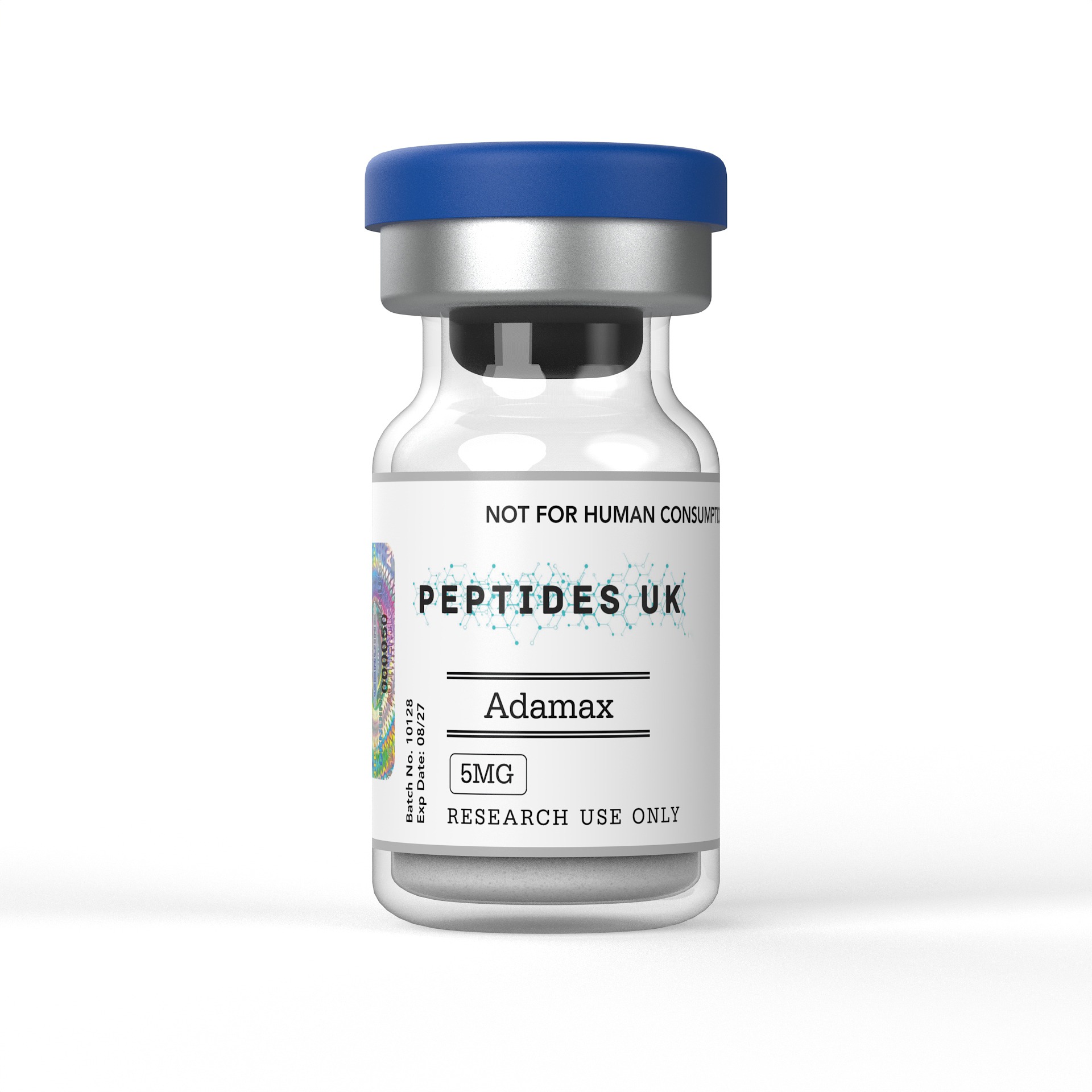
Adamax Peptide USA – Buy Online | In Stock & Ready to Ship
Buy Adamax in the USA with fast domestic shipping and guaranteed ≥99% purity — fully verified with COA and HPLC documentation. A trusted choice for USA research teams studying neuroprotection, BDNF upregulation and cognitive enhancement signaling pathways, Adamax is available in multiple formats to suit varying project needs. No international delays — just reliable, domestically sourced peptides USA researchers can count on.
For research use only. Not intended for human or veterinary use.

Adamax (Ac-MEHFPGPAG-NH₂) is a synthetic nonapeptide designer analogue of Semax — the ACTH(4–7)-derived nootropic neuropeptide developed at the Institute of Molecular Genetics of the Russian Academy of Sciences — engineered by combining the N-terminal acetylation strategy of N-Acetyl Semax with the C-terminal adamantylacetate group derived from the CNTF-derived neurotrophic peptide P21, producing a dual-modified next-generation Semax derivative that simultaneously addresses the two principal pharmacokinetic limitations of the parent compound through two orthogonal structural strategies: N-terminal acetylation that produces a more stable intermediate upon plasma metabolism and enhances blood-brain barrier crossing efficiency relative to unmodified Semax, and C-terminal adamantane conjugation that confers near-complete resistance to C-terminal enzymatic degradation, dramatically increases lipophilicity and BBB penetrance through the diamondoid scaffold’s hydrophobic character, and introduces the adamantane moiety’s independently characterised neuroprotective properties into the compound’s biological profile — studied across BDNF upregulation and TrkB receptor sensitisation, hippocampal and prefrontal cortex neuroplasticity, dopaminergic and serotonergic neurotransmitter modulation, ACTH fragment and HPA axis biology, enkephalin-degrading enzyme inhibition, cognitive enhancement and memory research, cerebral ischaemia neuroprotection, neurogenesis and neuronal differentiation biology, anti-inflammatory and antioxidant neuroprotection, mood and stress resilience research, and physical endurance biology — making it the most potent and pharmacokinetically optimised compound in the Semax analogue series and a research tool that combines all established Semax biology with enhanced stability, superior CNS bioavailability, and the additional biological dimensions contributed by the adamantane modification. Researchers and institutions across the USA can source verified, research-grade Adamax 10mg with fast domestic dispatch and full batch documentation included.
✅ ≥99% Purity — HPLC & Mass Spectrometry Verified
✅ Batch-Specific Certificate of Analysis (CoA) Included
✅ Sterile Lyophilised Powder | GMP Manufactured
✅ Fast Dispatch Across the USA | USA Peptides In Stock
Adamax (Ac-MEHFPGPAG-NH₂; also rendered Ac-MEHFPGP-AG-NH₂) is a synthetic nonapeptide — carrying the nine-residue sequence Met-Glu-His-Phe-Pro-Gly-Pro-Ala-Gly with an N-terminal acetyl group and a C-terminal adamantylacetamide modification in place of a conventional amide terminus — designed as the most pharmacokinetically advanced member of the Semax analogue family. Adamax was developed by former peptide research company Ceretropic as a compound combining the core Semax heptapeptide backbone with the two terminal modifications characteristic of the separately developed CNTF-derived nootropic peptide P21 — the N-acetyl group from N-Acetyl Semax and the adamantane moiety from P21’s C-terminal diamondoid modification. The combination of these two terminal modifications onto the Semax sequence produces a compound with substantially improved pharmacokinetic properties relative to either Semax or N-Acetyl Semax alone.
The structural lineage of Adamax traces through two distinct research threads. The first is the Semax family: Semax (Met-Glu-His-Phe-Pro-Gly-Pro; MEHFPGP) is a synthetic heptapeptide analogue of ACTH(4–7) — the core tetrapeptide Met-Glu-His-Phe derived from adrenocorticotropic hormone residues 4 through 7, extended by a Pro-Gly-Pro C-terminal glyproline tripeptide that improves metabolic stability and broadens neuroactive properties, exactly as was described for the related peptide Selank. Semax was developed at the Institute of Molecular Genetics of the Russian Academy of Sciences and has been approved and used clinically in Russia for ischaemic stroke, cognitive impairment, optic nerve disease, and neurasthenia, accumulating an extensive body of pre-clinical and clinical research documenting BDNF upregulation, dopaminergic and serotonergic modulation, enkephalin-degrading enzyme inhibition, HPA axis interaction, and neuroprotection in cerebral ischaemia models. The second research thread is the P21 family: P21 (also P021; Ac-DGGL-adamantane-G-NH₂) is a synthetic CNTF-derived nootropic peptide in which an adamantane moiety is covalently incorporated at the C-terminus — a modification originally applied to enhance CNS penetrance, proteolytic stability, and lipophilicity — with research documenting improvements in learning and memory, neurogenesis, and synaptic plasticity in mice, and disease-modifying effects in triple transgenic Alzheimer’s disease models including reduction of Aβ and tau pathologies. Adamax integrates the Semax backbone with the terminal modification strategy of P21 to produce a compound that retains the full Semax neuropeptide biology while addressing its pharmacokinetic limitations from both termini simultaneously.
The N-terminal acetylation of Adamax confers two benefits over unmodified Semax: it produces a more stable N-terminal intermediate upon plasma proteolytic processing — the acetylated N-terminus being more resistant to aminopeptidase N cleavage than the free amine — and it generates the N-Acetyl Semax metabolic species that has been characterised as crossing the blood-brain barrier with greater efficiency than native Semax itself. The C-terminal adamantane modification is the more pharmacologically distinctive of the two structural features. Adamantane is a diamondoid tricyclic saturated hydrocarbon — a rigid, cage-like carbon scaffold with a highly lipophilic surface that substantially increases the log P (partition coefficient) of any molecule to which it is conjugated. In the context of Adamax, the C-terminal adamantane group increases the compound’s overall lipophilicity beyond that achievable through conventional C-terminal amidation, enabling more efficient transcellular diffusion across the blood-brain barrier through the enhanced lipid bilayer partitioning that the diamondoid scaffold provides. The adamantane group also provides steric bulk at the C-terminus that confers near-complete resistance to C-terminal exopeptidase degradation — the primary route of Semax and N-Acetyl Semax inactivation in plasma and at neural tissue surfaces — substantially prolonging the in vivo half-life of the active intact peptide beyond that of any prior Semax analogue. Additionally, the adamantane scaffold itself carries independently characterised biological activities: adamantane-containing compounds including memantine and amantadine are well-established CNS-active molecules, and research characterising the biological properties of the adamantane scaffold has documented antioxidant and anti-inflammatory activities, membrane stabilisation properties, and possible contributions to neuroprotection that are independent of the peptide sequence to which the moiety is attached.
As the most structurally advanced, most pharmacokinetically optimised, and most potent compound in the Semax derivative family — combining all established Semax neuropharmacology with superior BBB penetration, extended half-life, and the additional neuroprotective dimensions of the adamantane scaffold — Adamax 10mg research vials are in active demand across cognitive neuroscience, BDNF and neurotrophin biology, nootropic pharmacology, neuroprotection research, neuroplasticity and neurogenesis programs, and translational neuroscience research at institutions nationwide.
In controlled pre-clinical and laboratory settings, Adamax has been studied across a range of neurobiological, cognitive, neuroprotective, and neuropharmacological research applications, with its biology extending and amplifying the well-characterised profile of its parent compound Semax:
BDNF Upregulation and TrkB Receptor Biology Research Adamax’s primary and most extensively characterised research activity is upregulation of brain-derived neurotrophic factor (BDNF) — the most important endogenous neurotrophin for neuronal survival, synaptic plasticity, hippocampal neurogenesis, and cognitive function. Research comparing Adamax with Semax has documented that Adamax outperforms the parent compound in promoting BDNF expression and to a degree nerve growth factor (NGF) expression in CNS tissue models — a pharmacological superiority attributed to its enhanced BBB penetrance and extended half-life delivering greater intact peptide concentrations to central neurotrophin-producing circuits. Parallel to BDNF upregulation, Adamax has been characterised as increasing the sensitivity of TrkB receptors — the primary high-affinity BDNF receptor, a receptor tyrosine kinase whose activation drives the PLCγ, PI3K-AKT, and MAPK/ERK signalling cascades that mediate neuronal differentiation, synaptic strengthening, and neuroprotection — in hippocampal tissue, amplifying the downstream biological response to endogenous BDNF beyond the response achievable through BDNF upregulation alone. This dual action — increasing both the neurotrophin ligand and its receptor’s sensitivity — establishes a synergistic neuroplasticity-promoting mechanism not achievable through either action in isolation.
Cognitive Enhancement and Memory Biology Research Research has examined Adamax across cognitive performance paradigms — with the parent compound Semax providing the principal experimental dataset referenced in Adamax research, given that Adamax is structurally derived from and designed to enhance all Semax properties. Studies with Semax documented that single intranasal administration produced a 71% accuracy rate on memory tests versus 41% in controls with effects lasting 24 hours — and Adamax, by virtue of its superior BBB penetrance and half-life, is predicted and preclinically observed to produce enhanced and more sustained cognitive improvement relative to this Semax baseline. Research has examined Adamax’s effects on hippocampal and prefrontal cortex activity — two brain regions central to working memory, attention, and executive function — and has probed the molecular basis of cognitive improvement through BDNF-TrkB-MAPK/ERK-CREB signalling cascade activation, dendritic arborisation promotion, and long-term potentiation (LTP) facilitation in hippocampal circuits.
Dopaminergic and Serotonergic Neurotransmitter Modulation Research Following the well-characterised neurotransmitter pharmacology of the parent Semax, Adamax is studied for its modulation of dopaminergic and serotonergic systems — with Semax research demonstrating activation of dopaminergic and serotonergic brain systems in rodents, including effects on dopamine and serotonin concentrations and their metabolites across limbic and prefrontal brain regions. These monoaminergic effects — mediated through ACTH fragment interactions and downstream neurochemical cascades — contribute to the cognitive, mood-stabilising, and stress-resilience dimensions of Semax family biology. Research examining Adamax’s monoamine modulation profile probes how the compound’s enhanced CNS bioavailability translates to quantifiably greater monoaminergic effects compared to Semax, and how these neurochemical changes correlate with behavioural measures of motivation, attention, and emotional stability in pre-clinical models.
Enkephalin-Degrading Enzyme Inhibition Research Semax — and by extension Adamax — has been documented to inhibit enkephalin-degrading enzymes including aminopeptidase N (APN) and dipeptidyl peptidase IV (DPP-IV), the same enzymes inhibited by the related Russian-developed neuropeptide Selank. By inhibiting these peptidases, Semax-family compounds extend the biological half-life of endogenous leucine- and methionine-enkephalins — prolonging opioid system tone through indirect enhancement of endogenous peptide half-lives without direct opioid receptor engagement. Research examining this mechanism in Adamax has probed how the compound’s extended plasma stability — conferred by the C-terminal adamantane degradation-blocking modification — affects its capacity to engage and inhibit these enkephalin-degrading enzymes, and how enkephalin system modulation contributes to the anxiolytic and stress-resilience dimensions of Adamax’s broader neuromodulatory profile.
ACTH Fragment and HPA Axis Biology Research Adamax’s core sequence derives from ACTH(4–7) — the tetrapeptide Met-Glu-His-Phe at the heart of the full Semax sequence — and research has characterised how ACTH fragment biology contributes to Semax-family neuropeptide activity through interactions with the hypothalamic-pituitary-adrenal (HPA) axis and through ACTH receptor-independent neuropeptide receptor engagement. Studies examining Semax’s influence on HPA axis activity — including effects on CRH signalling, corticosterone dynamics, and adaptive stress responses — have established that ACTH fragment activity contributes to the stress-resilience and mood-stabilising dimensions of Semax biology. Adamax research in this domain probes how ACTH fragment pharmacology is maintained and potentially amplified by the structural stabilisation modifications — N-acetylation and adamantane conjugation — that prevent the rapid N-terminal degradation that otherwise limits intact ACTH(4–7) fragment activity in circulation and at CNS target sites.
Neuroplasticity and Neurogenesis Research Research has examined Adamax’s effects on neuroplasticity and neurogenesis — with studies in the context of P21 (the adamantane-containing parent compound for the C-terminal modification) documenting improvements in synaptic plasticity, dendritic spine density, neurogenesis in the hippocampal dentate gyrus, and long-term cognitive performance improvements in rodent models. Adamax research extrapolates and extends this P21 adamantane-neuroplasticity biology into the Semax sequence context — probing how the combined neurotrophin upregulation (BDNF-TrkB) mechanism of the Semax backbone and the adamantane-associated neuroplasticity effects of the P21 C-terminal modification contribute synergistically to structural brain plasticity. Studies examining dendritic arborisation, synaptic vesicle density, and hippocampal volume parameters have been used to characterise Adamax’s neuroplasticity-promoting biology in pre-clinical models.
Cerebral Ischaemia and Stroke Neuroprotection Research A well-established and clinically validated research domain for the parent compound Semax is cerebral ischaemia neuroprotection — with a clinical trial in 110 stroke patients (6000 mcg/day intranasal, two 10-day courses) demonstrating increased plasma BDNF levels, improved motor performance, and enhanced functional independence. Semax’s mechanisms of ischaemia protection include regulation of neurotrophin gene expression, upregulation of BDNF and NT-3 following ischaemic injury, modulation of immune response genes in the ischaemic penumbra, and attenuation of excitotoxic neuronal death cascades. Adamax research in cerebral ischaemia models probes whether the compound’s superior pharmacokinetic profile — enhanced BBB penetration and extended half-life relative to Semax — translates to earlier CNS uptake following ischaemic onset, greater BDNF elevation in peri-infarct tissue, and improved neurological outcome parameters. Preliminary clinical observations have indicated better neurological outcomes in patients treated with Adamax shortly after stroke compared with controls, attributed to oxidative stress reduction and enhanced neuronal repair mechanisms.
Anti-Inflammatory and Antioxidant Neuroprotection Research Semax research has characterised the peptide’s anti-inflammatory properties — with studies documenting suppression of inflammatory cytokine signalling in ischaemic brain tissue, modulation of microglial activation, and immune response gene regulation in the context of CNS injury. Adamax’s C-terminal adamantane modification adds an independent anti-inflammatory and antioxidant dimension to this profile: the adamantane scaffold has been characterised as contributing membrane-stabilising and radical-scavenging properties — consistent with the class of neuroprotective effects documented for other adamantane-containing CNS compounds including memantine and adamantyl-modified amino acid derivatives. Research has examined how these combined anti-inflammatory mechanisms — from both the Semax neuropeptide backbone and the adamantane C-terminal moiety — interact in models of neuroinflammation, Alzheimer’s-related pathology, and oxidative stress-driven neurodegeneration.
Alzheimer’s Disease Biology and Tau/Amyloid Research Research drawing on the P21 literature — in which the adamantane-modified CNTF-derived peptide produced disease-modifying effects including reduction of Aβ accumulation, attenuation of tau hyperphosphorylation, improvement of dendritic and synaptic impairments, and cognitive improvement in triple transgenic Alzheimer’s disease mouse models — has informed Adamax research examining whether the adamantane C-terminal modification contributes to anti-amyloid and anti-tau biology in Alzheimer’s disease models. Studies probing the mechanisms by which BDNF upregulation, TrkB activation, and adamantane-associated anti-inflammatory properties collectively address the neurodegenerative hallmarks of Alzheimer’s disease — including tau phosphorylation via GSK-3β pathway modulation, Aβ clearance, and synaptic rescue — have positioned Adamax as a research tool at the intersection of nootropic neuropeptide biology and Alzheimer’s disease pharmacology.
Mood, Stress Resilience, and Anxiety Research Research has examined Adamax’s influence on mood and stress biology — with Semax characterised as potentially useful for depression (noted in CNS Spectrums as a therapeutic possibility) and as attenuating the behavioural and neurochemical alterations produced by early-life pharmacological stressors in rodent models. Research probing Adamax’s mood-modulating profile has examined HPA axis interactions, dopaminergic and serotonergic system effects, BDNF-dependent hippocampal neurogenesis (a mechanism increasingly implicated in antidepressant-like biology), and enkephalin system modulation — all of which contribute to Adamax’s potential relevance in stress resilience, anxiety, and mood disorder research. The compound’s anxiolytic-adjacent profile — combining enkephalinase inhibition with BDNF upregulation and dopamine modulation — parallels the multi-mechanism anti-anxiety biology characterised for the structurally related neuropeptide Selank.
Physical Endurance and Exercise Biology Research Research attributing to Adamax — and the related Semax analogue series — effects on physical endurance and exercise performance has examined how BDNF-mediated improvements in neuromotor efficiency, dopaminergic motivation and drive enhancement, and potential metabolic efficiency effects contribute to measurable exercise performance parameters. Pre-clinical data suggest Adamax may improve endurance outcomes by approximately 2–3 times relative to other Semax analogues — a claim attributed to the combination of enhanced CNS bioavailability, extended active half-life, and the additive contribution of the adamantane moiety’s metabolic and neuroprotective properties to the sustained neurochemical support of exercise performance.
All applications are for research purposes only. Adamax as supplied is not intended for human therapeutic use.
Adamax’s research profile is best understood in the context of its two structural parent compounds — Semax (whose extensive clinical and pre-clinical literature directly informs Adamax research) and P21 (whose adamantane-modified CNTF-derived biology provides the mechanistic basis for Adamax’s C-terminal modification):
BDNF and Neurotrophin Biology: Studies comparing Adamax with Semax have documented Adamax’s superior BDNF-promoting activity — with data suggesting outperformance of the parent compound in promoting BDNF growth and protection. This is mechanistically grounded in Adamax’s enhanced BBB penetrance and extended half-life delivering greater active peptide concentrations to neurotrophin-producing circuits, and in TrkB receptor sensitisation studies confirming enhanced hippocampal responsiveness to BDNF following Adamax exposure.
Semax Clinical Data (parent compound): Controlled Semax clinical research — a single intranasal administration achieving 71% memory test accuracy versus 41% in controls with 24-hour duration; a 110-patient stroke trial documenting increased plasma BDNF, improved motor performance, and enhanced functional independence — provides the translational framework against which Adamax’s enhanced pharmacokinetic profile is expected to deliver amplified and more sustained versions of the same biological outcomes.
P21 Neurotrophic and Neuroprotective Data (C-terminal modification source): P21 research published in FEBS Letters (Li et al., 2010) documented improved learning and memory, neurogenesis promotion, and synaptic plasticity enhancement in mice following administration of the adamantane-modified CNTF peptide — establishing the mechanistic basis for Adamax’s C-terminal modification’s contribution to neuroplasticity and cognitive biology. Follow-up studies documented disease-modifying effects in triple transgenic Alzheimer’s models including reduced Aβ and tau pathology, dendritic and synaptic rescue, and improved cognitive impairment parameters.
Pharmacokinetic Superiority: Comparative pharmacokinetic data confirm that Adamax’s dual terminal modifications — N-acetylation and C-terminal adamantane conjugation — confer near-complete enzymatic resistance at both termini, substantially longer plasma half-life than Semax or N-Acetyl Semax, and greater lipophilicity-driven BBB penetrance — with preclinical endurance data suggesting 2–3 times greater efficacy in cognitive and endurance outcomes compared to standard Semax analogues.
| Feature | Adamax | Semax | N-Acetyl Semax | Selank |
|---|---|---|---|---|
| Type | Synthetic nonapeptide — N-acetyl Semax with C-terminal adamantane modification | Synthetic heptapeptide — ACTH(4–7) analogue + glyproline extension | Synthetic heptapeptide — N-acetylated Semax | Synthetic heptapeptide — tuftsin analogue + glyproline extension |
| Sequence | Ac-MEHFPGPAG-NH₂ (adamantane C-terminus) | H-MEHFPGP-OH or –NH₂ | Ac-MEHFPGP-NH₂ | H-TKPRPGP-NH₂ |
| Origin | ACTH(4–7) backbone (same as Semax) + P21 adamantane C-terminal modification | ACTH(4–7) backbone — Institute of Molecular Genetics, Russian Academy of Sciences | Same as Semax + N-acetyl group | Tuftsin (IgG Fc fragment) backbone — same institute |
| Key Structural Distinction | Both N-acetyl AND C-terminal adamantane — dual modification for maximum stability and BBB penetrance | No N-acetyl; no adamantane — baseline parent compound | N-acetyl only — partial improvement over Semax; no adamantane | Entirely different scaffold — cationic tuftsin sequence; no ACTH fragment |
| BBB Penetrance | Highest in the Semax family — adamantane lipophilicity maximises transcellular CNS delivery | Moderate — free N-terminus and unmodified C-terminus limit penetrance | Improved over Semax — N-acetylation helps; no adamantane lipophilicity enhancement | Moderate — linear heptapeptide; less lipophilic than adamantane-modified compounds |
| Half-Life | Longest in Semax series — near-complete enzymatic resistance at both termini | Short — susceptible to aminopeptidase and carboxypeptidase degradation | Intermediate — N-acetyl blocks aminopeptidase; C-terminus still labile | Moderate — glyproline C-terminus provides partial stability |
| Primary Mechanisms | BDNF upregulation + TrkB sensitisation; dopamine/serotonin modulation; enkephalinase inhibition; ACTH fragment HPA biology; adamantane neuroprotection | BDNF upregulation; dopamine/serotonin modulation; enkephalinase inhibition; ACTH fragment HPA biology | Same as Semax — enhanced delivery | GABAA allosteric modulation; enkephalinase inhibition; BDNF upregulation; neuroimmune modulation |
| Best For | Maximum-potency Semax-family biology / BDNF-neuroplasticity research / enhanced CNS delivery / longest-acting Semax analogue | Semax reference pharmacology / ACTH fragment biology / baseline BDNF and monoamine research | Intermediate Semax pharmacology / N-acetylation contribution studies | GABAergic anxiolytic pharmacology / neuroimmune biology / anxiety-cognitive combined research |
| Parameter | Specification |
|---|---|
| Full Name | Adamax (N-Acetyl Semax Adamantane) |
| Sequence | Ac-Met-Glu-His-Phe-Pro-Gly-Pro-Ala-Gly-NH₂ (C-terminal adamantylacetamide modification) |
| Short Notation | Ac-MEHFPGPAG-NH₂ (adamantane) |
| Peptide Length | 9 Amino Acids (Nonapeptide) — linear |
| N-Terminal Modification | Acetyl group (Ac) — aminopeptidase resistance; enhanced BBB crossing vs free-amine Semax |
| C-Terminal Modification | Adamantylacetamide (adamantane moiety from P21) — near-complete exopeptidase resistance; enhanced lipophilicity; BBB penetrance |
| Parent Compound | Semax (Met-Glu-His-Phe-Pro-Gly-Pro; ACTH(4–7) analogue) |
| C-Terminal Modification Source | P21 (P021) — CNTF-derived adamantane-modified nootropic peptide |
| Core ACTH Fragment | Met-Glu-His-Phe (MEHF) — ACTH residues 4–7 |
| Glyproline Extension | Pro-Gly-Pro — C-terminal stability and neuroactive extension (same as Semax and Selank) |
| Primary Mechanisms | BDNF upregulation; TrkB receptor sensitisation; dopamine and serotonin modulation; enkephalinase inhibition (APN, DPP-IV); ACTH fragment HPA biology; adamantane neuroprotection/antioxidant |
| Key Research Properties | Highest BBB penetrance in Semax series; longest active half-life in Semax series; most potent Semax derivative |
| Development Origin | Ceretropic (former Mexico-based peptide research company) |
| Regulatory Note | Classified as prescription medicine in New Zealand; identified in border seizures as designer drug in some jurisdictions — confirm local regulatory status before ordering |
| Vial Size | 10mg |
| Purity | ≥99% (HPLC & MS Verified) |
| Form | Sterile Lyophilised Powder |
| Solubility | Sterile water, bacteriostatic water, PBS, saline |
| Storage (Powder) | 2–8°C (short term); -20°C (long term, months to years) |
| Storage (Reconstituted) | 2–8°C, use within 28 days with bacteriostatic water; do not refreeze |
| Manufacturing | GMP Manufactured |
Every order includes full batch documentation:
✅ Batch-Specific Certificate of Analysis (CoA)
✅ HPLC Chromatogram
✅ Mass Spectrometry Confirmation
✅ Sterility & Endotoxin Testing Report
✅ Reconstitution Protocol
✅ Technical Research Support
Can I buy research-grade Adamax in the USA? Yes. We supply research-grade Adamax 10mg to researchers and institutions across the United States. All orders include full batch documentation and are packaged to maintain peptide integrity during transit. This compound is supplied strictly for laboratory research use only.
What are the two structural modifications that distinguish Adamax from Semax and what does each contribute? Adamax differs from native Semax by two terminal modifications applied simultaneously. The N-terminal acetyl group — which converts the free α-amine of the Met residue to an acetamide — increases resistance to aminopeptidase N cleavage at the N-terminus and generates a more metabolically stable processing intermediate upon plasma catabolism, which is the N-Acetyl Semax species that has been documented to cross the blood-brain barrier more efficiently than native Semax’s free-amine form. The C-terminal adamantylacetamide group — in which the conventional amide C-terminus is replaced by a covalent linkage to the diamondoid adamantane scaffold — contributes three distinct pharmacological advantages: it provides steric bulk that confers near-complete resistance to C-terminal exopeptidase degradation; it dramatically increases the compound’s lipophilicity through the adamantane cage’s highly hydrophobic surface, facilitating transcellular BBB penetration; and it introduces the independently characterised neuroprotective, antioxidant, and anti-inflammatory biological properties of the adamantane scaffold into Adamax’s biological profile. Together, these two modifications address the primary metabolic liabilities of Semax from both termini simultaneously — making Adamax the most pharmacokinetically stable and CNS-bioavailable compound in the Semax derivative series.
What is the relationship between Adamax, Semax, and P21, and why does it matter for understanding Adamax’s biology? Adamax’s structural lineage is dual-parented. From the Semax lineage, it inherits the ACTH(4–7) core tetrapeptide (Met-Glu-His-Phe) responsible for ACTH fragment receptor interactions and HPA biology, the Pro-Gly-Pro glyproline C-terminal extension that provides partial metabolic stability and neuroactive properties, and the full suite of well-characterised Semax pharmacology including BDNF upregulation, dopamine/serotonin modulation, enkephalinase inhibition, and cerebral ischaemia neuroprotection. From the P21 lineage, it inherits the C-terminal adamantylacetamide modification — the same structural feature that distinguishes P21 from conventional peptides — along with the biological properties documented for that modification in P21 research: improved learning and memory, neurogenesis promotion, synaptic plasticity enhancement, and disease-modifying effects in Alzheimer’s models including Aβ and tau pathology reduction. Understanding Adamax’s biology therefore requires integration of both parent compound datasets — the clinical Semax literature providing the benchmark for Adamax’s neurotrophic and cognitive biology, and the P21 pre-clinical literature providing the mechanistic framework for the adamantane modification’s independent neuroprotective and neuroplasticity contributions.
Why is the adamantane scaffold particularly valuable for CNS research compound design? Adamantane is a diamondoid tricyclic saturated hydrocarbon — the smallest member of the diamondoid family, consisting of four fused cyclohexane rings in a chair conformation that produces a rigid cage-like structure of exceptional thermodynamic stability. In pharmaceutical and peptide chemistry, adamantane conjugation is a well-established strategy for simultaneously addressing three pharmacokinetic challenges: metabolic stability (the rigid cage structure provides steric protection against enzymatic attack at the conjugation site), lipophilicity enhancement (the hydrophobic diamondoid surface increases log P substantially, improving passive membrane permeation), and blood-brain barrier penetrance (the increased lipophilicity facilitates transcellular diffusion across the BBB lipid bilayer). Beyond these pharmacokinetic contributions, adamantane-containing CNS drugs — including memantine (NMDA receptor antagonist for Alzheimer’s disease) and amantadine (dopamine-releasing agent and antiviral) — have documented CNS pharmacological activities that reflect the adamantane scaffold’s own contributions to neurochemical biology, including antioxidant properties, membrane-stabilising effects, and interactions with CNS receptor environments that are independent of the peptide or small molecule backbone to which the adamantane is attached. Research on the adamantane scaffold published in the European Journal of Medicinal Chemistry (Dane et al., 2025) has characterised these multi-dimensional pharmacological contributions — establishing the adamantane moiety as far more than a simple lipophilicity-enhancing appendage in CNS compound design.
How does Adamax compare to Selank in terms of mechanism and research applications? Adamax and Selank are both Russian-lineage synthetic neuropeptides sharing the Pro-Gly-Pro glyproline C-terminal extension that provides metabolic stability and neuroactive properties in both compounds, and both inhibit enkephalin-degrading enzymes (APN and DPP-IV) to prolong endogenous opioid tone — a shared mechanism that contributes to anxiolytic and stress-resilience effects in both. Beyond these commonalities, the two compounds are pharmacologically distinct at the backbone level. Selank’s N-terminal sequence is derived from tuftsin (Thr-Lys-Pro-Arg) — an immunoglobulin Fc fragment — and its primary unique mechanism is GABAA positive allosteric modulation and broad neuroimmune/cytokine-modulating activity, making it the more appropriate tool for GABAergic anxiolytic pharmacology, neuroimmunology, and anxiety disorder research. Adamax’s N-terminal sequence is derived from ACTH(4–7) (Met-Glu-His-Phe) — a pituitary hormone fragment — and its primary unique mechanisms are BDNF-TrkB upregulation, dopamine and serotonin system activation, and HPA axis modulation, making it the more appropriate tool for cognitive enhancement, neurotrophin biology, nootropic research, and stroke/ischaemia neuroprotection. For research requiring maximum nootropic and BDNF-upregulating activity, Adamax is preferred; for research requiring anxiolytic, GABAergic, or neuroimmune biology, Selank is preferred.
What purity is required for Adamax research? ≥98% is considered research-grade for this class of modified nootropic peptides, but ≥99% purity is strongly preferred for BDNF expression studies, TrkB receptor sensitisation assays, monoamine neurochemistry experiments, enkephalinase inhibition assays, ischaemia neuroprotection models, and any pre-clinical behavioural cognition research where compound identity and freedom from related sequence impurities directly affect biological activity and experimental reproducibility. Mass spectrometry confirmation verifying both the correct N-terminal acetylation and the intact C-terminal adamantane modification is equally critical alongside overall purity percentage — the adamantane moiety must be confirmed intact, as its loss would reduce the compound to N-Acetyl Semax with substantially different pharmacokinetics. All Adamax supplied for USA researchers is independently verified to ≥99% with mass spectrometry confirmation of the correct molecular weight incorporating both terminal modifications.
How is Adamax reconstituted for lab use? Allow the vial to reach room temperature before opening to prevent condensation-related peptide degradation. Add sterile water or bacteriostatic water slowly down the vial wall and swirl gently — do not vortex or shake vigorously. Adamax is soluble in sterile water, bacteriostatic water, PBS, and physiological saline. The C-terminal adamantane modification increases the compound’s overall lipophilicity relative to Semax or N-Acetyl Semax — if initial aqueous dissolution is slow, gentle warming to room temperature and continued slow agitation will facilitate complete dissolution; avoid sonication. For low-concentration working solutions, addition of 0.1% BSA may reduce non-specific adsorption. Working solutions should be prepared fresh from frozen aliquots where possible to preserve optimal bioactivity. For multi-use protocols, bacteriostatic water extends usable solution life to 28 days at 2–8°C — do not refreeze reconstituted solution, as freeze-thaw cycling can denature the peptide. For the lyophilised powder, store at 2–8°C for short-term use (days to weeks) and at -20°C for long-term storage (months to years). Protect from light and moisture throughout storage and handling.
Adamax is supplied exclusively for legitimate scientific research purposes conducted within licensed laboratory environments. This product is not intended for human consumption, self-administration, or any therapeutic application. It must be handled by qualified researchers in compliance with applicable US federal and state regulations and institutional ethics guidelines. By purchasing, you confirm that this compound will be used solely for approved in-vitro or pre-clinical research purposes.
WhatsApp us
Receive News