
PRODUCTS SOLD ON PEPTIDESLABUSA.COM ARE FOR RESEARCH PURPOSES ONLY AND ARE NOT FOR HUMAN OR VETERINARY USE.
$306.00
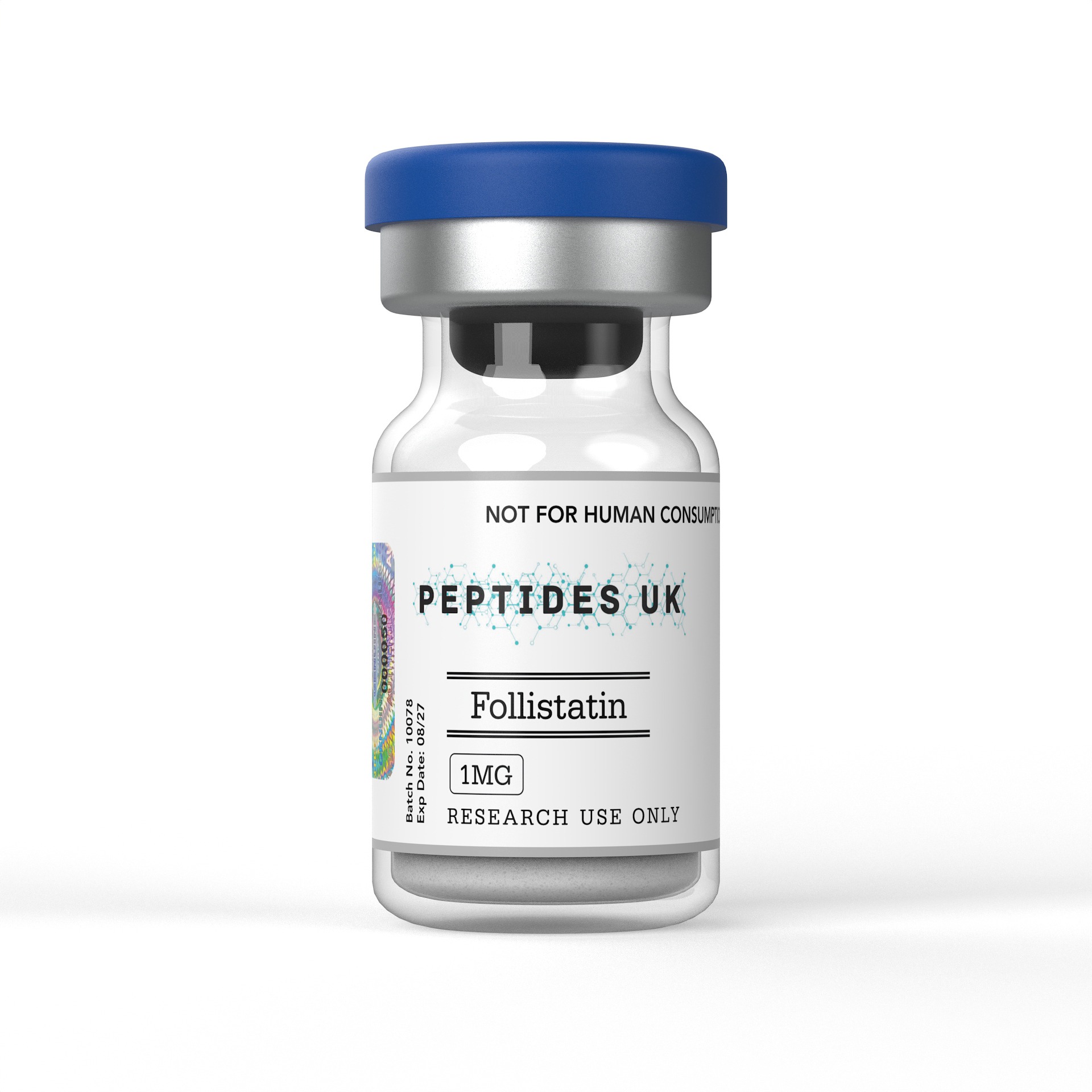
Follistatin Peptide USA – Buy Online | In Stock & Ready to Ship
Buy Follistatin in the USA with fast domestic shipping and guaranteed ≥99% purity — fully verified with COA and HPLC documentation. A trusted choice for USA research teams studying myostatin inhibition, muscle growth regulation and reproductive hormone pathways, Follistatin is available in multiple formats to suit varying project needs. No international delays — just reliable, domestically sourced peptides USA researchers can count on.
For research use only. Not intended for human or veterinary use.

Follistatin is a naturally occurring glycoprotein and potent endogenous antagonist of activin and myostatin, studied extensively across muscle biology, reproductive science, metabolic research, and tissue repair for its powerful inhibition of TGF-β superfamily signalling, its remarkable influence on skeletal muscle growth and fibrosis suppression, and its broad regulatory role across multiple organ systems — making it one of the most significant and actively researched endogenous growth regulators in modern cell biology and regenerative science. Researchers and institutions across the USA can source verified, research-grade Follistatin with fast domestic dispatch and full batch documentation included.
✅ ≥99% Purity — HPLC & Mass Spectrometry Verified
✅ Batch-Specific Certificate of Analysis (CoA) Included
✅ Sterile Lyophilised Powder | GMP Manufactured
✅ Fast Dispatch Across the USA | USA Peptides In Stock
Follistatin is a single-chain glycoprotein encoded by the FST gene, originally identified as a follicle-stimulating hormone (FSH) inhibitor in ovarian follicular fluid but subsequently recognised as a broadly acting endogenous antagonist of multiple members of the TGF-β (Transforming Growth Factor-beta) superfamily — most notably activin, myostatin (GDF-8), GDF-11, and BMP-7. It is expressed in virtually every tissue in the body, reflecting its fundamental role as a regulator of TGF-β superfamily signalling across multiple biological systems.
Follistatin exists in several isoforms produced through alternative splicing of the FST gene — the most studied being Follistatin-288 (FS-288) and Follistatin-315 (FS-315), which differ in their heparin binding properties and tissue distribution. FS-288 binds strongly to heparan sulphate proteoglycans on cell surfaces and in the extracellular matrix, giving it primarily local tissue-level activity. FS-315 has reduced heparin binding affinity and circulates more freely in the bloodstream, making it the predominant systemic isoform. Research compounds are available in both isoforms, with the choice between them depending on whether local or systemic TGF-β antagonism is the research focus.
Follistatin’s mechanism of action centres on its direct, high-affinity binding to activin, myostatin, and other TGF-β family ligands — neutralising them before they can engage their cognate receptors (ActRII/ALK4 for activin, ActRIIB/ALK4-5 for myostatin) and preventing the downstream SMAD2/3 signalling cascade that these ligands would otherwise activate. This ligand-trapping mechanism makes Follistatin a powerful tool for studying TGF-β superfamily biology, muscle growth regulation, and the broad physiological consequences of activin and myostatin pathway inhibition.
Follistatin is one of the most research-significant endogenous proteins available to buy in the USA, with rapidly growing demand across muscle biology, reproductive endocrinology, fibrosis research, and regenerative science programs at universities, biotech institutions, and research centres nationwide.
In controlled pre-clinical and laboratory settings, Follistatin has been studied across an exceptionally wide range of biological, physiological, and regenerative research applications:
Myostatin Inhibition Research Follistatin’s most actively studied research application in recent years is its potent inhibition of myostatin (GDF-8) — the primary negative regulator of skeletal muscle mass. Research has examined how Follistatin-mediated myostatin neutralisation affects muscle fibre size, satellite cell activation, protein synthesis signalling, and overall skeletal muscle mass in pre-clinical models — making myostatin inhibition biology one of the most active and high-profile areas of Follistatin research.
Skeletal Muscle Biology Research Beyond myostatin inhibition, Follistatin exerts broad effects on skeletal muscle biology through simultaneous inhibition of multiple TGF-β superfamily ligands. Studies have examined how Follistatin influences muscle fibre hypertrophy, satellite cell proliferation and differentiation, muscle regeneration following injury, and the balance between muscle protein synthesis and degradation — establishing it as a foundational research tool for studying the TGF-β superfamily’s role in muscle biology.
Activin Signalling Research Activin is one of Follistatin’s primary binding targets, and research has extensively examined how Follistatin-mediated activin neutralisation affects cellular proliferation, differentiation, apoptosis, and inflammatory signalling across multiple tissue types — contributing to the broad understanding of activin biology across reproductive, metabolic, and immune research contexts.
Reproductive Biology Research Follistatin was originally identified in the context of reproductive biology as an FSH-suppressing factor, and research has examined its role in regulating FSH secretion from the pituitary, ovarian follicle development, oocyte maturation, and reproductive cycle dynamics in pre-clinical models — making reproductive endocrinology one of the historically most active areas of Follistatin research.
Fibrosis Research TGF-β superfamily signalling — particularly activin and myostatin pathways — plays a central role in fibrotic tissue remodelling. Research has examined Follistatin’s influence on fibrosis development and progression in pre-clinical models of cardiac, pulmonary, hepatic, and skeletal muscle fibrosis — exploring how TGF-β antagonism via Follistatin affects collagen deposition, myofibroblast activation, and fibrotic signalling cascades.
Muscle Repair and Regeneration Research Studies have examined Follistatin’s influence on skeletal muscle repair following injury in pre-clinical models, with research documenting how myostatin and activin inhibition affects satellite cell activation, muscle fibre regeneration, and functional recovery timelines — reflecting strong research interest in how TGF-β antagonism influences the muscle repair process.
Bone and Cartilage Biology Research Follistatin inhibits several BMP (Bone Morphogenetic Protein) family members within the TGF-β superfamily, and research has examined its influence on bone formation, osteoblast biology, cartilage development, and skeletal remodelling in pre-clinical models — contributing to the understanding of how TGF-β superfamily regulation affects skeletal biology.
Metabolic Research Myostatin and activin signalling influence metabolic parameters including insulin sensitivity, adipogenesis, and energy expenditure. Studies have examined how Follistatin-mediated inhibition of these pathways affects metabolic outcomes in pre-clinical models — with research interest in how skeletal muscle mass regulation via TGF-β antagonism connects to systemic metabolic biology.
Cancer Biology Research Activin and myostatin signalling are studied in the context of cancer cachexia and tumour biology. Research has examined Follistatin’s influence on cancer cell biology, muscle wasting in tumour-bearing animal models, and how TGF-β superfamily antagonism affects the tumour microenvironment — generating research interest in Follistatin as a tool for studying cancer-related muscle biology.
Cardiac Biology Research Activin and myostatin receptors are expressed in cardiac tissue, and research has examined Follistatin’s influence on cardiac muscle biology, cardiac fibrosis models, and myocardial function parameters in pre-clinical cardiac studies — reflecting the cardiovascular dimension of TGF-β superfamily biology research.
FSH Regulation Research Follistatin’s original identified function as an FSH-suppressing factor continues to be studied in reproductive endocrinology research, with studies examining how Follistatin modulates FSH secretion from pituitary gonadotrophs and how this influences reproductive axis dynamics in pre-clinical models.
All applications are for research purposes only. Follistatin as supplied is not intended for human therapeutic use.
Follistatin has accumulated one of the most significant and broad research profiles of any endogenous TGF-β regulatory protein in modern biomedical science:
Myostatin Inhibition: Research has established Follistatin as one of the most potent endogenous myostatin inhibitors known, with studies consistently documenting remarkable increases in skeletal muscle mass in animal models with Follistatin overexpression or administration — including landmark studies reporting muscle mass increases of up to two to three times normal in genetically modified animal models — generating enormous research interest in the myostatin-Follistatin axis as a target for muscle biology research.
Muscle Biology: A substantial body of pre-clinical research has documented Follistatin’s broad effects on skeletal muscle biology beyond myostatin inhibition alone — with studies reporting simultaneous inhibition of multiple TGF-β ligands, activation of satellite cell pools, enhancement of muscle fibre hypertrophy, and improvement in muscle regeneration outcomes following injury in animal models.
Activin Biology: Research has thoroughly characterised Follistatin’s high-affinity binding to activin and its broad consequences for activin-dependent biology across reproductive, metabolic, and immune research contexts — establishing Follistatin as the primary endogenous activin antagonist and an essential research tool for studying activin signalling in multiple tissue systems.
Fibrosis Research: Pre-clinical fibrosis studies have reported Follistatin’s suppression of fibrotic signalling in multiple organ models, with research documenting reduced collagen deposition, myofibroblast activation, and fibrotic marker expression in cardiac, pulmonary, and skeletal muscle fibrosis models under Follistatin treatment — generating research interest in TGF-β antagonism as an anti-fibrotic research strategy.
Reproductive Science: Decades of reproductive biology research have documented Follistatin’s central role in FSH regulation, ovarian follicle development, and reproductive cycle dynamics — establishing it as a foundational research tool in reproductive endocrinology and contributing to the broad understanding of how TGF-β superfamily signalling regulates the reproductive axis.
Isoform Research: Studies comparing FS-288 and FS-315 isoforms have documented important differences in tissue distribution, heparin binding, and biological activity — providing pharmacological insight into how Follistatin isoform selection affects research outcomes and establishing the importance of isoform specificity in TGF-β antagonism research design.
| Feature | Follistatin-315 | Follistatin-288 | Myostatin (GDF-8) | Activin A |
|---|---|---|---|---|
| Type | Endogenous glycoprotein — systemic isoform | Endogenous glycoprotein — local tissue isoform | TGF-β superfamily ligand | TGF-β superfamily ligand |
| Primary Role | Systemic TGF-β superfamily antagonist | Local tissue TGF-β superfamily antagonist | Primary negative regulator of muscle mass | Broad TGF-β signalling ligand |
| Heparin Binding | Low — circulates freely | High — cell surface and ECM bound | N/A | N/A |
| Key Targets | Activin, Myostatin, GDF-11, BMP-7 | Activin, Myostatin, GDF-11, BMP-7 | ActRIIB/ALK4-5 | ActRII/ALK4 |
| Research Use | Systemic TGF-β antagonism / muscle / metabolic studies | Local tissue TGF-β antagonism / fibrosis / wound healing | Muscle mass negative regulation studies | Reproductive / immune / metabolic signalling studies |
| Best For | Broad TGF-β superfamily inhibition / muscle biology / systemic studies | Local myostatin / activin inhibition / tissue-level studies | Myostatin pathway activation research | Activin receptor pharmacology / reproductive research |
| Parameter | Specification |
|---|---|
| Full Name | Follistatin (FST) — available as FS-288 and FS-315 isoforms |
| Type | Endogenous glycoprotein — TGF-β superfamily antagonist |
| Primary Targets | Activin, Myostatin (GDF-8), GDF-11, BMP-7 |
| Receptor Pathway Blocked | ActRII/ALK4 (activin) |
| Purity | ≥99% (HPLC & MS Verified) |
| Form | Sterile Lyophilised Powder |
| Solubility | Sterile water, bacteriostatic water, PBS |
| Storage (Powder) | -20°C, protect from light |
| Storage (Reconstituted) | 2–8°C, use promptly |
| Manufacturing | GMP Manufactured |
Every order includes full batch documentation:
✅ Batch-Specific Certificate of Analysis (CoA)
✅ HPLC Chromatogram
✅ Mass Spectrometry Confirmation
✅ Sterility & Endotoxin Testing Report
✅ Reconstitution Protocol
✅ Technical Research Support
Can I buy research-grade Follistatin in the USA? Yes. We supply research-grade Follistatin to researchers and institutions across the United States. All orders include full batch documentation and are packaged to maintain protein integrity during transit. This compound is supplied strictly for laboratory research use only.
What is the difference between Follistatin-288 and Follistatin-315? Follistatin-288 (FS-288) and Follistatin-315 (FS-315) are the two primary isoforms produced through alternative splicing of the FST gene, and they differ primarily in their heparin binding properties and tissue distribution. FS-288 binds strongly to heparan sulphate proteoglycans on cell surfaces and in the extracellular matrix, making it predominantly locally acting — sequestered in tissues rather than circulating freely. FS-315 has reduced heparin binding affinity and circulates more freely in the bloodstream, making it the predominant systemic isoform. Researchers choose FS-288 for local tissue-level TGF-β antagonism studies and FS-315 for systemic inhibition studies and broader muscle biology research.
What is myostatin and why is Follistatin important for myostatin research? Myostatin (GDF-8) is a TGF-β superfamily ligand produced primarily by skeletal muscle that acts as the primary endogenous negative regulator of muscle mass — suppressing muscle fibre growth and satellite cell activation. Follistatin is one of the most potent known endogenous myostatin antagonists, binding myostatin directly and preventing it from engaging its receptors and activating downstream muscle-suppressing SMAD signalling. In research, Follistatin is the primary tool for studying the consequences of myostatin inhibition on skeletal muscle biology — with landmark animal studies reporting two to three times normal muscle mass under conditions of Follistatin overexpression making it one of the most significant compounds in muscle biology research.
What is the difference between Follistatin and myostatin inhibitor antibodies in research? Both Follistatin and anti-myostatin antibodies are used to study myostatin pathway inhibition in research, but they differ in specificity and breadth of action. Anti-myostatin antibodies are highly selective — they block only myostatin signalling. Follistatin is a broad TGF-β superfamily antagonist that simultaneously inhibits myostatin, activin, GDF-11, and BMP-7 among others. This makes Follistatin the preferred research tool when studying the combined effects of multiple TGF-β family member inhibition, while selective antibodies are used when isolated myostatin pathway blockade is required. The broader inhibition profile of Follistatin is both its key research advantage and an important consideration in experimental design.
What purity is required for Follistatin research? ≥98% is considered research-grade, but ≥99% purity is strongly preferred for TGF-β receptor binding assays, myostatin inhibition studies, muscle cell biology research, and activin signalling experiments where compound purity directly affects biological activity and experimental accuracy. All Follistatin supplied for USA researchers is independently verified to ≥99%.
How is Follistatin reconstituted for lab use? Allow the vial to reach room temperature before opening. Add sterile water, bacteriostatic water, or PBS slowly down the vial wall and swirl gently — do not shake, as vigorous agitation can denature the glycoprotein. Use promptly after reconstitution, or aliquot and store at -80°C to preserve biological activity across multiple experimental uses. Avoid repeated freeze-thaw cycles as these can significantly reduce Follistatin activity. For cell culture applications, carrier protein such as BSA may be added to the reconstitution buffer to enhance stability.
Follistatin is supplied exclusively for legitimate scientific research purposes conducted within licensed laboratory environments. This product is not intended for human consumption, self-administration, or any therapeutic application. It must be handled by qualified researchers in compliance with applicable US federal and state regulations and institutional ethics guidelines. By purchasing, you confirm that this compound will be used solely for approved in-vitro or pre-clinical research purposes.
Receive News