PRODUCTS SOLD ON PEPTIDESLABUSA.COM ARE FOR RESEARCH PURPOSES ONLY AND ARE NOT FOR HUMAN OR VETERINARY USE.
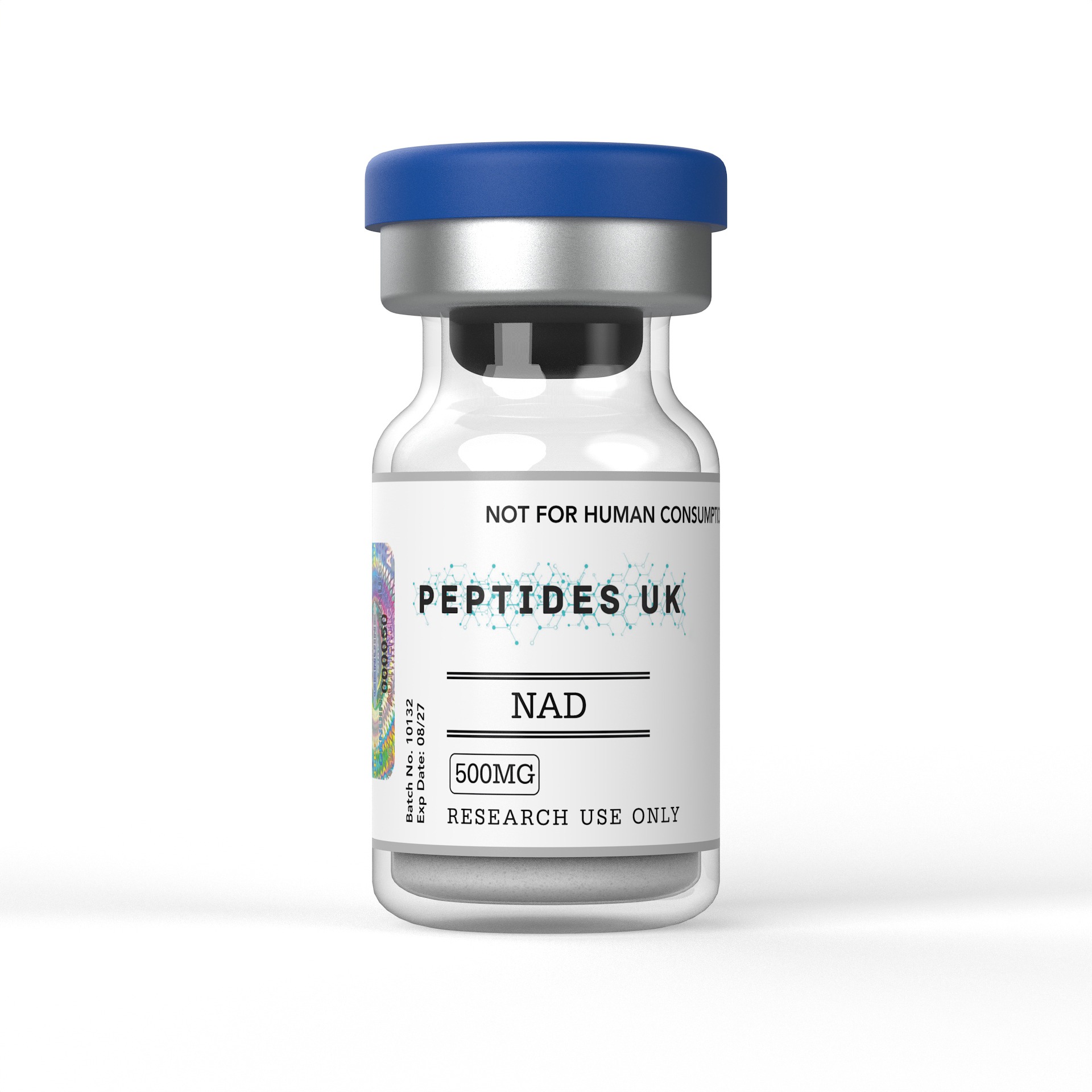
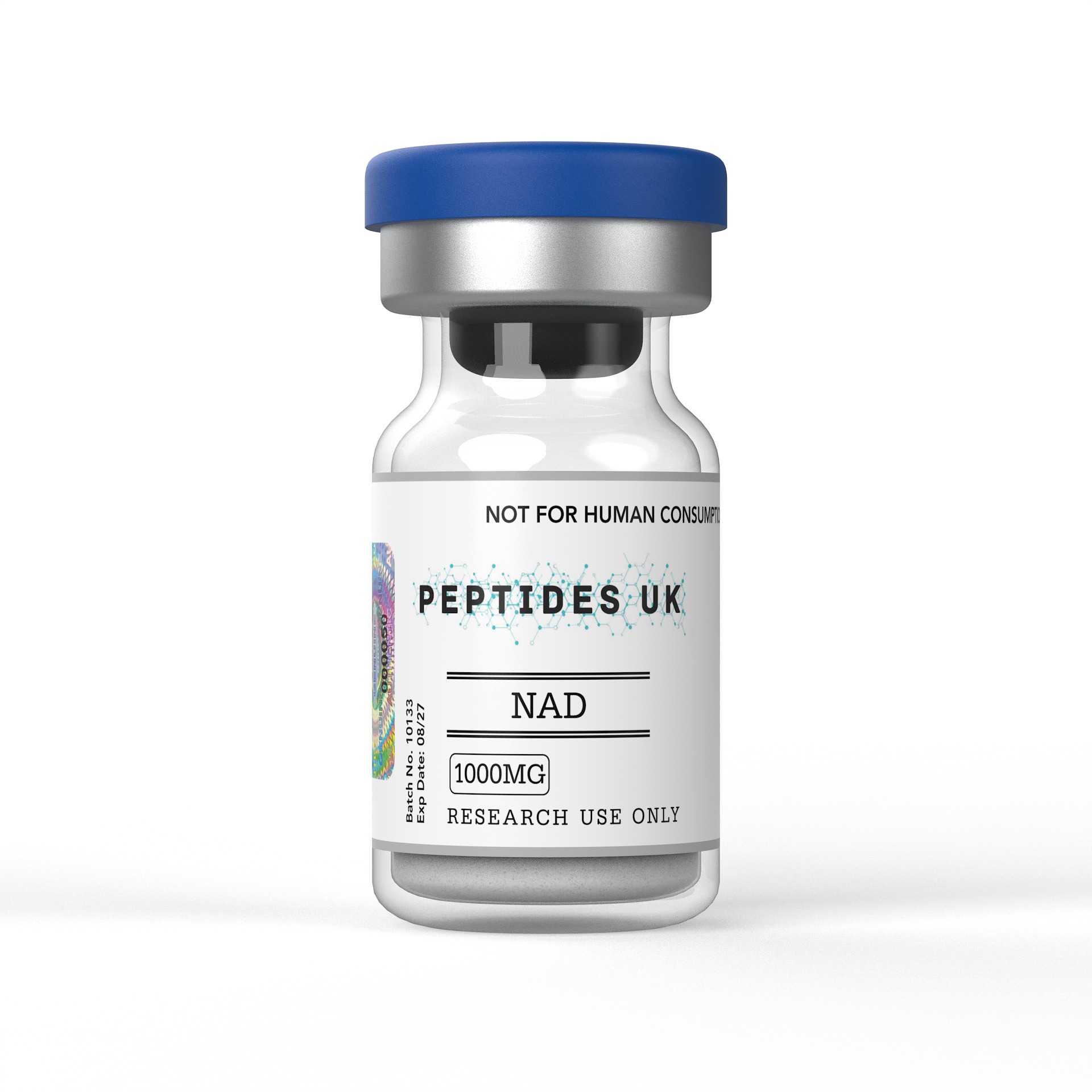
$130.00 – $184.50Price range: $130.00 through $184.50
NAD+ USA – Buy Online | In Stock & Ready to Ship
Buy NAD+ (Nicotinamide Adenine Dinucleotide) in the USA with fast domestic shipping and guaranteed ≥99% purity — fully verified with COA and HPLC documentation. A trusted choice for USA research teams studying cellular energy metabolism, mitochondrial function and DNA repair pathways, NAD+ is available in multiple formats to suit varying project needs. No international delays — just reliable, domestically sourced research compounds USA teams can count on.
For research use only. Not intended for human or veterinary use.

NAD+ (Nicotinamide Adenine Dinucleotide) is a naturally occurring coenzyme found in every living cell, studied extensively across metabolic biology, ageing science, DNA repair research, mitochondrial function, and cellular energy regulation for its fundamental role as an electron carrier in cellular respiration, a substrate for sirtuins and PARP enzymes, and a central regulator of cellular health and longevity signalling — making it one of the most biologically fundamental and broadly researched molecules in modern biochemistry, ageing science, and metabolic biology. Researchers and institutions across the USA can source verified, research-grade NAD+ with fast domestic dispatch and full batch documentation included.
✅ ≥99% Purity — HPLC & Mass Spectrometry Verified
✅ Batch-Specific Certificate of Analysis (CoA) Included
✅ Lyophilised Powder | GMP Manufactured
✅ Fast Dispatch Across the USA | USA Research Compounds In Stock
NAD+ (Nicotinamide Adenine Dinucleotide) is a dinucleotide coenzyme consisting of two nucleotides — one containing adenine and one containing nicotinamide — joined by a pair of phosphate groups. It exists in two primary interconvertible forms: the oxidised form NAD+ and the reduced form NADH, with the cycling between these two forms being central to its function as an electron carrier in cellular metabolism. NAD+ is present in every cell of every living organism and participates in hundreds of metabolic reactions — making it one of the most fundamental and universally important molecules in biochemistry.
Beyond its classical role as a redox coenzyme in metabolic pathways including glycolysis, the citric acid cycle, and oxidative phosphorylation, NAD+ has emerged over the past two decades as a critically important signalling molecule in its own right. NAD+ serves as the obligate substrate for three major classes of NAD+-consuming enzymes — sirtuins (SIRT1-7), PARP enzymes (poly-ADP-ribose polymerases), and CD38/CD157 — each of which consumes NAD+ to execute critical cellular functions including gene expression regulation, DNA damage repair, inflammation control, and calcium signalling. This dual role — as both a metabolic redox carrier and a signalling substrate — underpins NAD+’s central importance across a remarkably broad range of biological research areas.
NAD+ levels in cells and tissues decline significantly with age across multiple species including humans, and this age-related NAD+ decline has been identified as a potential contributor to metabolic dysfunction, reduced DNA repair capacity, mitochondrial deterioration, and other hallmarks of biological ageing — generating enormous research interest in the biology of NAD+ homeostasis, the enzymes that consume and synthesise NAD+, and the downstream consequences of NAD+ level modulation across ageing and metabolic research models.
NAD+ is one of the most actively researched molecules in modern biology, with applications spanning metabolism, ageing, DNA repair, mitochondrial science, and sirtuin biology — and is one of the most in-demand research compounds available to buy in the USA, with active use across biochemistry, cell biology, ageing science, and metabolic research programs at universities, biotech institutions, and research centres nationwide.
In controlled pre-clinical and laboratory settings, NAD+ has been studied across an exceptionally wide range of biochemical, cellular, and physiological research applications:
Cellular Energy Metabolism Research NAD+’s most fundamental research application is its role as a redox coenzyme in cellular energy metabolism. Studies have examined how NAD+ participates in glycolysis, the citric acid cycle, and the mitochondrial electron transport chain — accepting electrons from metabolic substrates to form NADH, which then donates electrons to drive ATP synthesis via oxidative phosphorylation — establishing NAD+ as the central electron carrier linking nutrient catabolism to cellular energy production.
Sirtuin Biology Research Sirtuins (SIRT1-7) are NAD+-dependent deacylase enzymes that regulate a broad range of cellular processes including gene expression, stress responses, DNA repair, mitochondrial biogenesis, and metabolic regulation. NAD+ is the obligate co-substrate for all sirtuin reactions — consumed stoichiometrically in each deacylation cycle. Research has examined how NAD+ availability regulates sirtuin activity, how sirtuin-mediated protein deacylation affects downstream biological outcomes, and how the NAD+-sirtuin axis connects cellular metabolic status to gene expression and longevity signalling.
PARP Enzyme and DNA Repair Research PARP enzymes (poly-ADP-ribose polymerases) — particularly PARP1 — are major NAD+-consuming enzymes activated by DNA strand breaks. Research has examined how PARP-mediated NAD+ consumption affects cellular NAD+ levels following genotoxic stress, how NAD+ availability influences DNA repair capacity and speed, and the competitive relationship between PARP activation and sirtuin activity for available NAD+ — a key area of research for understanding how DNA damage affects cellular metabolic and epigenetic regulation.
Mitochondrial Function Research NAD+ is essential for mitochondrial metabolism — as a substrate for the TCA cycle and as the primary electron donor for the mitochondrial electron transport chain. Research has examined how mitochondrial NAD+ levels affect respiratory chain function, mitochondrial membrane potential, ATP production efficiency, and mitochondrial morphology — contributing to the understanding of how NAD+ homeostasis regulates mitochondrial health and function in cellular models.
Ageing Biology Research Age-related NAD+ decline is one of the most actively studied areas of ageing biology. Research has examined how NAD+ levels change with age across tissues and species, what mechanisms drive age-related NAD+ decline — including increased CD38 activity, reduced biosynthesis, and altered consumption — and how experimental manipulation of NAD+ levels affects ageing-related biological parameters in pre-clinical models.
CD38 Biology Research CD38 is a major NAD+-consuming enzyme whose expression increases with age and inflammation, and is considered a primary driver of age-related NAD+ decline. Research has examined CD38’s NAD+-degrading activity, its regulation by inflammatory signals, and how CD38 inhibition affects NAD+ levels and downstream biology — establishing CD38 as a key research target in the NAD+ homeostasis field.
NAD+ Biosynthesis Pathway Research NAD+ is synthesised through multiple pathways — including the salvage pathway from nicotinamide (via NAMPT enzyme), the de novo pathway from tryptophan, and the Preiss-Handler pathway from nicotinic acid. Research has examined the relative contributions of each biosynthetic route to cellular NAD+ maintenance, how biosynthetic enzyme activity changes with age and metabolic stress, and how NAD+ precursors including NMN and NR enter and feed these pathways — providing fundamental insight into NAD+ homeostasis regulation.
Circadian Biology Research NAD+ biosynthesis via the NAMPT-mediated salvage pathway is under circadian clock control, with NAD+ levels oscillating across the 24-hour cycle in a clock-dependent manner. Research has examined how this circadian NAD+ oscillation affects sirtuin activity, metabolic gene expression, and circadian clock feedback regulation — establishing NAD+ as a key molecular link between the circadian clock and cellular metabolic regulation.
Neurological and Neuroprotection Research NAD+ metabolism plays important roles in neuronal health, and research has examined how NAD+ levels affect neuronal survival, axonal integrity, synaptic function, and resistance to neurotoxic challenges in neuronal cell models and pre-clinical CNS models — reflecting growing research interest in NAD+ biology in the context of neurodegeneration and brain ageing.
Immunology and Inflammation Research NAD+-consuming enzymes including CD38, PARP1, and SIRT1 play important roles in immune cell function and inflammatory signalling. Research has examined how NAD+ availability affects macrophage activation, T cell function, dendritic cell biology, and inflammatory cytokine production — contributing to the understanding of how cellular metabolic status regulates immune responses.
NAD+ Precursor Comparison Research NAD+ is used as the direct reference compound in studies comparing NAD+ precursors — including Nicotinamide Mononucleotide (NMN), Nicotinamide Riboside (NR), Nicotinamide (NAM), and Nicotinic Acid (NA) — examining how each precursor affects cellular NAD+ levels, which biosynthetic enzymes are engaged, and how precursor-mediated NAD+ repletion compares to direct NAD+ supplementation in various research models.
All applications are for research purposes only. NAD+ as supplied is not intended for human therapeutic use.
NAD+ has accumulated one of the most extensive and rapidly expanding research profiles of any biological molecule in modern biochemistry and ageing science:
Age-Related Decline: Research has consistently documented significant age-related declines in NAD+ levels across multiple tissues and species — with studies reporting reductions of 50% or more in tissue NAD+ concentrations between young and aged animals — establishing NAD+ decline as one of the most reproducible biochemical hallmarks of biological ageing and generating enormous research interest in the consequences and reversibility of this decline.
Sirtuin Regulation: Studies have established NAD+ as the rate-limiting factor for sirtuin activity in many cellular contexts — demonstrating that sirtuin-dependent gene regulation, stress responses, and metabolic adaptation are directly sensitive to NAD+ availability — cementing the NAD+-sirtuin axis as one of the most important regulatory connections in ageing and metabolic biology research.
PARP and DNA Repair: Research has documented the competitive relationship between PARP activation and sirtuin activity for available NAD+ — with studies showing that sustained DNA damage-driven PARP activation can deplete cellular NAD+ sufficiently to impair sirtuin function, connecting DNA damage burden to metabolic and epigenetic dysregulation via NAD+ competition.
Mitochondrial Biology: Studies have documented NAD+’s central role in mitochondrial metabolism and the consequences of mitochondrial NAD+ depletion on respiratory chain function, ATP production, and mitochondrial morphology — contributing foundational data to the understanding of how NAD+ homeostasis regulates mitochondrial health across cellular and pre-clinical models.
Pre-Clinical Ageing Research: Studies in aged animal models examining experimental NAD+ level manipulation have reported effects on multiple ageing-related parameters — including metabolic function, muscle physiology, neurological markers, and DNA repair capacity — generating significant research interest in NAD+ homeostasis as a modulator of ageing biology and driving the broader field of NAD+-focused longevity research.
CD38 and NAD+ Decline: Research has identified CD38 as a primary driver of age-related NAD+ decline — with studies documenting increased CD38 expression and NAD+-degrading activity in aged tissues, and showing that CD38 inhibition can preserve NAD+ levels and affect downstream biology — establishing CD38 as a key research target for understanding and potentially modulating age-related NAD+ depletion.
| Feature | NAD+ | NMN | NR | NADH |
|---|---|---|---|---|
| Type | Oxidised dinucleotide coenzyme | NAD+ biosynthetic precursor | NAD+ biosynthetic precursor | Reduced dinucleotide coenzyme |
| Role | Direct coenzyme / sirtuin-PARP substrate | Feeds NAD+ salvage pathway via NMN→NAD+ | Feeds NAD+ salvage pathway via NR→NMN→NAD+ | Electron donor in mitochondrial ETC |
| Enzyme Substrates | SIRT1-7, PARP1-17, CD38 | NMNAT enzymes | NRK enzymes → NMNAT | Complex I of ETC |
| Research Use | Direct NAD+ biology / sirtuin / PARP / redox research | NAD+ precursor pharmacology / biosynthesis pathway research | NAD+ precursor / NRK pathway research | Mitochondrial redox / electron transport research |
| Half-Life in Cells | Minutes — rapidly consumed | Moderate | Moderate | Rapid — rapidly oxidised to NAD+ |
| Best For | Direct NAD+ coenzyme studies / enzyme substrate research | Salvage pathway / NMN-to-NAD+ conversion research | NR-specific biosynthesis / comparative precursor studies | Mitochondrial respiratory chain / redox balance research |
| Parameter | Specification |
|---|---|
| Full Name | Nicotinamide Adenine Dinucleotide (NAD+) |
| Type | Oxidised dinucleotide coenzyme |
| Molecular Weight | 663.4 g/mol |
| Form | Lyophilised Powder |
| Purity | ≥99% (HPLC & MS Verified) |
| Solubility | Sterile water, PBS, aqueous buffers |
| Storage (Powder) | -20°C, protect from light and moisture |
| Storage (Reconstituted) | Use promptly — NAD+ is unstable in solution |
| pH Sensitivity | Degrades rapidly at alkaline pH — use neutral to slightly acidic buffers |
| Manufacturing | GMP Manufactured |
Every order includes full batch documentation:
✅ Batch-Specific Certificate of Analysis (CoA)
✅ HPLC Chromatogram
✅ Mass Spectrometry Confirmation
✅ Purity and Identity Verification Report
✅ Reconstitution Protocol
✅ Technical Research Support
Can I buy research-grade NAD+ in the USA? Yes. We supply research-grade NAD+ (Nicotinamide Adenine Dinucleotide) to researchers and institutions across the United States. All orders include full batch documentation and are packaged to maintain compound integrity during transit. This compound is supplied strictly for laboratory research use only.
What is the difference between NAD+ and NADH in research? NAD+ and NADH are the two interconvertible forms of the same dinucleotide coenzyme. NAD+ is the oxidised form that accepts electrons from metabolic substrates — becoming NADH in the process. NADH is the reduced form that donates electrons to the mitochondrial electron transport chain to drive ATP synthesis — regenerating NAD+ in the process. In research terms, NAD+ is used when studying NAD+-consuming enzyme systems including sirtuins and PARPs, NAD+ biosynthesis and homeostasis, and cellular NAD+ level regulation. NADH is used when studying mitochondrial electron transport, redox balance, and the NADH/NAD+ ratio as a metabolic indicator. The cycling between these two forms is central to both cellular energy metabolism and NAD+-dependent signalling research.
What is the difference between NAD+ and NMN in research? NAD+ is the active coenzyme that directly serves as substrate for sirtuins, PARPs, and CD38. NMN (Nicotinamide Mononucleotide) is a biosynthetic precursor that enters the NAD+ salvage pathway and is converted to NAD+ by NMNAT enzymes. In research terms, NAD+ is used when studying the direct coenzyme and its enzyme substrates — providing immediate substrate availability without biosynthetic conversion steps. NMN is used when studying NAD+ biosynthesis pathway pharmacology, NMN-to-NAD+ conversion kinetics, and how precursor supplementation affects cellular NAD+ levels and downstream biology. Both compounds are essential research tools for understanding different aspects of NAD+ biology.
Why do NAD+ levels decline with age and why does this matter in research? Age-related NAD+ decline is driven by multiple mechanisms — including increased CD38 expression and activity, reduced NAMPT-mediated biosynthesis, increased PARP activation from accumulated DNA damage, and altered NAD+ consumption patterns in aged tissues. This decline matters enormously in research because NAD+ availability directly regulates sirtuin activity, DNA repair capacity, mitochondrial function, and cellular stress responses — all of which are central to biological ageing. Research interest in NAD+ decline has made it one of the most active areas of ageing biology, with studies examining whether experimental restoration of NAD+ levels in aged models can affect ageing-related biological parameters across multiple tissue systems.
What purity is required for NAD+ research? ≥98% is considered research-grade, but ≥99% purity is strongly preferred for enzyme activity assays, sirtuin research, PARP biology studies, and metabolic experiments where compound purity directly affects the accuracy of NAD+-dependent enzyme kinetics and biological activity measurements. All NAD+ supplied for USA researchers is independently verified to ≥99%.
How is NAD+ reconstituted and handled for lab use? NAD+ should be reconstituted in sterile water or a neutral to slightly acidic aqueous buffer — PBS at pH 7.4 is suitable for most applications. Add solvent slowly and swirl gently to dissolve. A critical handling consideration is NAD+’s chemical instability in solution — particularly at alkaline pH and elevated temperatures, where NAD+ degrades rapidly. Always prepare fresh solutions for sensitive assays, use ice-cold buffers where possible, and avoid alkaline conditions. Store powder at -20°C protected from light and moisture — moisture is a particular concern as NAD+ is hygroscopic. Use reconstituted solutions promptly and do not store reconstituted NAD+ solutions for extended periods.
NAD+ (Nicotinamide Adenine Dinucleotide) is supplied exclusively for legitimate scientific research purposes conducted within licensed laboratory environments. This product is not intended for human consumption, self-administration, or any therapeutic application. It must be handled by qualified researchers in compliance with applicable US federal and state regulations and institutional ethics guidelines. By purchasing, you confirm that this compound will be used solely for approved in-vitro or pre-clinical research purposes.
Receive News