PRODUCTS SOLD ON PEPTIDESLABUSA.COM ARE FOR RESEARCH PURPOSES ONLY AND ARE NOT FOR HUMAN OR VETERINARY USE.
$92.50
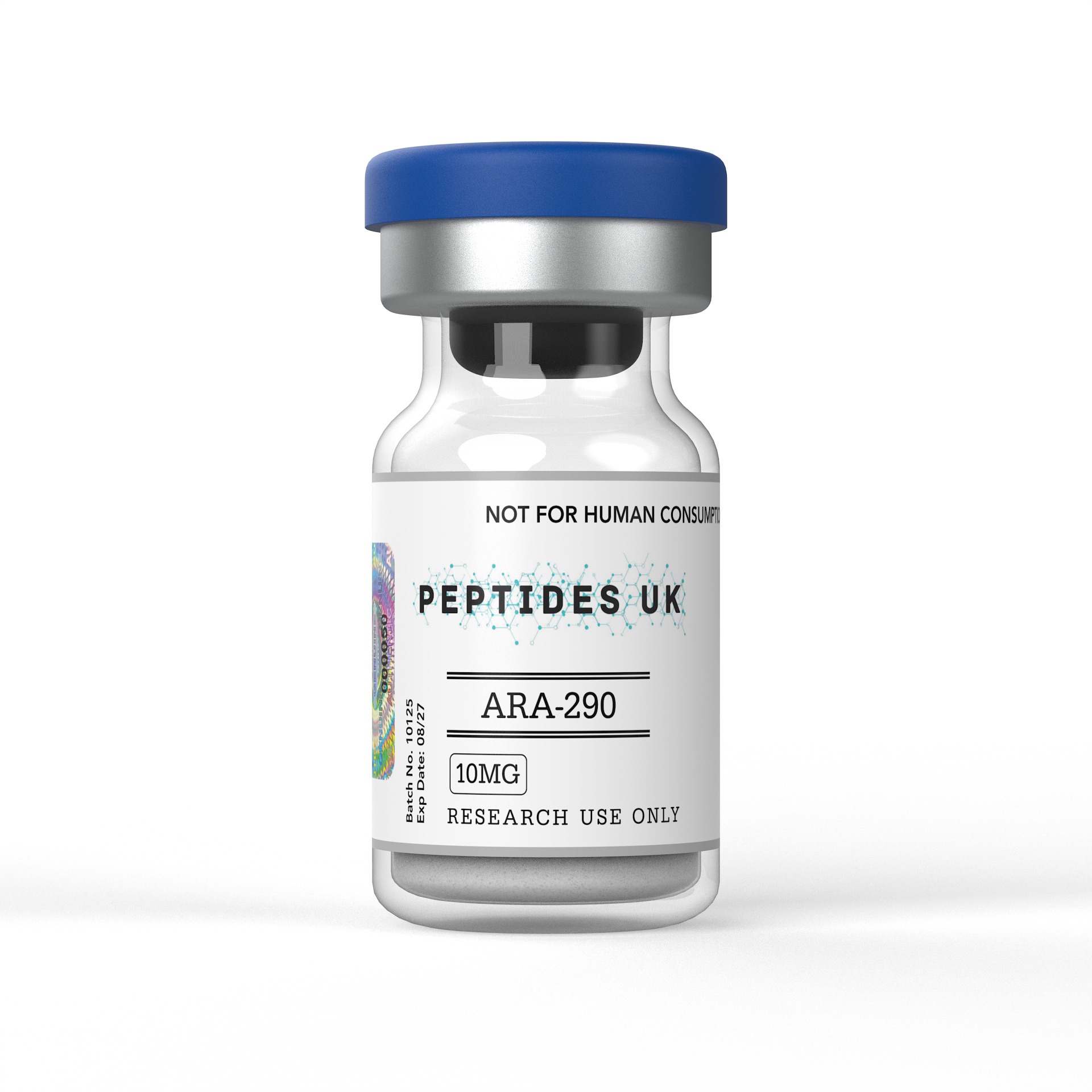
ARA-290 Peptide USA – Buy Online | In Stock & Ready to Ship
Buy ARA-290 in the USA with fast domestic shipping and guaranteed ≥99% purity — fully verified with COA and HPLC documentation. A trusted choice for USA research teams studying erythropoietin receptor activation, neuroprotection and anti-inflammatory tissue repair pathways, ARA-290 is available in multiple formats to suit varying project needs. No international delays — just reliable, domestically sourced peptides USA researchers can count on.
For research use only. Not intended for human or veterinary use.

ARA-290 is a synthetic 11-amino acid peptide engineered from the helix B region of erythropoietin (EPO), studied extensively across neuroprotection, neuropathic pain biology, inflammation research, tissue protection, and metabolic science for its selective activation of the innate repair receptor (IRR) — a distinct EPO receptor complex expressed in non-haematopoietic tissues — without the erythropoietic and haematopoietic side effects associated with full-length EPO stimulation, making it one of the most targeted and tissue-protective EPO-derived research peptides in modern neuroprotection and cytoprotection science. Researchers and institutions across the USA can source verified, research-grade ARA-290 with fast domestic dispatch and full batch documentation included.
✅ ≥99% Purity — HPLC & Mass Spectrometry Verified
✅ Batch-Specific Certificate of Analysis (CoA) Included
✅ Sterile Lyophilised Powder | GMP Manufactured
✅ Fast Dispatch Across the USA | USA Peptides In Stock
ARA-290 is a synthetic cyclic peptide of 11 amino acids derived from the helix B surface of erythropoietin (EPO) — specifically engineered to activate the innate repair receptor (IRR) while avoiding activation of the classical erythropoietin receptor (EPOR homodimer) responsible for EPO’s haematopoietic effects. This receptor selectivity is the defining pharmacological feature of ARA-290 and the foundation of its research value as a tissue-protective EPO-derived compound.
Erythropoietin is best known as the hormone that stimulates red blood cell production by activating the classical EPOR homodimer on erythroid progenitor cells in bone marrow. However, EPO also activates a structurally distinct receptor complex — the innate repair receptor (IRR) — which consists of the EPOR in heterodimeric association with the beta common receptor (βcR, also known as CD131). This IRR complex is expressed broadly across non-haematopoietic tissues including neurons, astrocytes, Schwann cells, pancreatic beta cells, cardiomyocytes, endothelial cells, and immune cells — where it mediates EPO’s cytoprotective, anti-inflammatory, and tissue repair effects independently of erythropoiesis.
ARA-290 was specifically engineered to bind selectively to the IRR heterodimer without activating the classical EPOR homodimer — thereby accessing EPO’s broad tissue-protective biology without triggering erythropoiesis, thrombosis risk, or the haematological side effects that limit the research utility of full-length EPO in non-haematopoietic tissue research. The helix B region of EPO from which ARA-290 is derived is the structural domain responsible for IRR engagement, and ARA-290’s cyclic peptide structure is designed to mimic this helix B surface conformation with high fidelity.
ARA-290 is one of the most mechanistically precise EPO-derived cytoprotective research peptides available to buy in the USA, with active and rapidly growing demand from neuroprotection, neuropathic pain, metabolic research, and inflammation biology programs at research institutions and biotech companies nationwide.
In controlled pre-clinical and laboratory settings, ARA-290 has been studied across a wide range of neurobiological, metabolic, immunological, and cytoprotective research applications:
Innate Repair Receptor (IRR) Pharmacology Research ARA-290’s primary research application is selective IRR activation — the EPOR/βcR heterodimeric receptor complex expressed in non-haematopoietic tissues. Studies have examined ARA-290’s binding characteristics at IRR, downstream signalling cascade activation including PI3K-AKT and JAK2-STAT3 pathways, and how selective IRR stimulation compares to full-length EPO’s combined EPOR homodimer and IRR activation — establishing ARA-290 as the primary selective IRR agonist for tissue-protective EPO receptor biology research.
Neuroprotection Research ARA-290 has been studied extensively in pre-clinical neuroprotection models — examining its effects on neuronal survival following ischaemic, toxic, and traumatic injury challenges. Studies have documented ARA-290’s activation of neuronal IRR and the downstream survival signalling cascades it triggers in neuronal models — including PI3K-AKT anti-apoptotic signalling and NF-κB modulation — establishing neuroprotection as one of the most active areas of ARA-290 research.
Neuropathic Pain Research One of the most distinctive and actively researched applications of ARA-290 is its influence on neuropathic pain biology. Studies have examined ARA-290’s effects on small fibre neuropathy models, corneal nerve fibre density parameters, and pain-related neurobiological markers in pre-clinical neuropathic pain models — with research documenting nerve fibre repair-promoting activity and modulation of pain signalling pathways, making neuropathic pain biology one of the most significant and distinctive research areas of ARA-290 investigation.
Small Fibre Neuropathy Research Research has examined ARA-290’s specific influence on small fibre nerve biology — the unmyelinated C fibres and thinly myelinated Aδ fibres responsible for pain, temperature, and autonomic signalling that are affected in small fibre neuropathy. Studies have used corneal confocal microscopy parameters in pre-clinical models to examine how ARA-290-mediated IRR activation affects small fibre density, morphology, and regeneration — a highly specific and clinically relevant research area within the broader neuropathic pain field.
Anti-Inflammatory Research ARA-290 has been studied for its anti-inflammatory properties in pre-clinical inflammatory models — examining its influence on pro-inflammatory cytokine production, macrophage activation states, NF-κB signalling, and the resolution of acute and chronic inflammation. Research has documented IRR-mediated anti-inflammatory effects across multiple immune cell types and inflammatory tissue models — reflecting the broad expression of the IRR complex in immune cells and inflamed tissues.
Pancreatic Beta Cell Protection Research IRR is expressed on pancreatic beta cells, and research has examined ARA-290’s cytoprotective effects on beta cell survival in models of metabolic stress, glucotoxicity, and inflammatory challenge — exploring how IRR activation protects beta cells from apoptosis and preserves insulin secretory function under stress conditions, a significant research area given the beta cell loss biology in type 1 and type 2 diabetes models.
Metabolic Research Studies have examined ARA-290’s influence on metabolic parameters in pre-clinical models — including insulin sensitivity, glucose metabolism, and pancreatic function — reflecting the metabolic dimensions of IRR biology and research interest in how tissue-protective EPO receptor signalling affects systemic metabolic regulation beyond its classical haematopoietic context.
Cardiac Protection Research IRR is expressed in cardiomyocytes and cardiac tissue, and research has examined ARA-290’s cardioprotective effects in pre-clinical ischaemia-reperfusion injury models — exploring how IRR activation influences cardiomyocyte survival signalling, infarct parameters, and cardiac function following ischaemic challenge, reflecting the cardiovascular dimension of tissue-protective EPO receptor biology.
Wound Healing and Tissue Repair Research ARA-290 has been examined in pre-clinical wound healing and tissue repair models — studying how IRR activation in endothelial cells, fibroblasts, and immune cells affects wound closure, angiogenesis, and tissue regeneration parameters — contributing to the understanding of how EPO’s tissue-protective receptor biology participates in repair processes beyond erythropoiesis.
Sarcoidosis and Autoimmune Biology Research Research has examined ARA-290 in pre-clinical models of sarcoidosis and autoimmune disease — exploring how selective IRR activation affects inflammatory granuloma biology, immune cell activation, and the chronic inflammatory processes associated with autoimmune tissue damage — a distinctive and growing area of ARA-290 research interest.
EPO vs IRR Selectivity Research ARA-290 is used as the selective IRR agonist reference compound in studies comparing EPOR homodimer versus IRR heterodimer signalling — allowing researchers to isolate the specific contribution of IRR activation to EPO’s biological effects and distinguish tissue-protective IRR-mediated effects from haematopoietic EPOR homodimer-mediated effects in the same experimental systems.
All applications are for research purposes only. ARA-290 as supplied is not intended for human therapeutic use.
ARA-290 has accumulated a focused, distinctive, and rapidly expanding research profile across neuroprotection, neuropathic pain, and tissue-protective biology:
IRR Selectivity: Research has confirmed ARA-290’s selective activation of the IRR heterodimer (EPOR/βcR) without activation of the classical EPOR homodimer — documenting its receptor binding characteristics, downstream IRR signalling activation, and absence of erythropoietic activity in pre-clinical models — establishing it as the gold standard selective IRR agonist for tissue-protective EPO receptor biology research.
Neuroprotection: Pre-clinical neuroprotection studies have reported ARA-290’s protective effects on neuronal survival across multiple injury models — including ischaemia, neurotoxicity, and traumatic nerve injury — with studies documenting PI3K-AKT survival signalling activation, reduced neuronal apoptosis, and preservation of neurological function parameters following ARA-290 treatment in animal models.
Neuropathic Pain and Small Fibre Neuropathy: Studies examining ARA-290 in neuropathic pain models have reported effects on pain behaviour parameters and small fibre nerve biology — with research documenting changes in corneal nerve fibre density parameters and pain-related neurobiological markers in pre-clinical small fibre neuropathy models — making this one of the most distinctive and clinically relevant areas of ARA-290 pre-clinical research.
Anti-Inflammatory Effects: Research has documented ARA-290’s anti-inflammatory activity across multiple pre-clinical inflammatory models — with studies reporting reductions in pro-inflammatory cytokine production, modulation of macrophage activation states, and attenuation of inflammatory tissue damage following IRR activation — establishing a well-characterised anti-inflammatory research profile for selective IRR agonism.
Beta Cell Protection: Pre-clinical studies have reported ARA-290’s cytoprotective effects on pancreatic beta cells under metabolic stress and inflammatory challenge conditions — with research documenting reduced beta cell apoptosis, preserved insulin secretory function, and IRR-mediated survival signalling in beta cell models — contributing to the understanding of how tissue-protective EPO receptor signalling affects pancreatic biology.
Non-Haematopoietic Profile: Studies have consistently confirmed ARA-290’s absence of erythropoietic activity in pre-clinical models — documenting no significant changes in red blood cell parameters, haematocrit, or erythroid progenitor cell activity following ARA-290 treatment — establishing its clean non-haematopoietic profile as a key pharmacological advantage over full-length EPO for tissue-protective biology research.
| Feature | ARA-290 | Full-Length EPO | BPC 157 | LL-37 |
|---|---|---|---|---|
| Type | Synthetic cyclic EPO helix B peptide (11AA) | Glycoprotein hormone (165AA) | Synthetic gastric-derived pentadecapeptide | Human cathelicidin antimicrobial peptide |
| Receptor Target | IRR (EPOR/βcR heterodimer) — selective | EPOR homodimer + IRR heterodimer | Multi-pathway — NO system, VEGFR2, FAK-paxillin | FPRL1, TLRs, EGFR, purinergic receptors |
| Haematopoietic Activity | None — IRR selective | Yes — primary EPOR homodimer activity | None | None |
| Primary Research Focus | Neuroprotection / neuropathic pain / IRR pharmacology / tissue protection | Erythropoiesis / EPOR pharmacology / haematopoietic biology | GI protection / tendon / muscle / neuro repair | Innate immunity / antimicrobial / wound healing |
| Key Research Advantage | Selective tissue-protective EPO receptor biology without haematopoietic confound | Complete EPO biology including erythropoiesis | Broadest multi-tissue repair research tool | Only human cathelicidin — broadest innate immunity relevance |
| Best For | IRR selective cytoprotection / neuropathic pain / beta cell / cardiac protection research | Full EPO receptor pharmacology / erythropoiesis studies | Broad tissue repair / GI / neuro pre-clinical studies | Human innate immunity / antimicrobial / skin research |
| Parameter | Specification |
|---|---|
| Full Name | ARA-290 (Cibinetide) |
| Peptide Length | 11 Amino Acids |
| Structure | Cyclic peptide — EPO helix B surface mimetic |
| Type | Synthetic selective IRR agonist — EPO-derived |
| Receptor Target | IRR (EPOR/βcR heterodimer) |
| Haematopoietic Activity | None — EPOR homodimer inactive |
| Purity | ≥99% (HPLC & MS Verified) |
| Form | Sterile Lyophilised Powder |
| Solubility | Sterile water, bacteriostatic water, PBS |
| Storage (Powder) | -20°C, protect from light |
| Storage (Reconstituted) | 2–8°C, use promptly |
| Manufacturing | GMP Manufactured |
Every order includes full batch documentation:
✅ Batch-Specific Certificate of Analysis (CoA)
✅ HPLC Chromatogram
✅ Mass Spectrometry Confirmation
✅ Sterility & Endotoxin Testing Report
✅ Reconstitution Protocol
✅ Technical Research Support
Can I buy research-grade ARA-290 in the USA? Yes. We supply research-grade ARA-290 to researchers and institutions across the United States. All orders include full batch documentation and are packaged to maintain peptide integrity during transit. This compound is supplied strictly for laboratory research use only.
What is ARA-290 and how is it related to erythropoietin? ARA-290 is a synthetic cyclic 11-amino acid peptide derived from the helix B surface region of erythropoietin (EPO) — specifically engineered to mimic the structural conformation of the EPO domain responsible for activating the innate repair receptor (IRR) without activating the classical erythropoietin receptor (EPOR homodimer) that drives red blood cell production. It is also known by the clinical research name Cibinetide. The relationship to EPO is structural and pharmacological — ARA-290 accesses EPO’s tissue-protective biology through selective IRR activation while avoiding EPO’s haematopoietic effects, making it a uniquely precise tool for studying non-haematopoietic EPO receptor biology.
What is the innate repair receptor (IRR) and why does it matter in ARA-290 research? The innate repair receptor (IRR) is a heterodimeric receptor complex consisting of the EPO receptor (EPOR) in association with the beta common receptor (βcR/CD131) — distinct from the EPOR homodimer that drives erythropoiesis. IRR is expressed broadly across non-haematopoietic tissues including neurons, Schwann cells, pancreatic beta cells, cardiomyocytes, and immune cells — where it mediates EPO’s cytoprotective, anti-inflammatory, and tissue repair effects. ARA-290’s selective IRR activation allows researchers to study these tissue-protective effects in isolation from haematopoietic biology — a critical research capability that full-length EPO cannot provide, as it activates both receptor complexes simultaneously and confounds tissue-protective effect studies with haematopoietic responses.
What makes ARA-290 different from full-length EPO in research? The fundamental difference is receptor selectivity. Full-length EPO activates both the classical EPOR homodimer — driving erythropoiesis, increased haematocrit, and thrombosis risk — and the IRR heterodimer — mediating tissue-protective, neuroprotective, and anti-inflammatory effects. ARA-290 selectively activates only the IRR heterodimer, producing tissue-protective biological effects without any erythropoietic activity. This selectivity is transformative for research because it allows scientists to study EPO’s tissue-protective biology without the confounding haematopoietic effects that make full-length EPO impractical for sustained non-haematopoietic tissue research — making ARA-290 the essential tool for dissecting IRR-specific biology from EPO’s complete pharmacological profile.
What purity is required for ARA-290 research? ≥98% is considered research-grade, but ≥99% purity is strongly preferred for IRR binding assays, neuroprotection studies, neuropathic pain research, beta cell protection experiments, and anti-inflammatory studies where compound purity directly affects receptor activation accuracy and biological activity measurements. All ARA-290 supplied for USA researchers is independently verified to ≥99%.
How is ARA-290 reconstituted for lab use? Allow the vial to reach room temperature before opening. Add sterile water, bacteriostatic water, or PBS slowly down the vial wall and swirl gently — do not shake. ARA-290’s cyclic peptide structure contributes to good aqueous solubility in standard research buffers. Use promptly after reconstitution, or aliquot and store at -80°C to preserve peptide activity across multiple experimental uses. Avoid repeated freeze-thaw cycles to maintain cyclic peptide integrity.
ARA-290 is supplied exclusively for legitimate scientific research purposes conducted within licensed laboratory environments. This product is not intended for human consumption, self-administration, or any therapeutic application. It must be handled by qualified researchers in compliance with applicable US federal and state regulations and institutional ethics guidelines. By purchasing, you confirm that this compound will be used solely for approved in-vitro or pre-clinical research purposes.
Receive News