
PRODUCTS SOLD ON PEPTIDESLABUSA.COM ARE FOR RESEARCH PURPOSES ONLY AND ARE NOT FOR HUMAN OR VETERINARY USE.
$37.50
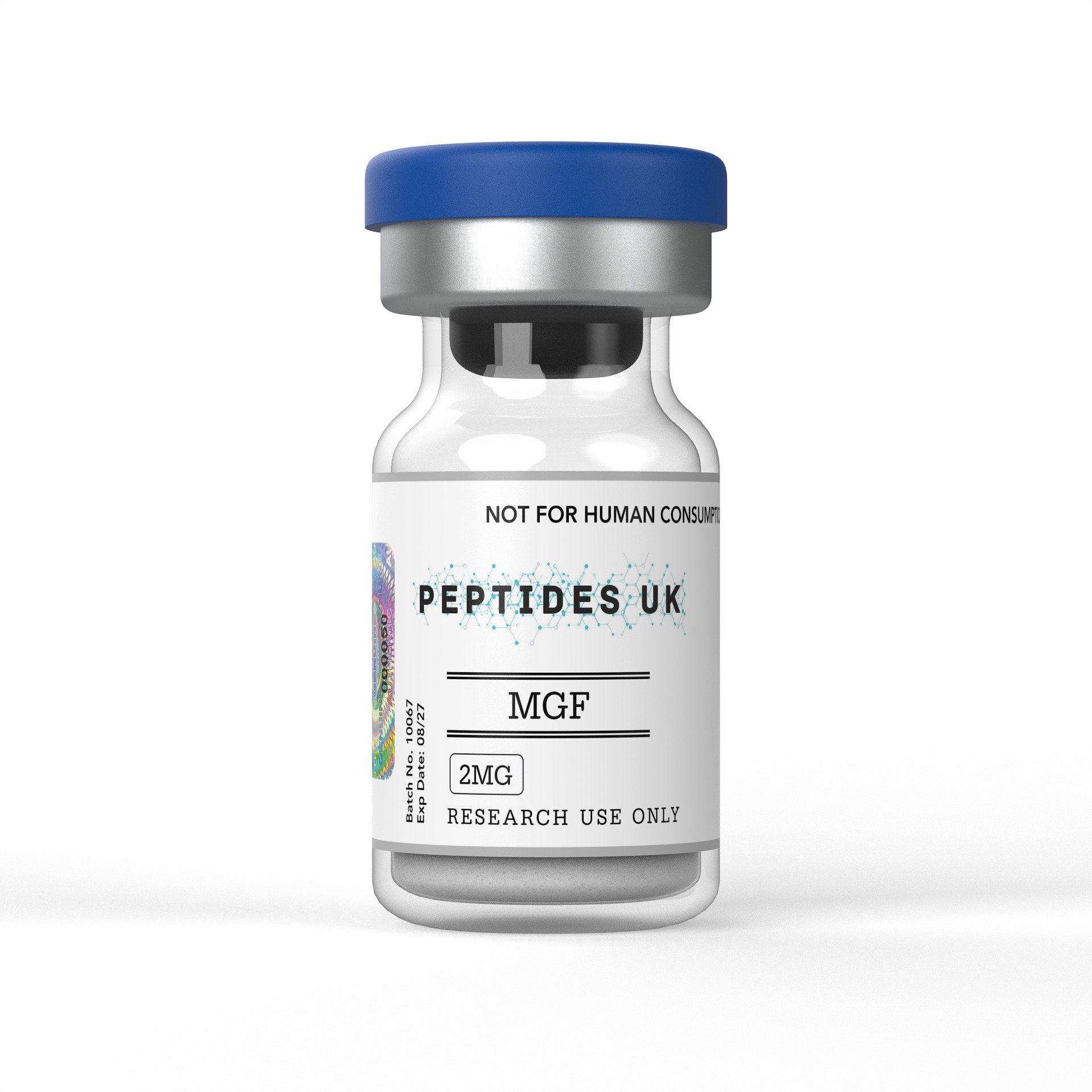
MGF (Mechano Growth Factor) Peptide USA – Buy Online | In Stock & Ready to Ship
Buy MGF in the USA with fast domestic shipping and guaranteed ≥99% purity — fully verified with COA and HPLC documentation. A trusted choice for USA research teams studying muscle repair, satellite cell activation and post-exercise tissue regeneration pathways, MGF is available in multiple formats to suit varying project needs. No international delays — just reliable, domestically sourced peptides USA researchers can count on.
For research use only. Not intended for human or veterinary use.


MGF (Mechano Growth Factor) is a naturally occurring splice variant of Insulin-Like Growth Factor 1 (IGF-1) produced locally in response to mechanical loading and tissue damage, studied extensively across muscle biology, tissue repair, neuroprotection, and regenerative science for its unique N-terminal peptide extension that confers distinct receptor binding properties and local tissue-activation characteristics entirely separate from the systemic IGF-1 signalling axis — making it one of the most biologically distinctive and actively researched IGF-1 splice variants in modern muscle biology and regenerative science. Researchers and institutions across the USA can source verified, research-grade MGF with fast domestic dispatch and full batch documentation included.
✅ ≥99% Purity — HPLC & Mass Spectrometry Verified
✅ Batch-Specific Certificate of Analysis (CoA) Included
✅ Sterile Lyophilised Powder | GMP Manufactured
✅ Fast Dispatch Across the USA | USA Peptides In Stock
MGF (Mechano Growth Factor) is a splice variant of the IGF-1 gene produced through alternative splicing of the IGF-1 pre-mRNA in response to mechanical stress, exercise, and tissue damage — particularly in skeletal muscle, cardiac muscle, bone, and neural tissue. The alternative splicing that produces MGF inserts a 49-base pair insert into the IGF-1 mRNA sequence, shifting the reading frame and generating a unique C-terminal E-domain extension — the MGF E-peptide — that is entirely distinct from the E-domains of other IGF-1 splice variants including IGF-1Ea and IGF-1Eb.
The MGF peptide consists of two functionally distinct regions. The mature IGF-1 domain — shared with standard IGF-1 — activates the IGF-1 receptor (IGF-1R) and drives the classical PI3K-AKT and MAPK-ERK signalling cascades associated with cell survival, proliferation, and protein synthesis. The unique MGF E-peptide — the C-terminal extension generated by the alternative splicing event — has distinct biological activities of its own, operating through mechanisms independent of IGF-1R and involving interactions with the extracellular matrix, cell surface receptors, and intracellular signalling pathways not engaged by standard IGF-1.
This dual-domain structure gives MGF a research profile that is fundamentally different from both standard IGF-1 and other IGFBP-resistant variants like IGF-1 DES and IGF-1 LR3. While those variants differ from standard IGF-1 primarily in their IGFBP binding characteristics and half-life, MGF differs in its tissue production context, its unique E-peptide biology, and its role as a locally acting mechano-sensitive growth factor that coordinates the immediate cellular response to mechanical loading and tissue damage — particularly the activation of muscle satellite cells, the resident stem cell population responsible for skeletal muscle repair and adaptation.
In research, both the full-length MGF peptide and the isolated MGF E-peptide are studied — with the E-peptide representing the unique biological contribution of the MGF splice variant beyond standard IGF-1R signalling, and the full-length MGF providing a tool for studying the combined IGF-1R and E-peptide biology of the complete mechano-sensitive IGF-1 variant. MGF is one of the most biologically distinctive and research-significant IGF-1 variants available to buy in the USA, with active demand across muscle biology, satellite cell research, tissue repair, and neuroprotection programs nationwide.
In controlled pre-clinical and laboratory settings, MGF has been studied across a wide range of muscle biological, regenerative, neurological, and physiological research applications:
Satellite Cell Activation Research MGF’s most distinctive and actively studied research application is its activation of muscle satellite cells — the quiescent resident stem cells of skeletal muscle that are responsible for muscle repair, regeneration, and adaptive hypertrophy. Research has examined how MGF E-peptide signalling triggers satellite cell proliferation, how this activation is coordinated with local IGF-1R signalling from the IGF-1 domain, and how the temporal dynamics of satellite cell activation following MGF stimulation differ from those driven by standard IGF-1 — establishing satellite cell biology as the most distinctive and high-profile area of MGF research.
Mechano-Sensitive Signalling Research MGF is produced specifically in response to mechanical loading, exercise, and tissue damage — making it a key research tool for studying mechano-sensitive gene expression and mechanotransduction biology. Studies have examined how mechanical stimuli trigger MGF splice variant production, what upstream signalling events regulate MGF expression, and how locally produced MGF coordinates the cellular response to mechanical stress — contributing to the understanding of how skeletal and cardiac muscle sense and respond to loading at the molecular level.
Skeletal Muscle Hypertrophy Research Research has examined MGF’s influence on skeletal muscle hypertrophy signalling — including its effects on protein synthesis pathways, muscle fibre size, myonuclear accretion, and the coordination between satellite cell activation and myofibre growth. Studies have compared MGF-driven hypertrophy signalling to that driven by standard IGF-1 and other IGF-1 variants — providing insight into the distinct contribution of the MGF splice variant to exercise-induced and overload-induced muscle growth responses.
Muscle Repair and Regeneration Research Studies have examined MGF’s role in skeletal muscle repair following injury — including its effects on satellite cell activation kinetics, myoblast proliferation, myocyte differentiation, and muscle fibre regeneration timelines in pre-clinical muscle injury models. Research has compared MGF-driven repair responses to those driven by other growth factors — establishing MGF as a primary early-response signal coordinating the muscle repair process following mechanical damage.
MGF E-Peptide Biology Research The isolated MGF E-peptide has been studied as a research compound in its own right — examining its biological activities independent of the IGF-1 domain and IGF-1R signalling. Studies have examined E-peptide interactions with extracellular matrix components, cell surface binding sites, and intracellular signalling pathways — documenting biological effects on satellite cell activation, cell migration, and cytoprotective signalling that are not replicated by standard IGF-1, establishing E-peptide biology as a distinct research area within the broader MGF field.
Cardiac Muscle Biology Research MGF is produced in cardiac muscle in response to mechanical loading and ischaemic stress. Research has examined MGF’s influence on cardiomyocyte survival, cardiac stem cell biology, and myocardial adaptation to haemodynamic stress in pre-clinical cardiac models — with studies exploring how locally produced MGF coordinates the cardiac muscle response to mechanical and ischaemic challenges.
Bone Biology Research MGF expression has been documented in bone tissue in response to mechanical loading and fracture, and research has examined its influence on osteoblast biology, bone repair signalling, and skeletal adaptation to mechanical stress — contributing to the understanding of how IGF-1 splice variant biology participates in mechano-sensitive bone remodelling.
Neuroprotection Research MGF and the MGF E-peptide have been studied in neurological pre-clinical models — examining their neuroprotective effects following brain injury, spinal cord damage, and neurotoxic challenge. Studies have reported cytoprotective effects of MGF E-peptide on neuronal cell populations independent of IGF-1R activation — reflecting the growing research interest in the neurobiological applications of mechano-sensitive IGF-1 variant biology.
IGF-1 Splice Variant Comparative Research MGF is used in comparative IGF-1 splice variant studies alongside standard IGF-1, IGF-1 DES, and IGF-1 LR3 — enabling researchers to examine how the unique E-peptide extension alters the biological profile of the IGF-1 domain, what specific biological functions are attributable to the E-peptide versus the shared IGF-1 domain, and how the mechano-sensitive production context of MGF distinguishes its tissue biology from systemically circulating IGF-1 forms.
Ageing and Sarcopenia Research MGF production in response to mechanical loading declines with age, and research has examined how reduced MGF signalling contributes to age-related impairment of muscle repair and adaptive hypertrophy — contributing to the understanding of sarcopenia biology and how mechano-sensitive IGF-1 splice variant activity changes across the lifespan in pre-clinical ageing models.
All applications are for research purposes only. MGF as supplied is not intended for human therapeutic use.
MGF has accumulated a well-established and distinctive research profile across muscle biology, satellite cell science, and regenerative research:
Satellite Cell Activation: Research has established MGF E-peptide as a potent activator of muscle satellite cells — with studies documenting satellite cell proliferation, upregulation of satellite cell activation markers, and enhanced muscle regenerative responses following MGF E-peptide treatment in muscle cell models and pre-clinical injury models — establishing satellite cell biology as the most distinctive and pharmacologically significant contribution of MGF to muscle research beyond standard IGF-1R signalling.
Mechano-Sensitive Expression: Studies have consistently documented MGF’s mechano-sensitive production in skeletal and cardiac muscle — with research confirming rapid upregulation of the MGF splice variant following exercise, mechanical overload, and muscle damage in pre-clinical models — establishing MGF as the primary locally acting mechano-responsive IGF-1 signal that initiates the muscle repair and adaptation response.
E-Peptide Independence: Research has confirmed that the MGF E-peptide exerts biological effects through mechanisms independent of IGF-1R activation — documenting satellite cell activation, cell migration effects, and cytoprotective signalling in neuronal and muscle cell models that are not replicated by standard IGF-1, and are not blocked by IGF-1R inhibition — establishing E-peptide biology as a pharmacologically distinct and research-significant component of MGF’s overall biological profile.
Muscle Hypertrophy: Studies in skeletal muscle models have reported MGF’s influence on muscle hypertrophy signalling — with research documenting effects on protein synthesis pathways, myonuclear accretion, and satellite cell-mediated myofibre growth that are qualitatively and quantitatively distinct from standard IGF-1-driven hypertrophy responses — contributing to the understanding of how mechano-sensitive IGF-1 splice variant biology coordinates exercise-induced muscle adaptation.
Neuroprotection: Pre-clinical neurological studies have reported neuroprotective effects of MGF E-peptide in brain injury and neurotoxicity models — with research documenting preservation of neuronal populations, reduced apoptotic markers, and cytoprotective signalling in neuronal models following E-peptide treatment — expanding MGF research well beyond its primary skeletal muscle biology focus.
Ageing and Repair Decline: Research examining MGF expression in aged muscle has documented reduced mechano-sensitive MGF production and blunted satellite cell activation responses in aged pre-clinical models — contributing to the understanding of how declining MGF signalling contributes to the impaired muscle repair and adaptive capacity associated with sarcopenia and age-related muscle dysfunction.
| Feature | MGF | IGF-1 DES | IGF-1 LR3 | Standard IGF-1 |
|---|---|---|---|---|
| Type | IGF-1 mechano-sensitive splice variant | Truncated natural IGF-1 variant (67AA) | Long-arginine synthetic IGF-1 analogue (83AA) | Full-length endogenous IGF-1 (70AA) |
| Unique Feature | MGF E-peptide — distinct satellite cell activation biology | N-terminal truncation — IGFBP resistant | Extended synthetic sequence — prolonged half-life | Reference standard IGF-1 |
| IGF-1R Activity | Yes — via shared IGF-1 domain | Yes — full IGF-1R affinity | Yes — full IGF-1R affinity | Yes — full IGF-1R affinity |
| E-Peptide Activity | Yes — unique MGF E-peptide biology | No | No | No |
| IGFBP Affinity | Moderate | Very low — IGFBP resistant | Very low — IGFBP resistant | High |
| Production Context | Mechano-sensitive — local tissue response to loading/damage | Natural brain/gut truncation product | Synthetic — systemic research use | Systemic circulation |
| Half-Life | Short — rapidly cleaved in circulation | Short — minutes | ~20–30 hours | Short — minutes |
| Best For | Satellite cell activation / mechano-sensitive muscle biology / E-peptide research | Local tissue IGF-1R signalling / IGFBP biology / neuroprotection | Sustained IGF-1R activation / systemic studies | IGF-1R reference ligand / standard studies |
| Parameter | Specification |
|---|---|
| Full Name | Mechano Growth Factor (MGF) — IGF-1 splice variant |
| Type | Natural IGF-1 mechano-sensitive splice variant peptide |
| Unique Domain | MGF E-peptide — C-terminal alternative reading frame extension |
| IGF-1R Activity | Yes — via shared IGF-1 mature domain |
| Purity | ≥99% (HPLC & MS Verified) |
| Form | Sterile Lyophilised Powder |
| Solubility | Sterile water, bacteriostatic water, dilute acetic acid |
| Storage (Powder) | -20°C, protect from light |
| Storage (Reconstituted) | 2–8°C, use promptly |
| Manufacturing | GMP Manufactured |
Every order includes full batch documentation:
✅ Batch-Specific Certificate of Analysis (CoA)
✅ HPLC Chromatogram
✅ Mass Spectrometry Confirmation
✅ Sterility & Endotoxin Testing Report
✅ Reconstitution Protocol
✅ Technical Research Support
Can I buy research-grade MGF in the USA? Yes. We supply research-grade MGF (Mechano Growth Factor) to researchers and institutions across the United States. All orders include full batch documentation and are packaged to maintain peptide integrity during transit. This compound is supplied strictly for laboratory research use only.
What does MGF stand for and where does it come from? MGF stands for Mechano Growth Factor — reflecting its production in response to mechanical loading, exercise, and tissue damage. It is a splice variant of the IGF-1 gene, produced through alternative splicing of IGF-1 pre-mRNA that generates a unique C-terminal E-domain extension — the MGF E-peptide — that is entirely distinct from the E-domains of other IGF-1 splice variants. MGF is produced primarily in skeletal muscle, cardiac muscle, bone, and neural tissue in response to mechanical stimuli and damage signals, where it acts locally to coordinate the cellular repair and adaptation response.
What is the difference between MGF and standard IGF-1 in research? The key distinction is the MGF E-peptide. Standard IGF-1 activates the IGF-1 receptor and drives PI3K-AKT and MAPK-ERK signalling through a single mechanism. MGF contains both the standard IGF-1 domain — providing IGF-1R activation — and the unique MGF E-peptide extension, which exerts distinct biological effects through IGF-1R-independent mechanisms including satellite cell activation, cell migration, and cytoprotective signalling that standard IGF-1 cannot replicate. Additionally, MGF is produced locally in a mechano-sensitive context rather than circulating systemically — making it a tissue-level mechano-responsive signal with a fundamentally different production biology and research profile compared to systemic IGF-1.
What is the MGF E-peptide and why is it important in research? The MGF E-peptide is the unique C-terminal extension generated by the alternative splicing event that produces MGF — a peptide sequence entirely absent from standard IGF-1 and other IGF-1 splice variants. Research has established that the E-peptide has distinct biological activities of its own — most notably the activation of muscle satellite cells through IGF-1R-independent mechanisms — that represent the unique biological contribution of the MGF splice variant beyond standard IGF-1R signalling. The E-peptide is studied both as part of full-length MGF and as an isolated research compound, enabling researchers to dissect the relative contributions of IGF-1R activation and E-peptide-specific biology to MGF’s overall tissue effects.
What is the difference between MGF and IGF-1 DES in research? Both MGF and IGF-1 DES are naturally occurring IGF-1 variants with distinct pharmacological profiles compared to standard IGF-1, but they differ fundamentally in their mechanism of distinction. IGF-1 DES differs from standard IGF-1 primarily through N-terminal truncation that reduces IGFBP affinity — enhancing tissue-level IGF-1R activation by reducing binding protein sequestration. MGF differs through C-terminal E-peptide addition — providing entirely new biological activities independent of IGF-1R via the E-peptide domain, and reflecting a mechano-sensitive splice variant production context rather than a proteolytic truncation. Researchers use IGF-1 DES for IGFBP biology and local IGF-1R signalling research, and MGF for satellite cell activation, mechano-sensitive muscle biology, and E-peptide-specific signalling research.
What purity is required for MGF research? ≥98% is considered research-grade, but ≥99% purity is strongly preferred for satellite cell activation assays, muscle repair studies, E-peptide biology research, and mechanotransduction experiments where compound purity directly affects biological activity measurements. All MGF supplied for USA researchers is independently verified to ≥99%.
How is MGF reconstituted for lab use? Allow the vial to reach room temperature before opening. MGF can be reconstituted in sterile water or bacteriostatic water — add the solvent slowly down the vial wall and swirl gently without shaking. If solubility is challenging at neutral pH, dilute acetic acid can assist initial dissolution before further dilution with an appropriate buffer or cell culture media. Use promptly after reconstitution, or aliquot and store at -80°C to preserve peptide activity across multiple experimental uses. Avoid repeated freeze-thaw cycles.
MGF (Mechano Growth Factor) is supplied exclusively for legitimate scientific research purposes conducted within licensed laboratory environments. This product is not intended for human consumption, self-administration, or any therapeutic application. It must be handled by qualified researchers in compliance with applicable US federal and state regulations and institutional ethics guidelines. By purchasing, you confirm that this compound will be used solely for approved in-vitro or pre-clinical research purposes.
Receive News