PRODUCTS SOLD ON PEPTIDESLABUSA.COM ARE FOR RESEARCH PURPOSES ONLY AND ARE NOT FOR HUMAN OR VETERINARY USE.
$53.50
AICAR Peptide USA – Buy Online | In Stock & Ready to Ship
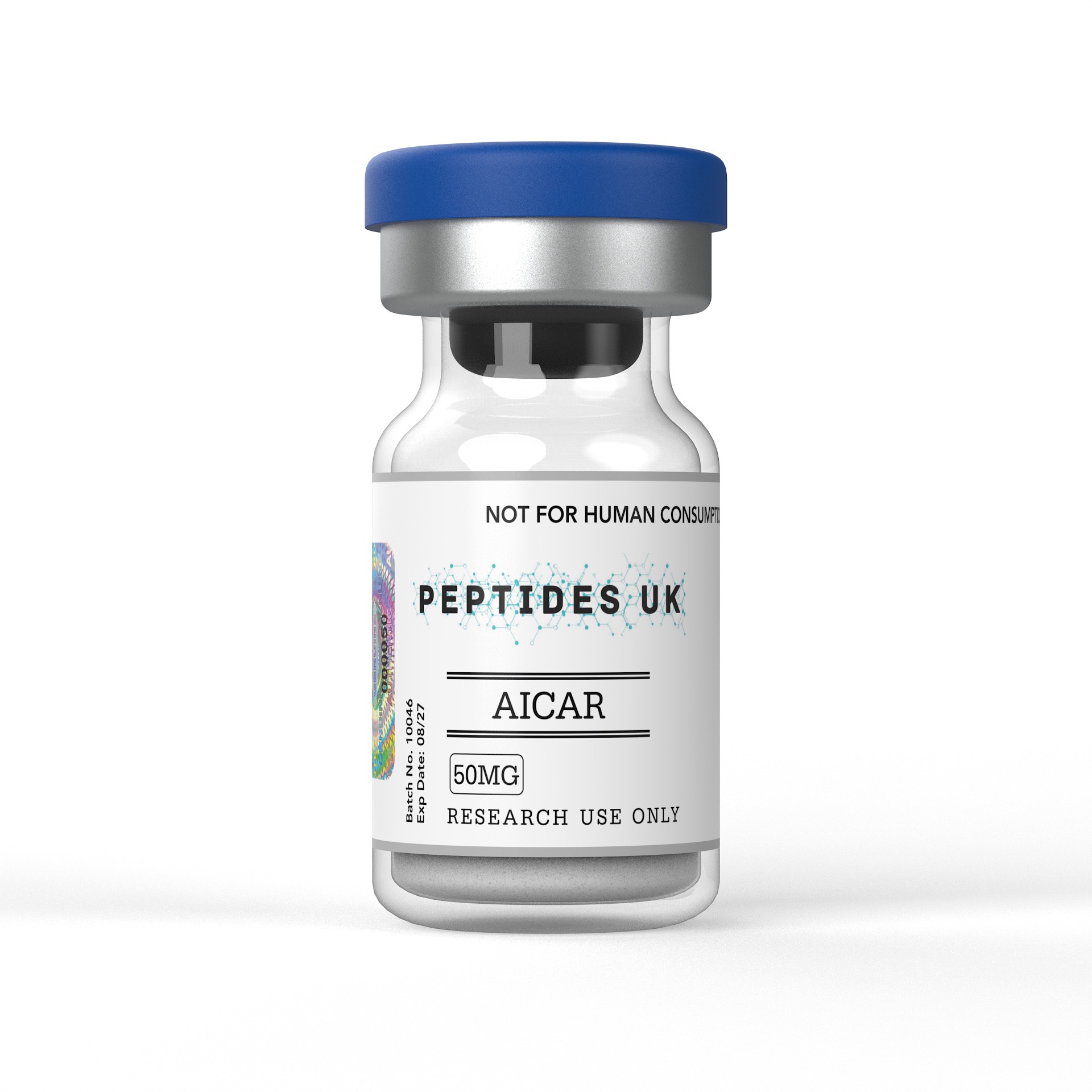
Buy AICAR in the USA with fast domestic shipping and guaranteed ≥99% purity — fully verified with COA and HPLC documentation. A trusted choice for USA research teams studying AMPK pathway activation, cellular energy regulation and metabolic endurance pathways, AICAR is available in multiple formats to suit varying project needs. No international delays — just reliable, domestically sourced peptides USA researchers can count on.
For research use only. Not intended for human or veterinary use.

AICAR (5-Aminoimidazole-4-Carboxamide Ribonucleotide) is a naturally occurring nucleotide intermediate of the purine biosynthesis pathway and potent pharmacological activator of AMP-activated protein kinase (AMPK), studied extensively across metabolic biology, mitochondrial research, exercise mimetic science, cellular energy sensing, and cardiometabolic research for its direct activation of the master metabolic regulator AMPK and its remarkably broad downstream influence on glucose uptake, fatty acid oxidation, mitochondrial biogenesis, and inflammatory signalling — making it one of the most widely used and pharmacologically significant AMPK activator research compounds in modern metabolic and exercise biology science. Researchers and institutions across the USA can source verified, research-grade AICAR with fast domestic dispatch and full batch documentation included.
✅ ≥99% Purity — HPLC & Mass Spectrometry Verified
✅ Batch-Specific Certificate of Analysis (CoA) Included
✅ Lyophilised Powder | GMP Manufactured
✅ Fast Dispatch Across the USA | USA Research Compounds In Stock
AICAR (5-Aminoimidazole-4-Carboxamide Ribonucleotide) — also known as Acadesine or AICA Ribonucleoside — is a naturally occurring intermediate of the de novo purine biosynthesis pathway that, upon cellular uptake, is phosphorylated by adenosine kinase to its monophosphate form ZMP (AICA Ribonucleotide Monophosphate). ZMP is a structural analogue of AMP (adenosine monophosphate) and activates AMPK — the master energy sensor and metabolic regulator of the cell — by mimicking the high-AMP state that signals cellular energy depletion, thereby triggering the full cascade of AMPK-mediated metabolic adaptations without actually depleting cellular ATP.
AMPK (AMP-activated protein kinase) is a heterotrimeric serine/threonine kinase that functions as the cell’s primary energy gauge — sensing the AMP:ATP ratio and activating catabolic pathways that generate ATP while inhibiting anabolic pathways that consume it when cellular energy status is low. AMPK’s downstream targets include hundreds of proteins involved in glucose transport, fatty acid oxidation, mitochondrial biogenesis, protein synthesis, autophagy, inflammatory signalling, and gene expression — making AMPK one of the most broadly influential kinases in cell biology and one of the most important research targets in metabolic science.
AICAR’s ability to activate AMPK pharmacologically — independently of actual energy depletion — makes it an uniquely powerful research tool. By activating AMPK without lowering cellular ATP, AICAR allows researchers to study AMPK-mediated biology in a controlled and reproducible manner, isolating the effects of AMPK activation from the confounding metabolic consequences of true energy depletion. This pharmacological precision, combined with AICAR’s well-characterised cellular uptake mechanism and ZMP conversion pathway, has established it as the gold standard small molecule AMPK activator for metabolic research — used in laboratories across the USA and worldwide to study virtually every aspect of AMPK biology.
AICAR is also notable for its role as an exercise mimetic research compound — activating many of the same AMPK-dependent metabolic adaptations produced by physical exercise including enhanced glucose uptake, fatty acid oxidation, and mitochondrial biogenesis, making it a valuable tool for studying exercise biology and metabolic adaptation in pre-clinical models where direct exercise interventions are not practical or appropriate.
AICAR is one of the most widely used and in-demand metabolic research compounds available to buy in the USA, with active use across metabolic biology, exercise science, mitochondrial research, diabetes biology, cardiovascular science, and cancer metabolism programs at research institutions nationwide.
In controlled pre-clinical and laboratory settings, AICAR has been studied across an exceptionally wide range of metabolic, cellular, and physiological research applications:
AMPK Activation Research AICAR’s primary and defining research application is pharmacological AMPK activation. Studies have examined how AICAR-driven ZMP accumulation activates AMPK’s catalytic alpha subunit, drives AMPK autophosphorylation at Thr172, and initiates the full downstream AMPK signalling cascade — establishing AICAR as the gold standard pharmacological tool for studying AMPK biology across virtually every metabolic and cellular research context.
Glucose Metabolism and Uptake Research AMPK activation by AICAR promotes glucose transporter (GLUT4) translocation to the cell surface and enhances glucose uptake in muscle and other metabolically active tissues independently of insulin signalling. Research has examined how AICAR-driven AMPK activation affects glucose transport kinetics, GLUT4 trafficking, and glucose utilisation in pre-clinical metabolic models — establishing glucose metabolism as one of the most actively studied downstream consequences of AICAR-mediated AMPK activation.
Fatty Acid Oxidation Research AMPK activation inhibits ACC (acetyl-CoA carboxylase) — reducing malonyl-CoA levels and releasing inhibition of CPT1 (carnitine palmitoyltransferase 1) to promote mitochondrial fatty acid import and beta-oxidation. Studies have examined how AICAR-driven AMPK activation affects fatty acid oxidation rates, lipid metabolism parameters, and the AMPK-ACC-CPT1 signalling axis — contributing to the understanding of how AMPK regulates lipid catabolism in metabolic research models.
Mitochondrial Biogenesis Research AMPK activation drives mitochondrial biogenesis through phosphorylation of PGC-1α — the master regulator of mitochondrial gene expression. Research has examined how AICAR-mediated AMPK-PGC-1α signalling affects mitochondrial content, respiratory capacity, and mitochondrial network dynamics in muscle and other cell types — establishing mitochondrial biogenesis as a key downstream research application of AICAR-driven AMPK activation.
Exercise Mimetic Research AICAR activates many of the same AMPK-dependent metabolic pathways triggered by physical exercise — including enhanced glucose uptake, fatty acid oxidation, and mitochondrial biogenesis. Studies have used AICAR to examine the molecular basis of exercise-induced metabolic adaptations in pre-clinical models — providing insight into how AMPK-mediated signalling mediates the metabolic benefits of physical activity and establishing AICAR as a primary exercise biology research tool.
Insulin Sensitivity Research AMPK activation by AICAR improves insulin sensitivity through multiple mechanisms — including enhanced GLUT4 expression and translocation, reduction of lipid intermediates that impair insulin signalling, and direct modulation of insulin receptor substrate biology. Studies have examined how AICAR affects insulin sensitivity parameters in pre-clinical models of insulin resistance — contributing foundational data to the understanding of AMPK’s role in metabolic disease biology.
mTOR Pathway Research AMPK inhibits mTORC1 — the mechanistic target of rapamycin complex 1 — through phosphorylation of TSC2 and Raptor, suppressing anabolic protein synthesis and promoting catabolic autophagy. Research has examined how AICAR-driven AMPK-mTOR axis modulation affects protein synthesis, cell growth, and autophagy induction — making AICAR a key tool for studying the AMPK-mTOR signalling relationship in metabolism and cell biology research.
Autophagy Research AMPK activates autophagy through both mTORC1 inhibition and direct ULK1 phosphorylation. Studies have examined how AICAR-mediated AMPK activation drives autophagy induction, affects autophagic flux, and influences cellular quality control mechanisms — contributing to the growing research field of AMPK-regulated autophagy biology and its role in cellular homeostasis and stress responses.
Anti-Inflammatory Research AMPK activation exerts broad anti-inflammatory effects through inhibition of NF-κB signalling, modulation of macrophage polarisation, and suppression of inflammatory cytokine production. Research has examined how AICAR-driven AMPK activation affects inflammatory signalling in immune cell models and inflammatory tissue models — establishing AICAR as a valuable tool for studying the intersection of AMPK biology and inflammation research.
Cardiovascular and Cardiac Research AMPK is highly expressed in cardiac tissue and plays a central role in cardiac energy metabolism and cardioprotection. Studies have examined AICAR’s effects in pre-clinical cardiac models — including ischaemia-reperfusion injury models, cardiac hypertrophy models, and cardiac metabolic stress models — documenting AMPK-mediated cardioprotective effects and contributing to the understanding of how AMPK regulates cardiac biology under stress conditions.
Cancer Metabolism Research AMPK activation suppresses cancer cell metabolism by inhibiting anabolic pathways — including de novo lipid synthesis, protein synthesis via mTOR inhibition, and nucleotide biosynthesis — that cancer cells depend on for proliferation. Studies have examined AICAR’s effects on cancer cell metabolism, proliferation, and survival in multiple cancer cell models — making cancer metabolism one of the most active and growing areas of AICAR research application.
Neuroprotection Research AMPK is expressed in neurons and plays roles in neuronal energy homeostasis and stress responses. Research has examined AICAR’s neuroprotective properties in pre-clinical neurological models — exploring how AMPK activation affects neuronal survival, mitochondrial function in neurons, and neuroinflammatory signalling — contributing to the growing field of AMPK biology in the CNS.
All applications are for research purposes only. AICAR as supplied is not intended for human therapeutic use.
AICAR has accumulated one of the most extensive and broadly cited research profiles of any metabolic research compound in modern cell biology and metabolic science:
AMPK Activation: Research has thoroughly characterised AICAR’s mechanism of AMPK activation — documenting ZMP accumulation following cellular uptake, AMP mimicry at the AMPK regulatory gamma subunit, Thr172 autophosphorylation, and the full downstream AMPK signalling cascade — establishing AICAR as the most widely used and best-characterised pharmacological AMPK activator in research literature with a research profile spanning decades of metabolic biology investigation.
Exercise Mimetic Effects: Pre-clinical studies have documented AICAR’s activation of exercise-like metabolic adaptations — with research reporting enhanced glucose uptake, increased fatty acid oxidation, improved insulin sensitivity, and mitochondrial biogenesis in animal models treated with AICAR — establishing its role as a primary exercise biology research tool and generating significant scientific interest in AMPK activation as a mediator of exercise-induced metabolic benefits.
Glucose Metabolism: Studies have consistently documented AICAR’s enhancement of muscle glucose uptake via GLUT4 translocation in pre-clinical models — with research confirming that AMPK-driven glucose transport activation by AICAR occurs independently of insulin signalling, making it a valuable tool for studying insulin-independent glucose metabolism pathways in metabolic disease research contexts.
Mitochondrial Biology: Research has documented AICAR’s promotion of mitochondrial biogenesis via AMPK-PGC-1α signalling — with studies reporting increased mitochondrial content, enhanced respiratory capacity, and upregulation of mitochondrial gene expression in muscle and other cell types following AICAR treatment — contributing foundational data to the understanding of how AMPK regulates mitochondrial health and biogenesis.
Anti-Inflammatory Effects: Studies have documented AICAR’s broad anti-inflammatory activity — with research reporting NF-κB inhibition, macrophage polarisation modulation, and inflammatory cytokine suppression across multiple inflammatory cell and tissue models — establishing AMPK activation as a significant anti-inflammatory signalling pathway and AICAR as a primary tool for its research investigation.
Cardiovascular Research: Pre-clinical cardiovascular studies have reported AICAR’s cardioprotective effects in ischaemia-reperfusion models — with research documenting AMPK-mediated improvements in cardiac energy metabolism, reduced ischaemic injury parameters, and enhanced cardiac function recovery — contributing to the understanding of how AMPK activation protects cardiac tissue during metabolic stress.
Cancer Metabolism: Studies examining AICAR in cancer cell models have reported suppression of cancer cell proliferation and metabolic reprogramming — with research documenting AMPK-mediated inhibition of anabolic pathways including mTOR-driven protein synthesis and ACC-driven lipid synthesis — generating research interest in AMPK activation as a tool for studying cancer cell metabolic vulnerability.
| Feature | AICAR | Metformin | Resveratrol | NAD+ |
|---|---|---|---|---|
| Type | Nucleotide intermediate — AMPK activator | Biguanide — indirect AMPK activator | Polyphenol — indirect AMPK activator | Dinucleotide coenzyme — sirtuin/PARP substrate |
| AMPK Activation Mechanism | Direct — ZMP mimics AMP at AMPK gamma subunit | Indirect — mitochondrial complex I inhibition raises AMP:ATP | Indirect — multiple upstream mechanisms | Indirect — via SIRT1 activation of LKB1 |
| Selectivity for AMPK | High — primary pharmacological target | Moderate — multiple targets beyond AMPK | Low — broad polyphenol activity | Indirect — SIRT1 mediated |
| Research Strength | Gold standard direct AMPK activator | Most studied indirect AMPK activator in metabolic research | Broad polyphenol / longevity pathway research | NAD+ homeostasis / sirtuin / PARP biology |
| Half-Life | Moderate — cellular uptake and ZMP conversion dependent | N/A — small molecule | N/A — small molecule | Minutes — rapidly consumed |
| Best For | Direct AMPK pharmacology / exercise mimetic / metabolic research | Indirect AMPK / biguanide metabolic research | Polyphenol / SIRT1 / longevity pathway research | Direct NAD+ coenzyme / sirtuin / PARP substrate studies |
| Parameter | Specification |
|---|---|
| Full Name | 5-Aminoimidazole-4-Carboxamide Ribonucleotide (AICAR) |
| Also Known As | Acadesine / AICA Ribonucleoside |
| Type | Nucleotide intermediate — pharmacological AMPK activator |
| Mechanism | ZMP accumulation → AMPK gamma subunit AMP mimicry → AMPK activation |
| Primary Research Target | AMPK (AMP-activated protein kinase) |
| Molecular Weight | 338.21 g/mol |
| Purity | ≥99% (HPLC & MS Verified) |
| Form | Lyophilised Powder |
| Solubility | Sterile water, PBS, DMSO |
| Storage (Powder) | -20°C, protect from light and moisture |
| Storage (Reconstituted) | 2–8°C, use promptly |
| Manufacturing | GMP Manufactured |
Every order includes full batch documentation:
✅ Batch-Specific Certificate of Analysis (CoA)
✅ HPLC Chromatogram
✅ Mass Spectrometry Confirmation
✅ Purity and Identity Verification Report
✅ Reconstitution Protocol
✅ Technical Research Support
Can I buy research-grade AICAR in the USA? Yes. We supply research-grade AICAR to researchers and institutions across the United States. All orders include full batch documentation and are packaged to maintain compound integrity during transit. This compound is supplied strictly for laboratory research use only.
What does AICAR stand for and how does it work? AICAR stands for 5-Aminoimidazole-4-Carboxamide Ribonucleotide. It is a naturally occurring intermediate of the purine biosynthesis pathway that, following cellular uptake, is phosphorylated to its monophosphate form ZMP — a structural analogue of AMP that activates AMPK by mimicking the high-AMP cellular energy depletion signal. This allows AICAR to trigger the full cascade of AMPK-mediated metabolic adaptations — including enhanced glucose uptake, fatty acid oxidation, and mitochondrial biogenesis — without actually depleting cellular ATP, making it a pharmacologically precise and controllable AMPK research tool.
What is AMPK and why is it important in AICAR research? AMPK (AMP-activated protein kinase) is a master metabolic regulator — a serine/threonine kinase that functions as the cell’s primary energy sensor, detecting the AMP:ATP ratio and activating catabolic energy-generating pathways while inhibiting anabolic energy-consuming processes when cellular energy status is low. AMPK’s downstream targets include hundreds of proteins involved in glucose transport, fatty acid oxidation, mitochondrial biogenesis, protein synthesis, autophagy, and inflammatory signalling — making it one of the most broadly influential kinases in cell biology. AICAR’s value in research stems entirely from its ability to pharmacologically activate this master regulator in a controlled and reproducible manner, making it the essential tool for studying AMPK biology across virtually every metabolic and cellular research context.
What makes AICAR an exercise mimetic research compound? AICAR activates AMPK — the same kinase that is activated by the energy depletion associated with physical exercise — triggering many of the same downstream metabolic adaptations that exercise produces in working muscle, including enhanced glucose uptake via GLUT4 translocation, increased fatty acid oxidation, improved insulin sensitivity, and mitochondrial biogenesis via PGC-1α activation. This exercise-mimetic profile makes AICAR a valuable research tool for studying the molecular mechanisms underlying exercise-induced metabolic adaptations in pre-clinical models — allowing researchers to examine AMPK-mediated exercise biology in cell and animal models where direct exercise interventions are not practical, and to isolate AMPK-specific contributions to exercise adaptation from the many other signalling pathways activated during physical activity.
What is the difference between AICAR and Metformin in AMPK research? Both AICAR and Metformin activate AMPK, but through fundamentally different mechanisms. AICAR activates AMPK directly — its ZMP metabolite mimics AMP at the AMPK gamma regulatory subunit, producing direct allosteric AMPK activation with high selectivity for the AMPK pathway. Metformin activates AMPK indirectly — primarily through inhibition of mitochondrial complex I, which raises the cellular AMP:ATP ratio and triggers AMPK activation as a secondary consequence. This mechanistic distinction is important for research design — AICAR is used when direct, selective AMPK pathway activation is required, while Metformin studies encompass a broader range of AMPK-independent effects that make it less suitable for AMPK-specific mechanistic research.
How is AICAR reconstituted for lab use? AICAR can be reconstituted in sterile water, PBS, or DMSO — add solvent slowly and swirl gently to dissolve. For aqueous reconstitution, sterile water or PBS at neutral pH is suitable for most cell culture and biochemical assay applications. If using DMSO as the primary solvent for poorly soluble preparations, keep the final DMSO concentration below 0.1% in cell-based assays to minimise solvent cytotoxicity. AICAR is relatively stable in neutral aqueous solution at 4°C for short periods, but for long-term storage aliquot and store at -20°C to -80°C protected from light and moisture. Avoid repeated freeze-thaw cycles to maintain compound integrity and AMPK activation potency.
AICAR (5-Aminoimidazole-4-Carboxamide Ribonucleotide) is supplied exclusively for legitimate scientific research purposes conducted within licensed laboratory environments. This product is not intended for human consumption, self-administration, or any therapeutic application. It must be handled by qualified researchers in compliance with applicable US federal and state regulations and institutional ethics guidelines. By purchasing, you confirm that this compound will be used solely for approved in-vitro or pre-clinical research purposes.
Receive News