PRODUCTS SOLD ON PEPTIDESLABUSA.COM ARE FOR RESEARCH PURPOSES ONLY AND ARE NOT FOR HUMAN OR VETERINARY USE.
$159.00
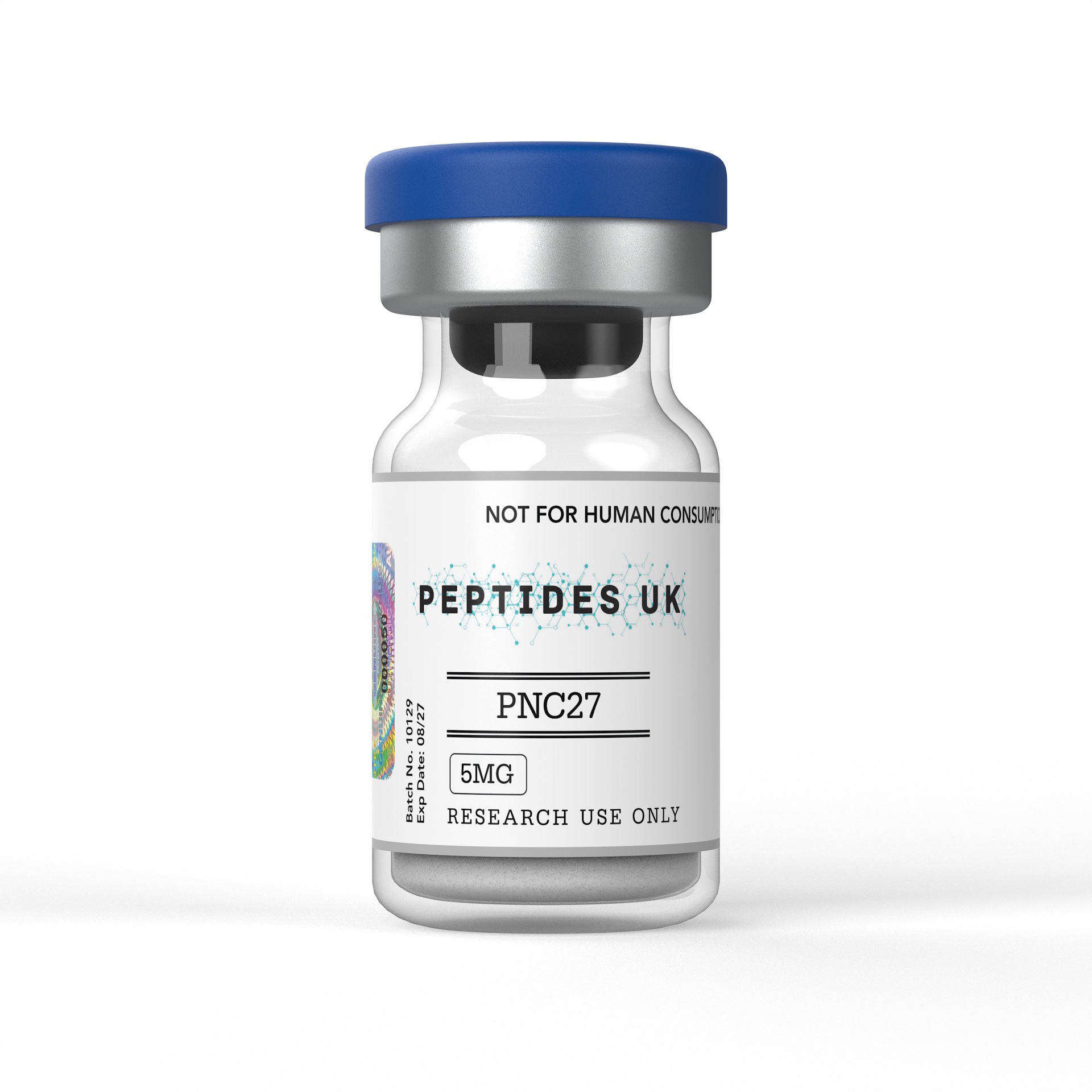
PNC-27 Peptide USA – Buy Online | In Stock & Ready to Ship
Buy PNC-27 in the USA with fast domestic shipping and guaranteed ≥99% purity — fully verified with COA and HPLC documentation. A trusted choice for USA research teams studying cancer cell membrane disruption, HDM2 binding and selective tumor cell apoptosis pathways, PNC-27 is available in multiple formats to suit varying project needs. No international delays — just reliable, domestically sourced peptides USA researchers can count on.
For research use only. Not intended for human or veterinary use.


PNC-27 is a synthetic anticancer peptide incorporating an HDM-2 binding domain derived from the p53 tumour suppressor protein fused to a transmembrane-penetrating sequence, studied extensively across cancer biology, tumour cell selectivity research, membrane disruption oncology science, and p53-MDM2 pathway research for its unique ability to selectively induce necrosis in cancer cells expressing membrane-bound HDM-2 while leaving normal non-cancerous cells unaffected — making it one of the most mechanistically distinctive and selectively targeted anticancer peptide research compounds in modern oncology and cancer cell biology science. Researchers and institutions across the USA can source verified, research-grade PNC-27 with fast domestic dispatch and full batch documentation included.
✅ ≥99% Purity — HPLC & Mass Spectrometry Verified
✅ Batch-Specific Certificate of Analysis (CoA) Included
✅ Sterile Lyophilised Powder | GMP Manufactured
✅ Fast Dispatch Across the USA | USA Peptides In Stock
PNC-27 is a synthetic chimeric peptide consisting of two functionally distinct domains fused into a single research compound. The first domain is a 12-amino acid sequence derived from the MDM-2 binding region of p53 — residues 12–26 of the p53 transactivation domain that constitutes the primary interaction surface between p53 and its negative regulator MDM-2 (the human homologue of which is HDM-2). The second domain is a transmembrane-penetrating sequence derived from the signal peptide of the H-ras oncogene — a hydrophobic sequence that enables the peptide to insert into and disrupt lipid bilayer membranes.
The biological rationale for PNC-27’s design is rooted in the observation that HDM-2 — which is normally an intracellular nuclear and cytoplasmic protein — is aberrantly expressed on the plasma membrane surface of many cancer cell types but is absent from the cell surface of normal non-cancerous cells. This cancer cell-specific membrane HDM-2 expression is the molecular feature that PNC-27 exploits for selectivity: when PNC-27 encounters a cell expressing HDM-2 on its surface, the p53-derived domain binds membrane HDM-2, localising the peptide to the cancer cell membrane — whereupon the transmembrane-penetrating domain inserts into the lipid bilayer and disrupts membrane integrity, inducing rapid necrotic cell death through a pore-forming membrane disruption mechanism.
On normal cells — which do not express HDM-2 on their plasma membrane surface — PNC-27 has no membrane anchor point and therefore does not localise to or disrupt the plasma membrane, explaining the cancer cell selectivity observed in pre-clinical research models. This two-component selectivity mechanism — membrane HDM-2 binding for cancer cell localisation plus transmembrane disruption for cytotoxic execution — makes PNC-27 a fundamentally distinct and pharmacologically innovative anticancer peptide research tool compared to conventional cytotoxic approaches that lack cancer cell selectivity.
PNC-27’s research significance extends beyond its anticancer activity to encompass broader contributions to understanding membrane HDM-2 biology, p53-MDM2 interaction pharmacology, and the emerging field of cancer cell membrane-targeted peptide therapeutics — making it one of the most scientifically interesting and mechanistically distinctive cancer biology research peptides available to buy in the USA, with active demand from oncology, cancer cell biology, and p53 pathway research programs at research institutions nationwide.
In controlled pre-clinical and laboratory settings, PNC-27 has been studied across a wide range of oncological, cell biological, and mechanistic research applications:
Cancer Cell Selective Membrane Disruption Research PNC-27’s defining research application is its selective induction of membrane disruption and necrotic cell death in cancer cells expressing surface HDM-2. Studies have examined how PNC-27 induces rapid plasma membrane permeabilisation, loss of membrane integrity, and necrotic cell death across multiple cancer cell lines — documenting the selectivity of this membrane disruption activity for HDM-2-expressing cancer cells versus normal cell controls and establishing this as PNC-27’s primary and most distinctive research capability.
Membrane HDM-2 Biology Research A key research contribution of PNC-27 is its utility for studying membrane-localised HDM-2 expression in cancer cells. Studies have used PNC-27 to examine which cancer cell types express surface HDM-2, how membrane HDM-2 expression varies across cancer cell lines, what regulates HDM-2 membrane translocation in cancer cells, and how surface HDM-2 density correlates with PNC-27 sensitivity — contributing to the understanding of membrane HDM-2 as a cancer cell-specific surface marker with broad implications for cancer biology research.
p53-MDM2 Interaction Research PNC-27’s p53-derived domain represents the key binding interface between p53 and MDM-2 — making it a research tool for studying the p53-MDM2 protein-protein interaction. Studies have examined how PNC-27’s p53 domain interacts with HDM-2, what binding affinity and kinetics characterise this interaction at the membrane surface, and how the p53-HDM2 interaction in the membrane context compares to the intracellular nuclear p53-MDM2 interaction — contributing pharmacological insight into one of the most important protein-protein interactions in cancer biology.
Necrosis Mechanism Research PNC-27 induces cell death through a necrotic — rather than apoptotic — mechanism, making it a research tool for studying necrotic cell death in cancer biology. Studies have examined the morphological and biochemical characteristics of PNC-27-induced necrosis — including rapid membrane permeabilisation, cellular swelling, ATP depletion, and inflammatory mediator release — contributing to the understanding of how membrane-disrupting peptides induce necrotic cancer cell death and how this differs from apoptotic anticancer mechanisms.
Cancer Cell Selectivity Research PNC-27’s cancer cell selectivity profile has been studied across panels of cancer and normal cell types — examining which cancer cell lines are sensitive to PNC-27 cytotoxicity, which normal cell types are resistant, and what molecular features predict sensitivity or resistance. This selectivity research contributes to the understanding of how membrane HDM-2 expression varies across cell types and cancer subtypes — with implications for the design of membrane-targeted cancer research strategies.
Pancreatic Cancer Biology Research PNC-27 has been studied extensively in pancreatic cancer cell models — one of the cancer types showing high surface HDM-2 expression. Studies have examined PNC-27’s cytotoxic activity against pancreatic cancer cell lines, its selectivity versus normal pancreatic cells, and the molecular characteristics of pancreatic cancer membrane HDM-2 expression — making pancreatic cancer one of the most active cancer type-specific research areas for PNC-27.
Breast Cancer Biology Research Research has examined PNC-27 in breast cancer cell models — studying its cytotoxic activity against breast cancer lines with surface HDM-2 expression, how activity varies across breast cancer subtypes with different molecular profiles, and how PNC-27’s membrane disruption mechanism compares to other anticancer approaches in breast cancer cell biology.
Leukaemia and Haematological Cancer Research Studies have examined PNC-27 activity in leukaemia and lymphoma cell models — exploring surface HDM-2 expression in haematological cancer cells and how PNC-27’s membrane disruption mechanism affects liquid tumour cell biology — contributing to the understanding of PNC-27’s anticancer activity across both solid and haematological cancer research contexts.
Transmembrane Domain Biology Research PNC-27 is used to study how transmembrane-penetrating peptide sequences interact with cancer cell plasma membranes — examining the biophysics of membrane insertion, pore formation, and lipid bilayer disruption in a cancer cell context. This membrane biology research contributes to the broader understanding of how chimeric peptides combining targeting domains with membrane-disrupting sequences can achieve selective cancer cell cytotoxicity.
Combination Cancer Biology Research Studies have examined PNC-27 in combination with other anticancer research compounds — exploring potential additive or synergistic effects between PNC-27’s membrane-disrupting necrotic mechanism and the apoptotic mechanisms of other cancer biology research tools — contributing to the understanding of how complementary cell death mechanisms can be studied in combination cancer cell research.
All applications are for research purposes only. PNC-27 as supplied is not intended for human therapeutic use.
PNC-27 has generated a focused and scientifically distinctive research profile in cancer cell biology and membrane-targeted oncology research:
Cancer Cell Selectivity: Research has documented PNC-27’s selective cytotoxicity against HDM-2-expressing cancer cells versus normal cells across multiple comparative studies — with studies reporting rapid and complete cancer cell membrane disruption and necrosis in HDM-2-positive cancer lines while normal cell controls remained largely unaffected — establishing cancer cell selectivity as PNC-27’s most significant and distinctive research characteristic.
Membrane HDM-2 as Cancer Biomarker: Studies using PNC-27 as a research tool have contributed to characterising membrane-localised HDM-2 as a cancer cell-specific surface feature — with research documenting HDM-2 membrane expression across multiple cancer types including pancreatic, breast, melanoma, and leukaemia cell lines — establishing surface HDM-2 as a biologically significant cancer cell marker with broad implications for cancer biology research.
Necrotic Mechanism: Research has characterised PNC-27’s induction of rapid necrotic cell death — documenting plasma membrane permeabilisation, cellular swelling, immediate ATP loss, and the morphological hallmarks of necrosis following PNC-27 treatment in cancer cell models — confirming that PNC-27’s membrane disruption mechanism is fundamentally distinct from apoptotic anticancer research compounds and representing a pharmacologically unique cancer cell death induction pathway.
Pancreatic Cancer Research: Studies examining PNC-27 in pancreatic cancer models have reported potent and selective cytotoxicity against multiple pancreatic cancer cell lines — with research documenting rapid membrane disruption and necrosis in cancer cells alongside minimal effects on normal pancreatic cell controls — making pancreatic cancer one of the most extensively documented cancer types in the PNC-27 research literature.
Structure-Activity Relationship: Research has examined the structural requirements for PNC-27’s cancer cell selectivity — studying the contributions of the p53-derived binding domain, the transmembrane sequence, and the linker region to overall anticancer activity and selectivity — providing pharmacological insight into the design principles of chimeric membrane-targeted anticancer peptides and establishing structure-activity data relevant to the broader field of cancer-selective membrane disrupting peptide research.
Comparison With Apoptotic Compounds: Studies comparing PNC-27 to conventional apoptosis-inducing anticancer compounds have documented the mechanistic distinctions between necrotic membrane disruption and apoptotic cell death induction in cancer cell models — contributing to the understanding of how different cancer cell death mechanisms compare in terms of speed, selectivity, and downstream biological consequences in cancer biology research.
| Feature | PNC-27 | FOXO4-DRI | Nutlin-3 | Cisplatin |
|---|---|---|---|---|
| Type | Chimeric p53-derived anticancer peptide | Retro-inverso D-peptide senolytic | Small molecule MDM2 inhibitor | Platinum-based DNA damaging agent |
| Mechanism | Membrane HDM-2 binding + transmembrane disruption → necrosis | FOXO4-p53 interaction disruption → senescent cell apoptosis | MDM2-p53 interaction inhibition → p53 stabilisation | DNA crosslinking → apoptosis |
| Cell Death Type | Necrosis — membrane disruption | Apoptosis — mitochondrial pathway | Apoptosis — p53-dependent | Apoptosis — DNA damage response |
| Selectivity | High — cancer cells with surface HDM-2 | High — senescent cells | Moderate — MDM2-overexpressing cells | Low — all rapidly dividing cells |
| p53 Pathway Role | Exploits p53-MDM2 binding interface for targeting | Disrupts FOXO4-p53 interaction in senescent cells | Stabilises p53 by blocking MDM2 inhibition | Activates p53 via DNA damage signalling |
| Best For | Cancer cell membrane HDM-2 / selective necrosis / chimeric peptide research | Senescent cell selective apoptosis / ageing biology | MDM2-p53 intracellular interaction / p53 stabilisation research | DNA damage response / genotoxic apoptosis research |
| Parameter | Specification |
|---|---|
| Full Name | PNC-27 (p53 residues 12–26 + H-ras transmembrane sequence) |
| Type | Synthetic chimeric anticancer peptide |
| Domains | p53 MDM-2 binding domain + H-ras transmembrane penetrating sequence |
| Mechanism | Membrane HDM-2 binding → transmembrane insertion → necrotic membrane disruption |
| Cancer Selectivity | HDM-2 membrane-expressing cancer cells |
| Purity | ≥99% (HPLC & MS Verified) |
| Form | Sterile Lyophilised Powder |
| Solubility | Sterile water, bacteriostatic water, DMSO |
| Storage (Powder) | -20°C, protect from light |
| Storage (Reconstituted) | 2–8°C, use promptly |
| Manufacturing | GMP Manufactured |
Every order includes full batch documentation:
✅ Batch-Specific Certificate of Analysis (CoA)
✅ HPLC Chromatogram
✅ Mass Spectrometry Confirmation
✅ Sterility & Endotoxin Testing Report
✅ Reconstitution Protocol
✅ Technical Research Support
Can I buy research-grade PNC-27 in the USA? Yes. We supply research-grade PNC-27 to researchers and institutions across the United States. All orders include full batch documentation and are packaged to maintain peptide integrity during transit. This compound is supplied strictly for laboratory research use only.
What is PNC-27 and how was it designed? PNC-27 is a synthetic chimeric peptide designed by fusing two functional domains — a p53-derived sequence representing the MDM-2 binding region of the p53 tumour suppressor protein, and a transmembrane-penetrating sequence derived from the H-ras oncogene signal peptide. The design rationale exploits the cancer cell-specific expression of HDM-2 on the plasma membrane surface — using the p53 domain to selectively anchor the peptide to HDM-2-expressing cancer cell membranes, and the transmembrane domain to disrupt membrane integrity and induce rapid necrotic cell death once localised. The result is a cancer cell-selective membrane-disrupting peptide that targets a cancer-specific surface marker rather than a shared cellular target.
What is membrane HDM-2 and why is it important in PNC-27 research? HDM-2 (the human homologue of MDM-2) is normally an intracellular protein that regulates p53 activity in the nucleus and cytoplasm. However, multiple studies have documented that HDM-2 is aberrantly expressed on the plasma membrane surface of many cancer cell types — a cancer-specific feature not observed in normal non-cancerous cells. This membrane HDM-2 expression is the molecular basis of PNC-27’s cancer cell selectivity — providing a cancer cell-specific surface anchor for the p53-derived domain that localises PNC-27 to cancer cell membranes while leaving normal cells without a membrane binding target. Research using PNC-27 has contributed substantially to characterising membrane HDM-2 as a cancer cell surface feature, documenting its expression across multiple cancer types and establishing it as a biologically significant and research-relevant cancer cell marker.
What is the difference between PNC-27 and FOXO4-DRI in cancer research? Both PNC-27 and FOXO4-DRI are selective cell-killing peptides that exploit cancer or disease cell-specific biology for selectivity, but they target fundamentally different cell populations and use entirely different mechanisms. PNC-27 targets actively proliferating cancer cells expressing membrane HDM-2 — inducing rapid necrosis through plasma membrane disruption. FOXO4-DRI targets senescent cells — inducing apoptosis by disrupting the FOXO4-p53 nuclear interaction that keeps senescent cells alive. In research terms, PNC-27 is the primary tool for studying selective cancer cell membrane disruption and necrotic anticancer biology, while FOXO4-DRI is used for senescent cell clearance and ageing biology research — making them complementary rather than competing cancer-adjacent research tools.
What purity is required for PNC-27 research? ≥98% is considered research-grade, but ≥99% purity is strongly preferred for cancer cell cytotoxicity assays, membrane disruption studies, HDM-2 binding research, and selectivity experiments where compound purity directly affects biological activity measurements and cancer cell versus normal cell selectivity data. All PNC-27 supplied for USA researchers is independently verified to ≥99%.
How is PNC-27 reconstituted for lab use? Allow the vial to reach room temperature before opening. PNC-27 can be reconstituted in sterile water or bacteriostatic water — add the solvent slowly down the vial wall and swirl gently without shaking. If aqueous solubility is challenging due to the hydrophobic transmembrane domain, DMSO can be used as an initial dissolution vehicle before dilution to working concentration with appropriate aqueous buffer or cell culture media — keep DMSO concentration below 0.1% in final working solutions for cell-based assays to minimise solvent cytotoxicity. Use promptly after reconstitution or aliquot and store at -80°C to preserve peptide activity. Handle with appropriate laboratory precautions given its cancer cell membrane-disrupting biological activity.
PNC-27 is supplied exclusively for legitimate scientific research purposes conducted within licensed laboratory environments. This product is not intended for human consumption, self-administration, or any therapeutic application. It must be handled by qualified researchers in compliance with applicable US federal and state regulations and institutional ethics guidelines. By purchasing, you confirm that this compound will be used solely for approved in-vitro or pre-clinical research purposes.
Receive News