PRODUCTS SOLD ON PEPTIDESLABUSA.COM ARE FOR RESEARCH PURPOSES ONLY AND ARE NOT FOR HUMAN OR VETERINARY USE.
$27.00
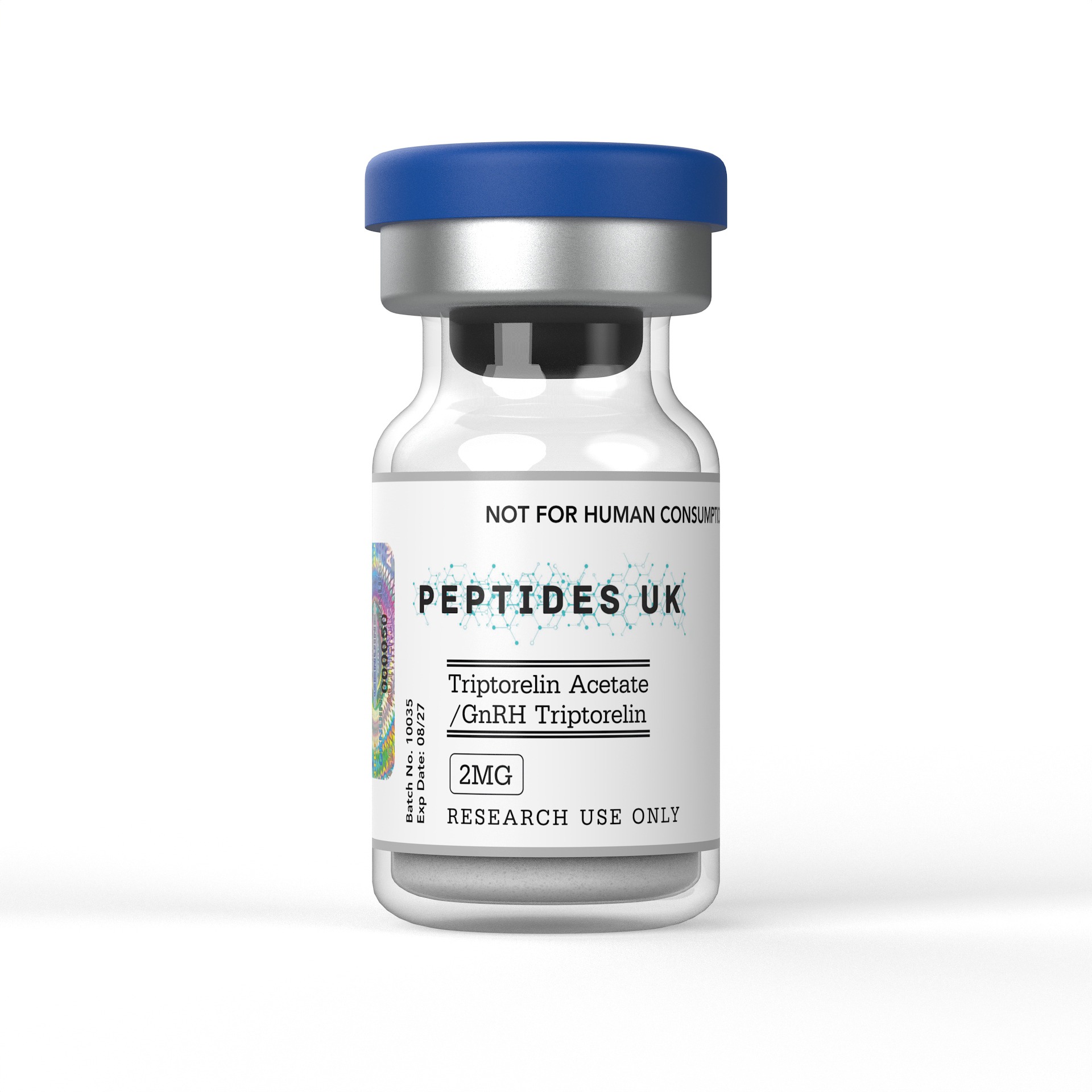
Triptorelin Acetate (GnRH) Peptide USA – Buy Online | In Stock & Ready to Ship
Buy Triptorelin Acetate (GnRH) in the USA with fast domestic shipping and guaranteed ≥99% purity — fully verified with COA and HPLC documentation. A trusted choice for USA research teams studying gonadotropin-releasing hormone receptor binding, pituitary-gonadal axis regulation and reproductive hormone suppression pathways, Triptorelin Acetate is available in multiple formats to suit varying project needs. No international delays — just reliable, domestically sourced peptides USA researchers can count on.
For research use only. Not intended for human or veterinary use.

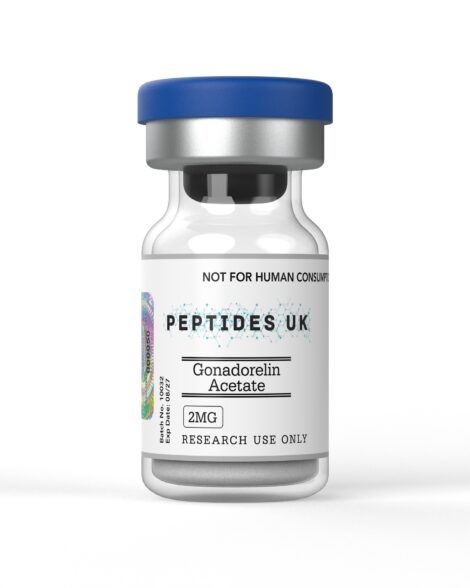
Triptorelin Acetate (GnRH Analogue) is the acetate salt form of the synthetic decapeptide [D-Trp6]-GnRH — a potent and metabolically stabilised analogue of endogenous Gonadotropin-Releasing Hormone studied extensively across reproductive endocrinology, hypothalamic-pituitary-gonadal axis research, gonadotropin secretion biology, steroidogenesis research, and oncology science for its characteristic biphasic HPG axis pharmacology — an initial gonadotropin-stimulating flare followed by receptor desensitisation and profound sustained HPG suppression — making it one of the most pharmacologically significant, broadly applicable, and extensively characterised GnRH receptor agonist research compounds in modern reproductive endocrinology and cancer biology science. Researchers and institutions across the USA can source verified, research-grade Triptorelin Acetate with fast domestic dispatch and full batch documentation included.
✅ ≥99% Purity — HPLC & Mass Spectrometry Verified
✅ Batch-Specific Certificate of Analysis (CoA) Included
✅ Sterile Lyophilised Powder | GMP Manufactured
✅ Fast Dispatch Across the USA | USA Peptides In Stock
Triptorelin Acetate is the acetate salt formulation of Triptorelin — a synthetic 10-amino acid GnRH analogue formally designated as [D-Trp6]-GnRH — in which a single D-tryptophan substitution at position 6 of the native GnRH decapeptide sequence replaces the naturally occurring glycine residue present in endogenous Gonadotropin-Releasing Hormone. The acetate salt form is the standard pharmaceutical and research grade formulation that provides enhanced aqueous solubility, improved lyophilisation stability, and consistent batch-to-batch reproducibility compared to the free base form — making it the preferred and most widely used form of Triptorelin in research settings globally.
Endogenous GnRH is a decapeptide produced by hypothalamic GnRH neurons and released in a pulsatile fashion into the hypothalamic-pituitary portal circulation — where it activates GnRH receptors (GnRHR) on anterior pituitary gonadotrophs to drive pulsatile LH and FSH secretion and downstream gonadal steroidogenesis. Native GnRH has a half-life of only 2–4 minutes due to rapid enzymatic degradation — a biological feature that makes pulsatile GnRH signalling possible but renders native GnRH impractical as a research tool for sustained receptor activation studies.
Triptorelin Acetate’s D-Trp6 substitution confers resistance to the primary enzymatic cleavage sites that rapidly degrade native GnRH — extending its half-life to approximately 7–8 hours while significantly enhancing its binding affinity at GnRHR compared to the native peptide. This combination of metabolic stability and enhanced receptor affinity produces Triptorelin Acetate’s defining pharmacological characteristic — the biphasic HPG axis response. Initial administration produces a GnRH receptor agonist flare, stimulating a surge of LH, FSH, and gonadal steroid secretion. Continued receptor occupancy then drives GnRHR downregulation, pituitary gonadotroph desensitisation, and progressive suppression of LH, FSH, and sex steroid production to near-castrate levels — a state that persists for as long as Triptorelin Acetate stimulation is maintained.
This biphasic pharmacology — and the ability to study both the stimulatory and suppressive phases of GnRH receptor biology within a single well-characterised research compound — makes Triptorelin Acetate one of the most pharmacologically versatile and research-valuable GnRH analogues available. As the acetate salt form with optimal solubility and stability characteristics for laboratory use, it is one of the most widely purchased GnRH research compounds available to buy in the USA, with active research use across reproductive endocrinology, HPG axis biology, cancer research, and metabolic endocrinology programs at institutions nationwide.
Triptorelin Acetate and Triptorelin refer to the same active peptide — [D-Trp6]-GnRH — differing only in their salt form. Triptorelin is the free base form of the peptide. Triptorelin Acetate is the same peptide combined with acetic acid to form the acetate salt — the standard formulation used in the vast majority of research and pharmaceutical applications for several practical reasons:
Solubility: The acetate salt form exhibits significantly better aqueous solubility than the free base — dissolving more readily and completely in sterile water and aqueous research buffers, which is critical for reproducible peptide reconstitution and accurate concentration preparation in laboratory settings.
Stability: Lyophilised Triptorelin Acetate powder has excellent long-term stability when stored correctly — the acetate counter-ion contributes to a more stable lyophilised solid compared to the free base form, supporting reliable shelf life and consistent biological activity across storage periods.
Reproducibility: The acetate salt formulation provides consistent and well-defined physical and chemical properties batch to batch — supporting the experimental reproducibility that is essential in high-quality research settings.
Research Standard: Triptorelin Acetate is the form used in the overwhelming majority of published GnRH analogue research — making it the appropriate form for researchers seeking to replicate or build upon the existing pre-clinical and pharmacological literature on Triptorelin biology.
For all practical research purposes, Triptorelin Acetate is the standard and preferred research form — and when researchers refer to Triptorelin in the context of laboratory research, they are almost universally working with the acetate salt formulation.
In controlled pre-clinical and laboratory settings, Triptorelin Acetate has been studied across a wide range of endocrinological, reproductive, oncological, and physiological research applications:
GnRH Receptor Pharmacology Research Triptorelin Acetate is the gold standard GnRH receptor agonist for studying GnRHR biology — used in receptor binding assays, GnRHR activation studies, downstream signalling characterisation, and receptor desensitisation research. Studies have examined its receptor binding kinetics, cAMP and IP3-PKC signalling activation, receptor internalisation dynamics, and how the D-Trp6 modification affects GnRHR interaction compared to native GnRH.
HPG Axis Stimulation Research In acute and pulsatile administration protocols, Triptorelin Acetate stimulates LH and FSH secretion from anterior pituitary gonadotrophs via GnRHR activation — providing a research tool for studying the stimulatory arm of HPG axis biology, gonadotropin secretion dynamics, and how sustained versus pulsatile GnRH receptor activation differently affects gonadotropin output in pre-clinical reproductive models.
GnRH Receptor Desensitisation Research Continuous Triptorelin Acetate administration drives GnRH receptor downregulation and pituitary gonadotroph desensitisation — making it the primary research tool for studying GnRHR desensitisation mechanisms including receptor phosphorylation, beta-arrestin recruitment, clathrin-mediated internalisation, and lysosomal degradation. This GPCR desensitisation biology research is one of the most mechanistically detailed and actively studied applications of Triptorelin Acetate.
HPG Axis Suppression Research Continuous Triptorelin Acetate produces profound suppression of LH, FSH, and gonadal steroid secretion in pre-clinical models — reducing sex steroid concentrations to near-castrate levels. Research has examined the timeline and depth of HPG axis suppression, the molecular mechanisms of gonadotroph desensitisation, and the downstream biological consequences of sustained sex steroid deprivation across multiple tissue systems.
Gonadal Steroidogenesis Research Triptorelin Acetate’s biphasic effects on gonadotropin secretion produce corresponding biphasic effects on gonadal steroidogenesis. Studies have examined how Triptorelin Acetate-driven LH dynamics affect Leydig cell testosterone production, ovarian steroidogenesis, and downstream hormonal biology — making it a primary tool for studying gonadotropin-regulated steroidogenesis across both male and female reproductive biology research.
Testosterone Suppression Research Continuous Triptorelin Acetate administration produces sustained testosterone suppression in male pre-clinical models. Research has examined how pharmacological castration affects androgen-dependent biological processes — including muscle biology, bone metabolism, cardiovascular parameters, metabolic function, and prostate tissue biology — using Triptorelin Acetate as the pharmacological tool for experimental androgen deprivation.
Prostate Cancer Biology Research GnRH receptors are expressed on prostate cancer cells, and Triptorelin Acetate has been studied in pre-clinical prostate cancer models — examining both direct GnRHR-mediated antiproliferative effects on cancer cells and the indirect effects of testosterone suppression on androgen-dependent prostate cancer cell biology — making prostate cancer one of the most active cancer research areas for Triptorelin Acetate.
Breast Cancer Biology Research Research has examined Triptorelin Acetate in breast cancer models — studying how HPG axis suppression and oestrogen reduction affect oestrogen-receptor-positive cancer cell biology, and how direct GnRHR activation on breast cancer cells influences tumour cell signalling independently of oestrogen deprivation.
Female Reproductive Biology Research In female pre-clinical models, Triptorelin Acetate has been studied for its effects on ovarian function, follicle development, ovulation dynamics, and reproductive cycle regulation — providing a pharmacological tool for studying the consequences of controlled GnRH receptor stimulation and suppression on female reproductive axis biology.
Fertility and Assisted Reproduction Research Triptorelin Acetate’s ability to trigger an acute LH surge has been studied in controlled ovarian stimulation research contexts — examining how GnRH agonist-triggered gonadotropin surges affect oocyte maturation, follicle development, and reproductive outcomes in pre-clinical assisted reproduction biology models.
Metabolic Effects of Sex Steroid Suppression Research Gonadal steroids exert broad metabolic effects, and research has examined how Triptorelin Acetate-induced sex steroid suppression affects metabolic parameters — including body composition, insulin sensitivity, lipid metabolism, and energy expenditure — contributing to the understanding of how the gonadal steroid axis regulates systemic metabolic biology in pre-clinical models.
All applications are for research purposes only. Triptorelin Acetate as supplied is not intended for human therapeutic use.
Triptorelin Acetate has accumulated one of the most extensive and well-documented research profiles of any GnRH analogue in modern reproductive endocrinology and oncology science:
GnRH Receptor Pharmacology: Research has thoroughly characterised Triptorelin Acetate’s receptor binding profile — documenting its enhanced affinity at GnRHR compared to native GnRH, downstream signalling through both cAMP and IP3-PKC pathways, and receptor internalisation and downregulation kinetics — establishing it as the gold standard pharmacological tool for GnRH receptor biology research.
Biphasic HPG Pharmacology: Studies have consistently documented and characterised Triptorelin Acetate’s biphasic HPG axis response — confirming the initial LH and FSH stimulatory flare, the timeline and mechanisms of gonadotroph desensitisation, and the depth of sex steroid suppression achieved with continuous administration — establishing the pharmacological basis for its use as both an HPG stimulator and suppressor in pre-clinical research designs.
GnRHR Desensitisation Mechanisms: Research has provided highly detailed mechanistic characterisation of GnRH receptor desensitisation following sustained Triptorelin Acetate stimulation — documenting receptor phosphorylation at specific serine and threonine residues, beta-arrestin 1 and 2 recruitment, clathrin-coated pit internalisation, and endosomal-lysosomal degradation pathways — contributing fundamental mechanistic insight into GPCR desensitisation biology.
Cancer Biology: Pre-clinical oncology research has examined Triptorelin Acetate’s direct effects on GnRHR-expressing cancer cells — with studies reporting antiproliferative and pro-apoptotic effects on prostate and breast cancer cell lines via GnRHR-mediated signalling, independently of gonadal steroid suppression — contributing to the understanding of how GnRH receptor activation directly influences cancer cell biology.
Testosterone Suppression Research: Studies have extensively documented the depth, timeline, and consistency of testosterone suppression achievable with continuous Triptorelin Acetate administration in pre-clinical models — establishing it as the primary pharmacological tool for experimental androgen deprivation and examining downstream biological consequences across androgen-dependent tissue systems.
Acetate Salt Advantages: Research formulation studies have confirmed the practical advantages of the acetate salt form — documenting superior aqueous solubility, lyophilisation stability, and batch-to-batch reproducibility compared to free base formulations — supporting Triptorelin Acetate as the standard and preferred research form for laboratory GnRH analogue studies.
| Feature | Triptorelin Acetate | Native GnRH | Leuprolide Acetate | Cetrorelix |
|---|---|---|---|---|
| Type | Synthetic GnRH agonist — acetate salt | Endogenous GnRH decapeptide | Synthetic GnRH agonist — acetate salt | Synthetic GnRH antagonist |
| Modification | D-Trp6 substitution | None — native sequence | D-Leu6 + C-terminal ethylamide | Multiple D-amino acid substitutions |
| Salt Form | Acetate — enhanced solubility and stability | N/A | Acetate | Free base / acetate |
| Half-Life | ~7–8 hours | ~2–4 minutes | ~3–4 hours | ~20 hours |
| GnRHR Effect | Agonist — stimulation then desensitisation | Pulsatile agonist — acute stimulation | Agonist — stimulation then desensitisation | Antagonist — immediate competitive blockade |
| HPG Axis Effect | Biphasic — initial flare then suppression | Pulsatile stimulation only | Biphasic — initial flare then suppression | Immediate suppression — no flare |
| Best For | Gold standard GnRHR agonist / biphasic HPG / cancer research | Native pulsatile GnRH biology / acute GnRHR pharmacology | Alternative GnRH agonist desensitisation studies | Immediate HPG blockade / GnRH antagonist pharmacology |
| Parameter | Specification |
|---|---|
| Full Name | Triptorelin Acetate ([D-Trp6]-GnRH Acetate Salt) |
| Peptide Length | 10 Amino Acids (Decapeptide) |
| Salt Form | Acetate — standard research and pharmaceutical grade |
| Type | Synthetic GnRH receptor agonist analogue |
| Modification | D-Tryptophan substitution at position 6 |
| Receptor Target | GnRHR (Gonadotropin-Releasing Hormone Receptor) |
| Half-Life | ~7–8 hours |
| Purity | ≥99% (HPLC & MS Verified) |
| Form | Sterile Lyophilised Powder |
| Solubility | Sterile water, bacteriostatic water, PBS |
| Storage (Powder) | -20°C, protect from light |
| Storage (Reconstituted) | 2–8°C, use promptly |
| Manufacturing | GMP Manufactured |
Every order includes full batch documentation:
✅ Batch-Specific Certificate of Analysis (CoA)
✅ HPLC Chromatogram
✅ Mass Spectrometry Confirmation
✅ Sterility & Endotoxin Testing Report
✅ Reconstitution Protocol
✅ Technical Research Support
Can I buy research-grade Triptorelin Acetate in the USA? Yes. We supply research-grade Triptorelin Acetate to researchers and institutions across the United States. All orders include full batch documentation and are packaged to maintain peptide integrity during transit. This compound is supplied strictly for laboratory research use only.
What is the difference between Triptorelin Acetate and Triptorelin? Triptorelin Acetate and Triptorelin refer to the same active peptide — [D-Trp6]-GnRH — differing only in their salt form. Triptorelin Acetate is the acetate salt formulation of the free base Triptorelin peptide. The acetate salt form provides significantly better aqueous solubility, improved lyophilisation stability, and more consistent batch-to-batch reproducibility — making it the standard and overwhelmingly preferred form in research settings. For all practical laboratory research purposes, Triptorelin Acetate is the appropriate form to use, and the published research literature on Triptorelin biology is conducted almost exclusively with the acetate salt formulation.
What is the difference between Triptorelin Acetate and native GnRH in research? Native GnRH has a half-life of only 2–4 minutes due to rapid enzymatic degradation — making it suited to studying acute pulsatile GnRH receptor activation as it occurs physiologically, but impractical for sustained receptor activation research. Triptorelin Acetate’s D-Trp6 substitution confers enzymatic resistance and enhances GnRHR binding affinity — extending its half-life to approximately 7–8 hours and enabling the sustained receptor activation needed for desensitisation studies, HPG axis suppression research, and longer-duration reproductive biology experiments. Researchers use native GnRH for acute pulsatile GnRHR pharmacology and Triptorelin Acetate when studying receptor desensitisation, sustained HPG modulation, or cancer biology applications requiring maintained receptor occupancy.
Why does Triptorelin Acetate first stimulate and then suppress the HPG axis? This biphasic response reflects the fundamental biology of GnRH receptor pharmacology. In the initial phase, Triptorelin Acetate acts as a potent GnRHR agonist — binding and activating the receptor to drive LH and FSH secretion and a corresponding surge of gonadal steroid production. However, unlike the intermittent pulsatile GnRH signal that normally maintains receptor sensitivity, continuous Triptorelin Acetate receptor occupancy triggers a series of desensitisation events — receptor phosphorylation, beta-arrestin recruitment, receptor internalisation, and ultimately receptor downregulation — that progressively reduce gonadotroph GnRHR signalling capacity. The result is a state of profound HPG axis suppression that persists for as long as Triptorelin Acetate stimulation is maintained — a pharmacological feature that makes it a uniquely powerful and versatile tool for studying both the stimulatory and suppressive dimensions of GnRH receptor biology in a single research compound.
What purity is required for Triptorelin Acetate research? ≥98% is considered research-grade, but ≥99% purity is strongly preferred for GnRH receptor binding assays, gonadotropin secretion studies, HPG axis research, receptor desensitisation experiments, and cancer biology studies where compound purity directly affects receptor activation accuracy and biological activity measurements. All Triptorelin Acetate supplied for USA researchers is independently verified to ≥99%.
How is Triptorelin Acetate reconstituted for lab use? Allow the vial to reach room temperature before opening. Add sterile water, bacteriostatic water, or PBS slowly down the vial wall and swirl gently — do not shake. Triptorelin Acetate’s acetate salt formulation provides excellent aqueous solubility, dissolving readily in standard aqueous research solvents. Use promptly after reconstitution, or aliquot and store at -80°C to preserve peptide activity across multiple experimental uses. Avoid repeated freeze-thaw cycles to maintain GnRH receptor binding activity and peptide integrity.
Triptorelin Acetate is supplied exclusively for legitimate scientific research purposes conducted within licensed laboratory environments. This product is not intended for human consumption, self-administration, or any therapeutic application. It must be handled by qualified researchers in compliance with applicable US federal and state regulations and institutional ethics guidelines. By purchasing, you confirm that this compound will be used solely for approved in-vitro or pre-clinical research purposes.
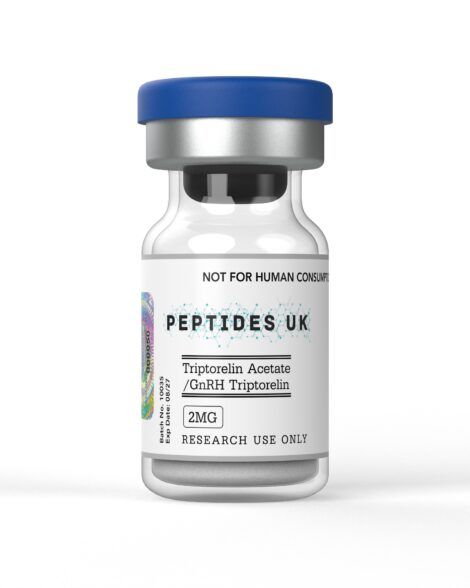
Receive News