PRODUCTS SOLD ON PEPTIDESLABUSA.COM ARE FOR RESEARCH PURPOSES ONLY AND ARE NOT FOR HUMAN OR VETERINARY USE.
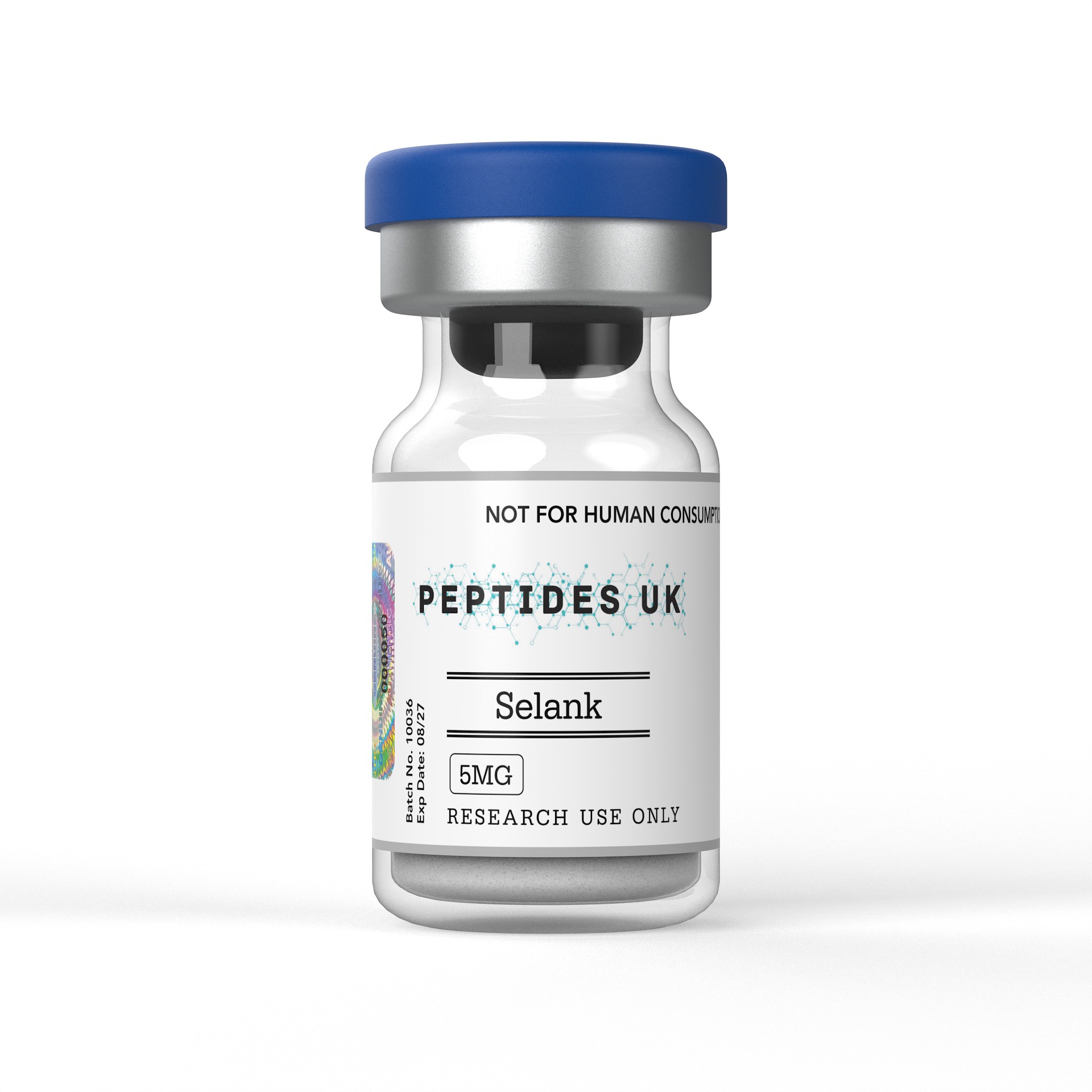
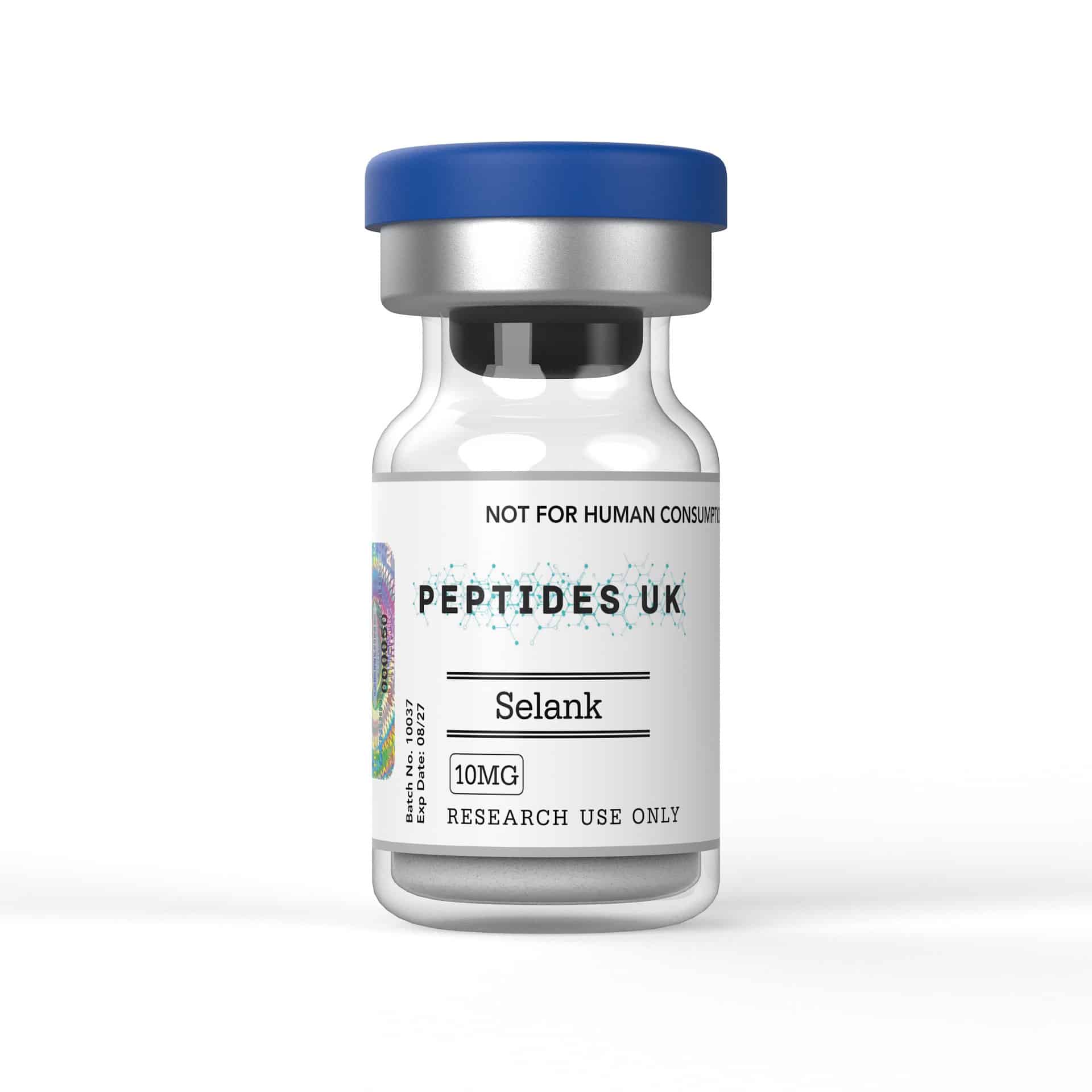
$31.00 – $53.50Price range: $31.00 through $53.50
Selank Peptide USA – Buy Online | In Stock & Ready to Ship
Buy Selank in the USA with fast domestic shipping and guaranteed ≥99% purity — fully verified with COA and HPLC documentation. A trusted choice for USA research teams studying anxiolytic activity, immune modulation and nootropic neurotransmitter regulation pathways, Selank is available in multiple formats to suit varying project needs. No international delays — just reliable, domestically sourced peptides USA researchers can count on.
For research use only. Not intended for human or veterinary use.

Selank is a synthetic heptapeptide anxiolytic and nootropic neuropeptide — carrying the seven-amino acid sequence Thr-Lys-Pro-Arg-Pro-Gly-Pro (TKPRPGP) — developed at the Institute of Molecular Genetics of the Russian Academy of Sciences as a metabolically stabilised analogue of tuftsin, the naturally occurring immunoregulatory tetrapeptide fragment of human immunoglobulin G heavy chains, and studied extensively across anxiety neurobiology, GABAergic pharmacology, cognitive neuroscience, neuroimmunology, stress biology, enkephalin system research, BDNF signalling, monoamine neurotransmitter regulation, and emerging neuroprotection and neurodegenerative disease research for its remarkably multifaceted biological profile spanning GABAA receptor allosteric modulation, serotonergic and dopaminergic system regulation, enkephalin-degrading enzyme inhibition, hippocampal BDNF upregulation, cytokine balance modulation, and broad frontal cortical gene expression remodelling — making it one of the most biologically distinct, mechanistically multitarget, and research-rich synthetic neuropeptides in modern anxiolytic pharmacology and translational neuroscience. Researchers and institutions across the USA can source verified, research-grade Selank 5mg with fast domestic dispatch and full batch documentation included.
✅ ≥99% Purity — HPLC & Mass Spectrometry Verified
✅ Batch-Specific Certificate of Analysis (CoA) Included
✅ Sterile Lyophilised Powder | GMP Manufactured
✅ Fast Dispatch Across the USA | USA Peptides In Stock
Selank (PL-14736; CAS 129954-34-3) is a synthetic heptapeptide — a linear seven-amino acid sequence with the structure H-Thr-Lys-Pro-Arg-Pro-Gly-Pro-OH (TKPRPGP) — designed as a metabolically enhanced analogue of tuftsin, the endogenous immunomodulatory tetrapeptide (Thr-Lys-Pro-Arg) that constitutes residues 289–292 of the Fc region of human immunoglobulin G heavy chains and is known for its immune-stimulating, phagocytosis-enhancing, and neuromodulatory properties. The core tuftsin tetrapeptide sequence was elongated at the C-terminus with a Pro-Gly-Pro tripeptide extension — a glyproline sequence with well-characterised neuroregulatory activity — to substantially increase resistance to enzymatic degradation, extend the biological half-life, and broaden the neuroactive profile beyond that of the parent tetrapeptide.
The mechanism of Selank is characterised by its engagement of multiple neurotransmitter and neuromodulatory systems simultaneously — a polypharmacological profile that distinguishes it from classical single-target anxiolytics such as benzodiazepines. Selank’s primary mechanistic interactions include: allosteric positive modulation of GABAA receptors, which enhances the affinity of endogenous GABA for its receptor and increases inhibitory tone; modulation of serotonin metabolism and dopamine release in limbic and prefrontal circuits; inhibition of enkephalin-degrading enzymes — principally aminopeptidase N (APN) and dipeptidyl peptidase IV (DPP-IV) — thereby prolonging the biological activity of endogenous enkephalins without directly activating opioid receptors; rapid upregulation of brain-derived neurotrophic factor (BDNF) expression in the hippocampus; and broad transcriptional remodelling of GABAergic, dopaminergic, serotonergic, and orexinergic gene expression networks in the frontal cortex — with studies documenting significant changes in the mRNA levels of up to 45 neurotransmission-related genes following intranasal administration.
Selank’s relationship to the GABAergic system is nuanced and mechanistically distinct from classical benzodiazepines: rather than binding to the canonical benzodiazepine allosteric site on GABAA receptors, Selank appears to act through a separate binding site that modulates receptor conformation and changes the affinity of GABA for the receptor — a positive allosteric modulation profile that is not fully cumulative with benzodiazepine activity and is distinct in its receptor pharmacology. This mechanistic distinction is supported by radioligand binding studies demonstrating that Selank can block the modulatory activity of diazepam and olanzapine without occupying the same binding site, suggesting partial allosteric site overlap rather than identity.
Developed at the Institute of Molecular Genetics, Russian Academy of Sciences, in cooperation with the V.V. Zakusov Research Institute of Pharmacology, Selank has been approved and used clinically in Russia and Ukraine for generalised anxiety disorder and neurasthenia — where its anxiolytic profile has been compared directly to that of low-dose benzodiazepine tranquilisers — and has accumulated a substantial body of preclinical and clinical research that continues to inform the global understanding of neuropeptide-based anxiolysis, nootropic biology, and neuroimmune pharmacology. The peptide demonstrates no sequence homology with other known anxiolytic compounds, underlining its structural uniqueness in the neuropsychopharmacological research landscape.
As one of the most pharmacologically distinctive, mechanistically multitarget, and extensively published synthetic neuropeptides available to buy in the USA, Selank 5mg research vials are in active demand across anxiety neuroscience, GABAergic pharmacology, cognitive biology, stress neurobiology, neuroimmunology, and translational psychiatric research programs at research institutions nationwide.
In controlled pre-clinical and laboratory settings, Selank has been studied across an exceptionally wide range of neurobiological, immunological, cognitive, and psychiatric research applications:
GABAA Receptor Allosteric Modulation Research Selank’s primary mechanistic research application is as a positive allosteric modulator of GABAA receptors — with studies employing radioligand binding assays to demonstrate that Selank modifies [³H]GABA binding in a concentration-dependent and subtype-selective manner, increasing receptor affinity for GABA without competing for the benzodiazepine binding site. Research has characterised the allosteric relationship between Selank and benzodiazepines — including diazepam and olanzapine — demonstrating that joint administration produces non-cumulative effects distinct from either compound alone, and that Selank can block benzodiazepine modulatory activity at GABAA receptors. These studies establish Selank as a pharmacologically unique GABAA allosteric modulator and a valuable tool for GABAergic receptor pharmacology research.
Anxiety Neurobiology and Anxiolytic Pharmacology Research Selank is one of the most extensively studied synthetic neuropeptides in anxiety neurobiology — with pre-clinical studies consistently documenting anxiolytic-like effects across the elevated plus maze, open field test, forced swim test, and active avoidance paradigms, and demonstrating attenuation of fear responses, reduced erroneous escape attempts in acute stress models, and normalised anxiety-like behaviour in chronic unpredictable mild stress models. Research comparing Selank’s anxiolytic activity directly to diazepam and phenazepam has established broadly comparable efficacy, positioning Selank as a pharmacologically relevant comparator for classical benzodiazepine anxiolytics and a valuable tool for anxiety neurobiology research examining GABAergic and multi-system anxiolytic mechanisms.
Enkephalin System and Enkephalinase Inhibition Research A mechanistically distinctive dimension of Selank’s biology is its inhibition of enkephalin-degrading enzymes — with studies identifying that Selank inhibits aminopeptidase N (APN) and dipeptidyl peptidase IV (DPP-IV), the key peptidases responsible for enkephalin catabolism, with potency exceeding that of established peptidase inhibitors including bacitracin and puromycin. By attenuating enkephalin catabolism, Selank prolongs the biological half-life of endogenous leucine- and methionine-enkephalins — extending their activity at δ- and μ-opioid receptors without directly engaging opioid receptors. Research has examined how this indirect enkephalinergic mechanism contributes to Selank’s anxiolytic and antistress effects, and clinical studies in generalised anxiety disorder patients have documented correlations between Selank-mediated increases in enkephalin half-life and improvements in anxiety and autonomic symptom parameters.
BDNF Signalling and Neuroplasticity Research Research has documented Selank’s capacity to rapidly upregulate brain-derived neurotrophic factor (BDNF) expression in the hippocampus — with RT-PCR and immunohistochemistry studies confirming increased BDNF mRNA and protein levels in hippocampal and cortical regions following Selank administration. BDNF’s critical roles in neuronal survival, synaptic plasticity, long-term potentiation, and hippocampus-dependent learning and memory make Selank’s BDNF-elevating activity a research-significant mechanism — contributing to the understanding of how neuropeptides influence neuroplastic signalling and establishing a neurochemical basis for Selank’s documented procognitive effects in pre-clinical models. Research examining the transcriptional dynamics of BDNF regulation following Selank has explored how regulatory peptides engage neurotrophin expression machinery rather than acting as direct receptor ligands.
Frontal Cortex Gene Expression and Transcriptomics Research Research employing cDNA microarray and real-time PCR methods has comprehensively mapped Selank’s influence on gene expression in frontal cortical and hippocampal tissue — with studies documenting significant changes in mRNA levels of up to 45 neurotransmission-related genes in the frontal cortex following intranasal Selank administration. Key transcriptional changes documented include downregulation of GABA transporter genes (Slc32a1, Slc6a1, Slc6a11) that prolong GABAergic inhibitory tone; significant modulation of GABA receptor subunit expression (Gabre, Gabrq); dopamine receptor expression changes (Drd3, Drd4, Drd5); and dramatic bidirectional modulation of orexin precursor gene (Hcrt) — with marked downregulation at one hour followed by pronounced upregulation at three hours — implicating Selank in orexinergic sleep-wake regulatory biology. The substantial overlap between Selank and GABA’s transcriptional profiles in the frontal cortex provides molecular-level confirmation of Selank’s GABAergic mechanism.
Serotonin and Monoamine Neurotransmitter Biology Research Research has examined Selank’s influence on monoamine neurotransmitter systems — with studies documenting that Selank modulates the concentration of serotonin, dopamine, and their metabolites across brain structures including limbic regions and prefrontal cortex. Studies examining serotonin metabolism specifically have found that Selank induces changes in serotonin turnover consistent with enhanced serotonergic neurotransmission — contributing to the understanding of how multi-system neuropeptide modulation underlies anxiolytic and antidepressant-like effects in the absence of classical receptor agonism. These monoaminergic effects are mechanistically distinct from GABAergic and enkephalinergic contributions, establishing Selank as a pharmacological probe for examining the crosstalk between inhibitory neuropeptide signalling and classical monoamine systems.
Stress Neurobiology and HPA Axis Research Research has examined Selank’s effects in stress neurobiology — with studies using unpredictable chronic mild stress (UCMS) models to characterise how Selank modulates anxiety indicators, behavioural stress responses, and the neurochemical parameters of stress reactivity. Research comparing Selank and diazepam in UCMS models has demonstrated that combined administration of the two compounds produces normalisation of anxiety indicators to pre-stress baseline levels — an effect not achieved by either compound alone at the same doses — establishing Selank as a research tool for examining stress-protective mechanisms and the neurobiological basis of stress resilience. Studies examining HPA axis parameters have probed how Selank’s multi-system modulation influences corticosterone dynamics and stress neuroendocrine responses.
Generalised Anxiety Disorder and Neurasthenia Research Selank carries a comparatively rich clinical research profile for a research peptide — with controlled clinical studies comparing its anxiolytic efficacy directly to medazepam (a benzodiazepine comparator) in 62 patients with generalised anxiety disorder and neurasthenia assessed using Hamilton, Zung, and CGI psychometric scales. These studies documented comparable anxiolytic activity between Selank and medazepam, while Selank additionally exhibited antiasthenic and psychostimulant effects not observed with the benzodiazepine — and documented significant correlations between Selank’s effects on serum enkephalin half-life and clinical outcomes in GAD patients. These clinical data establish Selank as a research-characterised compound with translational relevance for GAD biology research and anxiety pharmacology.
Cognitive Enhancement and Nootropic Biology Research Research has examined Selank’s procognitive effects across multiple pre-clinical paradigms — with studies documenting improvements in learning rate, active avoidance conditioning performance, spatial memory, and orientational-investigative behaviour following Selank administration. Studies in monkeys have documented compensatory and antiamnestic effects of Selank, suggesting capacity to counteract cognitive deficits — a finding consistent with its BDNF-elevating, synaptic plasticity-supporting mechanism. The hippocampal transcriptomics of Selank — including its modulation of genes associated with plasma membrane transport, ion homeostasis, and learning-related processes — provide mechanistic context for the procognitive effects observed at the behavioural level, establishing Selank as a distinctive nootropic neuropeptide research tool that enhances cognition without the procognitive ceiling imposed by classical anxiolytics that impair memory formation.
Neuroimmunology and Cytokine Biology Research As a structural analogue of tuftsin — an established immunomodulatory peptide — Selank retains and extends significant immunomodulatory activity, and has been studied extensively in neuroimmunological research contexts. Studies have documented Selank’s modulation of IL-6 expression, effects on the balance of T-helper cell cytokines (Th1/Th2 balance), suppression of pro-inflammatory cytokines including TNF-α, increases in anti-inflammatory cytokine markers, enhancement of macrophage phagocytic function, and effects on the expression of immune regulatory genes including Bcl6 — a key regulator of immune system development. Research examining the neuroimmune axis has established Selank as a valuable tool for studying the bidirectional communication between the nervous system and immune system, and for investigating the neuroinflammatory pathways increasingly recognised as contributors to anxiety, depression, and cognitive decline.
Neuroprotection and Neurodegenerative Biology Research Emerging research has examined Selank’s neuroprotective properties — with studies documenting BDNF upregulation, anti-inflammatory cytokine modulation, and potential relevance to neurodegenerative disease models including neuroinflammation-associated pathologies. Pre-clinical research has explored Selank’s potential in models relevant to ALS, Parkinson’s disease, and multiple sclerosis — where its combined neuroprotective (BDNF-mediated), anti-inflammatory (cytokine-modulating), and anti-oxidative stress properties represent mechanistically plausible intervention points. These studies establish neuroprotection as a growing and mechanistically grounded research dimension of Selank biology, extending its research profile from classical anxiety pharmacology into the broader field of neuropeptide neuroprotection.
Orexin System and Sleep-Wake Biology Research The marked and temporally dynamic effects of Selank on orexin precursor gene (Hcrt) expression — including dramatic downregulation at one hour and pronounced upregulation at three hours after administration — implicate Selank in the orexinergic regulation of arousal, sleep-wake transitions, and hypothalamic feeding circuits. Research examining these orexinergic transcriptional dynamics has contributed to the understanding of how GABAergic and peptidergic neuropeptides interact with orexin system biology, establishing Selank as a pharmacological tool for probing the intersection of anxiety neurobiology, inhibitory neurotransmission, and orexin-mediated arousal regulation.
All applications are for research purposes only. Selank as supplied is not intended for human therapeutic use.
Selank has accumulated a substantive and mechanistically rich research profile across anxiety, cognitive, neuroimmune, and stress biology:
GABAergic Pharmacology: Studies have characterised Selank as a positive allosteric modulator of GABAA receptors — with radioligand binding research confirming subtype-selective, concentration-dependent modulation of [³H]GABA binding and establishing that Selank’s allosteric binding site is distinct from, yet partially overlapping with, classical benzodiazepine sites. The non-cumulative pharmacological interaction between Selank and diazepam at GABAA receptors — documented in radioligand and gene expression studies — represents a pharmacologically significant finding that contributes to the mechanistic understanding of how multiple allosteric sites on GABAA receptors can be independently exploited for anxiolytic drug discovery.
Anxiolytic Activity: Pre-clinical studies have consistently documented anxiolytic-like effects comparable in magnitude to classical benzodiazepines across multiple established anxiety paradigms, and controlled clinical studies have confirmed comparable anxiolytic efficacy to medazepam in generalised anxiety disorder — with Selank additionally exhibiting antiasthenic and psychostimulant dimensions absent in the benzodiazepine comparator. The absence of sedation, tolerance, dependence, and withdrawal in pre-clinical and clinical studies distinguishes Selank’s anxiolytic pharmacological profile from that of classical GABAergic anxiolytics.
Enkephalin Biology: Studies have established that Selank inhibits enkephalin-degrading enzymes more potently than established peptidase inhibitors, and clinical research has documented that Selank’s modulation of enkephalin half-life correlates with improvements in anxiety symptoms and autonomic disorder measures in GAD patients — providing both mechanistic characterisation of the enkephalinergic contribution to Selank’s effects and clinical-biomarker validation of this pathway’s relevance to anxiety disorder biology.
BDNF and Neuroplasticity: Research has documented rapid and significant BDNF upregulation in hippocampal tissue following Selank administration, alongside hippocampal transcriptomic changes affecting 36 genes involved in plasma membrane function, ion homeostasis, and learning-related processes following single-dose administration — and 20 genes following course administration — establishing a molecular genetic framework for Selank’s procognitive effects and its relevance to neuroplasticity research.
Frontal Cortex Transcriptomics: Gene expression studies have mapped Selank’s broad effects on frontal cortical neurotransmission gene networks — documenting significant mRNA changes in 45 neurotransmission-related genes at one hour and 22 genes at three hours following administration, with substantial overlap between Selank’s and GABA’s transcriptional profiles providing molecular-level confirmation of GABAergic mechanism involvement. The orexin precursor dynamics documented in these studies extend Selank’s research relevance into arousal and sleep-wake biology.
Neuroimmunology: Studies have confirmed Selank’s modulation of cytokine balance — including IL-6 expression, TNF-α levels, T-helper cell cytokine balance, and immune cell gene expression — establishing Selank as a research-characterised neuroimmune modulator that bridges classical anxiolytic pharmacology and the growing field of inflammation-linked psychiatric biology.
Cognitive Biology: Pre-clinical research across multiple species — including rodent and primate models — has documented procognitive effects of Selank including improvements in learning, memory consolidation, active avoidance conditioning, and antiamnestic properties — effects mechanistically consistent with BDNF upregulation and hippocampal neuroplasticity enhancement, and pharmacologically distinctive in being procognitive rather than cognitively impairing, distinguishing Selank from classical anxiolytics that broadly impair memory formation.
| Feature | Selank | Semax | Diazepam (reference) | BPC-157 |
|---|---|---|---|---|
| Type | Synthetic tuftsin-analogue heptapeptide | Synthetic ACTH(4-7) analogue hexapeptide | Classical benzodiazepine | Synthetic gastric pentadecapeptide |
| Primary Mechanism | Multi-system: GABAA allosteric modulation + enkephalinase inhibition + BDNF upregulation + monoamine modulation | BDNF upregulation + dopaminergic / serotonergic modulation + neuroprotection | GABAA positive allosteric modulation (benzodiazepine site) | Growth factor upregulation (VEGF, EGF) + NO pathway + cytoprotection |
| Primary Research Focus | Anxiolytic pharmacology / GABAergic research / neuroimmunology / cognitive biology / stress neurobiology | Cognitive enhancement / neuroprotection / monoamine biology / stroke recovery research | Benzodiazepine site pharmacology reference / sedation / muscle relaxation | Tissue repair / wound healing / gut biology / tendon and ligament research |
| Key Research Distinction | Broadest multi-system neuropeptide profile combining anxiolytic + nootropic + neuroimmune research applications | Primarily nootropic/neuroprotective — minimal direct GABAergic activity; overlapping enkephalinase inhibition with Selank | Single-mechanism GABAergic reference with sedation, tolerance, and dependence in pre-clinical models | Cytoprotective / regenerative biology — not primarily anxiolytic or nootropic |
| Sequence | Thr-Lys-Pro-Arg-Pro-Gly-Pro (TKPRPGP) | Met-Glu-His-Phe-Pro-Gly-Pro (MEHFPGP) | N/A — benzodiazepine small molecule | Gly-Glu-Pro-Pro-Pro-Gly-Lys-Pro-Ala-Asp-Asp-Ala-Gly-Leu-Val (15AA) |
| Best For | Anxiolytic / GABAergic / enkephalin / neuroimmune / cognitive / stress neurobiology research | Nootropic / neuroprotection / dopaminergic biology / neurogenesis research | Classical benzodiazepine site reference pharmacology | Tissue repair / wound healing / gastrointestinal biology / musculoskeletal healing research |
| Parameter | Specification |
|---|---|
| Full Name | Selank (PL-14736) |
| Sequence | H-Thr-Lys-Pro-Arg-Pro-Gly-Pro-OH (TKPRPGP) |
| CAS Number | 129954-34-3 |
| Molecular Formula | C₃₃H₅₇N₁₁O₉ |
| Molecular Weight | 751.87 g/mol |
| Peptide Length | 7 Amino Acids (Heptapeptide) — linear |
| Structure | Linear — C-terminal carboxylic acid (free acid form) |
| Type | Synthetic neuropeptide / tuftsin analogue |
| Parent Compound | Tuftsin (Thr-Lys-Pro-Arg) — IgG Fc fragment residues 289–292 |
| C-terminal Extension | Pro-Gly-Pro (glyproline sequence — metabolic stabilisation) |
| Primary Mechanism | GABAA positive allosteric modulation; enkephalinase inhibition (APN, DPP-IV); BDNF upregulation; monoamine modulation |
| Key Downstream Effects | Prolonged GABAergic tone; extended enkephalin half-life; hippocampal neuroplasticity; cytokine balance modulation |
| Vial Size | 5mg |
| Purity | ≥99% (HPLC & MS Verified) |
| Form | Sterile Lyophilised Powder |
| Solubility | Sterile water, bacteriostatic water, saline, PBS |
| Storage (Powder) | -20°C, protect from light and moisture |
| Storage (Reconstituted) | 2–8°C, use within 28 days with bacteriostatic water |
| Manufacturing | GMP Manufactured |
Every order includes full batch documentation:
✅ Batch-Specific Certificate of Analysis (CoA)
✅ HPLC Chromatogram
✅ Mass Spectrometry Confirmation
✅ Sterility & Endotoxin Testing Report
✅ Reconstitution Protocol
✅ Technical Research Support
Can I buy research-grade Selank in the USA? Yes. We supply research-grade Selank 5mg to researchers and institutions across the United States. All orders include full batch documentation and are packaged to maintain peptide integrity during transit. This compound is supplied strictly for laboratory research use only.
What is the structural relationship between Selank and tuftsin? Selank is directly derived from tuftsin — the naturally occurring immunomodulatory tetrapeptide Thr-Lys-Pro-Arg found at residues 289–292 of the Fc region of human immunoglobulin G heavy chains. The core tuftsin sequence constitutes the first four amino acids of Selank’s seven-residue chain. The three additional C-terminal amino acids — Pro-Gly-Pro — constitute a glyproline sequence that was added during Selank’s design to dramatically reduce susceptibility to enzymatic degradation by plasma and tissue peptidases, extending biological half-life and broadening neuroactive properties. This structural modification transforms a rapidly metabolised endogenous tetrapeptide into a research-stable synthetic heptapeptide with substantially extended biological activity — while preserving and extending tuftsin’s immunomodulatory properties through the retained N-terminal tuftsin sequence. Selank shares no sequence homology with classical anxiolytic compounds, which contributes to its pharmacologically distinctive profile.
How does Selank’s GABAA mechanism differ from classical benzodiazepines? Classical benzodiazepines act on GABAA receptors by binding to a specific allosteric site located between α and γ subunits — the benzodiazepine binding site — where they enhance the response to GABA by increasing the frequency of chloride channel opening. Selank’s GABAA modulation appears to operate through a pharmacologically distinct allosteric site that modulates receptor conformation and alters GABA binding affinity through a different mechanism. This distinction is supported by several lines of research evidence: radioligand studies showing that Selank and benzodiazepines have non-identical, partially overlapping binding sites; the observation that combined Selank and diazepam administration produces non-cumulative effects distinct from either compound alone rather than simple additive activity; and the capacity of Selank to block diazepam’s modulatory activity at GABAA receptors at higher concentrations. In practice, this mechanistic distinction may explain why Selank’s anxiolytic profile lacks the sedation, motor impairment, tolerance, and dependence that characterise benzodiazepine pharmacology — observations that are consistent with a qualitatively different mode of GABAA allosteric engagement.
What is the significance of Selank’s enkephalinase inhibition? Enkephalins — endogenous opioid pentapeptides (leucine-enkephalin and methionine-enkephalin) — are rapidly degraded in plasma and neural tissue by peptidases including aminopeptidase N (APN) and dipeptidyl peptidase IV (DPP-IV), giving them an extremely short biological half-life that normally limits the duration of their physiological effects at δ- and μ-opioid receptors. Selank (along with the related peptide Semax) inhibits these enkephalin-degrading enzymes — with studies demonstrating that Selank’s enkephalinase inhibitory potency exceeds that of bacitracin and puromycin, established peptidase inhibitors — thereby prolonging enkephalin half-life and extending endogenous opioid tone without directly activating opioid receptors. This indirect enkephalinergic mechanism is research-significant because it contributes to Selank’s anxiolytic and antistress effects through an opioid-system pathway that does not carry the receptor downregulation, tolerance, dependence, or respiratory depression risks associated with exogenous opioid agonists. Clinical data in GAD patients have validated this pathway’s relevance: Selank-treated patients showed increases in leu-enkephalin half-life that correlated with reductions in anxiety, asthenia, and autonomic disorder severity.
What is the orexin system connection in Selank research? Frontal cortex transcriptomic studies have documented that Selank produces striking, temporally dynamic modulation of the orexin precursor gene Hcrt — a finding that was among the most dramatic transcriptional changes observed in the gene expression data, with approximately 25-fold downregulation at one hour post-administration followed by approximately 128-fold upregulation at three hours. Orexins (hypocretins) are hypothalamic neuropeptides that are central regulators of arousal, sleep-wake transitions, feeding behaviour, stress responses, and the integration of limbic emotional signals with hypothalamic arousal circuits. This orexinergic transcriptional pattern suggests that Selank engages hypothalamic arousal and sleep-wake regulatory biology in a temporally complex way — a research finding that extends Selank’s mechanistic profile beyond classical anxiolytic biology and into the intersection of GABAergic inhibitory signalling, emotional regulation, and hypothalamic arousal network modulation. This orexin connection is a distinctive and understudied dimension of Selank’s neuropharmacology that merits dedicated research investigation.
What purity is required for Selank research? ≥98% is considered research-grade, but ≥99% purity is strongly preferred for GABAA receptor radioligand binding studies, enkephalinase inhibition assays, BDNF expression research, frontal cortex transcriptomics, behavioural anxiety pharmacology experiments, and neuroimmune cytokine studies where compound purity directly affects receptor interaction fidelity, enzyme kinetic accuracy, and experimental reproducibility. All Selank supplied for USA researchers is independently verified to ≥99%.
How is Selank reconstituted for lab use? Allow the vial to reach room temperature before opening. Add sterile water, bacteriostatic water, or physiological saline slowly down the vial wall and swirl gently — do not shake vigorously. Selank is a linear heptapeptide that is readily soluble in aqueous buffers; PBS and dilute acetic acid are also suitable reconstitution vehicles depending on the experimental application. For multi-use protocols, bacteriostatic water extends the usable life of reconstituted solution to 28 days when stored at 2–8°C. For long-term storage of working solutions, aliquot and store at -80°C to preserve Selank’s peptide integrity and biological activity. Avoid repeated freeze-thaw cycles and protect from light. As a linear peptide without a disulfide bridge, Selank does not require the same disulfide-integrity precautions as cyclic peptides — however, protection from oxidative conditions and enzymatic contamination remains important for maintaining activity in reconstituted solutions intended for biological assays.
Selank is supplied exclusively for legitimate scientific research purposes conducted within licensed laboratory environments. This product is not intended for human consumption, self-administration, or any therapeutic application. It must be handled by qualified researchers in compliance with applicable US federal and state regulations and institutional ethics guidelines. By purchasing, you confirm that this compound will be used solely for approved in-vitro or pre-clinical research purposes.
Receive News