PRODUCTS SOLD ON PEPTIDESLABUSA.COM ARE FOR RESEARCH PURPOSES ONLY AND ARE NOT FOR HUMAN OR VETERINARY USE.
$57.50
Gonadorelin Peptide USA – Buy Online | In Stock & Ready to Ship
Buy Gonadorelin in the USA with fast domestic shipping and guaranteed ≥99% purity — fully verified with COA and HPLC documentation. A trusted choice for USA research teams studying GnRH receptor activation, pituitary gonadotropin release and hypothalamic-pituitary-gonadal axis regulation pathways, Gonadorelin is available in multiple formats to suit varying project needs. No international delays — just reliable, domestically sourced peptides USA researchers can count on.
For research use only. Not intended for human or veterinary use.

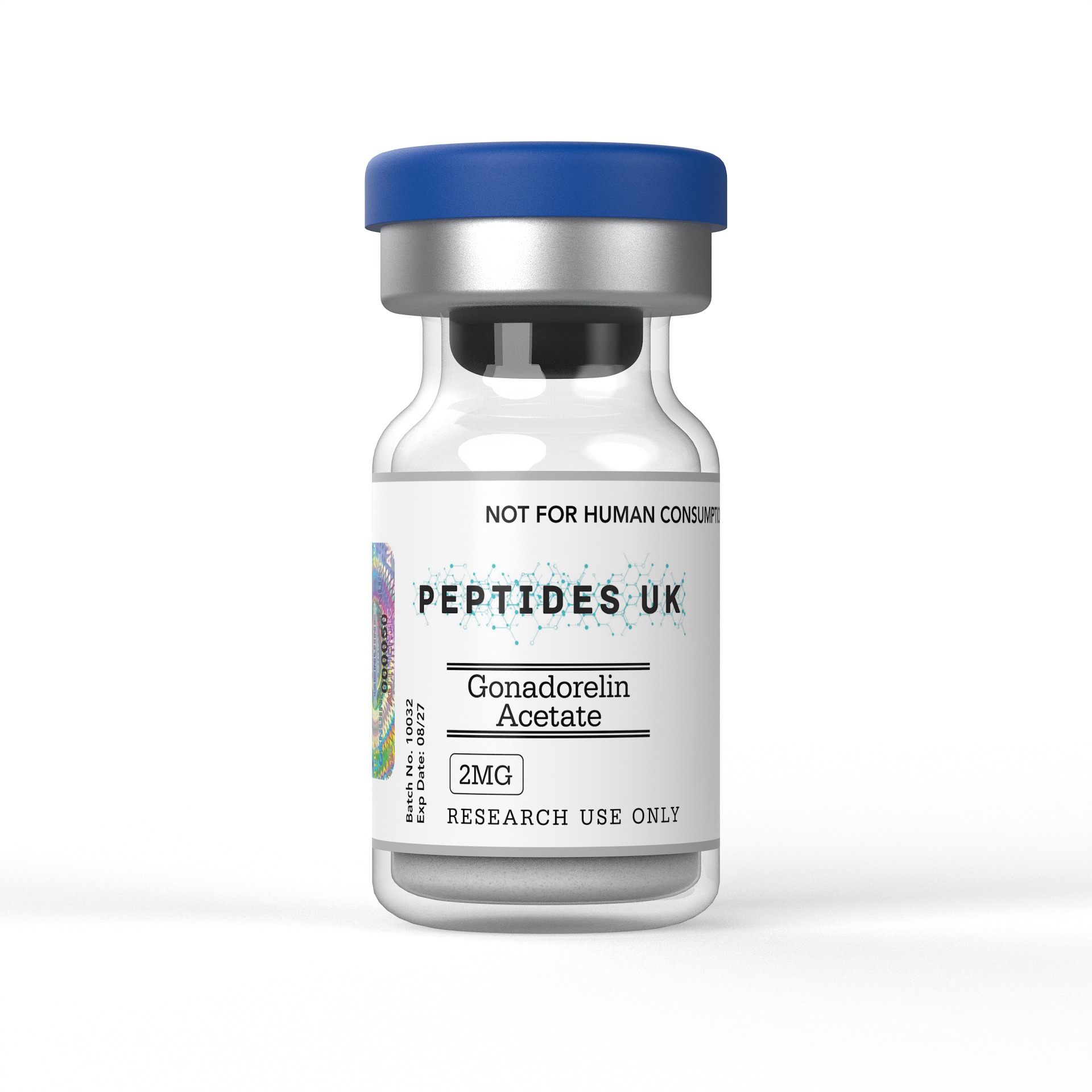
Gonadorelin is the synthetic bioidentical form of gonadotropin-releasing hormone (GnRH) — the endogenous hypothalamic decapeptide neurohormone that functions as the master upstream regulator of the entire hypothalamic-pituitary-gonadal (HPG) reproductive axis — first isolated from porcine hypothalamus in 1971 by Nobel laureate Andrew V. Schally and characterised as the essential neuroendocrine signal that drives pituitary gonadotropin secretion and all downstream gonadal steroid production, and studied extensively across reproductive endocrinology, GnRHR receptor pharmacology, pulsatile secretion biology, gonadotropin biosynthesis, hypogonadotropic hypogonadism research, fertility and ovulation biology, HPG axis diagnostic pharmacology, Kallmann syndrome research, GnRH analogue comparative pharmacology, pituitary gonadotrope cell biology, oncological endocrinology, and neuroendocrine development — with the defining pharmacological characteristic that its biological effect is entirely determined by pattern of administration: pulsatile delivery faithfully recapitulating hypothalamic GnRH secretion drives sustained LH and FSH release, while continuous exposure paradoxically suppresses gonadotropin output through receptor desensitisation and downregulation, making Gonadorelin the single most pharmacologically versatile and mechanistically instructive molecule in reproductive neuroendocrinology and the indispensable reference compound for GnRH receptor biology across the entire spectrum of HPG axis research. Researchers and institutions across the USA can source verified, research-grade Gonadorelin 2mg with fast domestic dispatch and full batch documentation included.
✅ ≥99% Purity — HPLC & Mass Spectrometry Verified
✅ Batch-Specific Certificate of Analysis (CoA) Included
✅ Sterile Lyophilised Powder | GMP Manufactured
✅ Fast Dispatch Across the USA | USA Peptides In Stock
Gonadorelin (GnRH; LHRH; CAS 9034-40-6) is a synthetic decapeptide bioidentical to the naturally occurring gonadotropin-releasing hormone produced by specialised hypothalamic neurons — carrying the sequence pGlu-His-Trp-Ser-Tyr-Gly-Leu-Arg-Pro-Gly-NH₂ (pyroGlu¹-His²-Trp³-Ser⁴-Tyr⁵-Gly⁶-Leu⁷-Arg⁸-Pro⁹-Gly¹⁰-NH₂) — with an N-terminal pyroglutamate residue protecting the free amine from aminopeptidase degradation and a C-terminal glycine amide essential for GnRHR binding affinity. Synthesised by solid-phase peptide synthesis to an amino acid sequence and molecular weight (C₅₅H₇₅N₁₇O₁₃; MW 1,182.31 g/mol) identical to the natural hypothalamic hormone, Gonadorelin carries the same pharmacological identity, receptor binding profile, and biological activity as endogenous GnRH — qualifying it as the native, unmodified reference compound against which all synthetic GnRH agonist and antagonist analogues are pharmacologically benchmarked.
GnRH was first isolated and characterised from porcine hypothalamus in 1971 by Andrew V. Schally’s laboratory — a discovery made in parallel with Roger Guillemin’s group — for which Schally and Guillemin shared the 1977 Nobel Prize in Physiology or Medicine. The isolation required processing of approximately 250,000 pig hypothalami to yield sufficient pure material for structural determination, underscoring the vanishingly small concentrations at which GnRH operates in vivo and the extraordinary sensitivity of the pituitary gonadotrope to this hypothalamic signal. The identification of GnRH as the single hypothalamic peptide capable of driving the full downstream cascade of reproductive hormone production — LH, FSH, gonadal steroids, and gamete production — established it as one of the most consequential molecular discoveries in twentieth-century endocrinology.
Gonadorelin exerts its biological effects through the GnRH receptor (GnRHR; encoded by the GNRHR gene on chromosome 4q13) — a 7-transmembrane rhodopsin-family class A GPCR expressed primarily on gonadotrope cells of the anterior pituitary. The human GnRHR is pharmacologically distinctive among GPCRs for its absence of a cytoplasmic carboxy-terminal intracellular tail — the domain present in most other GPCRs that mediates receptor internalisation and desensitisation through β-arrestin recruitment — a structural feature that substantially reduces desensitisation rate and slows receptor internalisation following agonist binding, prolonging the window of receptor activation following each pulsatile GnRH exposure. Upon Gonadorelin binding, GnRHR couples principally to the Gαq/11 pathway — activating phospholipase Cβ (PLCβ), hydrolyzing PIP2 to generate IP3 and diacylglycerol (DAG), mobilising intracellular calcium from the ER, and activating PKC and downstream ERK1/2 cascades that collectively drive the transcriptional regulation of LH-β and FSH-β gonadotropin subunit genes and the regulated secretory release of mature LH and FSH from gonadotrope secretory granules. GnRHR can additionally couple to Gαs and cAMP/PKA pathways as secondary signalling mechanisms in a cell-context-dependent manner.
The defining and pharmacologically irreplaceable characteristic of Gonadorelin’s biology is its absolute pulsatility dependence — a feature that renders it uniquely instructive among all HPG axis research compounds. GnRH neurons in the medial preoptic area and arcuate/infundibular nucleus of the hypothalamus release GnRH in discrete, episodic pulses approximately every 60–120 minutes — a secretory pattern that reflects the KNDy neuron pulse generator circuit of the arcuate nucleus and that is conserved across all vertebrate species examined. Pulsatile GnRH delivery to the pituitary, mimicking physiological hypothalamic secretion, maintains GnRHR surface expression and sustained gonadotropin synthesis and release. Continuous or non-pulsatile GnRH exposure, by contrast, drives paradoxical GnRHR downregulation and receptor cluster internalisation — leading to progressive loss of gonadotropin secretion and gonadal steroid suppression equivalent to surgical gonadectomy. This pharmacological duality — stimulatory when pulsatile, suppressive when continuous — makes Gonadorelin the single most mechanistically informative compound in reproductive endocrinology for dissecting the fundamental principles of neuropeptide receptor regulation, pituitary gonadotrope plasticity, and HPG axis control.
Over 20 structurally distinct GnRH isoforms have now been identified across vertebrate species — including GnRH-II (found in midbrain and peripheral tissues; eight conserved residues shared with GnRH-I) and GnRH-III (sea lamprey; 60% homology with mammalian GnRH) — while in humans GnRH-I (Gonadorelin) remains the principal hypothalamic regulator of pituitary gonadotropin release. Gonadorelin’s position as the native, unmodified mammalian GnRH sequence — in contrast to the position-6 D-amino acid-substituted synthetic agonist analogues (leuprolide, buserelin, triptorelin, deslorelin) or peptide antagonist analogues (cetrorelix, ganirelix) derived from it — establishes it as the pharmacological reference point against which all analogue biology is interpreted and the gold standard for GnRHR binding studies, pulse biology experiments, and pituitary gonadotrope pharmacology research.
As the Nobel Prize-associated master reproductive hormone, the essential pituitary gonadotropin secretagogue, and the singular compound whose pulsatility dependence has defined the modern understanding of neuropeptide receptor regulation, Gonadorelin 2mg research vials are in active demand across reproductive endocrinology, GnRHR pharmacology, pituitary biology, HPG axis diagnostic research, fertility science, oncological endocrinology, and neuroendocrine development programs at research institutions nationwide.
In controlled pre-clinical and laboratory settings, Gonadorelin has been studied across an exceptionally wide range of reproductive endocrine, pharmacological, developmental, oncological, and neuroendocrine research applications:
GnRHR Receptor Pharmacology and Binding Studies Gonadorelin’s primary research application is as the endogenous reference ligand for GnRHR — used in receptor binding assays, Gαq/11–PLCβ–IP3–Ca²⁺ signalling characterisation, PKC and ERK1/2 cascade activation studies, receptor clustering and internalisation kinetics, and GnRHR subtype pharmacology research. Studies characterising the molecular determinants of GnRHR–GnRH binding have identified residues at positions 1 (pyroGlu), 6 (Gly), 8 (Arg), and 10 (Gly-NH₂) as the key pharmacophoric contact points — establishing why position-6 D-amino acid substitutions in synthetic analogues enhance GnRHR affinity and protease resistance, and why position-8 Arg is essential for mammalian GnRHR-I selectivity. Gonadorelin serves as the unmodified native reference in all such comparative pharmacology studies.
Pulsatility Biology and GnRH Pulse Generator Research Research examining the fundamental pulsatility dependence of GnRHR pharmacology has used Gonadorelin as the gold standard pulse stimulus — with studies documenting the critical role of pulse frequency and amplitude in differentially regulating LH-β versus FSH-β subunit gene transcription, the molecular mechanisms of GnRHR surface expression maintenance under pulsatile versus continuous agonist exposure, and the kinetics of receptor clustering, internalisation, and recycling following episodic stimulation. Research has established that high-frequency GnRH pulses preferentially support LH secretion while low-frequency pulses favour FSH — a differential gonadotropin secretion pattern of fundamental importance for dissecting the phase-specific control of folliculogenesis and spermatogenesis. These pulsatility studies establish Gonadorelin as irreplaceable in the mechanistic understanding of how a single neuropeptide coordinates a complex multi-hormone reproductive programme through solely temporal variation in delivery pattern.
Pituitary Gonadotrope Cell Biology Research Research examining the cellular biology of anterior pituitary gonadotrope cells has used Gonadorelin as the primary stimulus to probe gonadotrope gene expression, gonadotropin subunit synthesis and processing, secretory granule dynamics, calcium signalling kinetics, PKC isoform activation, and ERK1/2-mediated transcriptional regulation of LH-β, FSH-β, and common α-subunit genes. Studies employing primary pituitary cell cultures and gonadotrope cell line models (LβT2, αT3-1) with Gonadorelin stimulation have characterised the transcription factor networks — including SF-1, Egr-1, GnSAF, and activin/inhibin regulatory components — that integrate GnRH signalling with the broader gonadotropin biosynthesis regulatory programme.
Hypogonadotropic Hypogonadism and Kallmann Syndrome Research Gonadorelin is the foundational reference compound in hypogonadotropic hypogonadism (HH) and Kallmann syndrome research — with studies characterising how GnRH deficiency produces its clinical phenotype of pubertal failure, gonadotropin insufficiency, and gonadal steroid deficiency, and how pulsatile Gonadorelin restoration of GnRH signalling rescues HPG axis function. Research examining the neurodevelopmental biology of Kallmann syndrome — where GnRH neuron migration from the olfactory placode along vomeronasal/olfactory axonal scaffolds to their final hypothalamic positions is disrupted by mutations in genes including FGFR1, FGF8, PROKR2, PROK2, SEMA3A, and ANOS1 — has used Gonadorelin as the pharmacological probe to assess residual gonadotrope responsiveness and distinguish pituitary-level from hypothalamic-level insufficiency. GNRHR loss-of-function mutation research has established the receptor-level genetic basis of GnRH-resistant HH and characterised the genotype–phenotype relationships — from partial to complete IHH, including the fertile eunuch syndrome — that inform GnRHR structure-function biology.
HPG Axis Diagnostic Pharmacology Research Gonadorelin’s most classically characterised research and clinical application is as the diagnostic stimulation agent for pituitary gonadotrope function assessment — with the GnRH stimulation test (intravenous bolus Gonadorelin followed by serial LH and FSH serum measurements) providing a direct pharmacological probe of anterior pituitary gonadotrope reserve. Studies have characterised the LH and FSH response kinetics, peak response magnitudes, and LH:FSH ratio dynamics following standard Gonadorelin challenge across healthy controls, IHH patients, patients with pituitary tumours or post-surgical pituitary damage, and patients with constitutional delay of puberty versus permanent HH — establishing the GnRH stimulation test as the foundational diagnostic pharmacology tool for the entire hypothalamic-pituitary reproductive axis. Research has also documented the distinctive finding that in prepubertal girls and certain gonadal disorders, the FSH response to Gonadorelin exceeds the LH response — a pharmacologically informative reversal of the usual LH-predominant pattern that provides mechanistic insight into gonadotrope maturation biology.
Fertility Research — Ovulation Induction and Hypothalamic Amenorrhea Gonadorelin has been studied extensively as the physiologically authentic ovulation trigger and gonadotropin secretagogue in fertility research — with studies characterising its use in hypothalamic amenorrhea to restore pulsatile gonadotropin release and induce ovulation through pulsatile pump delivery protocols. Research comparing Gonadorelin-based ovulation induction with exogenous gonadotropin protocols has examined the relative risks of multifollicular development and ovarian hyperstimulation syndrome (OHSS) — with pulsatile Gonadorelin therapy generally associated with mono-follicular development reflecting the preserved physiological pituitary regulation of follicular recruitment, in contrast to direct exogenous gonadotropin stimulation. Studies have characterised the optimal pulse intervals (every 90–120 minutes) and dose ranges (5–20 μg per pulse) for effective HPG axis restoration in hypothalamic amenorrhea models.
GnRH Neuron Development and Migration Biology Research Research examining the embryonic development and migration of GnRH neurons has established the unique developmental trajectory of these cells — originating in the nasal placode and migrating along vomeronasal and olfactory axonal scaffolds through the cribriform plate into the forebrain before reaching their definitive positions in the medial preoptic area and arcuate nucleus. Studies using Gonadorelin as the functional readout of GnRH neuronal identity and activity have characterised the genetic programmes — including FGFR1/FGF8 signalling, NELF, NOS1, semaphorin, and prokineticin pathways — governing this migration, and have probed how disruptions to these developmental programmes produce the anosmia and GnRH deficiency of Kallmann syndrome. This neuroembryological research establishes Gonadorelin-producing neurons as developmentally and anatomically unique among all hypothalamic cell types.
GnRH Analogue Comparative Pharmacology Research Gonadorelin serves as the indispensable native reference compound in all research comparing the pharmacological profiles of synthetic GnRH analogues — including the position-6 D-amino acid agonist series (leuprolide, buserelin, triptorelin, nafarelin, goserelin, deslorelin, histrelin) and the antagonist series (cetrorelix, ganirelix, degarelix, relugolix) — providing the baseline GnRHR binding affinity, receptor activation kinetics, and downstream signalling magnitude against which each analogue’s enhanced potency, altered receptor selectivity, agonist flare characteristics, and desensitisation kinetics are measured. Studies have used Gonadorelin as the native comparator to elucidate how position-6 D-amino acid substitutions stabilise the β-II’ turn conformation encompassing residues 5–8, and how C-terminal substitutions in synthetic agonists further enhance GnRHR affinity — mechanistic insights that have driven the rational design of the entire GnRH analogue therapeutic class.
Oncological Endocrinology Research — Prostate and Breast Cancer Models Continuous Gonadorelin exposure — or its pharmacological equivalents, long-acting GnRH agonist analogues — produces the gonadotropin suppression and downstream sex steroid deprivation that is the mechanistic basis of androgen deprivation therapy (ADT) in prostate cancer and ovarian suppression in premenopausal breast cancer research. Pre-clinical research using Gonadorelin and its analogues in prostate cancer xenograft models has documented reduced tumour cell proliferation, increased apoptosis, and downregulated androgen receptor (AR) signalling following medical castration through GnRHR desensitisation — contributing to the mechanistic framework for understanding hormonal manipulation in sex steroid-sensitive malignancies. Research has also examined the direct anti-proliferative effects of GnRHR activation on cancer cell lines expressing GnRHR, independent of downstream gonadal steroid effects, positioning GnRHR as a research target in oncology beyond its classical pituitary reproductive biology.
Precocious Puberty and GnRH Receptor Downregulation Research Research examining the pharmacological management of precocious puberty has established continuous GnRH agonist administration as a mechanism for inducing pituitary GnRHR downregulation and gonadotropin suppression — halting premature pubertal progression while maintaining the capacity for full reproductive axis reactivation upon cessation of treatment. Studies have used Gonadorelin as the pulsatile activation control in experiments dissecting the receptor-level and transcriptional mechanisms by which continuous versus pulsatile agonist exposure produce diametrically opposed gonadotrope outcomes — providing fundamental mechanistic data on GPCR regulation that extends beyond reproductive endocrinology into the broader field of neuropeptide receptor pharmacology.
GnRH and Energy Metabolism Research Research has examined the interaction between GnRH signalling, metabolic status, and energy homeostasis — probing how nutritional extremes, leptin deficiency, and insulin resistance affect hypothalamic GnRH pulse generator activity and thereby couple metabolic state to reproductive readiness. Studies have characterised how GnRH pulse frequency and amplitude are attenuated by caloric restriction, excessive energy expenditure, and obesity — mechanisms mediated in part through kisspeptin neuronal sensitivity to metabolic signals — and how Gonadorelin challenge tests can be used to pharmacologically distinguish hypothalamic-level (GnRH pulse generator) insufficiency from pituitary-level (GnRHR) insufficiency in metabolic reproductive dysfunction research.
Extrapituitary GnRHR Biology Research Research has characterised GnRHR expression in extrapituitary tissues — including the gonads (granulosa cells, Leydig cells, spermatids, ovarian surface epithelium), endometrium, placenta, breast, prostate, and immune cells — and has used Gonadorelin to probe the autocrine and paracrine functions of GnRHR in these peripheral contexts. Studies have documented GnRHR-mediated regulation of gonadal steroidogenesis, spermatogenesis, and ovarian cell proliferation independent of pituitary gonadotropin action — establishing a peripheral GnRH axis that parallels the classical hypothalamic-pituitary reproductive loop and opening additional research dimensions in reproductive tissue biology and tumour biology.
All applications are for research purposes only. Gonadorelin as supplied is not intended for human therapeutic use.
Gonadorelin has accumulated the most clinically translated, mechanistically characterised, and historically deep research profile of any hypothalamic neuropeptide:
GnRHR Pharmacology: Studies have comprehensively mapped the molecular pharmacophore of the Gonadorelin–GnRHR interaction — identifying the structural roles of pyroGlu¹, Tyr⁵, Gly⁶, Arg⁸, Pro⁹, and Gly¹⁰-NH₂ through systematic alanine substitution and analoguing studies, characterising the β-II’ turn conformation of residues 5–8 as the critical receptor-recognition fold, and establishing how the absence of the C-terminal intracellular tail of GnRHR uniquely slows receptor desensitisation. These structural pharmacology data collectively explain why the position-6 D-amino acid substitutions of synthetic agonists enhance affinity and resistance to proteolysis — findings only interpretable against the native Gonadorelin reference structure.
Pulsatility Dependence: Research has definitively established the absolute dependence of GnRHR pharmacological outcome on agonist delivery pattern — documenting the molecular mechanisms by which pulsatile Gonadorelin maintains GnRHR surface expression, gonadotropin gene transcription, and sustained LH/FSH secretion while continuous exposure triggers receptor clustering, internalisation, Gq uncoupling, and progressive gonadotropin suppression. Studies in both pre-clinical models and clinical research have confirmed these opposing outcomes with quantitative precision — establishing pulsatility dependence as the defining pharmacological principle of GnRHR biology.
Diagnostic Pharmacology: The GnRH stimulation test using Gonadorelin has been validated across decades of clinical research as the standard pharmacological probe of anterior pituitary gonadotrope reserve — with well-characterised LH and FSH response kinetics, established normal reference ranges, and defined response patterns for specific diagnostic categories including HH, Kallmann syndrome, constitutional delay, post-surgical pituitary damage, and gonadal disorders. This clinical validation record establishes Gonadorelin as among the most diagnostically characterised peptides in endocrine pharmacology.
Fertility Biology: Research has confirmed pulsatile Gonadorelin therapy as an effective and physiologically authentic approach to gonadotropin restoration in hypothalamic amenorrhea and hypogonadotropic hypogonadism — with studies documenting mono-follicular ovulation induction, successful fertility outcomes, and preservation of physiological HPG axis feedback regulation — outcomes that distinguish pulsatile GnRH-based fertility research from exogenous gonadotropin approaches and provide mechanistic insight into the physiology of natural ovulatory cycles.
Hypogonadism and Genetic Disease: Human genetic studies have comprehensively characterised the phenotypic spectrum of GNRHR loss-of-function mutations — from the complete IHH of homozygous null mutations to the partial IHH of hypomorphic mutations including the fertile eunuch syndrome — establishing a precise genotype–phenotype map that extends the mechanistic understanding of GnRHR structure-function biology and the physiological requirements for GnRH signal transduction in reproductive axis maintenance.
Oncological Endocrinology: Studies have established the pharmacological basis of androgen deprivation therapy and ovarian suppression through GnRHR desensitisation, documented the direct antiproliferative effects of GnRHR activation in sex steroid-sensitive tumour cell lines, and characterised the intracellular signalling pathways — including reduced AR signalling, increased apoptosis, and cell cycle arrest — through which sustained GnRHR activation suppresses tumour growth independently of downstream gonadal steroid effects.
| Feature | Gonadorelin | Kisspeptin-10 | Triptorelin | Leuprolide |
|---|---|---|---|---|
| Type | Native GnRH decapeptide — bioidentical hypothalamic neurohormone | KISS1-derived decapeptide — endogenous GnRH stimulator (RFamide family) | Synthetic GnRH agonist analogue — position-6 D-Trp substituted | Synthetic GnRH agonist analogue — position-6 D-Leu, C-terminal ethylamide |
| Receptor | GnRHR (Gαq/11 GPCR) — direct pituitary gonadotrope activation | KISS1R / GPR54 — upstream of GnRH neurons | GnRHR — same receptor as Gonadorelin; enhanced affinity and half-life | GnRHR — same receptor; continuous delivery = suppression |
| Position in HPG Axis | Central HPG node — the hypothalamic-pituitary signal | Upstream of GnRH — the kisspeptin/KISS1R drive to GnRH neurons | GnRHR agonist — stimulatory when pulsatile, suppressive when continuous | GnRHR agonist — typically deployed for continuous medical castration |
| Half-Life | 2–4 minutes — rapid endopeptidase cleavage | ~3–4 minutes (decapeptide; rapid degradation) | ~3 hours (D-Trp substitution; protease-resistant) | ~3 hours (similar analogue resistance) |
| Pulsatility Dependence | Absolute — same pharmacological duality as all GnRH agonists; gold standard reference | Acts upstream to regulate pulsatility of GnRH itself — different biology | Shares pulsatility duality — more commonly deployed in continuous suppression protocols | Typically continuous — medical castration in prostate cancer and endometriosis |
| Primary Research Use | GnRHR pharmacology / pulsatility biology / HPG diagnostic reference / fertility biology / analogue benchmarking | KISS1R pharmacology / upstream pulse generator / puberty and fertility / psychosexual research | Long-acting GnRH agonist pharmacology / prostate cancer models / endometriosis / IVF flare protocols | Medical castration models / androgen deprivation research / continuous GnRHR desensitisation |
| Best For | Native GnRHR reference / pulse biology / gonadotrope cell biology / HH/Kallmann / pituitary diagnostic testing | Upstream HPG activation biology / KISS1R-to-GnRH arc / KNDy neuron research / psychosexual biology | Extended-half-life GnRH agonist research / continuous suppression protocols / comparative analogue pharmacology | Continuous GnRHR suppression / medical castration / hormone-sensitive cancer models |
| Parameter | Specification |
|---|---|
| Full Name | Gonadorelin (GnRH-I; LHRH; Luteinising Hormone-Releasing Hormone) |
| Sequence | pGlu-His-Trp-Ser-Tyr-Gly-Leu-Arg-Pro-Gly-NH₂ |
| CAS Number | 9034-40-6 |
| Molecular Formula | C₅₅H₇₅N₁₇O₁₃ |
| Molecular Weight | 1,182.31 g/mol |
| Peptide Length | 10 Amino Acids (Decapeptide) — linear |
| N-Terminal Modification | Pyroglutamate (pGlu) — cyclised glutamine; protects against aminopeptidase degradation |
| C-Terminal Modification | Glycine amide (Gly-NH₂) — essential for GnRHR binding; free acid form markedly less active |
| Key Structural Positions | Gly⁶ (conformational flexibility / metabolic cleavage site) and Arg⁸ (mammalian GnRHR-I selectivity) |
| Type | Native endogenous hypothalamic neurohormone / neuropeptide — bioidentical synthetic |
| Primary Receptor | GnRHR / GNRHR — 7TM rhodopsin-family Gαq/11 GPCR (chromosome 4q13); lacks C-terminal intracellular tail |
| Key Downstream Signalling | PLCβ → IP3 + DAG → intracellular Ca²⁺ + PKC → ERK1/2 → LH-β and FSH-β gene transcription and secretion |
| Half-Life (in vivo) | 2–4 minutes — rapid cleavage at Gly⁶–Leu⁷ and Tyr⁵–Gly⁶ by endopeptidases |
| Biological Effect (pulsatile) | Sustained GnRHR activation → LH and FSH synthesis and secretion → gonadal steroid and gamete production |
| Biological Effect (continuous) | GnRHR downregulation and desensitisation → gonadotropin suppression → sex steroid reduction |
| GnRH Isoform | GnRH-I — primary mammalian hypothalamic isoform (vs GnRH-II in midbrain; GnRH-III in lamprey) |
| Vial Size | 2mg |
| Purity | ≥99% (HPLC & MS Verified) |
| Form | Sterile Lyophilised Powder |
| Solubility | Sterile water, bacteriostatic water, PBS, dilute acetic acid (0.1%) |
| Storage (Powder) | -20°C, protect from light and moisture |
| Storage (Reconstituted) | 2–8°C, use within 14–21 days with bacteriostatic water |
| Manufacturing | GMP Manufactured |
Every order includes full batch documentation:
✅ Batch-Specific Certificate of Analysis (CoA)
✅ HPLC Chromatogram
✅ Mass Spectrometry Confirmation
✅ Sterility & Endotoxin Testing Report
✅ Reconstitution Protocol
✅ Technical Research Support
Can I buy research-grade Gonadorelin in the USA? Yes. We supply research-grade Gonadorelin 2mg to researchers and institutions across the United States. All orders include full batch documentation and are packaged to maintain peptide integrity during transit. This compound is supplied strictly for laboratory research use only.
What is the structural basis of Gonadorelin’s extremely short half-life and why does it matter for research? Gonadorelin’s in vivo half-life of approximately 2–4 minutes is the direct consequence of rapid endopeptidase cleavage at two labile bonds: the Tyr⁵–Gly⁶ bond (cleaved by post-proline endopeptidase) and the Gly⁶–Leu⁷ bond (cleaved by a zinc metalloendopeptidase). These cleavage sites within the central portion of the decapeptide rapidly inactivate native GnRH in blood and at pituitary cell surfaces. This extreme brevity of action is not merely a pharmacokinetic inconvenience — it is biologically essential to the pulsatility mechanism: the rapid termination of each GnRH pulse prevents tonic receptor activation, allowing GnRHR to recover between pulses and maintaining the receptor surface expression that is required for the next pulse to be effective. For research applications, the short half-life means Gonadorelin’s activity window is precisely controllable in pulse experiments, and it underscores why GnRH analogue design focused first on position-6 D-amino acid substitutions that block the critical Gly⁶ endopeptidase cleavage site — extending half-life to hours and enabling both more potent agonism and, ultimately, continuous desensitisation-based suppression strategies.
How does the GnRHR’s structural uniqueness — its missing C-terminal tail — affect receptor pharmacology research? The human GnRHR is distinctive among class A GPCRs in lacking the cytoplasmic carboxy-terminal intracellular tail that is present in virtually all other members of the rhodopsin-family GPCR superfamily. This tail in conventional GPCRs serves as the primary docking site for GRKs (G protein-coupled receptor kinases) and β-arrestin recruitment — the molecular machinery responsible for rapid receptor desensitisation and internalisation following agonist binding. Without this tail, human GnRHR undergoes markedly slower desensitisation and internalisation compared to other GPCRs — a property that sustains receptor-level responsiveness to each pulse and prevents rapid tachyphylaxis. This structural feature has important implications for GnRHR pharmacology research: it means that the receptor desensitisation observed during continuous GnRH agonist exposure proceeds through a distinct, β-arrestin-independent mechanism involving receptor clustering and lysosomal degradation rather than classical GRK-mediated phosphorylation, making GnRHR biology a distinctive case study in GPCR desensitisation mechanisms. Notably, rodent GnRHRs retain a short C-terminal tail — a difference that must be accounted for when extrapolating between species in research design.
What is the pharmacological difference between Gonadorelin and synthetic GnRH agonist analogues like leuprolide or triptorelin? Gonadorelin is the native, unmodified GnRH decapeptide — identical in sequence and conformation to the endogenous hypothalamic hormone — with a half-life of 2–4 minutes and a pharmacological profile that is both stimulatory (pulsatile) and suppressive (continuous) depending purely on delivery pattern. Synthetic GnRH agonist analogues such as leuprolide and triptorelin introduce D-amino acid substitutions at position 6 (replacing the achiral Gly⁶ that is the primary endopeptidase cleavage site) that stabilise the β-II’ turn conformation, dramatically increase GnRHR binding affinity (up to 100-fold greater than native GnRH), and extend plasma half-life to several hours through protease resistance. The combination of higher affinity and prolonged receptor occupancy means synthetic agonist analogues cause much more pronounced GnRHR downregulation under continuous exposure — making them pharmacologically better suited to sustained medical castration applications, but also meaning they are not appropriate substitutes for Gonadorelin in research applications requiring pulse physiology, native GnRHR reference binding values, or authentic reproduction of physiological GnRH pulsatility. Gonadorelin remains the essential reference and the only compound for pulsatile GnRH biology research.
Why are pulse frequency and amplitude important variables in Gonadorelin research design? The differential regulation of LH versus FSH secretion by GnRH pulse frequency is one of the most mechanistically important and practically consequential properties of the GnRHR system. Studies have established that high-frequency GnRH pulses (approximately every 60 minutes) preferentially stimulate LH-β subunit gene transcription and LH secretion, driven by PKC and Egr-1-mediated pathways — supporting the mid-cycle LH surge and the luteal phase of the reproductive cycle. Low-frequency pulses (approximately every 2–3 hours) preferentially support FSH-β subunit transcription and FSH secretion — driving the follicular phase follicle recruitment and maturation. This frequency-dependent differential gonadotropin regulation is mediated at the level of GnRHR signalling pathway activation kinetics, transcription factor dynamics, and GnRHR surface expression levels, and it provides the biological explanation for why a single hypothalamic peptide can orchestrate the complex, phase-specific hormonal dynamics of the entire reproductive cycle. For research design, pulse frequency and amplitude are therefore critical experimental variables — not merely dosing parameters — and must be precisely controlled to probe specific aspects of gonadotrope biology.
What purity is required for Gonadorelin research? ≥98% is considered research-grade, but ≥99% purity is strongly preferred for GnRHR binding assays, gonadotrope cell stimulation experiments, pulse biology studies, pituitary diagnostic pharmacology research, and any application where compound identity and freedom from sequence-related impurities directly affects GnRHR activation fidelity and experimental reproducibility. Confirmation of correct N-terminal pyroglutamate formation and C-terminal glycine amidation by mass spectrometry is equally important alongside overall purity percentage, as these terminal modifications are essential for full GnRHR binding activity. All Gonadorelin supplied for USA researchers is independently verified to ≥99% with mass spectrometry confirmation of the correct molecular weight incorporating both terminal modifications.
How is Gonadorelin reconstituted for lab use? Allow the vial to reach room temperature before opening. Add sterile water, bacteriostatic water, or dilute acetic acid (0.1%) slowly down the vial wall and swirl gently — do not vortex or shake vigorously. Gonadorelin dissolves readily in slightly acidic aqueous conditions; dilute acetic acid can aid initial dissolution before further dilution with PBS or physiological buffer to working concentration. For cell-based or primary pituitary culture applications requiring low peptide concentrations, addition of 0.1% BSA to working solutions reduces non-specific adsorption of the peptide to plasticware surfaces. Given Gonadorelin’s short biological half-life, working solutions should be prepared fresh where possible and kept on ice. For multi-use protocols, bacteriostatic water extends the usable life of reconstituted solution to 14–21 days when stored at 2–8°C. For long-term storage of stock solutions, aliquot and store at -80°C to preserve peptide integrity; avoid repeated freeze-thaw cycles. The pyroglutamate N-terminal residue is relatively stable but should be protected from strongly acidic or basic conditions that could promote ring opening. Mass spectrometry verification of correct MW prior to use is advisable for critical receptor pharmacology applications.
Gonadorelin is supplied exclusively for legitimate scientific research purposes conducted within licensed laboratory environments. This product is not intended for human consumption, self-administration, or any therapeutic application. It must be handled by qualified researchers in compliance with applicable US federal and state regulations and institutional ethics guidelines. By purchasing, you confirm that this compound will be used solely for approved in-vitro or pre-clinical research purposes.
Receive News