
PRODUCTS SOLD ON PEPTIDESLABUSA.COM ARE FOR RESEARCH PURPOSES ONLY AND ARE NOT FOR HUMAN OR VETERINARY USE.
$60.50
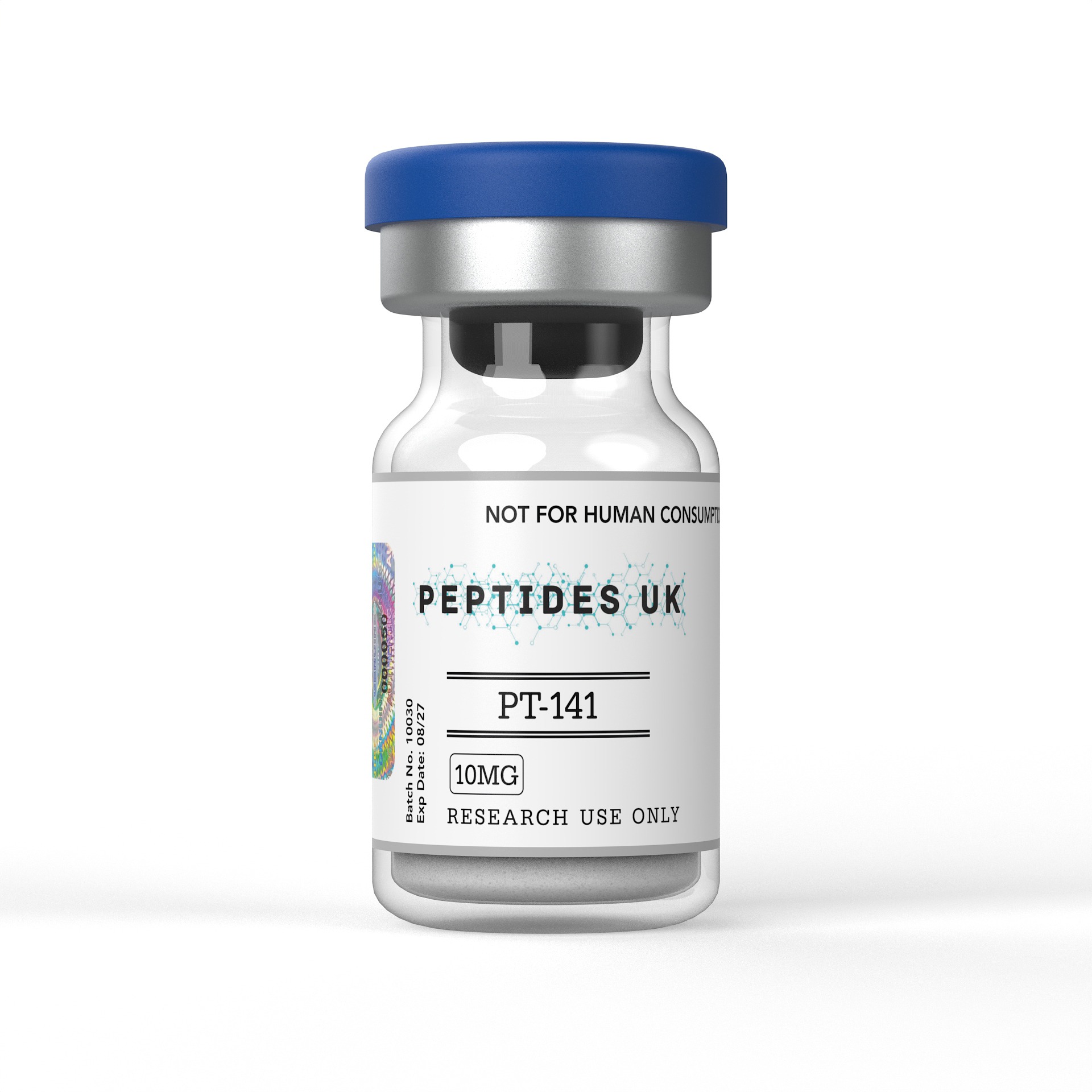
PT-141 Peptide USA – Buy Online | In Stock & Ready to Ship
Buy PT-141 in the USA with fast domestic shipping and guaranteed ≥99% purity — fully verified with COA and HPLC documentation. A trusted choice for USA research teams studying melanocortin receptor activation, sexual arousal pathways and central nervous system modulation, PT-141 is available in multiple formats to suit varying project needs. No international delays — just reliable, domestically sourced peptides USA researchers can count on.
For research use only. Not intended for human or veterinary use.

PT-141 (Bremelanotide; Palatin Technologies compound 141) is a synthetic cyclic heptapeptide lactam analogue of alpha-melanocyte-stimulating hormone (α-MSH) — carrying the sequence Ac-Nle-cyclo[Asp-His-D-Phe-Arg-Trp-Lys]-OH with a conformationally constraining Asp–Lys lactam bridge and an N-terminal acetylated norleucine residue — developed by Palatin Technologies as a metabolically stabilised active metabolite of Melanotan II, and studied extensively across melanocortin receptor pharmacology, central sexual behaviour neuroscience, hypothalamic MC3R and MC4R signalling biology, erectile function research, hypoactive sexual desire disorder (HSDD) models, dopaminergic and oxytocinergic reward circuit modulation, PDE5-independent arousal pathway research, energy homeostasis and feeding biology, and emerging oncological and neuroprotective applications — representing the first and only FDA-approved melanocortin receptor agonist (approved June 2019 as Vyleesi for acquired generalised HSDD in premenopausal women) and the most clinically and mechanistically characterised CNS-acting melanocortin peptide in modern sexual neuroscience, distinguished from all prior approaches to sexual dysfunction by its central nervous system mechanism of action targeting hypothalamic arousal circuitry rather than peripheral vascular physiology. Researchers and institutions across the USA can source verified, research-grade PT-141 5mg with fast domestic dispatch and full batch documentation included.
✅ ≥99% Purity — HPLC & Mass Spectrometry Verified
✅ Batch-Specific Certificate of Analysis (CoA) Included
✅ Sterile Lyophilised Powder | GMP Manufactured
✅ Fast Dispatch Across the USA | USA Peptides In Stock
PT-141 (Bremelanotide; CAS 189691-06-3) is a synthetic cyclic heptapeptide — carrying the amino acid sequence Ac-Nle-cyclo[Asp-His-D-Phe-Arg-Trp-Lys]-OH, also described by the substitutional name cyclo-[Nle⁴, Asp⁵, D-Phe⁷, Lys¹⁰]α-MSH-(4–10) — in which the linear α-MSH-derived sequence is cyclised through an intramolecular lactam bridge formed between the side-chain carboxylate of aspartic acid (position 5) and the ε-amino group of lysine (position 10), creating the characteristic seven-membered ring structure that constrains the peptide backbone into the bioactive conformation required for high-affinity melanocortin receptor binding. The N-terminal norleucine (Nle) residue replaces the methionine of the parent α-MSH sequence to improve metabolic stability, while the D-phenylalanine (D-Phe) at position 7 adopts the reverse chirality that further enhances receptor affinity and resistance to enzymatic degradation. PT-141 has a molecular formula of C₅₀H₆₈N₁₄O₁₀ and a molecular weight of 1,025.16 g/mol.
The discovery lineage of PT-141 begins at the University of Arizona in the 1980s, where researchers synthesised a series of cyclic α-MSH analogues as sunless tanning agents — producing Melanotan I and Melanotan II (MTII), the latter a non-selective melanocortin agonist that activates all five melanocortin receptor subtypes (MC1R–MC5R). During early clinical investigation of Melanotan II, the compound’s unexpectedly potent effects on sexual arousal and spontaneous erection — observed acutely in 8 of the first 10 male volunteer subjects and described famously when one researcher self-administered the compound — drew research interest that ultimately overshadowed the tanning application. Palatin Technologies subsequently synthesised and patented bremelanotide as a likely active metabolite of Melanotan II, structurally distinguished from MTII by the absence of the C-terminal amide group (replaced by a free carboxylic acid hydroxyl) — a modification that reduces MC1R activity relative to the parent compound while preserving MC3R and MC4R agonist potency, narrowing the receptor selectivity profile toward the central melanocortin receptors most relevant to sexual behaviour biology and reducing pigmentation-related confounding in research applications.
PT-141 exerts its biological effects through the melanocortin receptor family — a group of five class A Gαs-coupled GPCRs (MC1R through MC5R) activated by the endogenous melanocortin peptides α-MSH, β-MSH, γ-MSH, and ACTH. PT-141 binds these receptors with the following order of potency: MC1R > MC4R > MC3R > MC5R > MC2R — with MC2R (the ACTH receptor) showing minimal engagement at relevant concentrations. Upon receptor binding, PT-141 activates Gαs protein coupling, stimulating adenylyl cyclase, elevating intracellular cAMP, and activating PKA and downstream signalling cascades including ERK1/2 and MAPK pathways — a Gαs/cAMP signal transduction profile that is distinct from the Gαq/11 pathway engaged by oxytocin, GnRH, and KISS1R, reflecting the Gαs-coupled nature of the melanocortin receptor family. At MC4R specifically, PT-141 additionally modulates neuronal firing through ligand-induced closure of inwardly rectifying potassium channels (KCNJ13) independently of Gαs signalling — a secondary signalling mechanism that contributes to the compound’s direct excitatory effects on hypothalamic neurons in sexual behaviour control centres.
PT-141’s pharmacologically defining characteristic is its CNS-penetrant mechanism of action — engaging melanocortin receptors expressed on neurons of the hypothalamic medial preoptic area (mPOA) and paraventricular nucleus (PVN) to activate the brain’s intrinsic sexual arousal circuitry, driving downstream dopamine release in the mPOA and oxytocin release from PVN neurons, and engaging descending neural pathways to spinal and peripheral sexual response effectors — a mechanism that is fundamentally distinct from, and complementary to, the peripheral vascular mechanism of PDE5 inhibitors such as sildenafil and tadalafil. This CNS-primary mechanism explains PT-141’s documented capacity to restore sexual arousal in subjects in whom PDE5 inhibitors are ineffective, addressing the neurogenic and psychogenic components of sexual dysfunction that lie upstream of penile smooth muscle physiology.
PT-141 received FDA approval in June 2019 as Vyleesi (AMAG Pharmaceuticals) — a 1.75 mg subcutaneous autoinjector for on-demand use at least 45 minutes before anticipated sexual activity — making it the first melanocortin-based medicine to achieve regulatory approval and only the second FDA-approved pharmacotherapy for female sexual dysfunction after flibanserin. Its classification as a first-in-class medication by the FDA reflects its entirely novel mechanism of action among approved sexual dysfunction treatments.
As the first FDA-approved melanocortin receptor agonist, the most clinically characterised CNS-acting sexual behaviour peptide, and a compound whose discovery lineage established the melanocortin system’s role in sexual neurobiology, PT-141 5mg research vials are in active demand across melanocortin receptor pharmacology, sexual behaviour neuroscience, HSDD and erectile dysfunction research, hypothalamic circuit biology, dopaminergic reward research, and energy homeostasis programs at research institutions nationwide.
In controlled pre-clinical and laboratory settings, PT-141 has been studied across an exceptionally wide range of neurobiological, sexual behaviour, pharmacological, and metabolic research applications:
Melanocortin Receptor Pharmacology Research PT-141’s primary research application is as a reference agonist for the melanocortin receptor family — used in competitive radioligand binding assays, MC subtype selectivity profiling, Gαs/cAMP/PKA signalling characterisation, and receptor distribution mapping studies. Research has characterised PT-141’s binding affinities across MC1R, MC3R, MC4R, and MC5R — with MC4R affinity of approximately 10 nM in competitive binding assays using human MC4R-expressing HEK-293 cells — and has compared its receptor selectivity profile against parent compound MTII and the endogenous reference NDP-α-MSH. PT-141’s relative reduction in MC1R engagement compared to MTII — a consequence of its C-terminal carboxylic acid in place of MTII’s C-terminal amide — makes it a useful tool for dissecting MC3R/MC4R-mediated sexual behaviour biology from MC1R-mediated pigmentation confounds in comparative receptor pharmacology studies.
Central Sexual Behaviour Neuroscience Research PT-141 is the most extensively studied synthetic melanocortin agonist in central sexual behaviour neuroscience — with pre-clinical studies in rats and non-human primates documenting that systemic PT-141 administration activates neurons in the hypothalamus as measured by c-Fos immunoreactivity increases, and that the same hypothalamic regions receive pseudorabies virus injected retrogradely from the corpus cavernosum — establishing a direct neuroanatomical connection between hypothalamic melanocortin-responsive neurons and penile erectile tissue. Studies have characterised how PT-141 administration drives penile erection in rodents through a centrally initiated neural cascade, and have mapped the mPOA and PVN as the primary hypothalamic loci of PT-141’s pro-erectile and pro-sexual arousal effects.
Erectile Dysfunction and PDE5-Independent Arousal Research Research examining PT-141 in erectile dysfunction biology has established its activity in a clinically important population: men in whom PDE5 inhibitors are ineffective. Studies have documented that intranasal PT-141 administration in men with erectile dysfunction who had already responded to sildenafil produced dose-dependent increases in erectile activity, and controlled research in sildenafil-resistant subjects demonstrated that PT-141 produced significant improvements in erectile response compared to placebo — a result of particular mechanistic significance because the PDE5 inhibitor-resistant population is by definition not addressable through the nitric oxide/cGMP/smooth muscle relaxation pathway that sildenafil targets, confirming that PT-141’s mechanism operates through a distinct, CNS-initiated neural pathway. Ongoing Phase II clinical trials are examining PT-141 in combination with PDE5 inhibitors in men with refractory erectile dysfunction.
Hypoactive Sexual Desire Disorder (HSDD) Research PT-141 is the most clinically characterised compound in HSDD research — with the pivotal RECONNECT Phase III trials enrolling premenopausal women with acquired, generalised HSDD and documenting statistically significant improvements in the number of satisfying sexual events and reductions in intercourse-related distress compared to placebo. Earlier Phase II studies using intranasal administration demonstrated that PT-141 treatment resulted in significantly more women reporting moderate or high sexual desire and greater satisfaction with arousal during sexual encounters, compared to placebo — establishing the melanocortin pathway as a pharmacologically validated target for female sexual desire biology. These clinical data provide the most extensive translational research foundation of any peptide in the female sexual dysfunction field.
Hypothalamic MC4R Circuit and Dopamine Release Research Research examining the cellular neuroscience of PT-141’s sexual arousal effects has focused on MC4R-expressing neurons of the medial preoptic area (mPOA) — a hypothalamic region critical for the integration and expression of sexual behaviour across species. Studies have established that PT-141 activates presynaptic MC4Rs on mPOA neurons to increase dopamine release in this region — the primary dopaminergic mechanism linking melanocortin receptor activation to the motivational and reward dimensions of sexual arousal. Research employing c-Fos immunohistochemistry has mapped the neural activation signature of PT-141 across hypothalamic nuclei, and combined neurochemical and behavioural studies have probed how MC4R-mediated dopamine release in the mPOA translates to measurable changes in sexual motivation and copulatory behaviour parameters in pre-clinical models.
Oxytocin System and PVN Neuron Research Research has examined PT-141’s activation of oxytocin-releasing neurons in the paraventricular nucleus (PVN) — documenting that melanocortin receptor stimulation in the PVN drives oxytocin release that contributes to both the physiological and affective dimensions of PT-141’s pro-sexual effects. Studies have explored how the convergence of MC4R-mediated dopamine release (mPOA) and MC4R/oxytocin system activation (PVN) produces the multidimensional enhancement of sexual desire and arousal documented in PT-141 research, and have examined how PVN oxytocin neurons serve as an integration node for melanocortin and social bonding neurobiology — a research connection of growing significance given the parallel literature on oxytocin’s role in sexual and affiliative behaviour.
MC3R vs MC4R Selectivity and Receptor Attribution Research Research has used PT-141 alongside more selective MC3R and MC4R agonists to dissect the individual receptor contributions to the compound’s observed biological effects. Studies comparing PT-141 with MC4R-selective agonists have provided pharmacological evidence that MC4R is the primary mediator of sexual arousal and pro-erectile effects, while MC3R activation is implicated in energy homeostasis, feeding regulation, and potentially cardioprotective and anti-inflammatory dimensions of melanocortin biology. The availability of PT-141 as a mixed MC3R/MC4R research tool — combined with selective agonists and antagonists for each receptor subtype — allows dissection of receptor-specific contributions to the full spectrum of melanocortin biology in the hypothalamus.
Energy Homeostasis and Feeding Biology Research MC3R and MC4R are both expressed in hypothalamic circuits regulating food intake, energy expenditure, and body weight homeostasis — with MC4R in particular being a well-established regulator of the leptin–melanocortin pathway and a genetic determinant of human obesity (with MC4R loss-of-function mutations representing the most common monogenic cause of human obesity). Research using PT-141 has probed how MC3R/MC4R activation in arcuate nucleus and ventromedial hypothalamic neurons affects feeding behaviour, body weight, and energy balance parameters — establishing PT-141 as a research tool for examining the mechanistic intersection between the melanocortin sexual arousal system and the melanocortin energy homeostasis system that share the same receptor substrates in the hypothalamus.
Melanocortin System and Skin Pigmentation Research PT-141’s structural relationship to α-MSH and Melanotan II positions it in the historical research lineage of melanocortin pigmentation biology — with MC1R-mediated melanocyte activation and melanin synthesis representing the classical endocrine role of α-MSH in the skin. Research has used PT-141 and its relative reduction in MC1R potency compared to MTII to probe the structural basis of MC1R selectivity and to examine how C-terminal amide versus carboxylic acid modifications shift the receptor selectivity profile within the melanocortin analogue series. Studies have also examined the practical MC1R biology of PT-141 at higher concentrations — including the focal hyperpigmentation of injection sites documented in clinical use — contributing to the understanding of how systemic melanocortin agonism engages peripheral MC1R even when this is not the primary pharmacological target.
Cardiovascular and Blood Pressure Biology Research Research has characterised PT-141’s transient cardiovascular effects — specifically its induction of a dose-dependent and transient increase in blood pressure (approximately 6 mmHg systolic, 3 mmHg diastolic) following administration — and has probed the mechanistic basis for this pressor response. Studies have examined the cardiovascular pharmacology of melanocortin receptor activation in vascular and autonomic nervous system contexts, contributing to the understanding of how CNS melanocortin signalling interfaces with cardiovascular regulation and informing the clinical development decisions that led to the discontinuation of intranasal PT-141 in favour of the lower and more controlled dose exposure of subcutaneous administration.
Cancer Biology and Anti-Tumour Research Emerging research has examined PT-141 and melanocortin receptor agonism in cancer biology contexts — with studies exploring MC1R and MC4R expression in tumour cell lines and the potential anti-proliferative and pro-apoptotic effects of melanocortin receptor activation in certain cancer models. Research in this area contributes to the broader characterisation of melanocortin receptor biology in peripheral and tumour tissues and positions PT-141 as a research tool for investigating the oncological dimensions of the melanocortin system beyond its classical CNS and pigmentation roles.
All applications are for research purposes only. PT-141 as supplied is not intended for human therapeutic use.
PT-141 has accumulated a clinically rich and mechanistically well-characterised research profile across sexual behaviour neuroscience, receptor pharmacology, and translational medicine:
Erectile Dysfunction: Pre-clinical studies in rats and non-human primates established PT-141 as a centrally acting pro-erectile compound prior to human research, with c-Fos mapping confirming hypothalamic neuronal activation as the mechanistic basis. Controlled human studies documented that intranasal PT-141 produced dose-dependent erectile activity increases in both healthy men and men with ED — with 67% of PT-141 recipients reporting improved erections versus 33% in the placebo group in one Phase II study — and that PT-141 produced significant improvements in sildenafil-resistant men, confirming a mechanism independent of and complementary to PDE5 inhibition.
HSDD in Women: Phase II intranasal studies documented significantly more women reporting moderate to high sexual desire and greater satisfaction with sexual arousal following PT-141 versus placebo, and Phase III RECONNECT trials confirmed statistically significant improvements in satisfying sexual events and distress reduction — providing the clinical dataset on which FDA approval of Vyleesi was based. The Phase III data established the melanocortin pathway as a pharmacologically validated and regulatory-approved target in female sexual desire biology.
Hypothalamic Circuit Biology: Pre-clinical neuroimaging and c-Fos immunohistochemistry studies have confirmed PT-141’s activation of hypothalamic neurons in the mPOA and PVN — the same regions receiving corpus cavernosum neural projections — mechanistically validating the CNS-primary model of PT-141’s pro-sexual effects and distinguishing its neurobiology from the peripheral vascular mechanism of PDE5 inhibitors.
Receptor Pharmacology: Studies across multiple cell and tissue systems have characterised PT-141’s MCR subtype binding hierarchy, cAMP/PKA signalling profile, and EC50 values at MC3R and MC4R — and comparative studies with MTII and selective MC subtype tools have established PT-141’s relative MC1R-sparing profile as a functionally meaningful selectivity shift driven by the C-terminal structural modification. These data have contributed to the melanocortin receptor structure-activity relationship (SAR) literature informing next-generation selective melanocortin agonist design.
Metabolic Biology: Studies using PT-141 and related melanocortin agonists in feeding and energy homeostasis models have confirmed that MC3R/MC4R activation produces anorexigenic effects consistent with the established leptin-melanocortin pathway biology — and have documented that MC4R knock-out models develop obesity, confirming MC4R’s role as a critical energy homeostasis regulator. These data establish PT-141 as a pharmacological tool with dual research relevance in both sexual behaviour and metabolic biology.
| Feature | PT-141 (Bremelanotide) | Melanotan II (MTII) | Sildenafil (reference) | α-MSH |
|---|---|---|---|---|
| Type | Synthetic cyclic heptapeptide — α-MSH lactam analogue | Synthetic cyclic heptapeptide — α-MSH lactam analogue (parent compound) | Small molecule PDE5 inhibitor | Endogenous 13AA linear melanocortin peptide |
| Primary Receptors | MC1R > MC4R > MC3R > MC5R (MC2R minimal) | MC1R = MC3R = MC4R = MC5R (non-selective) | PDE5 (phosphodiesterase type 5) | MC1R–MC5R (full spectrum endogenous ligand) |
| Mechanism | CNS melanocortin receptor agonism → hypothalamic dopamine + oxytocin → central arousal cascade | CNS + peripheral melanocortin agonism → tanning + arousal + erection (less receptor-selective) | Peripheral — inhibits cGMP degradation in penile smooth muscle → vasodilation | Full-spectrum melanocortin agonism — pigmentation, feeding, arousal, adrenal, immune |
| Key Structural Distinction vs MTII | C-terminal –OH (free acid) in place of MTII’s C-terminal –NH₂ (amide) — reduces MC1R activity; improves selectivity for MC3R/MC4R | C-terminal amide — full MC1R agonism drives stronger pigmentation; less selective than PT-141 | Non-peptide small molecule — no receptor homology with melanocortins | Linear 13AA — metabolically labile; no lactam cyclisation; reference for natural MCR pharmacology |
| CNS Penetrance | High — designed for CNS melanocortin receptor engagement | High — same CNS activity plus stronger peripheral/pigmentation effects | Low — peripheral vascular primary mechanism | Moderate — endogenous CNS and peripheral roles |
| Primary Research Use | MC3R/MC4R pharmacology / CNS sexual arousal / HSDD models / PDE5-independent ED / hypothalamic circuit biology | Broad MCR pharmacology / comparative selectivity / pigmentation + arousal biology | PDE5 pharmacology reference / peripheral vascular ED models / cGMP/NO pathway | Full-spectrum MCR reference ligand / pigmentation / feeding / adrenal research |
| Best For | Sexual behaviour neuroscience / MC4R signalling / HSDD research / dopamine-melanocortin crosstalk / CNS arousal circuit mapping | Broad non-selective MCR research / comparative analogue pharmacology / tanning + sexual function combined models | Peripheral vascular ED mechanism / NO-cGMP pathway / comparison with central mechanisms | Endogenous reference MCR pharmacology / pigmentation biology / feeding and ACTH research |
| Parameter | Specification |
|---|---|
| Full Name | PT-141 (Bremelanotide; Palatin compound 141) |
| Sequence | Ac-Nle-cyclo[Asp-His-D-Phe-Arg-Trp-Lys]-OH |
| Substitutional Name | cyclo-[Nle⁴, Asp⁵, D-Phe⁷, Lys¹⁰]α-MSH-(4–10) |
| CAS Number | 189691-06-3 |
| Molecular Formula | C₅₀H₆₈N₁₄O₁₀ |
| Molecular Weight | 1,025.16 g/mol |
| Peptide Length | 7 Amino Acids (Heptapeptide) — cyclic |
| Cyclisation | Asp(5)–Lys(10) intramolecular lactam bridge |
| Key Structural Modifications vs α-MSH | N-terminal Nle (replaces Met); D-Phe at position 7; cyclised lactam; C-terminal free acid (–OH) |
| Key Distinction vs Melanotan II | C-terminal –OH (free acid) in place of MTII’s C-terminal –NH₂ (amide) — reduces MC1R potency |
| Type | Synthetic cyclic melanocortin peptide — α-MSH analogue |
| Parent Compound | Melanotan II (MTII) — active metabolite / des-amide derivative |
| Primary Receptors | MC1R > MC4R > MC3R > MC5R (MC2R minimal engagement) |
| Primary Research Target | MC4R and MC3R (hypothalamic sexual behaviour and energy homeostasis) |
| Downstream Signalling | Gαs → adenylyl cyclase → cAMP → PKA; ERK1/2 / MAPK; MC4R: KCNJ13 potassium channel closure |
| Tmax (subcutaneous) | ~1 hour (range 0.5–1.0 hours) |
| Bioavailability | ~100% (subcutaneous) |
| FDA Approval Status | Approved June 2019 (Vyleesi) — acquired generalised HSDD in premenopausal women |
| Vial Size | 5mg |
| Purity | ≥99% (HPLC & MS Verified) |
| Form | Sterile Lyophilised Powder |
| Solubility | Sterile water, bacteriostatic water, PBS |
| Storage (Powder) | -20°C, protect from light and moisture |
| Storage (Reconstituted) | 2–8°C, use within 28 days with bacteriostatic water |
| Manufacturing | GMP Manufactured |
Every order includes full batch documentation:
✅ Batch-Specific Certificate of Analysis (CoA)
✅ HPLC Chromatogram
✅ Mass Spectrometry Confirmation
✅ Sterility & Endotoxin Testing Report
✅ Reconstitution Protocol
✅ Technical Research Support
Can I buy research-grade PT-141 in the USA? Yes. We supply research-grade PT-141 5mg to researchers and institutions across the United States. All orders include full batch documentation and are packaged to maintain peptide integrity during transit. This compound is supplied strictly for laboratory research use only.
What is the structural difference between PT-141 and Melanotan II, and why does it matter for receptor pharmacology research? PT-141 (Bremelanotide) and Melanotan II (MTII) share the same cyclic heptapeptide lactam backbone — the same Nle⁴, Asp⁵, D-Phe⁷, Lys¹⁰ substitutions, and the same Asp–Lys intramolecular lactam bridge that creates the cyclic ring. The sole structural difference is at the C-terminus: MTII terminates in a C-terminal amide (–NH₂), while PT-141 terminates in a free carboxylic acid (–OH). This single chemical difference produces a meaningful shift in receptor selectivity: MTII engages all five melanocortin receptor subtypes with relatively non-selective potency, including strong MC1R activation that drives significant melanocyte stimulation and pigmentation. PT-141’s C-terminal modification reduces its relative potency at MC1R while preserving MC3R and MC4R agonist activity — shifting the receptor engagement profile toward the central melanocortin receptors most relevant to sexual behaviour and energy homeostasis biology, and reducing the pigmentation confounding that complicates pre-clinical research with MTII. For research applications requiring selective examination of MC3R/MC4R-mediated hypothalamic biology without MC1R-mediated pigmentation effects, PT-141 is the more appropriate tool.
What is the mechanistic difference between PT-141 and PDE5 inhibitors like sildenafil in sexual dysfunction research? PT-141 and PDE5 inhibitors represent entirely distinct mechanistic approaches to sexual dysfunction that act at different anatomical levels of the sexual response pathway. PDE5 inhibitors (sildenafil, tadalafil, vardenafil) act peripherally — inhibiting phosphodiesterase type 5 in penile smooth muscle, preventing cGMP degradation, and sustaining nitric oxide-mediated smooth muscle relaxation and vasodilation that facilitates erection. This mechanism requires pre-existing sexual stimulation to generate the initial NO/cGMP signal that the PDE5 inhibitor then amplifies — and it is irrelevant to the desire and arousal phases of the sexual response, acting solely on the vascular mechanics of erection. PT-141 acts centrally — engaging MC4R and MC3R in the hypothalamic mPOA and PVN to activate the brain’s own sexual arousal circuitry, driving dopamine release and initiating descending neural signals to spinal and peripheral sexual effectors. This upstream CNS mechanism can generate sexual arousal and erectile response independently of peripheral vascular status — which is why PT-141 is active in sildenafil-resistant subjects where peripheral NO/cGMP mechanisms are intact but insufficient or where psychogenic and neurogenic components dominate the dysfunction. The two mechanisms are therefore complementary rather than competitive, and ongoing clinical research is examining PT-141 in combination with PDE5 inhibitors for refractory ED.
What is the significance of the Asp–Lys lactam bridge in PT-141’s structure? The intramolecular lactam bridge between the side-chain carboxylate of Asp⁵ and the ε-amino group of Lys¹⁰ is the defining structural feature of PT-141 and the cyclic melanocortin analogue series from which it derives. This cyclisation constrains the seven-residue peptide backbone into a defined three-dimensional conformation that closely mimics the bioactive turn structure adopted by the central portion of α-MSH when it binds to melanocortin receptors — the β-turn centred on residues 6–9 of the α-MSH sequence. By pre-organising the peptide into this receptor-binding conformation, the lactam bridge eliminates the conformational entropy cost of binding (since the peptide does not need to adopt the bioactive conformation from a flexible linear state), substantially increasing binding affinity relative to linear α-MSH analogues. The cyclic structure also dramatically improves metabolic stability compared to linear melanocortin peptides, which are rapidly degraded by plasma peptidases — making the lactam-cyclised PT-141 pharmacokinetically tractable for both pre-clinical and clinical research applications. Maintaining the integrity of this lactam bridge is therefore a critical quality parameter for research-grade PT-141, and mass spectrometry verification of the correct molecular weight confirming intact cyclisation is an essential component of batch quality documentation.
Why does PT-141 affect both sexual desire and energy homeostasis in research models? The convergence of PT-141’s effects on both sexual behaviour and energy metabolism reflects the shared receptor substrate of these two physiological systems in the hypothalamus. MC3R and MC4R — PT-141’s primary CNS targets — are expressed both in hypothalamic circuits governing sexual behaviour (mPOA, PVN) and in circuits governing energy homeostasis and feeding (arcuate nucleus, ventromedial hypothalamus). MC4R in particular is a critical node of the leptin–melanocortin pathway: leptin acts on arcuate nucleus POMC neurons to drive α-MSH release onto MC4R-expressing neurons that suppress appetite and increase energy expenditure, while AgRP (agouti-related peptide) from NPY/AgRP neurons competitively antagonises MC4R to promote feeding. PT-141’s agonism at the same MC4R that regulates feeding and body weight therefore produces anorexigenic and energy expenditure-promoting effects alongside its pro-sexual effects — establishing PT-141 as a research tool at the intersection of reproductive neuroendocrinology and metabolic biology, and raising the mechanistically important question of how sexual motivation and energy homeostasis compete for the same hypothalamic melanocortin receptor substrate under different physiological conditions.
What purity is required for PT-141 research? ≥98% is considered research-grade for cyclic melanocortin peptides, but ≥99% purity is strongly preferred for MC3R/MC4R radioligand binding assays, cAMP signalling studies, hypothalamic neuron activation experiments, sexual behaviour pharmacology studies, and any application where peptide identity and freedom from related impurities — particularly open-ring (lactam-reduced) linear forms — directly affects receptor binding fidelity and biological activity. Confirmation of correct lactam bridge formation and cyclic structure by mass spectrometry is equally critical alongside overall purity percentage. All PT-141 supplied for USA researchers is independently verified to ≥99% with mass spectrometry confirmation of the correct molecular weight incorporating intact cyclisation.
How is PT-141 reconstituted for lab use? Allow the vial to reach room temperature before opening. Add sterile water or bacteriostatic water slowly down the vial wall and swirl gently — do not vortex or shake vigorously, as the cyclic peptide structure, while more stable than linear analogues, benefits from gentle handling to prevent aggregation. PT-141 is readily soluble in standard aqueous buffers including PBS; protein carrier addition (0.1% BSA) may be considered for low-concentration working solutions to reduce non-specific adsorption to plasticware. For multi-use protocols, bacteriostatic water extends the usable life of reconstituted solution to 28 days when stored at 2–8°C. For long-term storage of working solutions, aliquot and store at -80°C to preserve PT-141’s melanocortin receptor binding activity and structural integrity. Avoid repeated freeze-thaw cycles and protect from light, as the tryptophan and histidine residues in the sequence are susceptible to photo-oxidation that can alter receptor binding characteristics. Working solutions should be prepared from aliquots immediately before use where possible for optimal assay reproducibility.
PT-141 is supplied exclusively for legitimate scientific research purposes conducted within licensed laboratory environments. This product is not intended for human consumption, self-administration, or any therapeutic application. It must be handled by qualified researchers in compliance with applicable US federal and state regulations and institutional ethics guidelines. By purchasing, you confirm that this compound will be used solely for approved in-vitro or pre-clinical research purposes.
Receive News