
PRODUCTS SOLD ON PEPTIDESLABUSA.COM ARE FOR RESEARCH PURPOSES ONLY AND ARE NOT FOR HUMAN OR VETERINARY USE.
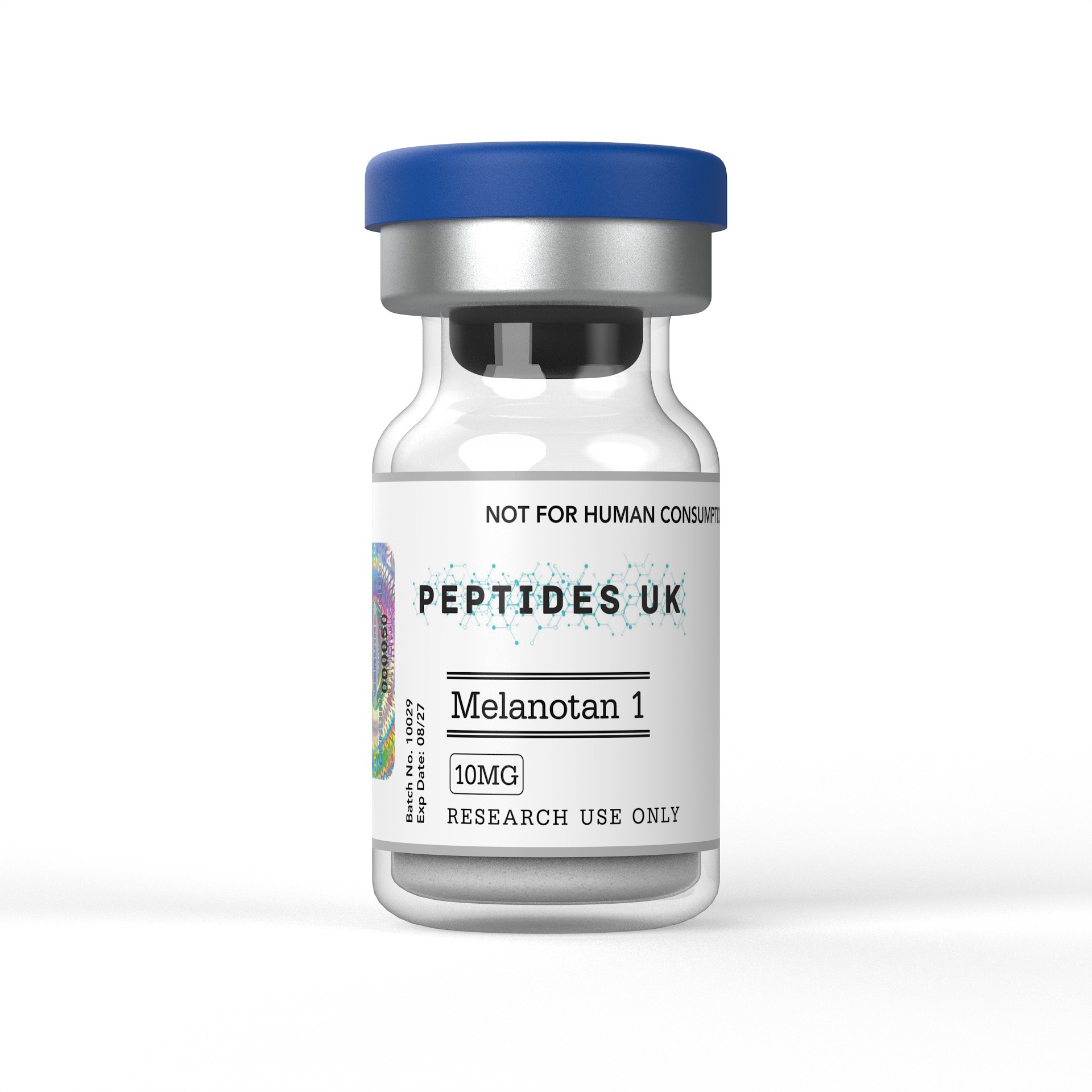
$67.00
Melanotan 1 (MT-1) Peptide USA – Buy Online | In Stock & Ready to Ship
Buy Melanotan 1 (MT-1) in the USA with fast domestic shipping and guaranteed ≥99% purity — fully verified with COA and HPLC documentation. A trusted choice for USA research teams studying melanocortin receptor activation, melanogenesis stimulation and photoprotective skin pigmentation pathways, Melanotan 1 is available in multiple formats to suit varying project needs. No international delays — just reliable, domestically sourced peptides USA researchers can count on.
For research use only. Not intended for human or veterinary use.

Melanotan 1 (MT-1; Afamelanotide; [Nle⁴, D-Phe⁷]-α-MSH; NDP-α-MSH) is a synthetic linear tridecapeptide analogue of alpha-melanocyte-stimulating hormone (α-MSH) — incorporating two targeted amino acid substitutions from the native 13-residue α-MSH sequence that together produce a compound approximately 1,000 times more potent than the endogenous parent hormone at the melanocortin 1 receptor — developed by Victor J. Hruby and Mac E. Hadley at the University of Arizona in the 1980s as the first superpotent synthetic melanocortin and subsequently developed clinically by Clinuvel Pharmaceuticals as the first-in-class MC1R-targeted medicine, studied extensively across melanocortin receptor pharmacology, melanogenesis and eumelanin biology, photoprotection research, erythropoietic protoporphyria biology, vitiligo and repigmentation research, UV-induced DNA damage and repair biology, anti-inflammatory and MC1R-mediated immune modulation, cutaneous fibrosis research, polymorphic light eruption, solar urticaria, melanoma biology, MC1R genotype-phenotype research, and adipose and metabolic biology — receiving FDA approval in October 2019 and EMA approval in January 2015 as Scenesse (the first approved MC1R-targeted medicine) for prevention of phototoxicity in erythropoietic protoporphyria, making it the most clinically validated, most historically significant, and most pharmacologically characterised MC1R agonist in the melanocortin research literature. Researchers and institutions across the USA can source verified, research-grade Melanotan 1 10mg with fast domestic dispatch and full batch documentation included.
✅ ≥99% Purity — HPLC & Mass Spectrometry Verified
✅ Batch-Specific Certificate of Analysis (CoA) Included
✅ Sterile Lyophilised Powder | GMP Manufactured
✅ Fast Dispatch Across the USA | USA Peptides In Stock
Melanotan 1 (Afamelanotide; CAS 75921-69-6; INN: afamelanotide) is a synthetic linear tridecapeptide — carrying the 13-amino acid sequence Ac-Ser-Tyr-Ser-Nle-Glu-His-D-Phe-Arg-Trp-Gly-Lys-Pro-Val-NH₂ — with a molecular formula of C₇₈H₁₁₁N₂₁O₁₉ and a molecular weight of 1,646.85 g/mol. The peptide retains the complete 13-amino acid backbone of endogenous α-MSH (a post-translational cleavage product of proopiomelanocortin, POMC) and differs from it by precisely two amino acid substitutions: methionine at position 4 is replaced by norleucine (Nle), and L-phenylalanine at position 7 is replaced by D-phenylalanine (D-Phe). These two targeted modifications — one metabolic stabilisation and one stereochemical inversion — transform the rapidly degraded, relatively weak endogenous hormone into a superpotent, protease-resistant synthetic agonist that binds MC1R with dramatically higher affinity and sustained biological activity.
The Nle⁴ substitution replaces the thioether-containing methionine side chain — which is susceptible to oxidative degradation — with the isosteric but chemically inert straight-chain norleucine side chain, eliminating a major metabolic liability without altering the steric profile of the side chain at that position. The D-Phe⁷ substitution inverts the stereochemistry of the phenylalanine at position 7 from the natural L-configuration to the D-configuration — a modification that stabilises the β-turn conformation encompassing residues 6–9 (His-D-Phe-Arg-Trp) that constitutes the pharmacophoric core required for high-affinity MC1R binding. Together these modifications produce a compound that is approximately 100 times more potent than α-MSH in stimulating melanoma tyrosinase activity (the rate-limiting enzyme of melanin biosynthesis), approximately 26 times more potent in adenylyl cyclase assays, and substantially more resistant to serum protease degradation — while producing longer-lasting biological activity that extends eumelanin synthesis well beyond the duration achievable with the native hormone.
The discovery of Melanotan 1 emerged from a University of Arizona research programme initiated in the early 1980s by Victor J. Hruby and Mac E. Hadley, motivated by the hypothesis that a pharmacological tanning agent — one that could stimulate eumelanin production without requiring UV exposure — might provide photoprotection against UV-induced skin damage and potentially reduce the incidence of skin cancer in high-risk populations. After synthesising and screening hundreds of α-MSH analogues spanning systematic alanine substitution studies and conformational constraint series, Hruby and Hadley identified [Nle⁴, D-Phe⁷]-α-MSH as the compound combining maximal potency, stability, and MC1R selectivity — naming it Melanotan, later Melanotan 1 as the linear variant was distinguished from the subsequently developed cyclic heptapeptide Melanotan 2 (MT-II). First published human data appeared in JAMA in 1991, demonstrating that subcutaneous MT-1 administration induced measurable skin tanning in human volunteers.
Melanotan 1 exerts its biological effects primarily through MC1R — a seven-transmembrane rhodopsin-family class A GPCR encoded on chromosome 16q24.3 in humans, comprising 317 amino acids, and expressed predominantly on melanocytes in the epidermis and hair follicles, as well as on a broader range of cells including keratinocytes, fibroblasts, immune cells (monocytes, macrophages, dendritic cells, T lymphocytes), endothelial cells, and cells of the CNS. MC1R couples to the Gαs pathway, activating adenylyl cyclase, elevating intracellular cAMP, and activating PKA — which phosphorylates CREB, driving transcription of the microphthalmia-associated transcription factor (MITF) gene. MITF in turn activates the genes encoding melanogenic enzymes including tyrosinase (TYR), tyrosinase-related protein 1 (TYRP1), and dopachrome tautomerase (DCT/TYRP2) — the enzymatic machinery that converts tyrosine through the melanogenic pathway to eumelanin (brown-black photoprotective pigment) rather than pheomelanin (red-yellow, poorly photoprotective pigment). The MC1R-cAMP-PKA-CREB-MITF-tyrosinase signalling cascade is the central and best-characterised molecular pathway of mammalian melanogenesis, and Melanotan 1 is its defining superpotent pharmacological activator.
Beyond MC1R, Melanotan 1 at higher concentrations engages MC3R, MC4R, and MC5R — the latter three expressed predominantly in hypothalamus, adipose tissue, exocrine glands, and peripheral tissues — though its primary pharmacological identity is defined by MC1R engagement. This non-selectivity is structurally expected given the conserved HXXRWamide pharmacophore — the His-D-Phe-Arg-Trp core of positions 6–9 — that is shared by all melanocortin peptide agonists and that engages the shared ligand-binding pocket geometry across all five MC receptor subtypes, with selectivity dictated primarily by flanking residue interactions and N/C-terminal extensions.
Developed clinically by Clinuvel Pharmaceuticals (formerly EpiTan) as Scenesse — a 16 mg bioresorbable subcutaneous implant formulation — Melanotan 1 received its first regulatory approval from the Italian Medicines Agency (AIFA) in May 2010, EMA approval in January 2015, and FDA approval in October 2019, carrying the FDA designation as a first-in-class medicine. Its approved indication — prevention of phototoxicity in adults with erythropoietic protoporphyria (EPP) — reflects the most clinically validated photomedicine application of MC1R pharmacology and establishes Melanotan 1 as the only approved MC1R agonist in modern dermatological pharmacology.
As the founding synthetic melanocortin superpotent agonist, the FDA-approved first-in-class MC1R medicine, and the most extensively published melanocortin peptide in dermatological and photoprotection research, Melanotan 1 10mg research vials are in active demand across melanocortin receptor pharmacology, melanogenesis biology, photoprotection and photomedicine research, pigmentation disorder research, anti-inflammatory biology, DNA repair research, and oncological dermatology programs at research institutions nationwide.
In controlled pre-clinical and laboratory settings, Melanotan 1 has been studied across an exceptionally wide range of dermatological, melanocortin pharmacological, immunological, oncological, and metabolic research applications:
MC1R Receptor Pharmacology and Melanocortin Reference Ligand Research Melanotan 1’s primary research application is as the superpotent reference agonist for MC1R — used in receptor binding competition assays, adenylyl cyclase activation studies, cAMP production assays, MITF and tyrosinase gene expression characterisation, and melanocortin receptor subtype selectivity profiling. With approximately 100-fold greater potency than α-MSH at tyrosinase stimulation and 26-fold greater potency in adenylyl cyclase assays, Melanotan 1 provides the maximal pharmacological MC1R activation signal against which partial agonists, inverse agonists, and antagonists are benchmarked. Studies have used Melanotan 1 to characterise MC1R signalling through the complete Gαs-cAMP-PKA-CREB-MITF-tyrosinase cascade and to probe how MC1R polymorphisms — Val60Leu, Asp84Glu, Val92Met, Arg142His, Arg151Cys, Arg160Trp — alter receptor binding affinity and downstream signalling capacity.
MC1R Genotype-Phenotype and Polymorphism Research A pharmacologically rich application of Melanotan 1 is the characterisation of how MC1R variant alleles affect melanocortin responsiveness and melanogenesis capacity — directly relevant to the genetics of skin cancer risk and photoprotection. Controlled clinical research in 77 Caucasian individuals documented that Melanotan 1 significantly increased melanin density in all study arms — and that the compound increased melanin density to a greater extent in individuals carrying MC1R variant alleles (Val60Leu, Asp84Glu, Val92Met, Arg142His, Arg151Cys, Arg160Trp) than in individuals without variant alleles — a counterintuitive but pharmacologically meaningful finding establishing that superpotent receptor agonism can pharmacologically overcome the reduced receptor function of loss-of-function MC1R polymorphisms. These studies establish Melanotan 1 as the essential reference tool for MC1R genotype-pharmacology research.
Melanogenesis and Eumelanin Biology Research Research has comprehensively characterised the melanogenesis cascade downstream of Melanotan 1/MC1R engagement — documenting the sequential activation of adenylyl cyclase, cAMP elevation, PKA activation, CREB phosphorylation, MITF gene transcription, and downstream upregulation of tyrosinase, TYRP1, and DCT — the complete enzymatic programme required for eumelanin production. Studies have further characterised how Melanotan 1 shifts the eumelanin:pheomelanin ratio — the photoprotection-relevant parameter — preferentially increasing eumelanin synthesis over pheomelanin, establishing the molecular mechanism by which MC1R superpotent agonism provides superior photoprotection relative to the mixed eumelanin/pheomelanin production that characterises UV-stimulated tanning in individuals with variant MC1R alleles.
Erythropoietic Protoporphyria (EPP) Biology Research Melanotan 1 is the pharmacological backbone of the most extensively clinically characterised EPP research programme. EPP is caused by ferrochelatase (FECH) deficiency — the enzyme that catalyses insertion of iron into protoporphyrin IX (PPIX) in the terminal step of heme biosynthesis — leading to accumulation of PPIX as a photosensitiser in erythrocytes, plasma, liver, and skin. Cutaneous PPIX absorbs visible light (predominantly the Soret band at 405 nm), generating singlet oxygen and reactive oxygen species that cause the severe phototoxic pain and skin damage that severely restricts EPP patients’ outdoor and light exposure. Research has examined how Melanotan 1-driven eumelanin deposition increases light absorbance across UV, UVA, and visible wavelengths — acting as a broad-spectrum chromophore that reduces the fraction of incident light reaching photosensitiser-containing cells — and has documented improvements in pain-free light exposure time, quality of life metrics, and phototoxic episode frequency in EPP patients across Phase II and Phase III clinical trials.
UV-Induced DNA Damage and Repair Biology Research Research has examined Melanotan 1’s effects on UV-induced DNA damage and repair beyond its well-characterised pigmentation mechanism — with studies documenting that MC1R activation enhances DNA repair capacity in keratinocytes through a pathway dependent on the xeroderma pigmentosum group A (XPA) nucleotide excision repair protein. Studies have reported reductions in thymine dimer formation (a specific UV-induced DNA photoproduct) and decreases in sunburn cell numbers following Melanotan 1 treatment, and have explored how MC1R-cAMP-PKA signalling activates the nucleotide excision repair (NER) pathway independently of eumelanin production — establishing a dual photoprotective mechanism combining physical light attenuation (eumelanin chromophore) with enhanced cellular DNA repair capacity. This DNA repair-augmenting activity is pharmacologically significant because it extends Melanotan 1’s photoprotective research relevance to individuals whose primary need is UV damage mitigation rather than pigmentation enhancement.
Anti-Inflammatory and MC1R-Mediated Immune Modulation Research MC1R is expressed on monocytes, macrophages, dendritic cells, and T lymphocytes, and research has characterised Melanotan 1’s anti-inflammatory properties mediated through MC1R engagement on immune cells. Studies have documented that Melanotan 1 and related α-MSH analogues suppress pro-inflammatory cytokine production — reducing TNF-α, IL-1β, and IL-6 — and increase anti-inflammatory cytokines including IL-10, through MC1R-cAMP-PKA-mediated modulation of NF-κB signalling and inflammatory gene transcription. Research has examined how MC1R activation on macrophages and dendritic cells modulates the innate immune response to skin damage and UV radiation, and has explored the anti-inflammatory dimension of Melanotan 1 in the context of conditions where cutaneous inflammation is a primary pathological driver — including acne vulgaris, where a Phase II pilot study examined afamelanotide’s anti-inflammatory potential.
Vitiligo and Repigmentation Research Research has examined Melanotan 1 as a potential repigmentation tool in vitiligo — where loss of melanocytes from defined skin regions produces the characteristic depigmented patches — with studies exploring whether MC1R superpotent agonism can stimulate residual melanocyte populations or melanocyte precursors in vitiliginous skin to repigulate. A pivotal JAMA Dermatology-published randomised multicentre trial examined the combination of Melanotan 1 and narrowband UV-B (NB-UVB) phototherapy versus NB-UVB alone — documenting superior repigmentation in the combination arm and establishing that Melanotan 1’s MC1R activation synergises with UV-B-induced melanocyte stimulation to achieve greater and more rapid repigmentation than phototherapy alone. Ongoing trials are further examining afamelanotide across different vitiligo subtypes and anatomical distributions.
Polymorphic Light Eruption (PLE) Research Research has examined Melanotan 1 in polymorphic light eruption — the most common photodermatosis, characterised by a pruritic rash appearing hours after UV exposure in photosensitive individuals — with Phase III clinical trials documenting that subcutaneous bioresorbable Melanotan 1 implants reduced the severity of PLE-related pruritus and improved light tolerance in European patients. The proposed mechanism involves Melanotan 1-driven eumelanin deposition providing the skin with the light-attenuating chromophore density that reduces the UV dose reaching the sub-epidermal immune compartment — analogous to the photoprotection mechanism in EPP — establishing photoprotective pigmentation induction as a mechanistically rational research approach to PLE management.
Photoprotection and UV Interaction Research Research has examined the interaction between Melanotan 1 administration and subsequent UV exposure — with studies confirming a synergistic tanning response in which Melanotan 1-primed melanocytes respond to UV stimulation with enhanced and accelerated eumelanin production, prolonged tan duration, and reduced sunburn cell formation. Studies documenting the effects of Melanotan 1 in combination with solar UV radiation in human volunteers have characterised the melanin density increases, erythema responses, and pigmentation time courses — and have established that Melanotan 1 produces photoprotective pigmentation that is qualitatively superior to UV-induced tanning in untreated skin by virtue of its preferential eumelanin production and independence from the photodamage that triggers endogenous α-MSH release.
Melanoma Biology and Anti-Tumour Research Research examining Melanotan 1 in melanoma models has probed the complex relationship between MC1R agonism and melanoma cell behaviour — documenting that [Nle⁴, D-Phe⁷]-α-MSH inhibits melanoma cell proliferation in certain cell line models, does not enhance anchorage-independent clonogenic cell growth (a hallmark of malignancy), and shows no enhancement of tumour incidence, size, or metastatic spread in pre-clinical in vitro and animal models. Studies have examined Melanotan 1’s effects on melanoma tyrosinase activity — with 100-fold greater potency than α-MSH at tyrosinase stimulation in S91 melanoma cells — and have explored its potential as a carrier for targeted drug delivery to MC1R-overexpressing melanoma cells. Complementary to the PT-141/Melanotan II research on metastasis suppression, Melanotan 1 research contributes to the understanding of how MC1R pharmacology intersects with melanocyte biology at the boundary between normal pigmentation and malignant transformation.
Cutaneous Fibrosis and Anti-Fibrotic Research Emerging pre-clinical research has examined α-MSH analogues including Melanotan 1 in models of cutaneous and hepatic fibrosis — with animal model studies documenting that MC1R activation modulates matrix metalloproteinase (MMP) and tissue inhibitor of metalloproteinase (TIMP) expression, suppresses fibrogenic signals including TGF-β1, and reduces collagen synthesis in fibroblast models. These findings extend Melanotan 1’s research profile into the dermal fibrosis and scleroderma biology field, where the anti-inflammatory and anti-fibrotic dimensions of MC1R pharmacology are of growing research interest.
Adipose Tissue and Metabolic Biology Research Research has examined Melanotan 1’s effects on adipose tissue and metabolic parameters — with studies documenting effects on leptin secretion in primary cultures of differentiated adipocytes, O₂ consumption and CO₂ production changes in C57BL/6 mice, and the broader engagement of MC3R and MC4R at higher concentrations that implicates Melanotan 1 in the melanocortin system’s energy homeostasis biology. Studies have also examined the relationship between MC1R signalling in adipocytes and lipid metabolism — expanding Melanotan 1’s research relevance into the intersection between pigmentation, immune, and metabolic biology that the melanocortin system coordinates across multiple receptor subtypes.
All applications are for research purposes only. Melanotan 1 as supplied is not intended for human therapeutic use.
Melanotan 1 has accumulated the deepest and most clinically validated research profile of any synthetic melanocortin peptide:
MC1R Pharmacology: Studies have conclusively established Melanotan 1 as a superpotent MC1R agonist — approximately 1,000 times more potent than native α-MSH in functional in vivo models, 100-fold more potent at tyrosinase stimulation, and 26-fold more potent in adenylyl cyclase assays — with the structural basis of this superpotency attributed to the D-Phe⁷-stabilised β-turn conformation and the protease-resistant Nle⁴ modification. These pharmacological parameters establish Melanotan 1 as the gold-standard reference agonist for MC1R biology research.
Eumelanin and Photoprotection: Human clinical studies have confirmed that Melanotan 1 induces significant and lasting increases in skin melanin density in both normal and MC1R variant allele populations, with eumelanin selectively upregulated over pheomelanin — the photoprotection-relevant distinction. Controlled studies in 77 Caucasian individuals confirmed significant melanin density increases versus placebo, with greater effect in variant allele carriers, validating Melanotan 1’s capacity to pharmacologically overcome reduced MC1R function in the highest-risk populations.
EPP Clinical Data: Phase III trials confirmed statistically significant improvements in pain-free light exposure time, phototoxic episode frequency, quality of life measures, and outdoor activity metrics in EPP patients receiving subcutaneous Melanotan 1 implants versus placebo — establishing the clinical and pharmacodynamic validation basis for FDA and EMA approval and making Melanotan 1 the only pharmacologically approved MC1R-targeted medicine globally.
Vitiligo Repigmentation: The JAMA Dermatology randomised multicentre trial documented superior repigmentation outcomes for Melanotan 1 combined with NB-UVB versus NB-UVB alone — providing the most robust clinical evidence for MC1R agonism as a repigmentation strategy and establishing Melanotan 1 as a pharmacologically validated tool for vitiligo research alongside phototherapy.
Anti-Inflammatory Biology: Pre-clinical and in vitro studies have consistently documented MC1R-mediated anti-inflammatory activity — including suppression of TNF-α, IL-1β, and NF-κB signalling — in immune cell and skin model systems, establishing the anti-inflammatory dimension of Melanotan 1 biology as a pharmacologically characterised mechanism distinct from its pigmentation effects and relevant to a broader spectrum of inflammatory dermatological conditions.
DNA Repair: Studies have documented Melanotan 1-enhanced UV-induced DNA repair in keratinocytes via XPA-dependent NER pathway activation — establishing a non-pigmentation-based photoprotective mechanism that contributes to Melanotan 1’s UV damage mitigation biology and extends its photoprotection research relevance beyond the eumelanin chromophore mechanism.
| Feature | Melanotan 1 (MT-1) | Melanotan 2 (MT-II) | PT-141 (Bremelanotide) | α-MSH (endogenous) |
|---|---|---|---|---|
| Type | Linear synthetic tridecapeptide — 13AA α-MSH analogue | Cyclic synthetic heptapeptide — 7AA α-MSH lactam analogue | Cyclic synthetic heptapeptide — MT-II active metabolite (des-amide) | Endogenous linear tridecapeptide — POMC-derived |
| Key Structural Differences vs α-MSH | Nle⁴ (replaces Met⁴); D-Phe⁷ (replaces L-Phe⁷) — superpotent, protease-resistant, full 13AA linear | Cyclic Asp–Lys lactam ring; 7AA central fragment only; C-terminal amide; Nle and D-Phe retained | Identical to MT-II except C-terminal –OH (free acid) replaces –NH₂ (amide) — reduces MC1R potency | Native sequence — Met⁴, L-Phe⁷; no stabilisation; rapid degradation |
| Primary Receptor | MC1R (dominant); MC3R, MC4R, MC5R at higher concentrations | MC1R, MC3R, MC4R, MC5R (non-selective; strong MC4R) | MC4R, MC3R (primary); reduced MC1R vs MT-II | MC1R (primary); all MCR subtypes at higher concentrations |
| Potency vs α-MSH at MC1R | ~1,000× more potent (in vivo); 100× tyrosinase; 26× adenylyl cyclase | Less potent than MT-1 at MC1R; stronger non-selective MCR activity | MC1R reduced vs MT-II due to des-amide modification | Reference (1×) — endogenous potency |
| Primary Research Use | MC1R pharmacology / melanogenesis / photoprotection / EPP / vitiligo / anti-inflammatory / DNA repair / pigmentation genetics | Broad non-selective MCR pharmacology / comparative analogue studies | CNS sexual arousal / MC4R signalling / HSDD and ED research | Endogenous reference for full-spectrum MCR biology |
| FDA Approval Status | Approved October 2019 (Scenesse) — EPP phototoxicity prevention | Not approved | Approved June 2019 (Vyleesi) — HSDD in premenopausal women | N/A — endogenous hormone |
| Best For | MC1R reference pharmacology / melanogenesis cascade / photoprotection / EPP and pigmentation disorder research | Broad MCR panel research / tanning + sexual function combined biology | MC4R/MC3R sexual behaviour research / CNS arousal / PDE5-independent mechanism | Endogenous reference / full MCR subtype panel baseline |
| Parameter | Specification |
|---|---|
| Full Name | Melanotan 1 (Afamelanotide; NDP-α-MSH; [Nle⁴, D-Phe⁷]-α-MSH) |
| INN | Afamelanotide |
| Sequence | Ac-Ser-Tyr-Ser-Nle-Glu-His-D-Phe-Arg-Trp-Gly-Lys-Pro-Val-NH₂ |
| CAS Number | 75921-69-6 |
| Molecular Formula | C₇₈H₁₁₁N₂₁O₁₉ |
| Molecular Weight | 1,646.85 g/mol |
| Peptide Length | 13 Amino Acids (Tridecapeptide) — linear |
| Key Substitutions vs α-MSH | Position 4: Met → Nle (oxidative stability); Position 7: L-Phe → D-Phe (β-turn stabilisation, protease resistance) |
| Potency vs α-MSH | ~1,000× (in vivo); 100× (tyrosinase stimulation); 26× (adenylyl cyclase assay) |
| Type | Synthetic superpotent MC1R agonist — α-MSH analogue |
| Origin | University of Arizona (Hruby & Hadley, 1980s); clinical development by Clinuvel Pharmaceuticals |
| Primary Receptor | MC1R — Gαs-coupled class A GPCR (chromosome 16q24.3); also MC3R, MC4R, MC5R at higher concentrations |
| Downstream Signalling | Gαs → adenylyl cyclase → cAMP → PKA → CREB phosphorylation → MITF → tyrosinase / TYRP1 / DCT → eumelanin |
| Half-Life (free peptide, subcutaneous) | ~30 minutes |
| Apparent Half-Life (slow-release implant) | ~15 hours |
| FDA Approval | October 2019 (Scenesse, Clinuvel) — EPP phototoxicity prevention |
| EMA Approval | January 2015 (Scenesse) — EPP phototoxicity prevention |
| Vial Size | 10mg |
| Purity | ≥99% (HPLC & MS Verified) |
| Form | Sterile Lyophilised Powder |
| Solubility | Sterile water, bacteriostatic water, PBS, dilute acetic acid (0.1%) |
| Storage (Powder) | -20°C, protect from light and moisture |
| Storage (Reconstituted) | 2–8°C, use within 28 days with bacteriostatic water |
| Manufacturing | GMP Manufactured |
Every order includes full batch documentation:
✅ Batch-Specific Certificate of Analysis (CoA)
✅ HPLC Chromatogram
✅ Mass Spectrometry Confirmation
✅ Sterility & Endotoxin Testing Report
✅ Reconstitution Protocol
✅ Technical Research Support
Can I buy research-grade Melanotan 1 in the USA? Yes. We supply research-grade Melanotan 1 10mg to researchers and institutions across the United States. All orders include full batch documentation and are packaged to maintain peptide integrity during transit. This compound is supplied strictly for laboratory research use only.
What are the two amino acid substitutions in Melanotan 1 and what does each one contribute? Melanotan 1 differs from endogenous α-MSH by exactly two amino acid substitutions. At position 4, methionine is replaced by norleucine (Nle⁴): methionine contains a thioether side chain that is susceptible to oxidative degradation to methionine sulfoxide, which reduces receptor binding affinity. Norleucine is isosteric with methionine — identical in chain length and hydrophobicity — but contains a simple methylene chain without the oxidisable sulfur, eliminating this metabolic liability while preserving the receptor contact geometry at this position. At position 7, L-phenylalanine is replaced by D-phenylalanine (D-Phe⁷): the D-configuration at this position stabilises the β-turn conformation spanning residues 6–9 (His-D-Phe-Arg-Trp) that is the pharmacophoric core required for high-affinity MC1R binding. The D-Phe stereochemistry also confers resistance to proteolytic enzymes — which predominantly cleave peptide bonds with L-amino acids — substantially increasing plasma stability. Together these two modifications transform native α-MSH into a compound approximately 1,000 times more potent and orders of magnitude more protease-resistant — a pharmacological gain of function achieved through minimal structural intervention.
Why is Melanotan 1 more MC1R-selective than Melanotan 2, and what are the research implications? The relative MC1R selectivity of Melanotan 1 compared to Melanotan 2 follows from their different structural scaffolds. Melanotan 1 is a full 13-amino acid linear peptide — retaining the complete α-MSH sequence including the N-terminal Ser-Tyr-Ser and C-terminal Lys-Pro-Val residues that flank the central HXXRWamide pharmacophore. These flanking residues provide selectivity contacts that favour MC1R over other MCR subtypes, giving Melanotan 1 its predominant MC1R engagement profile. Melanotan 2 (MT-II) is a cyclic heptapeptide — retaining only the core seven residues of the pharmacophoric β-turn, with cyclisation via an Asp–Lys lactam bridge — which produces much more equivalent activation across MC1R, MC3R, MC4R, and MC5R. For research applications requiring selective MC1R biology — melanogenesis, photoprotection, eumelanin production, EPP biology, vitiligo — Melanotan 1 is the more appropriate tool. For research requiring broad-spectrum MCR activation or specific MC4R engagement (sexual behaviour, energy homeostasis), Melanotan 2 or PT-141 are better suited. This selectivity difference makes the two compounds complementary rather than interchangeable research tools.
What is the significance of Melanotan 1’s effect on DNA repair, distinct from its melanin production effect? Beyond producing eumelanin as a physical chromophore that absorbs and scatters UV light, Melanotan 1 has been shown to directly enhance cellular UV-induced DNA repair through a mechanism independent of pigmentation. Studies demonstrated that MC1R activation by α-MSH analogues enhances the nucleotide excision repair (NER) pathway in keratinocytes through a mechanism that requires xeroderma pigmentosum group A (XPA) — a key NER scaffold protein — and operates through cAMP-PKA signalling downstream of MC1R. This DNA repair-enhancing mechanism reduces the formation of cyclobutane pyrimidine dimers and 6-4 photoproducts — the specific UV-induced DNA photoproducts that initiate the carcinogenic mutations driving skin cancer. The research significance is that this establishes Melanotan 1 as a photoprotective agent operating through two mechanistically distinct and complementary pathways: a passive chromophore pathway (eumelanin absorbs incident UV before it reaches DNA) and an active cellular repair pathway (MC1R-cAMP signalling upregulates the NER capacity to correct UV damage that does reach DNA). This dual mechanism is pharmacologically unique among photoprotective agents and extends Melanotan 1’s research relevance to skin cancer prevention biology.
What is the EPP disease model and why is it the primary clinical application of Melanotan 1? Erythropoietic protoporphyria (EPP) is caused by heterozygous loss-of-function mutations in the FECH gene encoding ferrochelatase — the mitochondrial enzyme that catalyses the terminal step of heme biosynthesis by inserting ferrous iron into protoporphyrin IX (PPIX) to form heme. FECH deficiency causes PPIX to accumulate in erythrocytes, plasma, and the skin rather than being converted to heme. PPIX is a potent photosensitiser with a major absorption peak in the visible light Soret band (~405 nm) — meaning EPP patients experience severe phototoxic pain, burning, and skin damage following visible light exposure (not just UV), often after only minutes outdoors. Conventional sun protection measures including sunscreens are largely ineffective because PPIX absorbs visible wavelengths that sunscreens do not block. Melanotan 1’s eumelanin-inducing mechanism is well-suited to EPP because eumelanin is a broad-spectrum chromophore that absorbs across UV, UVA, and visible wavelengths — including the Soret band — and therefore increases the fraction of incident light absorbed before it reaches PPIX-containing cells in the dermis. Phase III clinical trials confirmed that eumelanin loading induced by Melanotan 1 significantly increases the light dose at which EPP patients experience phototoxic pain — extending pain-free outdoor time and dramatically improving quality of life, the endpoints that secured FDA and EMA approval.
What purity is required for Melanotan 1 research? ≥98% is considered research-grade for synthetic melanocortin peptides, but ≥99% purity is strongly preferred for MC1R radioligand binding assays, tyrosinase activation studies, melanogenesis cascade characterisation, MITF and melanogenic enzyme gene expression experiments, and in vivo pigmentation biology studies where compound purity directly affects receptor activation fidelity and experimental reproducibility. Confirmation of correct N-terminal acetylation and C-terminal glycine amidation by mass spectrometry is equally important alongside overall purity percentage, as both terminal modifications contribute to Melanotan 1’s proteolytic stability and receptor binding profile. All Melanotan 1 supplied for USA researchers is independently verified to ≥99% with mass spectrometry confirmation of the correct molecular weight incorporating both terminal modifications.
How is Melanotan 1 reconstituted for lab use? Allow the vial to reach room temperature before opening. Add sterile water, bacteriostatic water, or dilute acetic acid (0.1%) slowly down the vial wall and swirl gently — do not shake vigorously. Melanotan 1 dissolves readily in slightly acidic aqueous conditions; dilute acetic acid can aid initial dissolution before further dilution with PBS or physiological buffer. For melanocyte cell culture applications requiring low concentrations, addition of 0.1% BSA to working solutions reduces non-specific adsorption to plasticware. Melanotan 1 contains a tryptophan residue at position 9 that is susceptible to photo-oxidation — working solutions should be protected from light exposure and prepared freshly where possible. For multi-use protocols, bacteriostatic water extends the usable life of reconstituted solution to 28 days when stored at 2–8°C. For long-term storage of working solutions, aliquot and store at -80°C to preserve MC1R binding activity. Avoid repeated freeze-thaw cycles and protect from light and oxidative conditions throughout handling.
Melanotan 1 is supplied exclusively for legitimate scientific research purposes conducted within licensed laboratory environments. This product is not intended for human consumption, self-administration, or any therapeutic application. It must be handled by qualified researchers in compliance with applicable US federal and state regulations and institutional ethics guidelines. By purchasing, you confirm that this compound will be used solely for approved in-vitro or pre-clinical research purposes.
Receive News