
PRODUCTS SOLD ON PEPTIDESLABUSA.COM ARE FOR RESEARCH PURPOSES ONLY AND ARE NOT FOR HUMAN OR VETERINARY USE.
$79.00
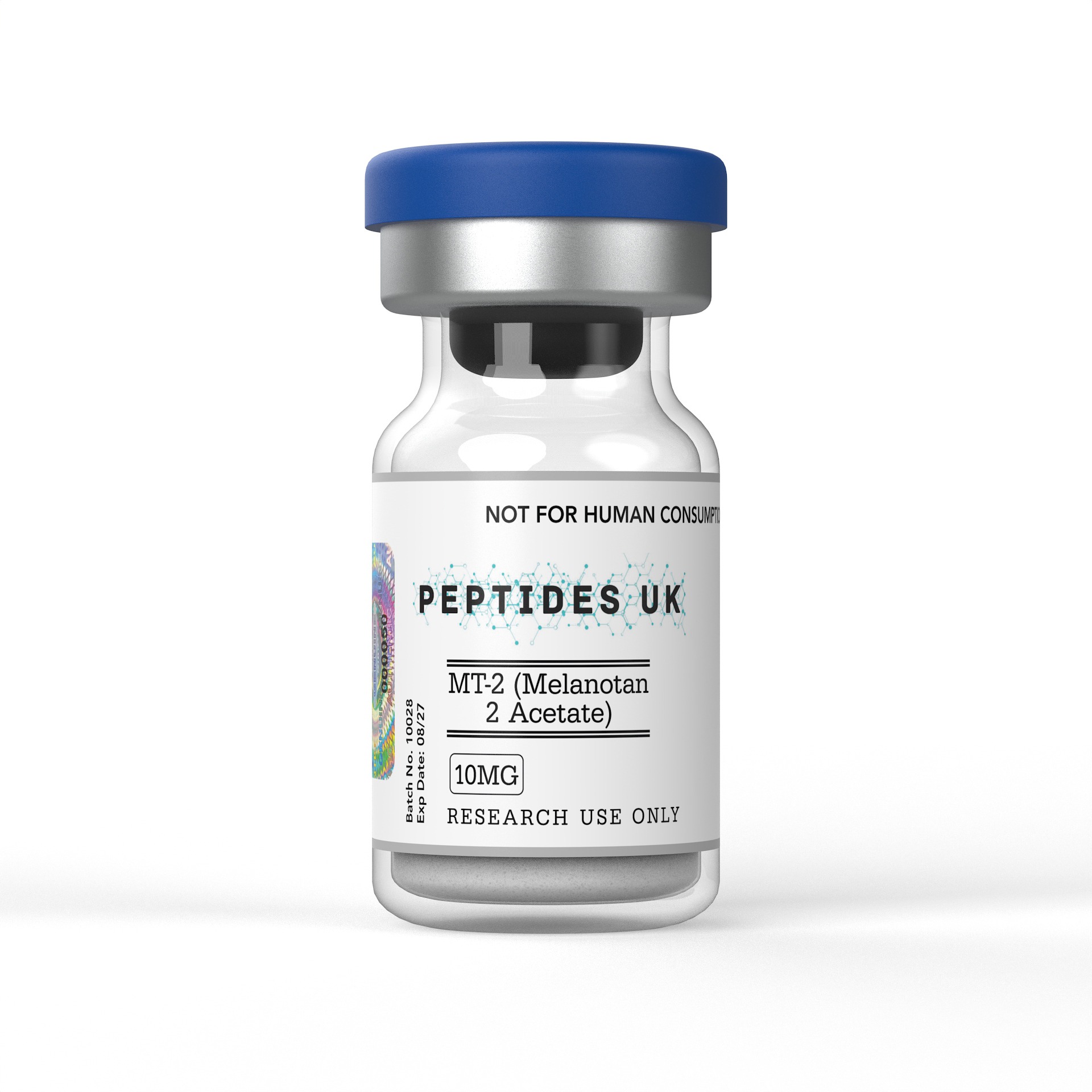
Melanotan 2 Acetate (MT-2) Peptide USA – Buy Online | In Stock & Ready to Ship
Buy Melanotan 2 Acetate (MT-2) in the USA with fast domestic shipping and guaranteed ≥99% purity — fully verified with COA and HPLC documentation. A trusted choice for USA research teams studying melanocortin receptor agonism, skin pigmentation regulation and appetite suppression pathways, MT-2 is available in multiple formats to suit varying project needs. No international delays — just reliable, domestically sourced peptides USA researchers can count on.
For research use only. Not intended for human or veterinary use.

Melanotan 2 Acetate (MT-2; MTII; Melanotan II) is a synthetic cyclic heptapeptide non-selective melanocortin receptor agonist — carrying the sequence Ac-Nle-cyclo[Asp-His-D-Phe-Arg-Trp-Lys]-NH₂ with a conformationally constraining Asp–Lys intramolecular lactam bridge, an N-terminal acetylated norleucine, a D-phenylalanine at position 7, and a C-terminal amide — developed at the University of Arizona by Victor J. Hruby and Mac E. Hadley in 1989 as a truncated, cyclised analogue of the superpotent linear Melanotan 1 (afamelanotide) sequence designed to produce a more compact, proteolytically stable, and CNS-penetrant melanocortin tool compound, and studied extensively across broad-spectrum melanocortin receptor pharmacology, melanogenesis and pigmentation biology, central sexual behaviour neuroscience, MC4R-mediated energy homeostasis and appetite regulation, hypothalamic POMC-AgRP circuit biology, dopaminergic and oxytocinergic reward circuit research, erectile function and female sexual arousal research, anti-inflammatory and neuroimmune biology, melanoma biology and PTEN/COX-2 signalling, addiction and substance use disorder research, social behaviour and autism spectrum biology, and neuroprotection — representing the original non-selective pan-MCR research tool whose discovery of potent central sexual arousal effects during human tanning trials directly spawned the entire field of melanocortin-based sexual medicine and led to the development of the FDA-approved PT-141 (Bremelanotide), making it the most historically pivotal, most pharmacologically versatile, and most broadly studied synthetic melanocortin peptide in the modern research literature. Researchers and institutions across the USA can source verified, research-grade Melanotan 2 Acetate 10mg with fast domestic dispatch and full batch documentation included.
✅ ≥99% Purity — HPLC & Mass Spectrometry Verified
✅ Batch-Specific Certificate of Analysis (CoA) Included
✅ Sterile Lyophilised Powder | GMP Manufactured
✅ Fast Dispatch Across the USA | USA Peptides In Stock
Melanotan 2 Acetate (MT-II; CAS 121062-08-6 free base; acetate salt form) is a synthetic cyclic heptapeptide — carrying the amino acid sequence Ac-Nle-cyclo[Asp-His-D-Phe-Arg-Trp-Lys]-NH₂ — with a molecular formula of C₅₀H₆₉N₁₅O₉ (free base) and a molecular weight of 1,024.2 Da. The compound is the acetate salt form of MT-II, providing improved aqueous solubility and chemical stability in lyophilised powder storage compared to the free base form, and is the standard presentation for research-grade MTII used in laboratory applications worldwide.
MT-II was conceived in 1989 at the University of Arizona as part of a systematic programme of cyclic lactam-bridged α-MSH analogues designed to identify compact, conformationally constrained melanotropic peptides with enhanced metabolic stability and prolonged biological activity. The design rationale was grounded in NMR spectroscopy and computer modelling studies that had identified a proposed salt bridge between Glu⁵ and Lys¹¹ in the α-MSH/NDP-α-MSH sequence — a salt bridge hypothesised to constrain the bioactive β-turn conformation centred on the His-D-Phe-Arg-Trp pharmacophore. Hruby’s group converted this proposed intramolecular interaction into a covalent lactam bridge by truncating three residues from each terminus of the NDP-α-MSH sequence, replacing Glu⁵ with the slightly shorter Asp⁵ (γ-carboxyl rather than δ-carboxyl side chain), and replacing the C-terminal residue at position 10 with Lys (ε-amino side chain donor) — cyclising the resulting seven-residue fragment through a stable amide bond formed between the Asp carboxylate and the Lys ε-amino group to produce the characteristic cyclic ring structure. The N-terminal acetyl-norleucine (Ac-Nle) and C-terminal amide (–NH₂) retained from the NDP-α-MSH parent confer additional metabolic resistance at both termini.
The resulting compound is structurally distinguished from its linear predecessor Melanotan 1 by three pharmacologically consequential features. First, the cyclic lactam bridge replaces the thermal and conformational flexibility of the linear peptide with a conformationally constrained ring that pre-organises the His-D-Phe-Arg-Trp pharmacophore into the β-turn geometry required for high-affinity MCR binding — eliminating the conformational entropy cost of binding and contributing to MT-II’s superpotent receptor engagement profile. Second, the dramatic truncation from 13 to 7 residues eliminates the N- and C-terminal flanking residues of the α-MSH sequence that contribute to MC1R selectivity in Melanotan 1 — resulting in MT-II’s non-selective engagement profile across MC1R, MC3R, MC4R, and MC5R, which is the defining pharmacological characteristic distinguishing it from its linear predecessor. Third, the cyclic structure substantially improves blood-brain barrier permeability compared to the larger linear Melanotan 1 — a pharmacokinetic property that enables MT-II’s well-documented CNS effects on sexual behaviour, appetite, and reward circuitry and that makes it a particularly valuable tool for research examining hypothalamic and limbic melanocortin biology.
MT-II binds melanocortin receptors with the following affinity hierarchy: MC1R (Ki ~0.67 nM) > MC4R (Ki ~6.6 nM) > MC3R (Ki ~34 nM) > MC5R (Ki ~46 nM), with minimal engagement of MC2R (Ki > 1 μM) — the ACTH-selective adrenal receptor whose sparing provides an important pharmacological safety margin by avoiding adrenocortical stimulation. All engaged receptors couple primarily through Gαs to adenylyl cyclase, generating cAMP elevation and downstream PKA, CREB, ERK1/2, and MAPK activation in a tissue- and receptor-specific manner. At MC4R specifically, additional signalling through Gαi/o and Gαq pathways has been characterised in a cellular context-dependent manner, as has MC4R-mediated closure of inwardly rectifying KCNJ13 potassium channels — a direct neuronal excitation mechanism independent of Gαs/cAMP that contributes to MC4R’s roles in hypothalamic appetite and sexual behaviour neurocircuitry.
The historical pivot that defined MT-II’s modern research identity occurred during the compound’s first human pilot phase I clinical study conducted at the University of Arizona, when male volunteers undergoing subcutaneous MT-II dose escalation for tanning research reported spontaneous penile erections — with 8 of 10 men developing clinical erections in a subsequent placebo-controlled crossover study, with a mean tip rigidity duration of 38 minutes versus 3 minutes on placebo. This unexpected and pharmacologically dramatic central sexual effect redirected the entire research programme: Clinuvel Pharmaceuticals (formerly Epitan) pursued the tanning application of the linear Melanotan 1, while Competitive Technologies licensed the sexual medicine application of MT-II to Palatin Technologies — who ultimately ceased MT-II development and synthesised bremelanotide (PT-141) as a metabolically modified derivative with a free carboxylic acid in place of MT-II’s C-terminal amide, producing a compound with reduced MC1R activity and improved receptor selectivity toward MC3R/MC4R.
MT-II’s non-selective pan-MCR profile — engaging all four pharmacologically active melanocortin receptor subtypes simultaneously — makes it uniquely valuable in research contexts where the investigator wishes to activate the entire melanocortin system or probe the integrated biological responses of multi-receptor co-engagement, while requiring careful receptor-subtype dissection using selective agonists, antagonists, and knockout models to attribute observed effects to specific receptor populations.
As the original non-selective pan-MCR research tool, the historically pivotal compound that established melanocortin biology’s role in sexual neuroscience, and the most broadly studied synthetic melanocortin peptide across pigmentation, sexual behaviour, appetite, immune, and cancer biology, Melanotan 2 Acetate 10mg research vials are in active demand across melanocortin receptor pharmacology, pigmentation biology, sexual behaviour neuroscience, hypothalamic energy homeostasis, neuroimmune research, and oncological dermatology programs at research institutions nationwide.
In controlled pre-clinical and laboratory settings, Melanotan 2 Acetate has been studied across an exceptionally wide range of melanocortin pharmacological, neurobiological, metabolic, immunological, and oncological research applications:
Non-Selective Pan-MCR Pharmacology and Reference Ligand Research MT-II’s primary research application is as the gold-standard non-selective reference agonist for the melanocortin receptor family — used in competitive radioligand binding assays across MC1R, MC3R, MC4R, and MC5R, functional cAMP accumulation studies establishing full agonist activity at all four pharmacologically active MCR subtypes, receptor distribution mapping studies, and comparative analogue pharmacology experiments. Studies have characterised MT-II’s Ki values across all five MCR subtypes — confirming sub-nanomolar affinity at MC1R, low-nanomolar affinity at MC4R and MC3R, and negligible MC2R engagement — establishing the selectivity ratio that makes MT-II a clean four-receptor agonist without adrenocortical liability. As the most non-selective melanocortin reference tool available, MT-II enables pan-system melanocortin activation in experimental designs where the sum contribution of all active MCR subtypes is the research variable of interest.
Melanogenesis and Pigmentation Biology Research MT-II is extensively studied in melanogenesis research — with pre-clinical dose-escalation studies in C57BL/6 mice documenting dose-dependent increases in skin pigmentation following subcutaneous administration, and the pilot phase I clinical study demonstrating visible skin tanning in human volunteers at doses as low as 0.01 mg/kg. Research has characterised the MC1R-cAMP-PKA-CREB-MITF-tyrosinase cascade activated by MT-II in melanocytes — confirming eumelanin-preferential upregulation over pheomelanin, MITF nuclear translocation, and tyrosinase, TYRP1, and DCT transcriptional activation. Comparative studies between MT-II and Melanotan 1 in melanogenesis models have been used to examine how cyclic versus linear scaffold and C-terminal amide versus free acid modifications affect MC1R binding kinetics, downstream signalling duration, and melanin synthesis output — contributing to the structure-activity relationship literature for melanocortin pigmentation pharmacology.
Sexual Behaviour Neuroscience and Erectile Function Research MT-II is the original compound in the melanocortin sexual behaviour neuroscience field — with the landmark double-blind placebo-controlled RigiScan study establishing that 8 of 10 men with psychogenic erectile dysfunction developed clinical erections following subcutaneous MT-II, with mean tip rigidity >80% lasting 38 minutes versus 3 minutes on placebo. Research has characterised the central neural mechanism of MT-II’s pro-erectile effects — documenting hypothalamic neuronal activation via c-Fos immunoreactivity in the mPOA and PVN, driving dopamine release and initiating descending neural pathways to spinal erectile centres. Studies in both normal and sexually sluggish male rats confirmed that MT-II increased the frequency and duration of spontaneous and apomorphine-induced erections, reduced mount and intromission latencies, and enhanced sexual motivation in partner preference tests — with these effects mediated through central MC4R activation in brain regions controlling sexual behaviour. Female sexual arousal effects of MT-II have also been characterised in pre-clinical research, establishing its pro-sexual activity across both sexes.
MC4R Energy Homeostasis, Appetite, and Feeding Biology Research MC3R and MC4R are central nodes of the hypothalamic melanocortin energy homeostasis circuit — with POMC/α-MSH neurons in the arcuate nucleus driving anorexigenic signalling through MC4R-expressing PVN and lateral hypothalamic neurons, and AgRP neurons competitively antagonising and inverse agonising MC3R and MC4R to drive orexigenic feeding behaviour. MT-II has been used extensively to probe this circuit — with central intracardiac, intracerebroventricular, and systemic administration studies consistently documenting dose-dependent inhibition of food intake, reductions in meal size and frequency, and increased energy expenditure in rodent models. Research has employed the POMC-AgRP-MC4R axis as the model system for understanding obesity genetics — with MC4R loss-of-function mutations representing the most common monogenic cause of human obesity — and has used MT-II as the pharmacological activation tool to probe how MC4R-mediated cAMP/PKA and KCNJ13 signalling in PVN neurons translates to anorexigenic behavioural output.
POMC-AgRP-MCR Axis and Hypothalamic Circuit Biology Research MT-II’s activation of MC3R and MC4R makes it a primary pharmacological probe for the hypothalamic POMC-AgRP melanocortin circuit — the most studied neural circuit in metabolic biology. Research has characterised how MT-II competes with AgRP and agouti protein at MC3R and MC4R — with MT-II displacing the endogenous inverse agonist AgRP from MC4R to drive anorexigenic cAMP signalling in the PVN — and has examined how the balance between endogenous melanocortin agonists (α-MSH) and antagonists/inverse agonists (AgRP) is pharmacologically interrogated using MT-II as the exogenous probe. Studies examining the downstream neural architecture of the POMC-AgRP axis — projections from arcuate nucleus neurons to the PVN, lateral hypothalamus, dorsomedial hypothalamus, brainstem, and spinal cord — have used MT-II administration to map the functional connectivity and physiological output of this circuit in energy balance, glucose homeostasis, and autonomic regulation.
Dopaminergic and Reward Circuit Research Research has characterised MT-II’s modulation of dopaminergic signalling and mesolimbic reward circuitry — documenting MC4R-mediated dopamine release in the mPOA and mesolimbic pathways and examining how melanocortin receptor activation modulates the reward-motivational dimensions of sexual behaviour, feeding, and substance use. Studies examining addiction biology have used MT-II to probe how MC3R and MC4R activation in the nucleus accumbens and ventral tegmental area affects dopamine release dynamics, reward sensitivity, and drug-seeking behaviour in pre-clinical substance use disorder models — with research documenting that central MT-II administration can attenuate cocaine- and ethanol-seeking behaviour and reduce relapse-like reinstatement in rodent models. These findings position MT-II as a pharmacological tool at the intersection of melanocortin receptor biology and the mesolimbic dopamine reward circuitry that underlies both natural reward processing and addictive behaviour.
Oxytocinergic System and Social Behaviour Research Research has examined MT-II’s activation of oxytocinergic neurons in the paraventricular nucleus — documenting that MC4R-mediated PVN activation drives oxytocin release that contributes to MT-II’s pro-social and pro-sexual effects and that positions the melanocortin-oxytocin axis as a research-significant neuromodulatory intersection. Studies examining social behaviour in autism spectrum biology have used MT-II in pre-clinical mouse models — including a 2019 study documenting that MT-II improved sociability deficits in mice exhibiting autistic features — exploring how melanocortin-driven oxytocin release modulates social recognition, social motivation, and affiliative behaviour in ways relevant to the neurobiology of social behaviour disorders.
Anti-Inflammatory and Neuroimmune Biology Research MC1R, MC3R, and MC5R are expressed on monocytes, macrophages, dendritic cells, mast cells, microglia, T lymphocytes, and endothelial cells, and MT-II has been studied extensively as a broad-spectrum melanocortin immune modulator. Studies in models of inflammatory disease have documented that MT-II reduces inflammatory cytokine production — suppressing TNF-α, IL-1β, and IL-6 while increasing IL-10 — modulates NF-κB signalling, reduces cell adhesion molecule expression, and protects against tissue damage in models of inflammatory bowel disease, acute lung injury, and ischaemia-reperfusion injury. Research attributing these effects primarily to MC3R activation on immune cells — with contributions from MC1R and MC5R in specific contexts — has established MT-II as a broad neuroimmune research tool whose multi-receptor engagement provides a comprehensive pharmacological stimulus to the full complement of melanocortin immune biology.
Melanoma Biology and Anti-Tumour Research Research examining MT-II in melanoma biology has produced an important and counterintuitive dataset: despite theoretical concerns about MC1R-mediated melanocyte stimulation by a tanning agent, studies have demonstrated that MT-II potently inhibits the migration, invasion, and colony-forming capability of melanoma cells in B16-F10, A375, and A2058 melanoma cell lines without affecting proliferation. In mice bearing established melanoma, topical MT-II application significantly attenuated tumour progression — with histological analysis confirming MT-II-induced apoptosis, inhibition of proliferation, and suppression of neovascularisation in melanoma tissues. Mechanistically, these anti-tumour effects were attributed to MC1R-mediated dose-dependent upregulation of PTEN protein and reduction in PTEN phosphorylation — driving inhibition of AKT/NF-κB signalling — alongside suppression of COX-2 expression and prostaglandin E2 (PGE2) production. Antibody neutralisation studies confirmed MC1R as the essential receptor mediating PTEN upregulation and melanoma suppression, establishing a mechanistically specific anti-tumour pathway for MT-II in the melanoma context.
Neuroprotection and Neuroinflammation Research Research has examined MT-II’s neuroprotective properties — with studies documenting that melanocortin receptor activation modulates neuroinflammatory signalling in microglial and astrocytic models, reduces inflammatory mediator expression in CNS injury paradigms, and engages neurotrophic signalling pathways. Studies in models of cerebral ischaemia, traumatic brain injury, and neuroinflammatory disease have documented melanocortin-mediated neuroprotective effects — attributable to MC1R, MC3R, and MC4R activation on CNS-resident immune cells and neurons — establishing MT-II as a pharmacological probe for the growing field of melanocortin neuroprotection biology.
Glucose Homeostasis and Metabolic Research Research examining MT-II’s effects on glucose metabolism has documented MC4R-mediated improvements in insulin sensitivity in obese pre-clinical models, effects on hepatic glucose production and peripheral glucose uptake, and interactions between central MC4R signalling and the autonomic nervous system regulation of glucose homeostasis. Studies have also characterised MT-II’s influence on lipid metabolism, adipose tissue biology, thermogenic gene expression, and the sympathetic nervous system output that mediates MC4R’s energy expenditure effects — establishing MT-II as a broad metabolic research tool for probing the hypothalamic MC3R/MC4R axis that regulates the integration of energy balance, glucose control, and body weight.
MC5R and Exocrine Gland Biology Research MT-II’s engagement of MC5R — expressed broadly in exocrine glands, skeletal muscle, and immune cells — enables research on exocrine gland biology that more selective MCR agonists cannot access. Studies have characterised MC5R’s roles in sebaceous gland lipid secretion, lacrimal gland function, and harderian gland activity, and have used MT-II as the pharmacological probe to examine how MC5R activation affects exocrine secretory biology and the lipid composition of sebaceous products — research dimensions of growing interest in the dermatological biology of acne, seborrhoea, and dry eye conditions.
All applications are for research purposes only. Melanotan 2 Acetate as supplied is not intended for human therapeutic use.
MT-II has accumulated one of the most extensive and pharmacologically diverse research records of any synthetic melanocortin peptide:
MCR Pharmacology: In vitro characterisation across MC1R, MC3R, MC4R, and MC5R has established MT-II’s Ki hierarchy — sub-nanomolar at MC1R, low-nanomolar at MC4R and MC3R — confirming full agonist activity with negligible MC2R engagement. These data establish MT-II as the definitive non-selective four-receptor reference agonist for the melanocortin family, and comparative studies with Melanotan 1 and PT-141 have used the MT-II dataset to pharmacologically dissect the structural determinants of MCR subtype selectivity across the three most-studied melanocortin analogues.
Sexual Behaviour: The landmark double-blind placebo-controlled RigiScan crossover study documenting clinical erections in 8 of 10 men with psychogenic ED represents the first controlled evidence of centrally mediated pharmacological pro-erectile activity in humans — a finding that established the melanocortin pathway as a therapeutic target in sexual medicine and directly drove the development of PT-141/Bremelanotide, the subsequent FDA-approved medicine.
Energy Homeostasis: Pre-clinical studies consistently document dose-dependent food intake inhibition and energy expenditure increases following MT-II administration — with central and peripheral administration studies, selective MC4R antagonist blocking experiments, and MC4R knockout animal controls collectively establishing MC4R as the primary mediator of MT-II’s anorexigenic effects. These data have contributed substantially to the mechanistic understanding of MC4R as the most important single gene locus for human body weight regulation.
Melanoma: The 2020 study documenting MT-II-induced PTEN upregulation, AKT/NF-κB suppression, COX-2/PGE2 inhibition, and melanoma growth attenuation in both in vitro and in vivo models — with MC1R antibody neutralisation confirming receptor specificity — provides important preclinical evidence that MCR agonism can produce anti-tumoural effects in melanoma, directly relevant to the pharmacological safety characterisation of melanocortin analogues and the research interest in MCR-targeted oncological approaches.
Anti-Inflammatory Biology: Studies across multiple inflammatory disease models have documented consistent MT-II-mediated suppression of pro-inflammatory cytokines and NF-κB pathway activity, establishing the anti-inflammatory dimension of pan-MCR agonism as a pharmacologically reproducible and mechanistically characterised biological activity with broad potential research relevance across inflammatory and autoimmune disease models.
| Feature | Melanotan 2 (MT-II) | Melanotan 1 (MT-1) | PT-141 (Bremelanotide) | α-MSH (endogenous) |
|---|---|---|---|---|
| Type | Cyclic heptapeptide — truncated cyclised α-MSH analogue — acetate salt | Linear tridecapeptide — full-length α-MSH analogue | Cyclic heptapeptide — MT-II des-amide metabolite derivative | Endogenous linear tridecapeptide — POMC-derived |
| Sequence | Ac-Nle-cyclo[Asp-His-D-Phe-Arg-Trp-Lys]-NH₂ | Ac-Ser-Tyr-Ser-Nle-Glu-His-D-Phe-Arg-Trp-Gly-Lys-Pro-Val-NH₂ | Ac-Nle-cyclo[Asp-His-D-Phe-Arg-Trp-Lys]-OH | H-Ser-Tyr-Ser-Met-Glu-His-Phe-Arg-Trp-Gly-Lys-Pro-Val-NH₂ |
| Key Structural Difference vs MT-1 | Cyclic 7AA — no N/C-terminal flanking residues; C-terminal amide; stronger CNS penetrance | Linear 13AA — full flanking residues provide MC1R selectivity; weaker CNS penetrance | Same cyclic core as MT-II; C-terminal –OH vs MT-II’s –NH₂ — reduces MC1R activity | Full 13AA linear — Met⁴, L-Phe⁷; no protease resistance; reference for natural MCR activity |
| MCR Selectivity | Non-selective: MC1R (Ki 0.67 nM) > MC4R (6.6 nM) > MC3R (34 nM) > MC5R (46 nM) | Predominantly MC1R — flanking residues confer selectivity; MC3R/MC4R at higher concentrations | MC4R > MC3R primary; reduced MC1R vs MT-II (des-amide C-terminus) | Full spectrum — MC1R primary endogenous ligand; all subtypes at physiological concentrations |
| CNS Penetrance | High — cyclic compact structure; crosses BBB | Moderate — linear 13AA; less BBB penetrant than MT-II | High — same cyclic core as MT-II | Low — rapidly degraded; limited CNS access |
| Primary Research Use | Broad non-selective pan-MCR pharmacology / comparative analogue studies / sexual behaviour / appetite / neuroimmune / melanoma | MC1R-selective melanogenesis / photoprotection / EPP / vitiligo / DNA repair / MC1R genotype research | CNS MC4R/MC3R sexual arousal / HSDD / PDE5-independent ED / hypothalamic dopamine-MCR research | Endogenous full-spectrum MCR reference / pigmentation / feeding / POMC biology baseline |
| FDA Status | Not approved | Approved 2019 (Scenesse) — EPP | Approved 2019 (Vyleesi) — HSDD | N/A — endogenous hormone |
| Best For | Broad non-selective MCR panel activation / pan-system melanocortin biology / sexual behaviour neuroscience origin compound / appetite-pigmentation-immune multi-system research | Selective MC1R research / melanogenesis cascade / photoprotection / EPP and pigmentation disorders | Selective CNS MC4R/MC3R research / sexual behaviour / HSDD and ED pharmacology | Endogenous MCR reference / baseline POMC biology / natural receptor pharmacology |
| Parameter | Specification |
|---|---|
| Full Name | Melanotan 2 Acetate (Melanotan II; MT-II; MTII) |
| Sequence | Ac-Nle-cyclo[Asp-His-D-Phe-Arg-Trp-Lys]-NH₂ |
| CAS Number | 121062-08-6 (free base) |
| Salt Form | Acetate salt — improved aqueous solubility and lyophilised stability |
| Molecular Formula | C₅₀H₆₉N₁₅O₉ (free base) |
| Molecular Weight | 1,024.2 Da (free base) |
| Peptide Length | 7 Amino Acids (Heptapeptide) — cyclic |
| Cyclisation | Asp–Lys intramolecular lactam bridge |
| N-Terminal Modification | Acetyl-norleucine (Ac-Nle) — Met replacement + aminopeptidase resistance |
| C-Terminal Modification | Amide (–NH₂) — key distinction from PT-141’s free acid (–OH) |
| Type | Synthetic cyclic melanocortin peptide — truncated α-MSH/NDP-α-MSH analogue |
| Parent Linear Compound | Melanotan 1 (Afamelanotide; NDP-α-MSH) — 13AA linear precursor |
| Development Origin | University of Arizona, 1989 — Hruby & Hadley |
| Receptor Binding (Ki) | MC1R: 0.67 nM; MC4R: 6.6 nM; MC3R: 34 nM; MC5R: 46 nM; MC2R: >1 μM |
| Primary Receptors | MC1R, MC4R, MC3R, MC5R — non-selective pan-MCR agonist |
| Downstream Signalling | Gαs → adenylyl cyclase → cAMP → PKA → CREB / ERK1/2 / MAPK; MC4R also Gαi/o, Gαq, KCNJ13 closure |
| CNS Penetrance | High — cyclic structure improves blood-brain barrier permeability vs linear MT-1 |
| Vial Size | 10mg |
| Purity | ≥99% (HPLC & MS Verified) |
| Form | Sterile Lyophilised Powder |
| Solubility | Sterile water, bacteriostatic water, PBS (5 mg/ml aqueous) |
| Storage (Powder) | -20°C, protect from light and moisture |
| Storage (Reconstituted) | 2–8°C, use within 28 days with bacteriostatic water |
| Manufacturing | GMP Manufactured |
Every order includes full batch documentation:
✅ Batch-Specific Certificate of Analysis (CoA)
✅ HPLC Chromatogram
✅ Mass Spectrometry Confirmation
✅ Sterility & Endotoxin Testing Report
✅ Reconstitution Protocol
✅ Technical Research Support
Can I buy research-grade Melanotan 2 Acetate in the USA? Yes. We supply research-grade Melanotan 2 Acetate 10mg to researchers and institutions across the United States. All orders include full batch documentation and are packaged to maintain peptide integrity during transit. This compound is supplied strictly for laboratory research use only.
What is the structural and pharmacological difference between Melanotan 2 and Melanotan 1, and why does it matter for research? Melanotan 1 (Afamelanotide) is a full 13-amino acid linear tridecapeptide retaining the complete α-MSH sequence with Nle⁴ and D-Phe⁷ substitutions — and its complete N- and C-terminal flanking residues around the central pharmacophore confer predominantly MC1R-selective receptor engagement. Melanotan 2 is a cyclic heptapeptide — retaining only the central seven-residue pharmacophoric core of the Melanotan 1 sequence, cyclised through an intramolecular Asp–Lys lactam bridge — which eliminates the flanking residues that provide MT-1’s MC1R selectivity and produces non-selective activation across MC1R, MC3R, MC4R, and MC5R simultaneously. The cyclic architecture also substantially improves blood-brain barrier penetrance compared to the larger linear MT-1. For research purposes: Melanotan 1 is the appropriate tool when MC1R-selective melanogenesis, photoprotection, EPP, or vitiligo biology is the research question; Melanotan 2 is the appropriate tool when broad-spectrum MCR activation, hypothalamic energy homeostasis, sexual behaviour neuroscience, pan-MCR anti-inflammatory biology, or integrated multi-receptor melanocortin pharmacology is required. The two compounds are pharmacological complements, not interchangeable alternatives.
What is the structural difference between Melanotan 2 and PT-141, and what are the research implications? Melanotan 2 and PT-141 (Bremelanotide) share identical cyclic heptapeptide backbones — both carry Ac-Nle-cyclo[Asp-His-D-Phe-Arg-Trp-Lys] — and differ by a single chemical change at the C-terminus: MT-II terminates in a C-terminal amide (–NH₂), while PT-141 terminates in a C-terminal free carboxylic acid (–OH). This single modification reduces PT-141’s potency at MC1R relative to MT-II — shifting the relative receptor engagement profile toward MC3R and MC4R — while preserving CNS-penetrant MC4R-mediated sexual arousal activity. For research, this means MT-II is the appropriate tool when full-spectrum non-selective MCR activation — including strong MC1R-mediated melanogenesis — is desired alongside sexual behaviour and appetite effects; PT-141 is the appropriate tool when MC3R/MC4R-selective CNS sexual arousal pharmacology with reduced MC1R pigmentation engagement is the research requirement. The structural relationship makes MT-II and PT-141 the most directly comparable pair in the melanocortin analogue series, enabling precise structural pharmacology studies using this single-functional-group difference.
Why is Melanotan 2 non-selective across MCR subtypes while Melanotan 1 is predominantly MC1R-selective? The subtype selectivity of melanocortin peptides is determined by the residues flanking the central His-D-Phe-Arg-Trp pharmacophore — the core sequence that engages the shared ligand-binding pocket present in all five MCR subtypes. In Melanotan 1, the full complement of N-terminal (Ser-Tyr-Ser) and C-terminal (Gly-Lys-Pro-Val) α-MSH flanking residues provides selective interaction contacts with the extracellular loop regions of MC1R that are not conserved across MC3R, MC4R, and MC5R — producing preferential MC1R engagement. In Melanotan 2, the cyclic lactam design truncates all flanking residues, leaving only the core pharmacophore constrained in a rigid ring — which binds the shared orthosteric pocket geometry of all four pharmacologically active MCR subtypes with broadly equivalent accessibility. Research requiring selective MCR subtype pharmacology must therefore use either Melanotan 1 for MC1R-selective work or receptor-selective synthetic analogues for MC3R/MC4R/MC5R isolation, with MT-II providing the non-selective pan-activation reference for integrated system studies.
What is the significance of Melanotan 2’s PTEN/COX-2/PGE2 mechanism in melanoma biology research? The finding that MT-II inhibits melanoma cell migration, invasion, and colony formation — and attenuates established melanoma growth in vivo — through MC1R-mediated PTEN upregulation and consequent AKT/NF-κB suppression and COX-2/PGE2 inhibition is mechanistically significant for several reasons. First, it provides a specific molecular mechanism by which MC1R agonism exerts anti-tumour rather than pro-tumour effects in melanoma — PTEN is a tumour suppressor whose loss-of-function is a common oncogenic event in melanoma, and MT-II-driven PTEN upregulation directly opposes the AKT/NF-κB pro-survival and pro-invasive signalling that drives melanoma progression. Second, it establishes that MT-II’s effects on melanoma are mechanistically distinct from its effects on normal melanocytes — with normal melanocytes responding to MC1R activation with increased eumelanin production, while melanoma cells respond with anti-invasive PTEN pathway activation. Third, the COX-2/PGE2 suppression provides an additional anti-inflammatory, anti-angiogenic dimension to MT-II’s melanoma biology — consistent with the established roles of PGE2 in promoting tumour immune evasion and neovascularisation. These findings are of active research interest given the historical concern about melanocortin agonism in the context of melanoma risk, providing evidence that the pharmacological consequences of MC1R activation in melanoma cells are anti-tumourigenic rather than pro-tumourigenic.
What purity is required for Melanotan 2 Acetate research? ≥98% is considered research-grade for cyclic melanocortin peptides, but ≥99% purity is strongly preferred for MCR radioligand binding assays, multi-receptor cAMP profiling studies, sexual behaviour pharmacology experiments, hypothalamic feeding circuit research, melanogenesis cascade studies, and anti-inflammatory or melanoma biology experiments where peptide identity and freedom from related impurities — particularly open-ring linear forms resulting from lactam bridge hydrolysis — directly affects receptor binding fidelity and biological reproducibility. Mass spectrometry confirmation of correct molecular weight verifying intact Asp–Lys lactam cyclisation and C-terminal amidation is an equally critical quality parameter alongside overall purity percentage. All Melanotan 2 Acetate supplied for USA researchers is independently verified to ≥99% with mass spectrometry confirmation of the correct cyclic molecular weight.
How is Melanotan 2 Acetate reconstituted for lab use? Allow the vial to reach room temperature before opening. Add sterile water or bacteriostatic water slowly down the vial wall and swirl gently — do not vortex. The acetate salt form of MT-II is readily soluble in water at concentrations up to 5 mg/ml. PBS is also suitable for reconstitution of working solutions for biological assays. For low-concentration applications, addition of 0.1% BSA can reduce non-specific adsorption to plasticware. MT-II contains tryptophan and histidine residues susceptible to photo-oxidation — protect working solutions from light and prepare freshly where possible. The Asp–Lys lactam bridge is chemically stable under physiological aqueous conditions but susceptible to hydrolysis under prolonged exposure to strongly acidic (pH < 3) or strongly basic (pH > 10) conditions — maintain working solutions within physiological pH range. For multi-use protocols, bacteriostatic water extends usable solution life to 28 days at 2–8°C. For long-term storage, aliquot reconstituted stock solutions and store at -80°C to preserve cyclic peptide integrity and MCR binding activity. Avoid repeated freeze-thaw cycles.
Melanotan 2 Acetate is supplied exclusively for legitimate scientific research purposes conducted within licensed laboratory environments. This product is not intended for human consumption, self-administration, or any therapeutic application. It must be handled by qualified researchers in compliance with applicable US federal and state regulations and institutional ethics guidelines. By purchasing, you confirm that this compound will be used solely for approved in-vitro or pre-clinical research purposes.
Receive News