PRODUCTS SOLD ON PEPTIDESLABUSA.COM ARE FOR RESEARCH PURPOSES ONLY AND ARE NOT FOR HUMAN OR VETERINARY USE.
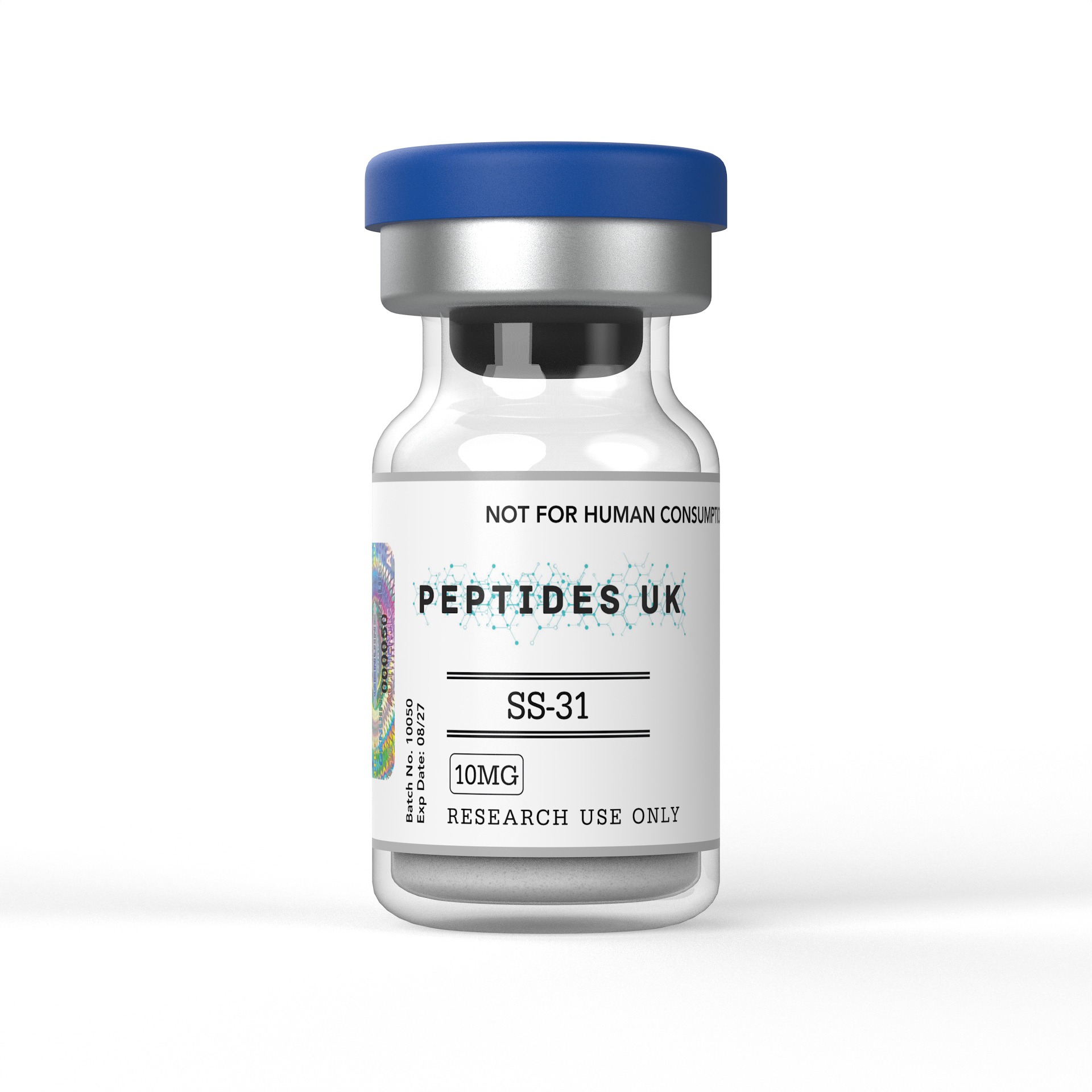
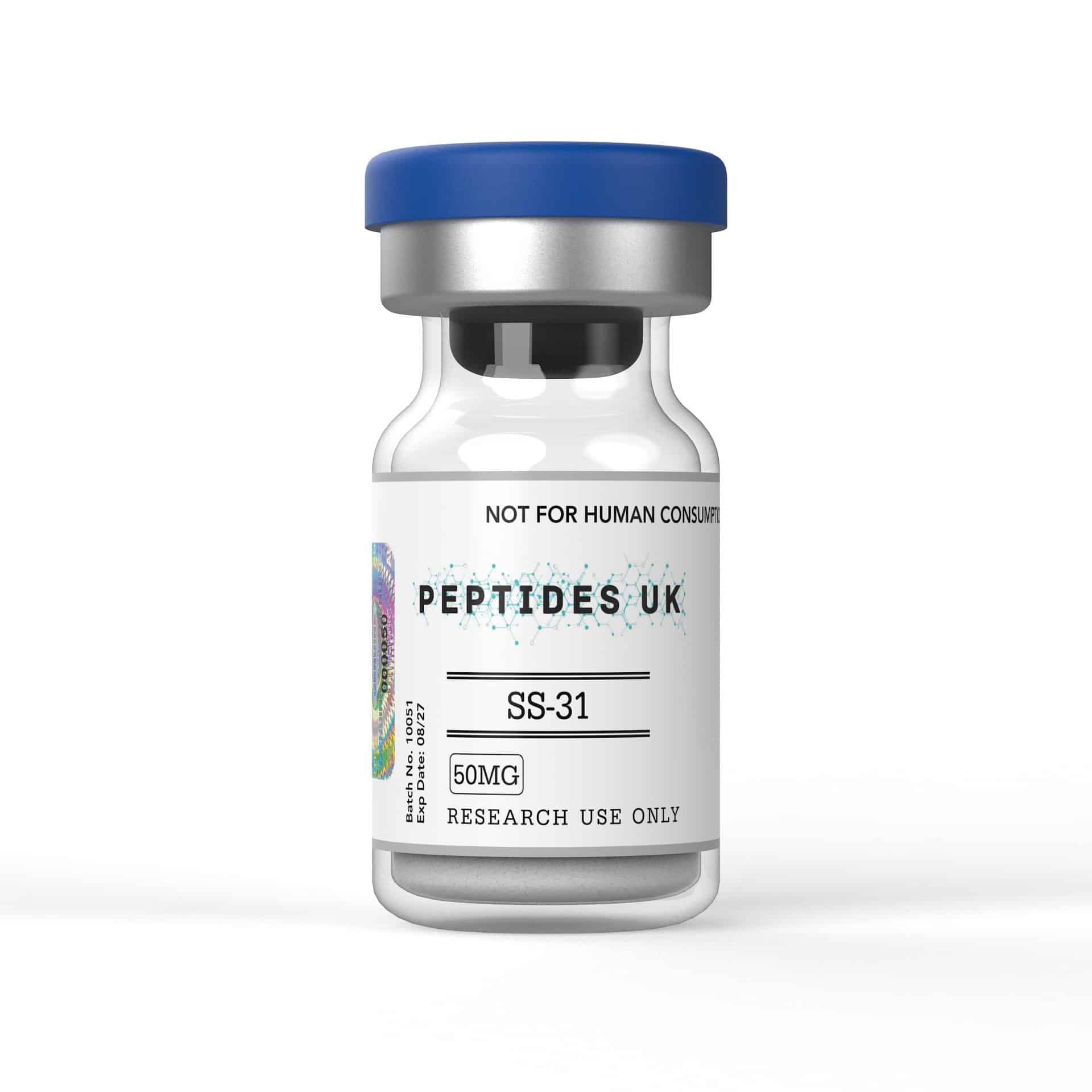
$131.00 – $399.50Price range: $131.00 through $399.50
SS-31 Peptide USA – Buy Online | In Stock & Ready to Ship
Buy SS-31 (Elamipretide) in the USA with fast domestic shipping and guaranteed ≥99% purity — fully verified with COA and HPLC documentation. A trusted choice for USA research teams studying mitochondrial membrane protection, oxidative stress reduction and cardioprotective energy metabolism pathways, SS-31 is available in multiple formats to suit varying project needs. No international delays — just reliable, domestically sourced peptides USA researchers can count on.
For research use only. Not intended for human or veterinary use.

SS-31 (Elamipretide; Bendavia; MTP-131) is a synthetic cell-permeable tetrapeptide mitochondria-targeting compound — carrying the four-amino acid sequence D-Arg-Dmt-Lys-Phe-NH₂, where Dmt represents the non-coded amino acid 2′,6′-dimethyltyrosine — discovered serendipitously by Dr. Hazel H. Szeto at Weill Cornell Medical College and Dr. Peter W. Schiller at the University of Montreal during opioid receptor ligand research in the early 2000s, and representing the lead compound of the Szeto-Schiller (SS) peptide family characterised by their alternating aromatic-cationic motif that confers cell permeability, mitochondrial inner membrane selectivity, and preferential accumulation of over 1,000-fold within the inner mitochondrial membrane through electrostatic interaction with the signature anionic phospholipid cardiolipin — studied extensively across cardiolipin biology, electron transport chain and OXPHOS supercomplex research, mitochondrial cristae structure and dynamics, ATP production and bioenergetics, reactive oxygen species and redox biology, cardiac and skeletal muscle myopathy research, ischaemia-reperfusion injury, acute kidney injury, chronic kidney disease, Barth syndrome and tafazzin biology, sarcopenia and age-related muscle biology, neurodegenerative disease and cognitive research, glaucoma and retinal ganglion cell biology, pulmonary hypertension, osteoarthritis, diabetic nephropathy, and the biology of mitochondrial dysfunction in the broader ageing process — having received FDA approval in September 2025 for Barth syndrome and been characterised in over 150 peer-reviewed publications across more than a dozen organ systems, making it the most clinically validated, most mechanistically characterised, and most broadly applicable mitochondria-targeting peptide in the modern research literature. Researchers and institutions across the USA can source verified, research-grade SS-31 50mg with fast domestic dispatch and full batch documentation included.
✅ ≥99% Purity — HPLC & Mass Spectrometry Verified
✅ Batch-Specific Certificate of Analysis (CoA) Included
✅ Sterile Lyophilised Powder | GMP Manufactured
✅ Fast Dispatch Across the USA | USA Peptides In Stock
SS-31 (Elamipretide; CAS 736992-21-5) is a synthetic tetrapeptide — carrying the four-amino acid sequence D-Arg-Dmt-Lys-Phe-NH₂, where Dmt (2′,6′-dimethyltyrosine) is a non-coded amino acid bearing two methyl groups at the ortho positions of the tyrosine aromatic ring — with a molecular formula of C₃₂H₄₉N₉O₅ and a molecular weight of 639.8 g/mol. The peptide is water-soluble, carries a net positive charge under physiological conditions from its D-Arg and Lys residues, and terminates in a C-terminal amide (–NH₂) that protects against carboxypeptidase degradation. The alternating aromatic-cationic motif — cationic D-Arg followed by aromatic Dmt followed by cationic Lys followed by aromatic Phe — is the structural signature of the entire SS peptide family and is the pharmacophoric basis for both cell permeability and selective mitochondrial inner membrane accumulation.
The discovery of SS-31 was serendipitous. Szeto and Schiller were engaged in a systematic programme of opioid receptor ligand research involving aromatic-cationic peptide analogues when they observed that a subset of their compounds displayed unexpected cell permeability and selective mitochondrial localisation — properties that were unrelated to opioid receptor binding but that were consistently associated with the alternating aromatic-cationic motif. Subsequent investigation established that the cell permeability of these peptides derived from charge shielding: the positive charges on D-Arg and Lys residues — which would normally reduce membrane permeability — are attenuated by the π orbital electron density of the adjacent aromatic Dmt and Phe rings, which shields the positive charges and reduces the effective charge density perceived by the hydrophobic cell membrane. This combination of amphipathic charge shielding and aromatic membrane interaction allows SS-31 to traverse plasma membranes and all cytosolic and outer mitochondrial membrane barriers without requiring active transport — an unusual and pharmacologically significant property for a charged peptide.
Once inside the cell, SS-31 concentrates selectively at the inner mitochondrial membrane (IMM) — accumulating at greater than 1,000-fold above cytosolic concentrations — driven by electrostatic interaction between its two cationic residues (D-Arg, Lys) and cardiolipin (CL), an anionic phospholipid that is almost exclusively localised on the IMM and that constitutes approximately 10–20 mol% of total IMM lipid content. Cardiolipin is structurally unique among cellular phospholipids: its dimeric structure carries two phosphate headgroups and four acyl chains, giving it a net charge of −2 under physiological conditions, a conical molecular geometry that contributes to the negative curvature of IMM cristae, and a central role in organising the protein-rich IMM landscape. CL functions as a structural platform for the assembly of the electron transport chain (ETC) complexes — Complexes I through IV — into higher-order supercomplexes (the respirasome) on the cristae membrane, and mediates the functional interactions between these complexes and the mobile electron carriers cytochrome c and coenzyme Q that enable efficient electron flow through the OXPHOS pathway. CL also provides the binding sites for cytochrome c — holding it at the IMM surface in a configuration that supports its electron-carrying function — while simultaneously its peroxidation converts cytochrome c from an electron carrier to a peroxidase that catalyses cardiolipin peroxidation in a destructive autocatalytic cycle that drives apoptosis and mitochondrial dysfunction.
SS-31’s primary mechanism of action is cardiolipin binding and protection: by intercalating into the IMM at cardiolipin-rich sites, SS-31 stabilises cardiolipin’s molecular geometry and electrostatic properties, prevents cardiolipin peroxidation, maintains the electrostatic surface potential of the IMM in a state that supports normal protein-lipid interactions, and preserves the structural integrity of the cristae membrane that houses the ETC supercomplexes. Cross-linking mass spectrometry studies have further identified specific SS-31-interacting proteins at the IMM — all known cardiolipin binders — including components of the ATP synthase (Complex V), components of the OXPHOS pathway, and enzymes of the 2-oxoglutarate (α-ketoglutarate) metabolic pathway — suggesting that SS-31’s effects extend beyond lipid bilayer stabilisation to direct engagement with the cardiolipin-dependent protein machinery of mitochondrial bioenergetics. Additional mechanisms include inhibition of cytochrome c peroxidase activity (blocking the autocatalytic cardiolipin peroxidation cycle), reduction of mitochondrial permeability transition pore (mPTP) opening under stress conditions, restoration of cristae membrane curvature and morphology, and reduction of electron leak and superoxide generation at the ETC — collectively producing the improvements in ATP synthesis rate, reduction in ROS, and preservation of mitochondrial structural integrity that define SS-31’s biological activity across disease models.
Notably, SS-31 has no measurable effect on healthy mitochondria in energetically replete cells — its cardiolipin-protective activity is conditionally engaged by the cardiolipin peroxidation and membrane disruption that characterises mitochondrial dysfunction under energy-depleted, oxidatively stressed, or disease-state conditions. This selectivity for dysfunctional mitochondria is a pharmacologically important property that distinguishes SS-31 from non-selective antioxidants and mitochondrial membrane-disruptive agents.
Developed clinically by Stealth Biotherapeutics (formerly Stealth Peptides Inc.) under the name Elamipretide, SS-31 received FDA Fast Track designation for primary mitochondrial myopathy in January 2016, orphan drug designation for Barth syndrome in November 2017, and FDA approval for Barth syndrome in September 2025 — establishing it as a first-in-class cardiolipin-protective therapeutic and the only approved mitochondria-targeting peptide in medicine. It has been evaluated in clinical trials including TAZPOWER (Barth syndrome), MMPOWER-3 (primary mitochondrial myopathy), PROGRESS-HF (heart failure with reduced ejection fraction), EMBRACE-STEMI (ST-elevation myocardial infarction), and ReCLAIM (ischaemic cardiomyopathy) — accumulating the most extensive clinical dataset of any mitochondria-targeting compound in research or clinical development.
As the only FDA-approved mitochondria-targeting peptide, the lead compound of the Szeto-Schiller family, and the most broadly published cardiolipin-protective agent across more than 150 peer-reviewed studies and over a dozen organ systems, SS-31 50mg research vials are in active demand across mitochondrial biology, cardiovascular research, renal research, neuroscience, muscle biology, ageing research, and rare disease programs at research institutions nationwide.
In controlled pre-clinical and laboratory settings, SS-31 has been studied across an exceptionally wide range of mitochondrial, cardiovascular, renal, neurological, musculoskeletal, and ageing research applications:
Cardiolipin Biology and Inner Mitochondrial Membrane Research SS-31’s primary research application is as the definitive cardiolipin-targeting tool compound — used in cardiolipin binding assays, Langmuir adsorption and Scatchard binding isotherm studies, biophysical membrane characterisation experiments, cryo-EM and electron microscopy cristae morphology analyses, and cardiolipin peroxidation inhibition assays. Studies using yeast strains with knockouts in cardiolipin synthase (Δcrd1) and tafazzin (Δtaz1) have directly confirmed that SS-31 binding is cardiolipin-dependent — with abolition of binding in CL-deficient membranes and restoration upon CL reintroduction — establishing cardiolipin selectivity as the primary determinant of SS-31’s IMM targeting. Biophysical studies have characterised SS-31’s equilibrium membrane binding parameters (KD, binding stoichiometry of approximately 1.4–1.5 CL molecules per SS-31 peptide) and established that SS-31 partitions into the membrane interfacial region — modulating the electrostatic surface potential of the IMM without inserting deeply into the hydrophobic bilayer core.
ETC Supercomplex Assembly and OXPHOS Research Research has examined SS-31’s role in promoting the assembly and stability of ETC supercomplexes — the higher-order assemblies of Complexes I, III, and IV (the respirasome) that enable substrate channelling of electrons through the ETC for more efficient OXPHOS with minimal electron leak and ROS generation. Studies have documented that SS-31 stabilises cardiolipin at the IMM in a way that preserves the lipid-protein interaction geometry required for supercomplex assembly — with cross-linking mass spectrometry identifying direct SS-31 protein interactions with Complex I, Complex III (cytochrome bc1), Complex IV (cytochrome c oxidase), and Complex V (ATP synthase) subunits, all of which are established cardiolipin-binding proteins. Studies in Barth syndrome models — where tafazzin mutations produce defective cardiolipin remodelling and MLCL accumulation — have documented SS-31-mediated restoration of respiratory chain supercomplex assembly alongside improved bioenergetic efficiency, providing mechanistic confirmation of the cardiolipin-supercomplex-OXPHOS axis.
Cytochrome c Peroxidase Inhibition Research A mechanistically critical and well-characterised SS-31 activity is its inhibition of the cytochrome c peroxidase function. Cytochrome c bound to cardiolipin at the IMM normally acts as an electron carrier between Complexes III and IV — but when cardiolipin becomes peroxidised (as occurs under oxidative stress), the altered binding geometry converts cytochrome c into a peroxidase that catalyses further cardiolipin peroxidation in a destructive autocatalytic cycle. This cycle depletes cardiolipin, disrupts ETC function, and ultimately releases cytochrome c into the cytoplasm to trigger the intrinsic apoptotic cascade through caspase activation. SS-31’s binding to cardiolipin modulates the hydrophobic interaction between cytochrome c and its cardiolipin anchor — preserving the electron-carrying configuration and blocking peroxidase conversion — thereby interrupting the cardiolipin peroxidation autocatalytic cycle at its initiation. Research has used cytochrome c peroxidase activity assays, HPLC-based cardiolipin peroxidation quantification, and cytochrome c release measurements to characterise this mechanism in isolated mitochondria, permeabilised cells, and intact tissue models.
Cardiac Biology and Heart Failure Research SS-31 is the most extensively studied mitochondria-targeting peptide in cardiac research — with pre-clinical studies in dog and rodent models of heart failure documenting that three months of subcutaneous elamipretide therapy increased stroke volume, ejection fraction, cardiac output, and cardiac index; decreased left ventricular end-diastolic pressure, systemic vascular resistance, and end-diastolic wall stress; normalised natriuretic peptide and pro-inflammatory cytokine biomarkers; reversed mitochondrial dysfunction evidenced by improved ATP synthesis and reduced ROS; reduced cardiomyocyte hypertrophy and interstitial fibrosis; and increased capillary density. Clinical trials have examined SS-31 in heart failure with reduced ejection fraction (PROGRESS-HF), reporting improvements in left ventricular end-systolic volume and trends toward improved cardiac output after four weeks of subcutaneous treatment. The EMBRACE-STEMI Phase 2a trial examined intravenous elamipretide administered at the time of reperfusion in STEMI patients, demonstrating trends toward reduced infarct size by cardiac MRI. Research in aged mice has documented that eight weeks of SS-31 treatment substantially reverses pre-existing diastolic dysfunction — normalising proton leak and reducing ROS — a finding mechanistically attributed to restoration of cardiolipin-dependent inner membrane integrity.
Barth Syndrome and Tafazzin Biology Research SS-31 is the only FDA-approved therapeutic for Barth syndrome — a rare X-linked cardiomyopathy caused by mutations in the TAFAZZIN gene encoding the enzyme responsible for cardiolipin remodelling. Tafazzin mutations produce defective cardiolipin acyl composition remodelling, with accumulation of monolysocardiolipin (MLCL) and a dramatically elevated MLCL/CL ratio that is the pathological hallmark of Barth syndrome, producing mitochondrial bioenergetics dysfunction, cristae ultrastructure disruption, cardiac and skeletal myopathy, growth retardation, and neutropenia. Research in tafazzin knockdown (TazKD) mice has characterised how SS-31 restores mitochondrial morphology in tafazzin-deficient heart — improving cristae structure, normalising mitochondrial fission-fusion dynamics and mitophagy, and increasing respiratory chain supercomplex assembly efficiency — without changing the underlying MLCL/CL ratio, confirming that SS-31 stabilises the function of available cardiolipin rather than restoring its biosynthesis. The TAZPOWER Phase 2/3 clinical trial (40 mg/day subcutaneous, 12-week crossover in 12 Barth syndrome patients) documented improvements in 6-minute walk test distance, five-times sit-to-stand test, and cardiac stroke volume, providing the clinical basis for FDA approval.
Ischaemia-Reperfusion Injury Research Research has examined SS-31’s protective effects in ischaemia-reperfusion (I/R) models across multiple organ systems — with studies in cardiac, renal, cerebral, and hepatic I/R models consistently documenting that SS-31 administered before, during, or after ischaemia reduces infarct size, preserves mitochondrial structural integrity, increases viable mitochondrial numbers, restores ATP production, reduces apoptosis and necrosis markers, and attenuates inflammatory infiltration. In renal I/R models, SS-31 treatment starting as late as one month post-ischaemia was shown to restore glomerular capillaries, arrest glomerulosclerosis, reverse mitochondrial damage in podocytes, and normalise inflammatory markers — with protection sustained for over six months after treatment ended, a durable protective effect of particular research significance. These studies establish SS-31 as a research tool for examining the mitochondrial mechanisms of I/R injury and protection across the full spectrum of organ systems vulnerable to ischaemic insult.
Acute Kidney Injury and Renal Research Research has characterised SS-31’s renoprotective mechanisms in acute kidney injury (AKI) models — documenting reductions in serum creatinine, increased creatinine clearance, reduced tubular necrosis and apoptosis, preservation of brush border structure, maintained mitochondrial cristae integrity, increased viable mitochondria, and promoted ATP recovery following bilateral renal ischaemia. Studies in obesity-associated kidney injury have demonstrated that SS-31 lengthens mitochondria and restores cristae membrane structure in proximal tubular and podocyte cells — reversing the mitochondrial shrinkage and structural disorganisation that characterise obesity-driven renal mitochondrial dysfunction. Research in atherosclerotic renal artery stenosis models has shown that SS-31 restores cardiolipin levels, improves glomerular filtration rate, reduces renal fibrosis, and normalises stenotic renal microvascular architecture — with the mechanism attributed to cardiolipin stabilisation and mitochondrial biogenesis enhancement.
Skeletal Muscle, Sarcopenia, and Exercise Biology Research Research has examined SS-31’s effects on age-related skeletal muscle mitochondrial dysfunction — with eight-week treatment studies in aged mice (26 months) documenting reversal of age-related decline in maximal mitochondrial ATP production (ATPmax) and oxidative phosphorylation coupling (P/O ratio), restoration of redox homeostasis, and improvements in exercise tolerance. Studies using ³¹P magnetic resonance spectroscopy and optical spectroscopy confirmed in vivo mitochondrial functional improvements in skeletal muscle following SS-31 treatment. Research has further examined SS-31’s effects on skeletal muscle bioenergetics in models of Duchenne muscular dystrophy, primary mitochondrial myopathy, and chemotherapy-induced muscle wasting — contributing to the understanding of how cardiolipin-dependent ETC function contributes to muscle force generation capacity and fatigue resistance. A randomised crossover trial (MMPOWER-3) examined SS-31 in adults with primary mitochondrial myopathy, providing the most rigorously controlled dataset for SS-31’s effects on human skeletal muscle function in the context of established mitochondrial genetic disease.
Neurodegenerative Disease and Cognitive Research Research has examined SS-31’s neuroprotective properties across multiple CNS disease models — with studies documenting that SS-31 improves mitochondrial function and cognitive outcomes in models of Alzheimer’s disease, LPS-induced neuroinflammation, isoflurane-induced cognitive impairment, and traumatic brain injury. Mechanistic studies have identified SS-31-mediated restoration of synaptic mitochondrial function, inhibition of mPTP opening in neuronal mitochondria, reduction of neuroinflammatory cytokine expression, suppression of pyroptosis signalling, and preservation of BDNF-dependent synaptic plasticity pathways as contributors to its neuroprotective profile. Research examining ageing-associated cognitive decline has used SS-31 to probe the mitochondrial mechanisms linking ETC dysfunction, ROS accumulation, and synaptic energy deficiency to hippocampus-dependent memory impairment — establishing SS-31 as a pharmacological tool for investigating the mitochondrial hypothesis of cognitive ageing.
Glaucoma and Retinal Ganglion Cell Research Research in experimental glaucoma models has characterised SS-31’s neuroprotection of retinal ganglion cells (RGCs) — neurons whose progressive loss defines glaucoma as the leading cause of irreversible blindness. Studies in elevated intraocular pressure (IOP) rat models documented that SS-31 preserved ganglion cell complex thickness, reduced TUNEL-positive apoptotic retinal cells, increased Brn3a-positive viable RGC numbers, elevated SOD2 antioxidant levels, suppressed cytochrome c release, and shifted the Bcl-2/Bax ratio toward cell survival — with these effects mechanistically attributed to prevention of mitochondrial dysfunction in RGCs, which are among the most energetically demanding neurons in the body due to their long unmyelinated axons and high mitochondrial density. These studies establish SS-31 as a research tool for examining the mitochondrial mechanisms of RGC vulnerability and protection in glaucoma biology.
Ageing Biology and Geroscience Research SS-31 is one of the most studied compounds in the geroscience field — with research examining how cardiolipin peroxidation and ETC supercomplex disassembly contribute to the progressive mitochondrial dysfunction that underlies multiple hallmarks of ageing including sarcopenia, cardiac diastolic dysfunction, cognitive decline, renal glomerular architectural deterioration, and reduced exercise capacity. Studies have used SS-31 as the pharmacological probe to establish causal roles for cardiolipin dysfunction in age-related tissue deterioration — with studies in old mice consistently documenting restoration of mitochondrial function, reduction of oxidative damage markers, and reversal of organ-level functional decline following SS-31 treatment. Research examining the relationship between mitochondrial membrane potential, proton leak, and ageing-associated energy deficiency has used SS-31 to pharmacologically interrogate IMM integrity as the upstream cause of age-related bioenergetic decline.
Osteoarthritis and Joint Biology Research Research has examined SS-31 in post-traumatic osteoarthritis models — with studies documenting that acute mitochondrial respiratory dysfunction occurs within hours after cartilage impact-injury, and that SS-31 administered up to six hours after injury prevents chondrocyte death, apoptosis, and matrix degradation. The Szeto-Schiller peptide mechanism — stabilising cardiolipin at the IMM to preserve ETC function and prevent apoptotic cascade initiation — has been mechanistically validated in chondrocyte models as the basis for this joint-protective effect, establishing cardiolipin stabilisation as a pharmacologically relevant research target in the acute post-injury window that determines long-term osteoarthritis progression.
Pulmonary Hypertension and Vascular Biology Research Research in pulmonary arterial hypertension models has documented that SS-31 suppresses blood pressure elevation, oxidative stress markers, inflammatory cytokines (TNF-α, iNOS, MMP9), pro-apoptotic proteins (Bax, caspase-3), and DNA damage markers — establishing a broad mitochondria-protective and anti-inflammatory profile in pulmonary vascular biology. Studies examining the vascular endothelial biology of SS-31 have probed how mitochondrial dysfunction in endothelial cells contributes to vascular remodelling and how cardiolipin stabilisation modulates the energetic and redox status of the endothelial mitochondrial compartment.
All applications are for research purposes only. SS-31 as supplied is not intended for human therapeutic use.
SS-31 has accumulated a research record of over 150 peer-reviewed publications spanning more than a dozen organ systems — the broadest pre-clinical dataset of any mitochondria-targeting peptide:
Cardiolipin and Mechanism: Biophysical studies have precisely characterised SS-31’s cardiolipin binding parameters — Langmuir adsorption and Scatchard analyses confirming preferential CL binding with approximately 1.4–1.5 CL molecules per peptide, direct CL dependence confirmed in yeast CL-deficient mutants, and cross-linking mass spectrometry identifying direct protein interaction partners at the IMM that are all established cardiolipin binders. These mechanistic data have evolved SS-31’s pharmacological description from a non-selective mitochondrial antioxidant — the initial characterisation — to a specific cardiolipin-binding compound that stabilises IMM electrostatic surface potential, promotes ETC supercomplex assembly, and restores cardiolipin-dependent protein function.
Heart Failure: Pre-clinical studies in canine and rodent heart failure models documented comprehensive improvements in cardiac function, mitochondrial bioenergetics, and cardiac remodelling parameters following SS-31 treatment. Phase 2 clinical data demonstrated improvements in left ventricular end-systolic volume in heart failure patients, and the EMBRACE-STEMI trial showed trends toward reduced infarct size by cardiac MRI — providing the clinical proof-of-concept for mitochondrial cardioprotection in human cardiac disease.
Barth Syndrome: The TAZPOWER Phase 2/3 trial and its open-label extension documented improvements in 6-minute walk test, sit-to-stand functional testing, and cardiac stroke volume in Barth syndrome patients — representing the clinical validation dataset that supported FDA approval in September 2025, making SS-31 the first and only approved cardiolipin-targeted medicine.
Renal Biology: Studies across AKI, CKD, diabetic nephropathy, ischaemia-reperfusion, and atherosclerotic renal artery stenosis models have consistently documented SS-31-mediated renoprotection — with the durability of protection extending six months beyond treatment cessation in I/R models representing a particularly notable pharmacological finding for a peptide with a relatively short plasma half-life.
Skeletal Muscle and Ageing: Studies in aged mice confirmed in vivo reversal of age-related mitochondrial ATP production decline and exercise capacity improvement following eight-week SS-31 treatment — using ³¹P MRS to confirm in vivo bioenergetic improvements and providing the most rigorously quantified dataset for SS-31’s skeletal muscle effects.
Neuroscience: Studies across multiple CNS models have documented SS-31-mediated improvements in cognitive function, synaptic mitochondrial health, neuroinflammation reduction, and RGC neuroprotection — establishing the breadth of SS-31’s CNS research relevance and its utility as a tool for investigating the mitochondrial basis of neurological disease and ageing-associated cognitive decline.
| Feature | SS-31 (Elamipretide) | MitoQ | NAD⁺ / NMN | SkQ1 |
|---|---|---|---|---|
| Type | Synthetic tetrapeptide — alternating aromatic-cationic | Ubiquinone-triphenylphosphonium conjugate (small molecule) | Endogenous coenzyme / nucleotide precursor | Plastoquinone-triphenylphosphonium conjugate (small molecule) |
| Mitochondrial Targeting Mechanism | Electrostatic — cationic residues bind anionic cardiolipin at IMM; >1,000-fold IMM accumulation | Electrophoretic — TPP⁺ cation driven into matrix by mitochondrial membrane potential (ΔΨm) | Diffusion — NAD⁺ precursor converted intracellularly; not directly targeted to mitochondria | Electrophoretic — TPP⁺ cation driven by ΔΨm; plastoquinone antioxidant moiety |
| Primary Target | Cardiolipin (IMM) — ETC supercomplex stability, cristae morphology, cytochrome c peroxidase inhibition | Complex I and ubiquinone redox cycling — antioxidant at CoQ site | NAD⁺/NADH ratio — sirtuin activation, PARP inhibition, ETC substrate replenishment | Complex I and III — plastoquinone antioxidant at membrane interface |
| Mechanism | Cardiolipin binding and stabilisation; mPTP inhibition; cytochrome c peroxidase inhibition; cristae curvature preservation | CoQ redox cycling antioxidant — reduces superoxide at Complex I and III | NAD⁺ repletion — substrate-level bioenergetics; sirtuin-FOXO-PGC-1α transcriptional regulation | Plastoquinone antioxidant — more potent than MitoQ at lower concentrations |
| ΔΨm Dependence | None — cardiolipin binding is ΔΨm-independent; active in depolarised mitochondria | High — accumulation requires intact ΔΨm; reduced targeting in severely depolarised mitochondria | None | High — same as MitoQ |
| Effect on Healthy Mitochondria | None — conditionally engaged only when cardiolipin is peroxidised or IMM disrupted | Potential pro-oxidant at high concentrations in healthy mitochondria | Generally beneficial — restores declining NAD⁺ levels with ageing | Antioxidant at low doses; potentially disruptive at high doses |
| FDA Status | Approved September 2025 (Barth syndrome) | Not approved | Not applicable (precursor nutrient) | Not approved |
| Primary Research Use | Cardiolipin biology / OXPHOS supercomplex / heart failure / Barth syndrome / AKI / sarcopenia / ageing / neuroprotection | Mitochondrial ROS research / Complex I/III biology / ΔΨm-dependent targeting studies | NAD⁺ metabolism / sirtuin biology / metabolic ageing / nuclear-mitochondrial communication | Mitochondrial ROS / ΔΨm-dependent comparative antioxidant pharmacology |
| Parameter | Specification |
|---|---|
| Full Name | SS-31 (Elamipretide; Bendavia; MTP-131; SBT-272) |
| INN | Elamipretide |
| Sequence | D-Arg-Dmt-Lys-Phe-NH₂ |
| Dmt Definition | 2′,6′-dimethyltyrosine — non-coded amino acid; oxidation-resistant aromatic residue |
| CAS Number | 736992-21-5 |
| Molecular Formula | C₃₂H₄₉N₉O₅ |
| Molecular Weight | 639.8 g/mol |
| Peptide Length | 4 Amino Acids (Tetrapeptide) — linear |
| Structural Motif | Alternating aromatic-cationic (cationic D-Arg — aromatic Dmt — cationic Lys — aromatic Phe) |
| N-Terminal Residue | D-Arg (D-Arginine) — D-configuration; resistance to aminopeptidase degradation |
| C-Terminal Modification | Amide (–NH₂) — carboxypeptidase resistance |
| Cell Permeability Mechanism | Charge shielding — π orbital electrons of Dmt and Phe attenuate positive charge density; passive membrane permeation |
| Mitochondrial Targeting Mechanism | Electrostatic — cationic residues bind anionic cardiolipin (CL) at the IMM; ΔΨm-independent |
| IMM Accumulation | >1,000-fold above cytosolic concentration |
| Primary Target | Cardiolipin (CL) at the inner mitochondrial membrane |
| Primary Mechanisms | Cardiolipin binding/stabilisation; cytochrome c peroxidase inhibition; ETC supercomplex promotion; cristae morphology preservation; mPTP inhibition; ROS reduction |
| Effect on Healthy Mitochondria | None — conditionally engaged by cardiolipin peroxidation and IMM disruption |
| Discovery | Serendipitous — Szeto and Schiller opioid receptor research programme, early 2000s |
| Developer (clinical) | Stealth Biotherapeutics (formerly Stealth Peptides Inc.) |
| FDA Approval | September 2025 (Barth syndrome) |
| Key Clinical Trials | TAZPOWER (Barth syndrome), MMPOWER-3 (primary mitochondrial myopathy), PROGRESS-HF (HFrEF), EMBRACE-STEMI (STEMI reperfusion), ReCLAIM (ischaemic cardiomyopathy) |
| Peer-Reviewed Publications | Over 150 |
| Vial Size | 50mg |
| Purity | ≥99% (HPLC & MS Verified) |
| Form | Sterile Lyophilised Powder |
| Solubility | Water, bacteriostatic water, PBS, saline — excellent aqueous solubility |
| Storage (Powder) | 2–8°C (refrigerator) for routine storage; -20°C or below for long-term (>3 months) |
| Storage (Reconstituted) | 2–8°C, use within 7–14 days |
| Manufacturing | GMP Manufactured |
Every order includes full batch documentation:
✅ Batch-Specific Certificate of Analysis (CoA)
✅ HPLC Chromatogram
✅ Mass Spectrometry Confirmation
✅ Sterility & Endotoxin Testing Report
✅ Reconstitution Protocol
✅ Technical Research Support
Can I buy research-grade SS-31 in the USA? Yes. We supply research-grade SS-31 50mg to researchers and institutions across the United States. All orders include full batch documentation and are packaged to maintain peptide integrity during transit. This compound is supplied strictly for laboratory research use only.
What is the significance of the alternating aromatic-cationic motif in SS-31’s structure? The alternating aromatic-cationic motif — D-Arg (cationic), Dmt (aromatic), Lys (cationic), Phe (aromatic) — is the structural basis for SS-31’s two most pharmacologically important properties: cell permeability and cardiolipin-targeted IMM accumulation. For cell permeability, the positive charges on D-Arg and Lys residues would ordinarily impede passive membrane penetration, but the adjacent aromatic Dmt and Phe residues attenuate these charges through π orbital electron shielding — reducing the effective surface charge density that the plasma membrane perceives, allowing passive permeation across lipid bilayers without requiring active transport or carrier systems. This charge shielding mechanism is a general property of the alternating aromatic-cationic structural class. For IMM targeting, the net positive charge under physiological conditions enables electrostatic attraction to the anionic cardiolipin that is almost exclusively localised at the IMM — producing the >1,000-fold accumulation at the IMM relative to cytosolic concentrations that places SS-31 precisely at its cardiolipin target. Crucially, this IMM accumulation is driven by cardiolipin binding rather than by the mitochondrial membrane potential (ΔΨm) — unlike TPP⁺-conjugated mitochondria-targeting antioxidants such as MitoQ, which require an intact ΔΨm for electrophoretic accumulation and lose their mitochondrial targeting in severely dysfunctional, depolarised mitochondria. SS-31’s ΔΨm-independence means it can access and protect the most severely dysfunctional mitochondria — precisely the population most in need of intervention.
What is cardiolipin and why is it the central target in SS-31 research? Cardiolipin (CL) is a structurally unique phospholipid found almost exclusively in the inner mitochondrial membrane, where it constitutes approximately 10–20 mol% of total IMM lipid content. Its structure — two phosphate headgroups and four acyl chains linked by a central glycerol backbone — gives it a net charge of −2 under physiological conditions, a conical molecular geometry that contributes to the negative curvature of IMM cristae, and exceptional capacity to associate with the peripheral and integral membrane proteins of the electron transport chain. CL functions as a structural scaffold for assembling ETC Complexes I through IV into higher-order supercomplexes — the respirasome — that enable substrate channelling and efficient electron transfer with minimal ROS generation. CL also holds cytochrome c at the IMM surface in its electron-carrying configuration, and its peroxidation converts cytochrome c into a peroxidase that catalyses further CL peroxidation in an autocatalytic cycle that progressively destroys the IMM, uncouples OXPHOS, and releases cytochrome c into the cytoplasm to initiate the intrinsic apoptotic cascade. CL peroxidation and depletion are characteristic features of virtually every condition characterised by mitochondrial dysfunction — heart failure, ischaemia-reperfusion, neurodegeneration, kidney injury, sarcopenia, and ageing — which is why CL is identified as a drug target whose pharmacological protection by SS-31 offers broad therapeutic and research relevance across the full spectrum of mitochondrial disease states.
Why does SS-31 have no effect on healthy mitochondria? SS-31’s conditional pharmacological activity — active when cardiolipin is peroxidised or IMM function is disrupted, inactive in healthy energetically replete mitochondria — is a consequence of the dependency of its mechanism on a pathological substrate. In healthy mitochondria with intact cardiolipin and normal IMM electrostatic surface potential, SS-31 binds cardiolipin at the IMM surface as characterised by biophysical studies, but finds no peroxidised CL to stabilise, no aberrant cytochrome c peroxidase activity to inhibit, no disrupted cristae morphology to restore, and no pathologically elevated mPTP opening to block. The mitochondrial machinery is already operating optimally and SS-31’s cardiolipin-binding presence does not perturb it. Under pathological conditions — ischaemia, oxidative stress, CL remodelling deficiency — the cardiolipin peroxidation cascade initiates, and SS-31’s presence at the CL-rich IMM enables it to intercept the peroxidation cycle before it propagates, restore electrostatic surface potential, and protect protein-lipid interactions that are otherwise disrupted. This conditional activity profile distinguishes SS-31 from broad-spectrum antioxidants that may interfere with physiological ROS signalling in healthy cells, and is a pharmacologically important property for research applications requiring mitochondrial protection specifically in diseased or aged tissue without disrupting normal mitochondrial biology in surrounding healthy cells.
What is Barth syndrome and why did SS-31 receive FDA approval for it specifically? Barth syndrome (BTHS) is a rare X-linked recessive disorder caused by mutations in the TAFAZZIN gene encoding tafazzin — a transacylase enzyme responsible for the remodelling of newly synthesised cardiolipin into its mature, tissue-specific fatty acid composition. Without functional tafazzin, immature CL species accumulate and cannot be remodelled to mature tetralinoleoyl-CL (the predominant cardiac CL species), producing an elevated monolysocardiolipin (MLCL)/CL ratio that is the pathological hallmark of BTHS. This CL composition defect impairs ETC supercomplex assembly, reduces OXPHOS efficiency, increases oxidative stress, and produces the clinical phenotype of dilated cardiomyopathy, skeletal myopathy, growth retardation, neutropenia, and exercise intolerance that characterises BTHS. Barth syndrome represents a nearly ideal research and clinical target for SS-31 because its pathology is mechanistically and specifically attributable to cardiolipin dysfunction — the exact substrate of SS-31’s mechanism of action. The TAZPOWER trial’s documentation of functional improvements and cardiac benefits in BTHS patients, combined with the mechanistic rationale and unmet need in a rare genetic disease, provided the regulatory basis for FDA approval. Importantly, SS-31 does not restore the underlying CL compositional defect — it stabilises the function of the defective CL that is present — representing a pharmacological compensation rather than a genetic correction.
What purity is required for SS-31 research? ≥98% is considered research-grade for tetrapeptides of this complexity, but ≥99% purity is strongly preferred for cardiolipin binding biophysics, OXPHOS supercomplex assembly studies, cytochrome c peroxidase inhibition assays, mitochondrial respiration and ATP production measurements, cardiac and renal disease model studies, and ex vivo mitochondrial isolation experiments where peptide purity and correct Dmt incorporation directly affect IMM binding fidelity and biological activity. Mass spectrometry confirmation of correct molecular weight — verifying incorporation of the non-coded Dmt residue with both methyl groups intact — is a critical quality parameter alongside overall purity percentage, as the Dmt residue’s dimethyl substitution is essential for its antioxidant radical-scavenging activity and contributes to the charge-shielding cell permeability mechanism. All SS-31 supplied for USA researchers is independently verified to ≥99% with mass spectrometry confirmation of the correct molecular weight.
How is SS-31 reconstituted for lab use? Allow the vial to reach room temperature before opening. SS-31 is a small, water-soluble tetrapeptide that dissolves readily in sterile water, bacteriostatic water, PBS, and physiological saline — add the reconstitution vehicle slowly down the vial wall and swirl gently. Unlike larger acylated peptides or cyclic lactam compounds, SS-31 does not carry the aggregation risks associated with hydrophobic moieties or constrained ring structures, and reconstitution is generally straightforward. For subcutaneous administration in pre-clinical models, physiological saline or PBS is the standard vehicle. For in vitro mitochondrial isolation and respiration buffer experiments, prepare SS-31 stocks in respiration buffer matched to the specific OXPHOS assay conditions. Working solutions should be freshly prepared from frozen aliquots where possible to ensure maximal activity. For multi-use protocols, bacteriostatic water extends solution usability at 2–8°C for up to 7–14 days; for longer storage of reconstituted solution, aliquot and store at -20°C. Lyophilised powder should be stored at 2–8°C for routine use and at -20°C or below for long-term storage beyond three months. The Dmt residue is relatively resistant to oxidation compared to unmodified tyrosine — the purpose of the dimethyl substitution — but solutions should nonetheless be protected from prolonged light exposure and oxidative conditions to maintain full antioxidant and cardiolipin-binding activity.
SS-31 is supplied exclusively for legitimate scientific research purposes conducted within licensed laboratory environments. This product is not intended for human consumption, self-administration, or any therapeutic application. It must be handled by qualified researchers in compliance with applicable US federal and state regulations and institutional ethics guidelines. By purchasing, you confirm that this compound will be used solely for approved in-vitro or pre-clinical research purposes.
Receive News