PRODUCTS SOLD ON PEPTIDESLABUSA.COM ARE FOR RESEARCH PURPOSES ONLY AND ARE NOT FOR HUMAN OR VETERINARY USE.
$79.00
HGH Fragment Peptide USA – Buy Online | In Stock & Ready to Ship
Buy HGH Fragment in the USA with fast domestic shipping and guaranteed ≥99% purity — fully verified with COA and HPLC documentation. A trusted choice for USA research teams studying lipolysis regulation, fat metabolism and truncated growth hormone analogue activity pathways, HGH Fragment is available in multiple formats to suit varying project needs. No international delays — just reliable, domestically sourced peptides USA researchers can count on.
For research use only. Not intended for human or veterinary use.

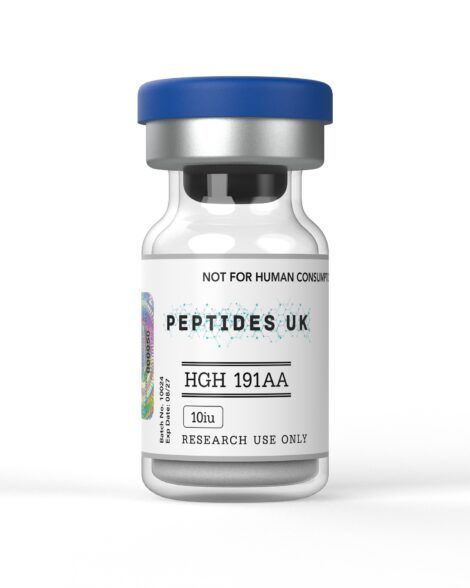
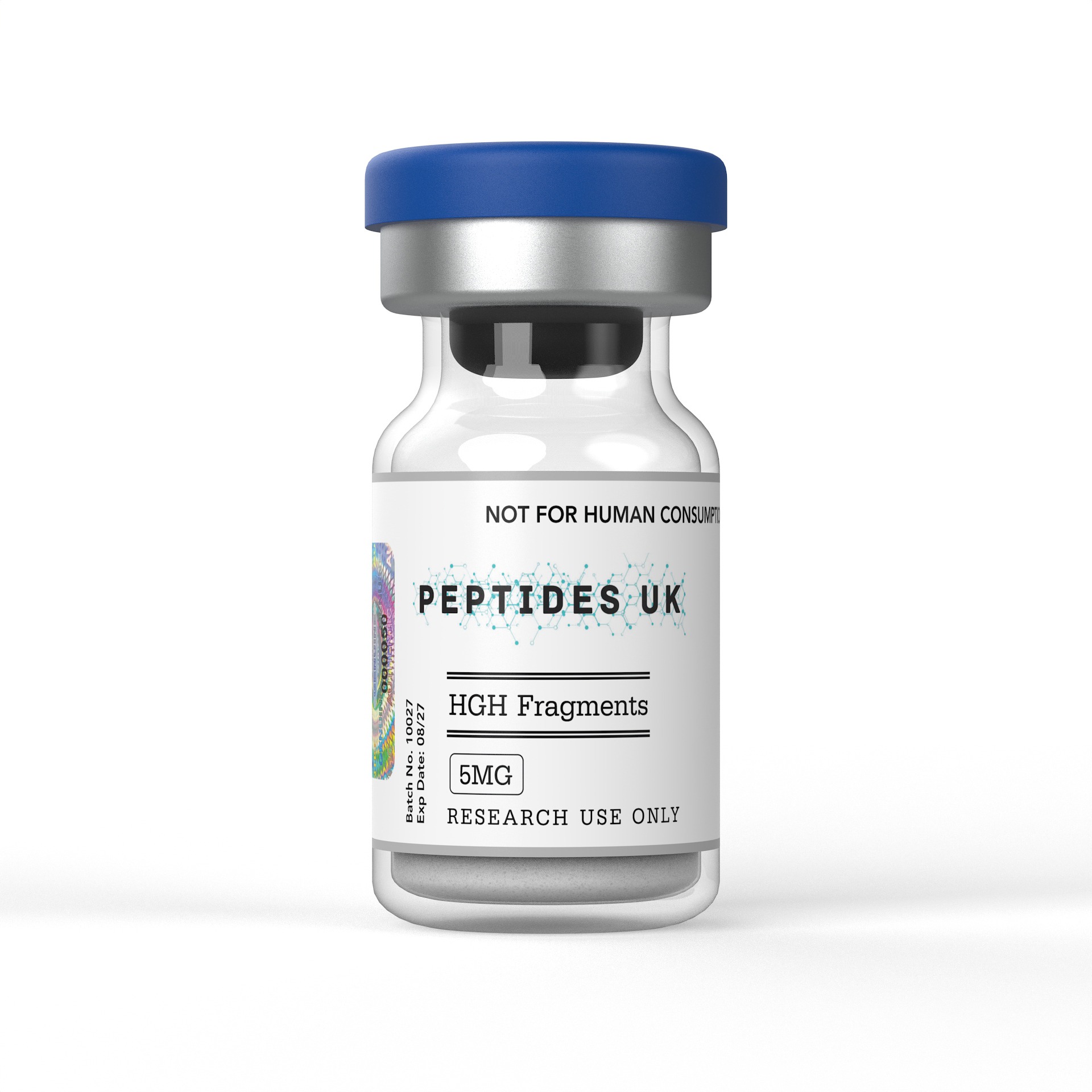
HGH Fragment is a synthetic research peptide derived from the C-terminal region of human growth hormone — studied extensively in pre-clinical research for its ability to influence fat metabolism and lipolysis through a GH-independent mechanism, without the growth-promoting or insulin-desensitising effects of full-length HGH.
Available for US researchers and institutions with fast domestic dispatch, full batch documentation, and verified ≥99% purity on every vial.
✅ ≥99% Purity — HPLC & Mass Spectrometry Verified
✅ Batch-Specific Certificate of Analysis (CoA) Included
✅ Sterile Lyophilised Powder | GMP Manufactured
✅ Fast Dispatch Across the USA | USA Peptides In Stock
HGH Fragment is a synthetic peptide corresponding to amino acid residues 176 through 191 of the 191-amino acid human growth hormone sequence. It represents the C-terminal tail of HGH — a region that research has identified as responsible for growth hormone’s fat-mobilising (lipolytic) activity, separate from the receptor-binding domain that drives IGF-1 production and tissue growth.
The peptide carries the sequence Tyr-Leu-Arg-Ile-Val-Gln-Cys-Arg-Ser-Val-Glu-Gly-Ser-Cys-Gly-Phe, with a molecular weight of approximately 1817.1 g/mol (CAS 221231-10-3). It contains an internal disulfide bond between the two cysteine residues at positions 182 and 189 — a structural feature critical for maintaining the active conformation required for lipolytic activity.
The research rationale behind Fragment 176-191 is the dissociation of HGH’s metabolic effects from its anabolic and mitogenic effects. Full-length HGH stimulates both IGF-1-driven tissue growth and lipolysis — but also causes insulin resistance, fluid retention, and other effects that complicate long-term metabolic research. Fragment 176-191 retains the lipolytic signalling of the parent molecule while showing no meaningful IGF-1 stimulation, no effect on cell proliferation, and a markedly cleaner metabolic profile in pre-clinical models — making it a more focused tool for studying fat metabolism biology.
In laboratory and pre-clinical research settings, HGH Fragment 176-191 has been studied across a range of metabolic and body composition research areas:
Lipolysis and Fat Metabolism Research
The primary research application of HGH Fragment 176-191 is its lipolytic activity — the stimulation of fat breakdown from adipose tissue. Pre-clinical studies have documented that Fragment 176-191 activates lipolysis in adipocytes through a mechanism involving beta-3 adrenergic receptor-like signalling pathways, independent of the GH receptor binding that drives IGF-1 production. Studies in obese animal models documented significant reductions in body fat with Fragment 176-191 administration, with effects comparable to full-length HGH on adipose tissue but without the accompanying IGF-1 elevation or anti-insulin activity.
Anti-Lipogenic Activity
Beyond stimulating fat breakdown, research has shown Fragment 176-191 also inhibits lipogenesis — the formation of new fat from non-fat dietary sources such as carbohydrates. This dual action (promoting fat breakdown while inhibiting fat storage) has been characterised in adipocyte cell culture models and in vivo animal studies, establishing Fragment 176-191 as a useful tool for studying the regulation of adipose tissue metabolism at both ends of the lipid balance equation.
Insulin Sensitivity Research
Unlike full-length HGH, which is well established to reduce insulin sensitivity — a significant confounding factor in metabolic research — Fragment 176-191 has been shown in pre-clinical models to have a neutral to mildly positive effect on insulin sensitivity. Some studies documented modest improvements in glucose uptake in adipocyte models treated with Fragment 176-191. This metabolic neutrality on the insulin axis makes it a cleaner tool than HGH for research designs where glucose homeostasis needs to be controlled for.
Body Composition Research
Animal studies using Fragment 176-191 in diet-induced obese models documented measurable reductions in total body fat, particularly visceral adipose tissue, over the course of multi-week treatment protocols — without the lean mass-altering effects associated with full-length GH administration. These body composition findings have positioned Fragment 176-191 as a reference compound for studying selective adipose tissue reduction mechanisms in obesity research.
Cartilage and Bone Research
More recent pre-clinical research has examined potential effects of HGH Fragment 176-191 on cartilage metabolism — with some studies investigating whether the peptide influences chondrocyte activity and extracellular matrix production. While this research area is earlier-stage than the lipolysis literature, it represents an emerging secondary research dimension beyond the peptide’s established metabolic biology.
All applications listed are for pre-clinical and laboratory research use only.
HGH Fragment 176-191 has accumulated a focused pre-clinical research record centred on adipose tissue biology and metabolic regulation:
On lipolysis: Pre-clinical studies confirmed Fragment 176-191 stimulates fat cell lipolysis at a potency comparable to full-length HGH on adipose tissue, through a mechanism independent of GH receptor-mediated IGF-1 signalling. The disulfide bond between Cys182 and Cys189 has been identified as structurally essential — linear (reduced) versions of the fragment show significantly attenuated lipolytic activity, confirming the cyclic conformation is required for receptor engagement.
On body fat in obesity models: Studies in diet-induced obese mice documented statistically significant reductions in total body fat percentage and absolute fat mass over multi-week Fragment 176-191 treatment protocols compared to vehicle controls — without equivalent changes in lean body mass, and without the IGF-1 elevation that accompanies full-length HGH treatment.
On IGF-1 and growth promotion: Multiple studies confirmed that Fragment 176-191 produces no meaningful stimulation of IGF-1, no enhancement of cell proliferation in GH-responsive tissues, and no longitudinal bone growth effect — establishing its clean dissociation from HGH’s anabolic and mitogenic biology.
On insulin sensitivity: Pre-clinical data consistently showed Fragment 176-191 does not impair glucose tolerance or insulin sensitivity — contrasting with the insulin-antagonising effects of full-length HGH and supporting its utility in metabolic research designs where insulin axis confounding needs to be minimised.
| HGH Frag 176-191 | Full-Length HGH | AOD-9604 | CJC-1295 | |
|---|---|---|---|---|
| Mechanism | C-terminal HGH fragment — direct lipolytic activity | Full GH receptor agonist | Modified HGH frag 177-191 — enhanced stability | GHRH analogue — stimulates pituitary GH release |
| Lipolytic Activity | Yes — primary research application | Yes — but confounded by IGF-1 and insulin effects | Yes — similar to Frag 176-191 | Indirect — via GH release |
| IGF-1 Stimulation | None — key research advantage | Significant | None | Yes — via GH |
| Insulin Sensitivity | Neutral to mildly positive | Impaired — well documented | Neutral | Variable |
| Growth Promotion | None | Significant | None | Indirect via GH/IGF-1 |
| Best For | Isolated lipolysis and fat metabolism research without GH anabolic confounds | Full GH biology research | Lipolysis research with improved peptide stability | GH pulse simulation / somatotropic axis research |
| Parameter | Detail |
|---|---|
| Full Name | HGH Fragment 176-191 (Human Growth Hormone Fragment 176-191) |
| Sequence | Tyr-Leu-Arg-Ile-Val-Gln-Cys-Arg-Ser-Val-Glu-Gly-Ser-Cys-Gly-Phe |
| CAS Number | 221231-10-3 |
| Molecular Weight | ~1817.1 g/mol |
| Peptide Length | 16 amino acids |
| Disulfide Bond | Cys182–Cys189 — required for active conformation and lipolytic activity |
| Origin | C-terminal region of 191-amino acid human growth hormone sequence |
| Primary Activity | Lipolysis stimulation and lipogenesis inhibition — GH receptor independent |
| IGF-1 Stimulation | None documented in pre-clinical research |
| Vial Size | 5mg |
| Purity | ≥99% (HPLC & MS Verified) |
| Form | Sterile Lyophilised Powder |
| Solubility | Sterile water, bacteriostatic water, PBS, saline |
| Storage (Powder) | -20°C, protect from light and moisture |
| Storage (Reconstituted) | 2–8°C, use within 28 days (bacteriostatic water) |
| Manufacturing | GMP Manufactured |
Every order of HGH Frag 176-191 peptide USA includes full batch documentation:
✅ Batch-Specific Certificate of Analysis (CoA)
✅ HPLC Chromatogram
✅ Mass Spectrometry Confirmation
✅ Sterility & Endotoxin Testing Report
✅ Reconstitution Protocol
✅ Technical Research Support
Can I buy HGH Fragment 176-191 in the USA?
Yes. We supply research-grade HGH Fragment 176-191 5mg to researchers and licensed institutions across the United States. All orders ship domestically with full batch documentation included. This compound is supplied strictly for laboratory research use only.
What is HGH Fragment 176-191 used for in research?
HGH Fragment 176-191 is used primarily as a research tool for studying lipolysis, fat metabolism, adipose tissue biology, and body composition regulation — with the key advantage over full-length HGH being its clean dissociation from IGF-1 stimulation, growth promotion, and insulin resistance. It is also used as a reference compound in studies examining which regions of the HGH molecule are responsible for specific metabolic versus anabolic effects.
What is the difference between HGH Fragment 176-191 and full HGH?
Full-length HGH is a 191-amino acid hormone that activates the GH receptor to drive both IGF-1 production (anabolic, growth-promoting) and lipolysis (fat breakdown). Fragment 176-191 is just the C-terminal 16-amino acid tail — the region responsible for lipolytic activity — with the GH receptor-binding domain removed. The result is a peptide that retains fat metabolism activity while producing no IGF-1 elevation, no tissue growth stimulation, and no insulin resistance — making it a far more targeted research tool for metabolic biology.
What is the difference between HGH Fragment 176-191 and AOD-9604?
AOD-9604 is a modified version of HGH Fragment 177-191 (one residue shorter at the N-terminus) with a tyrosine residue added at the N-terminal end and modifications designed to enhance metabolic stability. Both peptides share the same core lipolytic mechanism and similar pre-clinical metabolic profiles. Fragment 176-191 is the more widely cited reference sequence in the primary research literature; AOD-9604 was developed with a focus on improved pharmacokinetics for translational research applications.
Why is the disulfide bond in HGH Fragment 176-191 important?
The disulfide bond between Cys182 and Cys189 creates a cyclic loop within the peptide that maintains the three-dimensional conformation required for lipolytic receptor engagement. Studies comparing the cyclic (oxidised, disulfide-bonded) and linear (reduced) forms of the fragment have confirmed that the linear form shows significantly weaker lipolytic activity — establishing the disulfide bond as a critical structural feature rather than an incidental modification. This is an important quality consideration: correctly folded, disulfide-intact peptide is essential for research reproducibility.
What purity should HGH Fragment 176-191 have for research?
≥98% is the accepted minimum, but ≥99% is strongly recommended — particularly because Fragment 176-191 quality is not just a function of overall purity percentage but also of correct disulfide bond formation. Mass spectrometry confirmation of the correct molecular weight (consistent with the oxidised, disulfide-bonded form rather than the reduced linear form) is an important quality parameter alongside HPLC purity. All HGH Fragment 176-191 supplied for USA researchers is independently verified to ≥99% with disulfide bond integrity confirmed.
How do I reconstitute HGH Fragment 176-191?
Allow the vial to reach room temperature before opening. Add sterile or bacteriostatic water slowly down the vial wall and swirl gently — do not vortex. Fragment 176-191 dissolves readily in standard aqueous buffers; PBS is suitable for cell culture applications. Avoid strongly acidic or strongly alkaline conditions that could disrupt the disulfide bond. Protect reconstituted solutions from light and excessive heat. With bacteriostatic water, solutions are stable at 2–8°C for up to 28 days. For longer storage, aliquot and freeze at -80°C and avoid repeated freeze-thaw cycles. Store the lyophilised powder at -20°C protected from moisture.
HGH Fragment 176-191 is supplied exclusively for legitimate scientific research purposes conducted within licensed laboratory environments. This product is not intended for human consumption, self-administration, or any therapeutic application. It must be handled by qualified researchers in compliance with all applicable US federal and state regulations and institutional guidelines. By purchasing, you confirm this compound will be used solely for approved in-vitro or pre-clinical research purposes.
Receive News