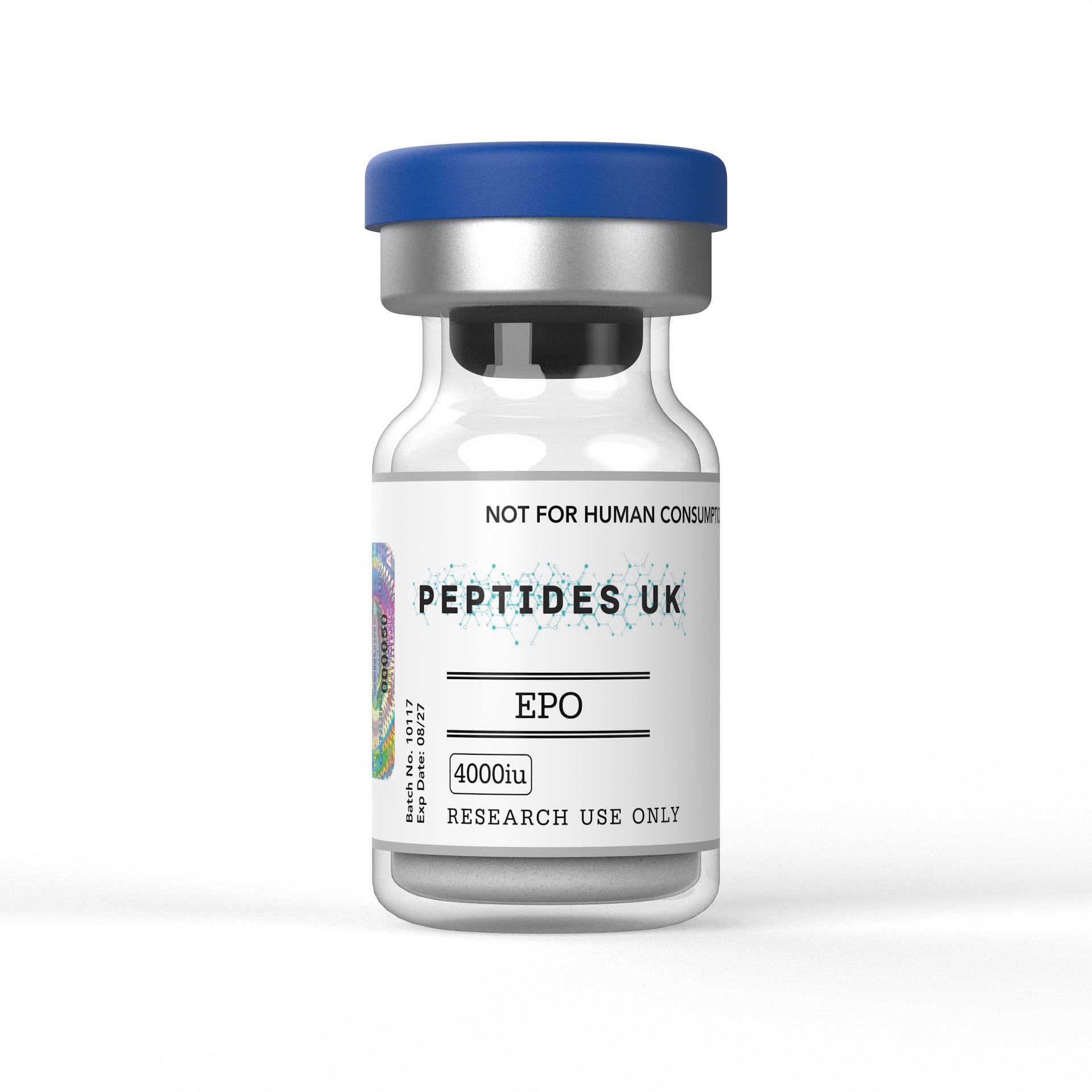
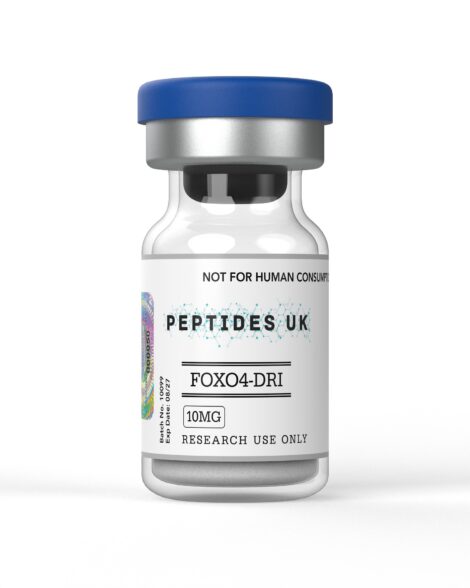
EPO 4000IU — Research-Grade Peptide | Buy EPO in USA | ≥99% Purity
EPO 4000IU (Erythropoietin) is a research-grade glycoprotein hormone used in laboratory studies to investigate red blood cell production, erythropoiesis signaling, hypoxia response pathways, and JAK2/STAT5 intracellular signaling — available to buy in the USA with fast domestic dispatch and batch-specific Certificates of Analysis.
✅ ≥99% Purity — HPLC & Mass Spectrometry Verified
✅ Batch-Specific Certificate of Analysis (CoA) Included
✅ Sterile Lyophilized Powder | GMP Manufactured | 4000IU Per Vial
✅ Fast USA Dispatch | Ships to All 50 States
✅ Research Use Only
What is EPO (Erythropoietin)?
EPO, short for Erythropoietin, is a naturally occurring glycoprotein hormone produced primarily by the kidneys in response to low oxygen levels in the blood. Its primary biological role is to stimulate the bone marrow to produce red blood cells (erythropoiesis) — making it one of the most important hormonal regulators of oxygen-carrying capacity in the body.
When oxygen levels drop — due to altitude, blood loss, or reduced kidney function — the kidneys ramp up EPO production, which travels through the bloodstream to the bone marrow, where it binds to EPO receptors (EPOR) on erythroid progenitor cells and drives their proliferation, differentiation, and survival into mature red blood cells.
In research settings, recombinant human EPO (rHuEPO) at 4000IU is a widely used concentration for in vitro and pre-clinical studies examining erythropoiesis regulation, hypoxia-inducible factor (HIF) pathway biology, anemia models, kidney disease signaling, and EPO receptor pharmacology — making it a high-demand research reagent in hematology, nephrology, and physiology laboratories across the USA.
What Does EPO 4000IU Do in Research?
In the laboratory, EPO 4000IU is used across a broad range of hematology, physiology, and cell signaling studies. Key research applications include:
- Studying erythroid progenitor cell proliferation, differentiation, and survival signaling
- Examining JAK2/STAT5 pathway activation downstream of EPO receptor binding
- Investigating hypoxia-inducible factor (HIF-1α and HIF-2α) pathway regulation and EPO gene expression
- Researching anemia biology and erythropoiesis deficiency models
- Studying chronic kidney disease (CKD) signaling and EPO production dysregulation
- Evaluating EPO receptor (EPOR) expression and binding kinetics in cell-based assays
- Examining EPO’s cytoprotective and anti-apoptotic signaling in erythroid and non-erythroid cells
- Investigating EPO resistance mechanisms in bone marrow cell studies
- Studying EPO’s reported roles in neuroprotection and cardiovascular tissue research
- Comparative erythropoiesis-stimulating agent (ESA) pharmacology studies
What Do Studies Say About EPO?
Erythropoiesis regulation: EPO’s role as the primary hormonal driver of red blood cell production is one of the best-characterized regulatory systems in hematology. Research has documented the complete signaling cascade from renal oxygen sensing through HIF-2α-mediated EPO gene transcription, circulating EPO binding to EPOR on bone marrow erythroid progenitors, JAK2/STAT5 activation, and downstream proliferation and differentiation responses — establishing EPO as the master regulator of red blood cell homeostasis.
JAK2/STAT5 signaling: Studies have characterized EPO receptor signaling in molecular detail — EPO binding induces EPOR homodimerization, activating constitutively associated JAK2 kinase, which phosphorylates STAT5 transcription factors. STAT5 activation drives expression of survival and proliferation genes including Bcl-xL — providing both the mechanistic foundation for understanding EPO biology and a well-validated model system for studying JAK/STAT pathway pharmacology more broadly.
Hypoxia and HIF pathway research: Research has established EPO as a key HIF target gene — with studies characterizing how HIF-1α and HIF-2α accumulate under low oxygen conditions and drive EPO transcription in renal and hepatic cells. This HIF-EPO axis has become one of the most studied hypoxia response pathways in cell biology, with significant research interest in HIF stabilization as a research strategy for studying anemia models.
Kidney disease and anemia research: Studies have extensively documented EPO production impairment in chronic kidney disease models, establishing the renal EPO deficit as a primary driver of CKD-associated anemia. This research has made EPO a central tool in nephrology and hematology laboratory studies examining anemia-of-chronic-disease pathways.
Cytoprotective signaling: Beyond erythropoiesis, research has examined EPO receptor expression and EPO signaling in non-erythroid tissues — including neurons, cardiomyocytes, and endothelial cells — with studies documenting anti-apoptotic and cytoprotective signaling responses. These findings have expanded EPO’s research relevance into neuroprotection and cardiovascular biology research contexts.
EPO vs Related Hematology Research Proteins
| Compound |
Type |
Primary Action |
Primary Research Focus |
| EPO (Erythropoietin) |
Glycoprotein hormone |
Stimulates red blood cell production |
Erythropoiesis, anemia, CKD, HIF pathway |
| Darbepoetin Alfa |
EPO analogue |
Long-acting EPOR agonist |
ESA pharmacology comparison studies |
| Thrombopoietin (TPO) |
Glycoprotein hormone |
Stimulates platelet production |
Platelet biology, megakaryopoiesis |
| G-CSF |
Colony-stimulating factor |
Stimulates neutrophil production |
Neutrophil biology, bone marrow studies |
| SCF (Stem Cell Factor) |
Cytokine |
Supports hematopoietic stem cells |
Stem cell biology, erythroid progenitors |
| HIF-1α |
Transcription factor |
Drives hypoxia gene response |
Oxygen sensing, EPO gene regulation |
EPO 4000IU Product Specifications
| Parameter |
Detail |
| Also Known As |
Erythropoietin, rHuEPO, Epoetin |
| Type |
Glycoprotein Hormone / Cytokine |
| Vial Concentration |
4000 IU |
| Primary Receptor |
Erythropoietin Receptor (EPOR) |
| Intracellular Signaling |
JAK2 / STAT5 pathway |
| Biological Role |
Primary stimulator of red blood cell production |
| Purity |
≥99% |
| Verification |
HPLC & Mass Spectrometry |
| Form |
Lyophilized Powder |
| Storage |
-20°C, protected from light and moisture |
| Intended Use |
Research use only |
Buying EPO 4000IU in the USA — What’s Included
Every order shipped within the USA includes:
- Batch-specific Certificate of Analysis (CoA)
- HPLC Chromatogram
- Mass Spectrometry Confirmation
- Sterility & Endotoxin Testing Reports
- Reconstitution Protocol
- Technical Research Support
Frequently Asked Questions
Can I buy EPO 4000IU in the USA? Yes. We supply research-grade EPO 4000IU (Erythropoietin) with fast dispatch to all US states. All orders include full batch documentation and are packaged to maintain protein stability throughout transit. This product is supplied strictly for laboratory research use only.
What is the difference between EPO and Darbepoetin? Both EPO and Darbepoetin alfa act on the erythropoietin receptor (EPOR) to stimulate red blood cell production, but they differ in their molecular structure and half-life. Native rHuEPO has a shorter circulating half-life, while Darbepoetin is an engineered analogue with additional glycosylation sites that extend its activity. In research settings, native EPO is typically used as the reference molecule for receptor binding, signaling, and erythropoiesis mechanism studies, while Darbepoetin is used in comparative ESA pharmacology research.
What does EPO’s JAK2/STAT5 signaling pathway do? When EPO binds its receptor (EPOR), it causes two receptor molecules to come together (homodimerization), which activates JAK2 kinase enzymes associated with the receptor’s intracellular domain. Activated JAK2 phosphorylates STAT5 transcription factors, which then travel to the cell nucleus and switch on genes responsible for cell survival and proliferation — most notably Bcl-xL, which prevents apoptosis in developing red blood cells. This well-characterized pathway makes EPO a valuable research tool for studying JAK/STAT signaling more broadly.
What is the relationship between EPO and HIF pathways? Erythropoietin gene expression is directly regulated by hypoxia-inducible factors (HIFs) — particularly HIF-2α in the kidney. When oxygen levels fall, HIF proteins accumulate and bind to hypoxia response elements in the EPO gene, driving EPO transcription. Under normal oxygen conditions, HIF proteins are rapidly degraded. This HIF-EPO axis is one of the most studied oxygen-sensing mechanisms in cell biology and makes EPO a central research tool for hypoxia pathway studies.
How is EPO 4000IU reconstituted for lab use? Allow the vial to reach room temperature before opening. Reconstitute with sterile water for injection or an appropriate laboratory buffer, adding liquid gently along the vial wall and swirling slowly — do not shake, as EPO is sensitive to agitation and foaming. Aliquot into single-use volumes promptly to avoid repeated freeze-thaw cycles and store at -80°C for best stability. Always follow your institution’s specific protocol for handling glycoprotein research reagents.
How quickly does EPO ship to USA addresses? Orders are dispatched promptly via tracked courier. Domestic USA delivery typically takes 2–4 business days, with packaging designed to maintain protein integrity throughout transit.
Research Disclaimer: EPO 4000IU (Erythropoietin) is supplied exclusively for legitimate scientific research conducted within licensed laboratory environments. This product is not intended for human consumption, self-administration, or any therapeutic or veterinary application. It must be handled solely by qualified researchers in compliance with applicable US federal and state regulations and institutional ethics guidelines. By purchasing, you confirm this compound will be used exclusively for approved in vitro or pre-clinical research purposes.