PRODUCTS SOLD ON PEPTIDESLABUSA.COM ARE FOR RESEARCH PURPOSES ONLY AND ARE NOT FOR HUMAN OR VETERINARY USE.
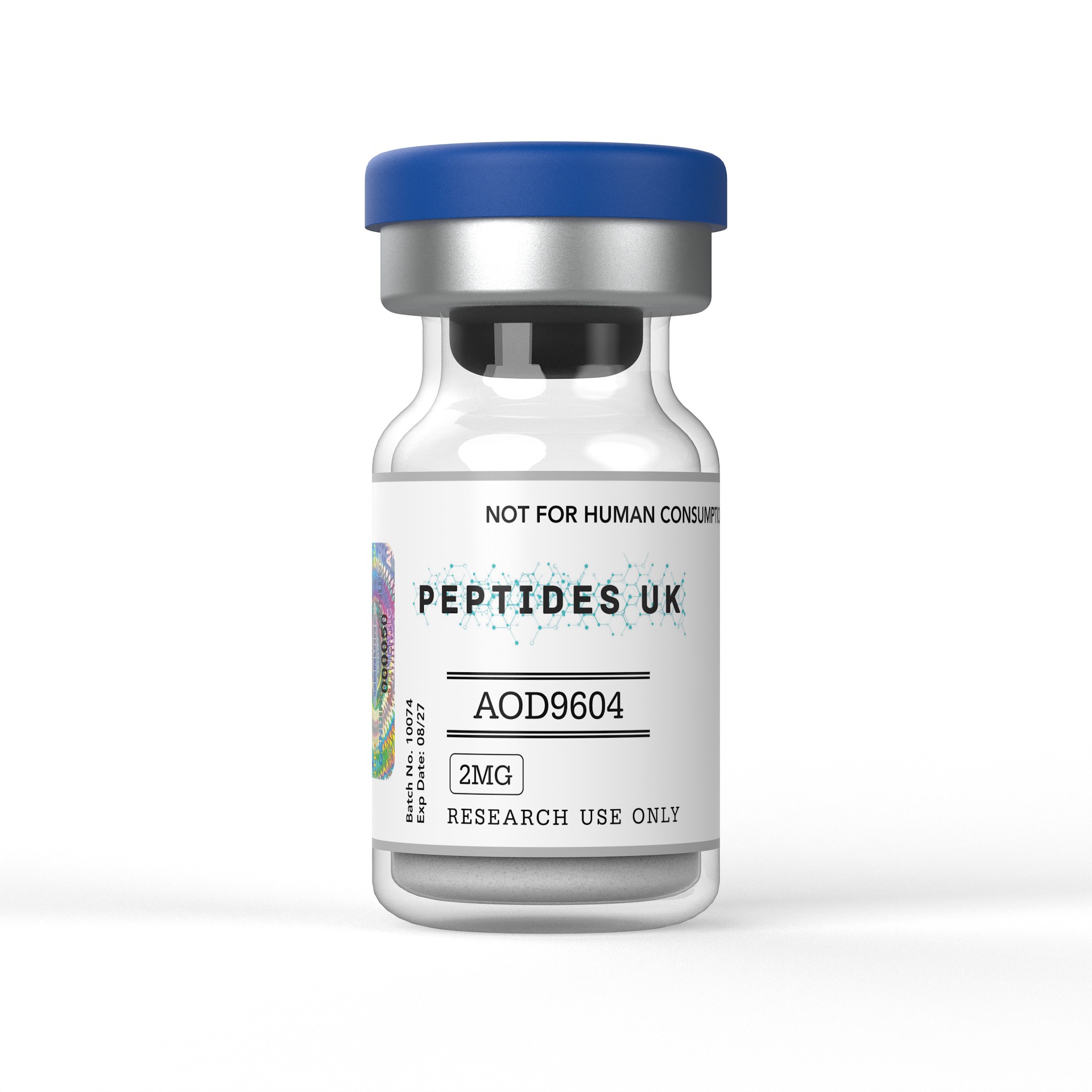
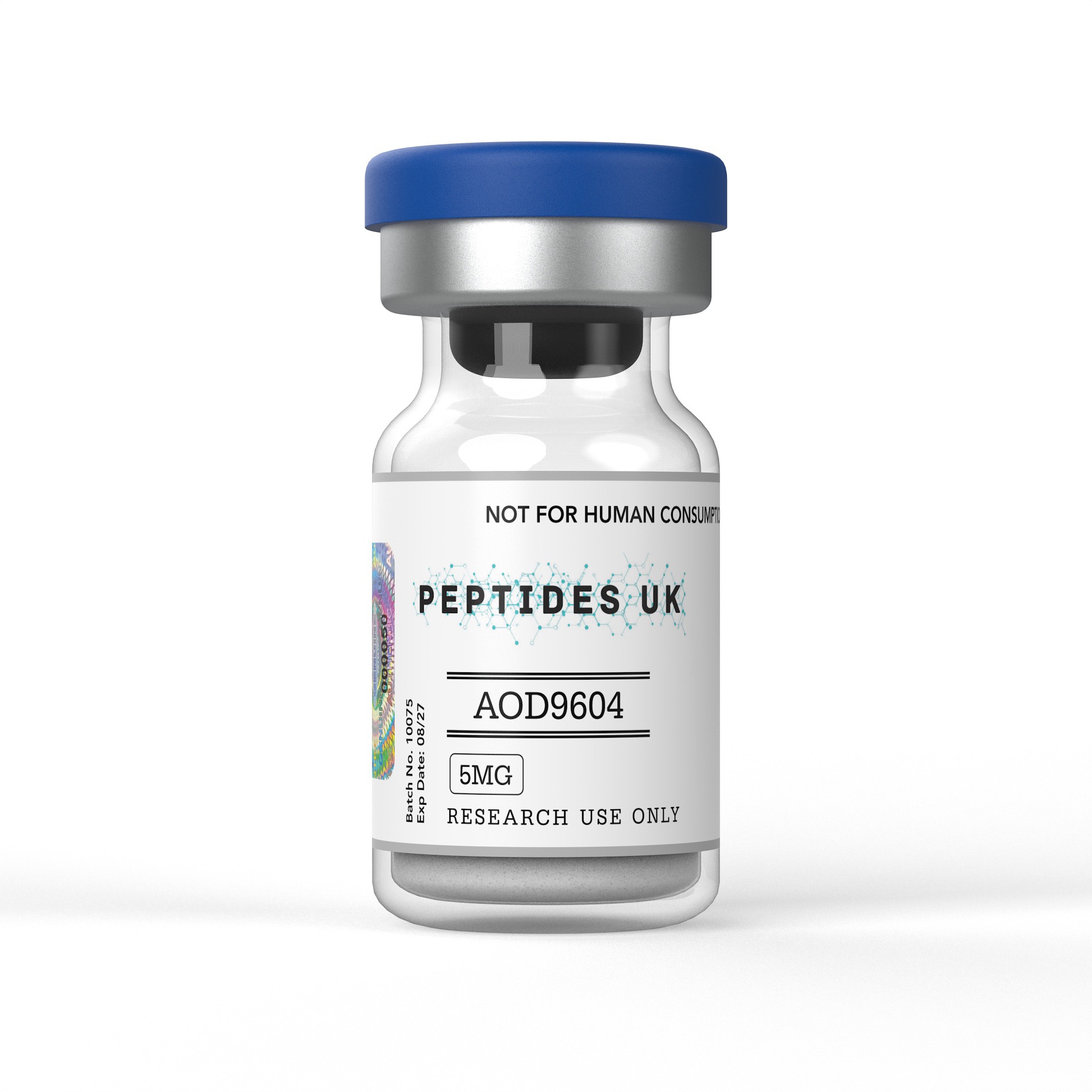
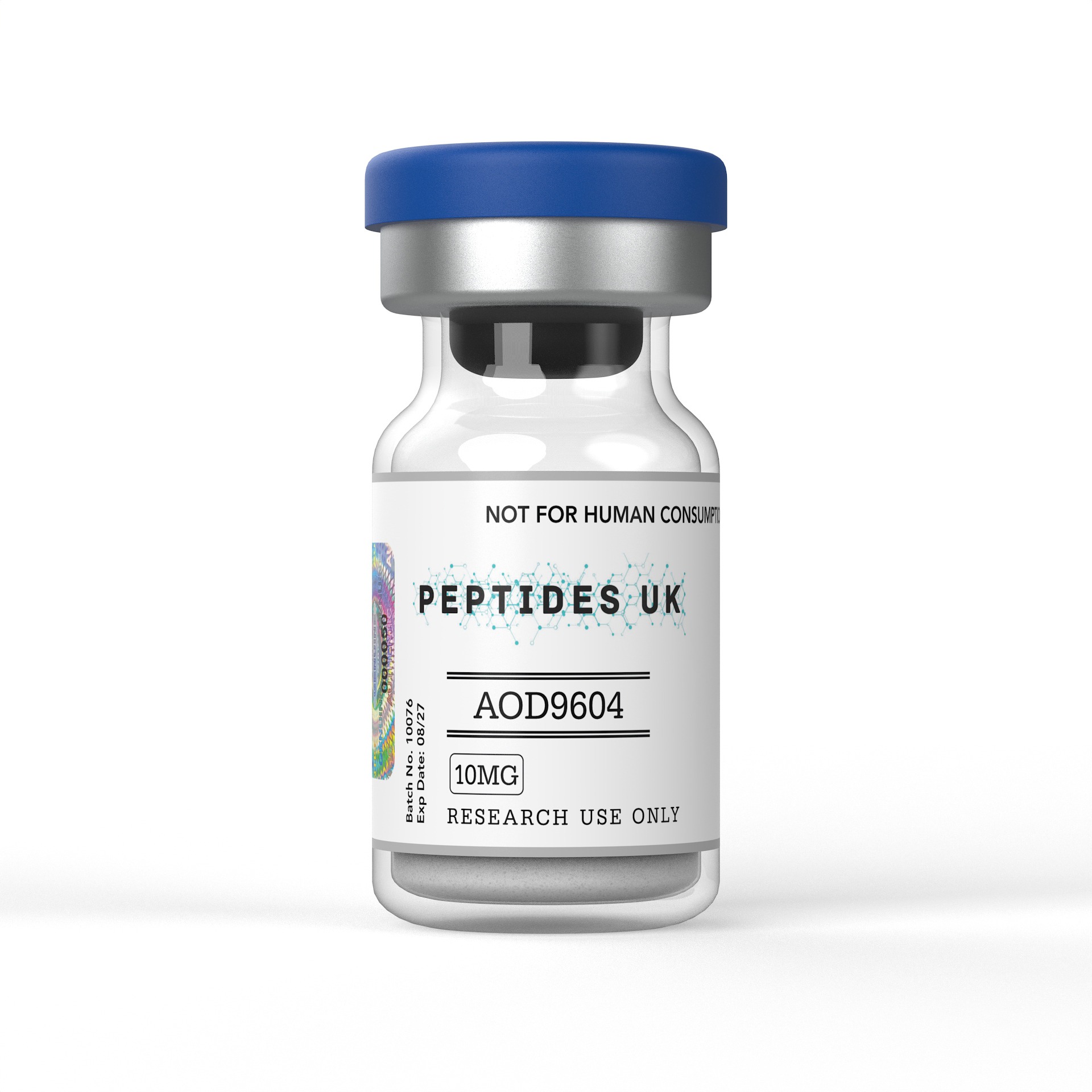
$33.50 – $140.50Price range: $33.50 through $140.50
AOD9604 Peptide USA – Buy Online | In Stock & Ready to Ship
Buy AOD9604 in the USA with fast domestic shipping and guaranteed ≥99% purity — fully verified with COA and HPLC documentation. A trusted choice for USA research teams studying fat metabolism, lipolysis regulation and obesity-related pathways, AOD9604 is available in multiple formats to suit varying project needs. No international delays — just reliable, domestically sourced peptides USA researchers can count on.
For research use only. Not intended for human or veterinary use.

AOD9604 is a synthetic 16-amino acid peptide fragment derived from the C-terminus of human growth hormone (hGH residues 176–191) — studied for its selective effects on adipose tissue metabolism, lipolysis, and fat oxidation without activating GH receptors or elevating IGF-1, making it one of the most researched metabolic peptide fragments available in the USA today.
Researchers, labs, and institutions across the United States can source verified, research-grade AOD9604 with fast dispatch, full documentation, and third-party verified purity.
✅ ≥99% Purity — HPLC & Mass Spectrometry Verified
✅ Batch-Specific Certificate of Analysis (CoA) Included
✅ Third-Party Tested | GMP Manufactured
✅ Fast Dispatch to USA — Tracked Shipping Available
AOD9604 — also written as AOD-9604 and designated Anti-Obesity Drug 9604 — is a synthetic peptide corresponding to amino acid residues 176–191 of human growth hormone, with an additional tyrosine residue added to the N-terminus to improve stability. It was originally developed in the 1990s by Professor Frank Ng and colleagues at Monash University, Melbourne, Australia, under the commercial sponsorship of Metabolic Pharmaceuticals Limited, with the specific goal of isolating the lipolytic region of hGH into a smaller, more targeted research compound.
Full-length human growth hormone produces a range of systemic effects — including both lipolytic (fat-mobilizing) and anabolic (growth-promoting) actions — through GH receptor binding and downstream IGF-1 elevation. AOD9604 was engineered to capture the lipolytic activity of hGH without triggering GH receptor activation or IGF-1 elevation. Research has confirmed that AOD9604 does not bind the GH receptor, does not measurably raise IGF-1 levels, and does not interfere with glucose homeostasis — properties that distinguish it mechanistically from both full-length hGH and from other GH-related research compounds.
AOD9604 underwent over $50 million USD in development funding and six randomized, double-blind, placebo-controlled human clinical trials involving over 925 participants, conducted in Australia and the UK between 2001 and 2007 — making it one of the most extensively human-safety-characterized peptide fragments in the research peptide category. It did not achieve regulatory approval as an anti-obesity drug following Phase IIb trial results. It is supplied here as a research compound only.
In research settings, AOD9604 is studied primarily as a selective lipolytic peptide fragment and metabolic research tool. Studies have explored its role in:
AOD9604 is a research compound only and is not approved for human therapeutic use in the United States.
AOD9604’s research body is unusually well-documented for a research peptide — spanning preclinical mechanistic studies, comprehensive toxicological characterization, and six Phase I/II human clinical trials conducted under formal pharmaceutical development programs.
Preclinical Lipolysis and Obesity Research The foundational preclinical work published in Endocrinology (2001) examined AOD9604 in obese mice and β3-AR knockout models. Chronic treatment with AOD9604 reduced body weight and fat content in obese wild-type mice alongside increased β3-AR mRNA expression, while the same chronic treatment failed to produce weight changes in β3-AR knockout animals — confirming β3-AR upregulation as a primary mechanism for long-term lipolytic effects. Importantly, acute experiments showed AOD9604 could still increase energy expenditure and fat oxidation in knockout models, pointing to additional β3-AR-independent signaling pathways. A separate preclinical study noted a reduction in adipose tissue accumulation of more than 50% in laboratory models.
Human Clinical Trial Program — Safety Data Across six randomized, double-blind, placebo-controlled trials involving more than 925 participants, AOD9604 was consistently found to be safe and well tolerated. Published data in the Journal of Endocrinology and Metabolism confirmed no significant effects on glucose homeostasis or IGF-1 levels — directly validating the design goal of separating GH lipolytic activity from its metabolic and anabolic side effects. No genotoxic, mutagenic, or clastogenic activity was identified in preclinical toxicological testing.
Human Clinical Trial Program — Efficacy Data (Mixed) Weight loss effects were observed in earlier phase trials, with researchers noting effects particularly on abdominal fat comparable in extent to those seen with full-length hGH. However, in the final Phase IIb trial — in which participants followed an intensive diet and exercise program — no significant weight loss difference was observed between AOD9604 and placebo. Researchers have proposed several explanations for this discrepancy, including the possibility that the lifestyle intervention itself masked treatment effects or that the study design was not optimized for detecting the compound’s effects in the context of active weight management. As a result of the mixed Phase IIb data, AOD9604 did not achieve regulatory approval as an anti-obesity drug. It remains a research compound with well-characterized safety and a partially characterized efficacy profile.
Cartilage and Joint Repair Research A published study in Annals of Clinical and Laboratory Science examined intra-articular injection of AOD9604 with or without hyaluronic acid in a rabbit osteoarthritis model. Findings suggested potential benefits in cartilage repair parameters, extending AOD9604’s research relevance beyond adipose tissue metabolism into musculoskeletal biology — though this remains a relatively early-stage research area compared to its metabolic research body.
Cancer Biology Research A 2022 study published in Drug Design, Development and Therapy examined the human growth hormone fragment 176-191 (AOD9604) for its ability to enhance the toxicity of doxorubicin-loaded chitosan nanoparticles against MCF-7 breast cancer cells in vitro. The findings demonstrated enhanced cytotoxicity in the combination model — an early-stage finding that has opened a novel research direction for this peptide fragment in oncology-adjacent drug delivery research.
Regulatory Status — GRAS Designation AOD9604 received Generally Recognized As Safe (GRAS) status from the FDA in 2014 as a food ingredient — a regulatory designation that reflects its established safety profile but does not constitute approval for therapeutic use. It is not FDA-approved as a drug, peptide therapy, or treatment for any condition.
All referenced findings are from pre-clinical studies or clinical trials conducted under formal pharmaceutical development programs. AOD9604 is not FDA-approved for therapeutic use and is supplied here for licensed laboratory research purposes only.
When you buy AOD9604 in the USA through our platform, every order includes:
We supply USA research peptides to licensed researchers, universities, and institutions — with cold-chain compliant packaging designed to maintain peptide integrity throughout transit.
| Parameter | Specification |
|---|---|
| Purity | ≥99% (HPLC & MS Verified) |
| Full Name | Human Growth Hormone Fragment 176–191 |
| Also Known As | AOD-9604, GH Frag 176-191, Anti-Obesity Drug 9604 |
| Amino Acids | 16 (residues 176–191 of hGH + N-terminal Tyr) |
| Molecular Formula | C₇₈H₁₂₃N₂₃O₂₃S₂ |
| Molecular Weight | ~1,815 g/mol |
| Mechanism | Selective lipolytic / β3-AR upregulation |
| GH Receptor Binding | No |
| IGF-1 Elevation | No |
| Form | White Lyophilized Powder |
| Solubility | Sterile water / 0.1% acetic acid |
| Storage (powder) | -20°C, stable 24+ months |
| Storage (reconstituted) | 2–8°C, use within 2–4 weeks |
| Available Sizes | 2mg |
Allow the vial to reach room temperature before opening. Add sterile water or 0.1% acetic acid slowly down the inside wall of the vial and swirl gently — do not shake. A typical working concentration is 1–2 mg/mL. Aliquot and store at -80°C for longer-term stability. Note that AOD9604 degrades primarily through sequential N-terminal amino acid removal in biological systems — minimize room temperature exposure time and avoid repeated freeze-thaw cycles.
| Feature | AOD9604 | 5-Amino-1MQ | SLU-PP-332 |
|---|---|---|---|
| Classification | GH peptide fragment | Small molecule (NNMT inhibitor) | Small molecule (ERR agonist) |
| Primary Mechanism | Selective lipolysis / β3-AR upregulation | NAD+ pathway / NNMT inhibition | Mitochondrial biogenesis / AMPK |
| GH Receptor Activation | No | No | No |
| IGF-1 Elevation | No | No | No |
| Energy Expenditure Research | Yes (acute fat oxidation) | Yes (resting metabolic rate) | Yes (exercise mimetic) |
| Adipose Tissue Research | Primary focus | Extensively studied | Studied |
| Human Clinical Trials | Yes (925 participants, 6 trials) | No | No |
| FDA GRAS Status | Yes (food ingredient, 2014) | No | No |
| WADA Prohibited | Yes | No | No |
Can I buy AOD9604 in the USA? Yes. We supply research-grade AOD9604 with fast tracked dispatch across the United States for licensed laboratory research use. All orders include full purity documentation and integrity-maintained packaging.
What is the difference between AOD9604 and HGH? Full-length human growth hormone (HGH) binds to the GH receptor and elevates IGF-1, producing both lipolytic and anabolic effects alongside potential side effects including insulin resistance, fluid retention, and joint discomfort. AOD9604 is a 16-amino acid fragment corresponding to the C-terminal lipolytic region of HGH only. It does not bind the GH receptor, does not elevate IGF-1, and does not interfere with glucose homeostasis — making it a more selective tool for studying fat metabolism pathways in isolation from growth hormone’s broader systemic effects.
Is AOD9604 FDA approved? AOD9604 is not FDA-approved as a drug or therapeutic agent. It received FDA GRAS (Generally Recognized As Safe) designation as a food ingredient in 2014 — reflecting its established safety profile from over 925 human trial participants — but this is a food safety classification, not a drug approval. AOD9604 is supplied here exclusively for licensed laboratory research use.
Why did AOD9604 fail to receive drug approval if it’s been in six clinical trials? AOD9604 completed Phase I and Phase II trials with a clean safety record and early efficacy signals. However, the pivotal Phase IIb trial, in which participants followed an intensive diet and exercise regimen, did not demonstrate a statistically significant weight loss difference between AOD9604 and placebo. Researchers have proposed that the active lifestyle intervention may have masked the compound’s effects or that study design variables limited detection of treatment differences. As a result, Metabolic Pharmaceuticals did not progress to Phase III. The compound’s well-characterized safety profile and GRAS status have maintained its relevance as a research tool, and new research directions including joint biology and cancer applications continue to be explored.
Is AOD9604 banned in sports? Yes. AOD9604 is prohibited under WADA regulations as a GH-related peptide fragment. This product is supplied exclusively for licensed laboratory research use and is not provided for any sporting, performance, or non-research purpose.
What purity level should research-grade AOD9604 be? ≥98% is the accepted minimum for research-grade peptide fragments, though ≥99% is preferred for lipolysis, receptor signaling, and adipocyte biology assays. All of our USA research peptides — including AOD9604 — are HPLC and mass spectrometry verified to ≥99%.
How quickly is AOD9604 delivered in the USA? Orders are dispatched promptly with tracked shipping. Most USA orders arrive within 3–5 business days.
Where can I find AOD9604 for sale in the USA? We offer research-grade AOD9604 (GH Fragment 176-191) for sale in the USA exclusively for licensed laboratory research use, with full documentation and verified purity included as standard with every order.
Research Disclaimer: AOD9604 is supplied exclusively for legitimate scientific research purposes in licensed laboratory environments. This product is not FDA-approved as a drug or therapeutic agent and is not intended for human self-administration, weight loss treatment, or therapeutic use of any kind. AOD9604 is prohibited in competitive sport under WADA regulations. It must be handled by qualified researchers in accordance with all applicable US federal and state regulations and institutional ethics guidelines. By purchasing, you confirm that this compound will be used solely for approved in-vitro or pre-clinical research.
Receive News