PRODUCTS SOLD ON PEPTIDESLABUSA.COM ARE FOR RESEARCH PURPOSES ONLY AND ARE NOT FOR HUMAN OR VETERINARY USE.
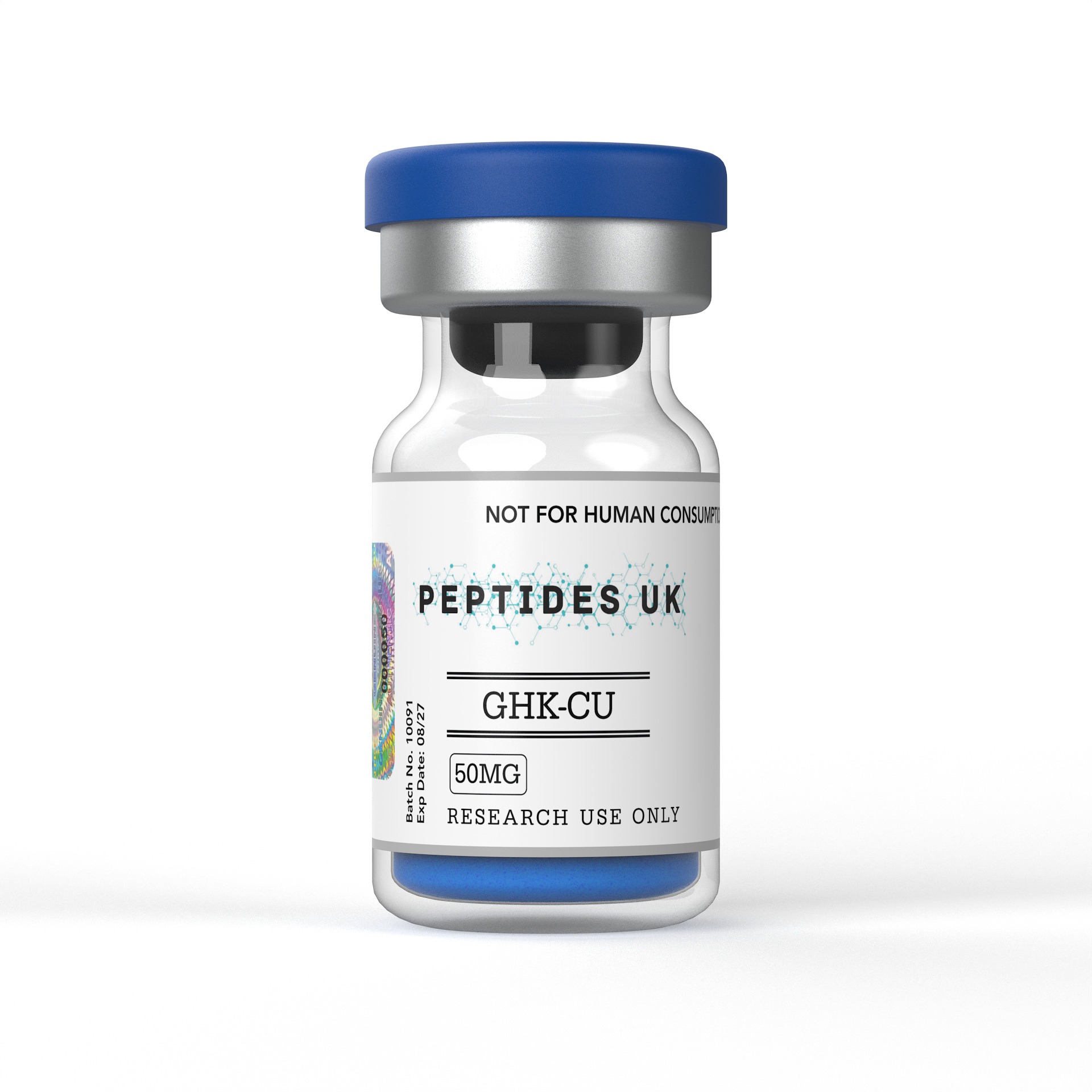
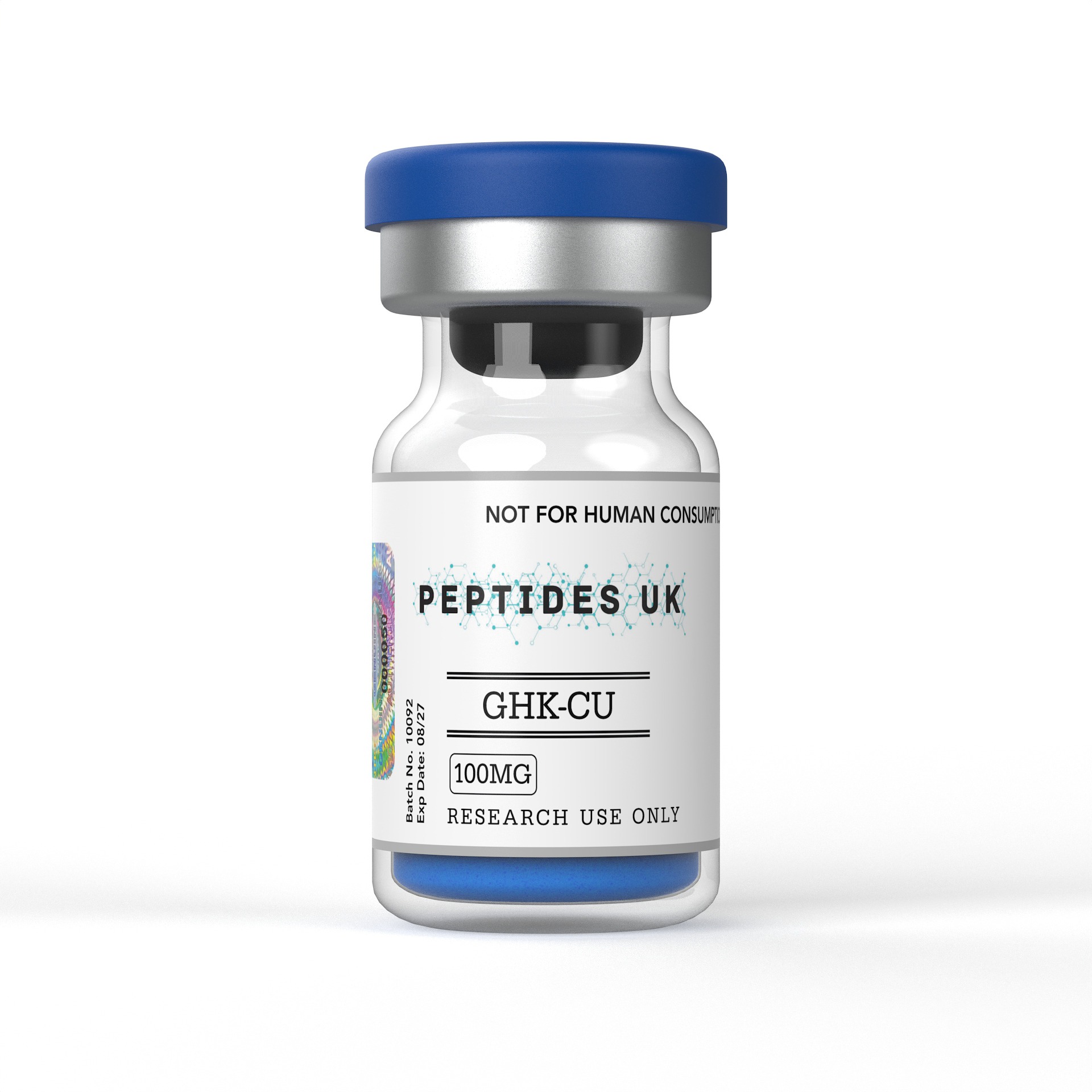
$51.00 – $94.00Price range: $51.00 through $94.00
GHK-Cu Peptide USA – Buy Online | In Stock & Ready to Ship
Buy GHK-Cu (Copper Peptide) in the USA with fast domestic shipping and guaranteed ≥99% purity — fully verified with COA and HPLC documentation. A trusted choice for USA research teams studying skin regeneration, collagen synthesis and wound healing pathways, GHK-Cu is available in multiple formats to suit varying project needs. No international delays — just reliable, domestically sourced peptides USA researchers can count on.
For research use only. Not intended for human or veterinary use.

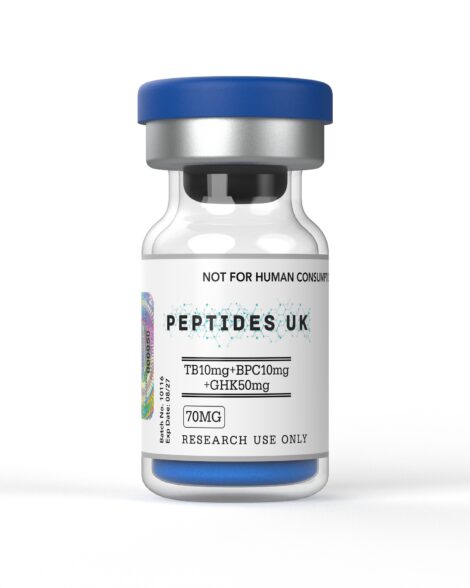
GHK-Cu (Glycyl-L-Histidyl-L-Lysine Copper) is a naturally occurring human copper-binding tripeptide studied extensively across regenerative biology, wound healing, skin science, anti-ageing research, and tissue remodelling for its broad influence on collagen synthesis, antioxidant defence, angiogenesis, and gene expression regulation — making it one of the most versatile and widely researched copper peptides in modern regenerative and dermatological science. Researchers and institutions across the USA can source verified, research-grade GHK-Cu with fast domestic dispatch and full batch documentation included.
✅ ≥99% Purity — HPLC & Mass Spectrometry Verified
✅ Batch-Specific Certificate of Analysis (CoA) Included
✅ Sterile Lyophilised Powder | GMP Manufactured
✅ Fast Dispatch Across the USA | USA Peptides In Stock
GHK-Cu is a naturally occurring tripeptide — composed of glycine, histidine, and lysine — that is found in human plasma, saliva, and urine, and has a strong affinity for copper ions (Cu²⁺). The copper-bound form, GHK-Cu, is the biologically active complex studied across regenerative biology, wound healing research, skin science, and anti-ageing science for its remarkably broad range of cellular and tissue-level effects.
First isolated from human plasma in the early 1970s, GHK-Cu has since accumulated one of the most diverse research profiles of any small peptide in biomedical science. Unlike many peptides that act through a single well-defined receptor, GHK-Cu exerts its biological effects through multiple mechanisms — including direct stimulation of collagen and glycosaminoglycan synthesis, activation of antioxidant enzymes, modulation of metalloproteinase activity, promotion of angiogenesis, and broad regulation of gene expression across hundreds of genes involved in tissue repair, inflammation, and cellular protection.
GHK-Cu’s natural occurrence in the human body, combined with its copper-dependent activity and multi-pathway biological influence, makes it a uniquely valuable research tool for studying tissue repair biology, skin science, and regenerative medicine at the cellular and molecular level. It is one of the most established and in-demand copper peptide research compounds available to buy in the USA, with active use across dermatology, wound healing, anti-ageing biology, and regenerative science research programs nationwide.
In controlled pre-clinical and laboratory settings, GHK-Cu has been studied across an exceptionally wide range of biological, regenerative, and dermatological research applications:
Collagen Synthesis Research GHK-Cu’s most extensively studied function is its stimulation of collagen production in fibroblast and skin tissue models. Research has examined how GHK-Cu activates collagen type I, III, and IV synthesis, influences collagen cross-linking, and modulates the balance between collagen production and degradation — establishing it as a foundational tool for skin biology and connective tissue research.
Wound Healing Research Studies have examined GHK-Cu’s influence across multiple phases of the wound healing process in pre-clinical models — including inflammation modulation, fibroblast proliferation and migration, granulation tissue formation, collagen deposition, and epithelial re-covering — making wound healing one of the most active and well-documented GHK-Cu research areas.
Skin Biology and Dermatology Research GHK-Cu has been studied extensively in skin biology research, with studies examining its effects on keratinocyte and fibroblast function, extracellular matrix remodelling, skin barrier integrity, and dermal thickness parameters in cellular and pre-clinical skin models — reflecting its broad relevance to dermatological and cosmeceutical science.
Antioxidant and Cytoprotection Research Research has examined GHK-Cu’s influence on antioxidant defence systems in cellular models — including its activation of superoxide dismutase and other antioxidant enzymes — and its cytoprotective effects against oxidative stress-induced cell damage, a key area of interest in ageing biology and cellular protection research.
Angiogenesis Research Studies have examined GHK-Cu’s pro-angiogenic properties in pre-clinical wound and tissue repair models, with research documenting its effects on endothelial cell behaviour, vascular endothelial growth factor (VEGF) signalling, and new blood vessel formation — reflecting the critical role of vascular supply in effective tissue repair and regeneration.
Gene Expression Research One of GHK-Cu’s most remarkable research characteristics is its broad influence on gene expression. Studies using gene array analysis have reported that GHK-Cu modulates the expression of hundreds of human genes — including genes involved in tissue remodelling, inflammation regulation, DNA repair, antioxidant defence, and cellular metabolism — making it a uniquely broad-spectrum research tool for studying peptide-driven gene regulation.
Anti-Ageing Biology Research Research has examined GHK-Cu in the context of cellular ageing and senescence, with studies exploring its effects on oxidative stress markers, DNA repair signalling, inflammatory gene expression, and extracellular matrix maintenance in aged cell models — contributing to the growing field of peptide-based anti-ageing biology research.
Hair Follicle Biology Research Studies have examined GHK-Cu’s influence on hair follicle biology in pre-clinical models, with research exploring its effects on follicle size, hair growth cycle parameters, and scalp tissue biology — an area of active research interest given GHK-Cu’s broad influence on skin and connective tissue biology.
Metalloproteinase Regulation Research GHK-Cu modulates the activity of matrix metalloproteinases (MMPs) and their inhibitors (TIMPs) — enzymes that regulate extracellular matrix remodelling. Research has examined how GHK-Cu influences MMP/TIMP balance in tissue repair models, contributing to understanding of how copper peptides regulate the extracellular matrix environment during healing and remodelling.
Neuroprotection Research Emerging research has examined GHK-Cu’s influence on neuronal biology, with studies exploring its effects on nerve growth factor (NGF) expression, neuronal survival signalling, and neuroprotective gene expression in cellular models — an expanding frontier of GHK-Cu research beyond its established skin and wound healing applications.
All applications are for research purposes only. GHK-Cu as supplied is not intended for human therapeutic use.
GHK-Cu has accumulated one of the broadest and most well-established research profiles of any small peptide in regenerative and skin biology science:
Collagen and ECM Research: Studies have consistently documented GHK-Cu’s stimulatory effects on collagen synthesis in fibroblast models, with research reporting upregulation of collagen type I, III, and IV production alongside modulation of MMP and TIMP activity — establishing GHK-Cu as one of the most well-characterised collagen-stimulating peptides in dermatological and tissue biology research.
Wound Healing: A substantial body of pre-clinical wound healing research has reported accelerated healing outcomes in skin and soft tissue injury models following GHK-Cu treatment — with studies documenting effects across multiple healing phases including inflammation resolution, fibroblast activity, granulation tissue formation, and epithelial closure.
Gene Expression Regulation: Research using gene array analysis has reported that GHK-Cu influences the expression of over 4,000 human genes in cellular models — including broad upregulation of tissue repair, antioxidant defence, and anti-inflammatory genes, and downregulation of genes associated with inflammation and oxidative stress — making it one of the most extensively gene-profiled small peptides in biomedical research.
Antioxidant Activity: Studies have documented GHK-Cu’s activation of antioxidant enzyme systems and its protective effects against oxidative stress in cellular models — contributing to research interest in its potential role in cellular protection and age-related oxidative biology.
Skin Biology: Pre-clinical skin research has reported GHK-Cu’s broad effects on dermal fibroblast function, extracellular matrix composition, and skin structural parameters — generating sustained research interest across dermatology, cosmeceutical science, and skin ageing biology.
Angiogenesis: Research has documented GHK-Cu’s pro-angiogenic effects in pre-clinical models, with studies reporting enhanced endothelial cell activity and new vessel formation — supporting the vascular mechanism as a contributor to its broad tissue repair activity.
Safety Profile in Research: GHK-Cu’s natural occurrence in the human body and its well-characterised copper-binding chemistry have contributed to a favourable pre-clinical safety profile in research models, supporting its continued use as a broadly applicable research tool across multiple biological systems.
| Feature | GHK-Cu | BPC 157 | TB-500 | Epithalon |
|---|---|---|---|---|
| Type | Copper-binding tripeptide | Synthetic pentadecapeptide | Synthetic thymosin peptide | Synthetic tetrapeptide |
| Primary Research Focus | Collagen synthesis, wound healing, skin biology, gene expression | GI protection, tendon, muscle, neuro repair | Actin regulation, wound healing, cardiac repair | Telomere biology, anti-ageing, pineal research |
| Mechanism | Copper-dependent collagen/ECM stimulation, gene regulation | Multi-pathway — NO system, VEGFR2, FAK-paxillin | Actin sequestration, cell migration | Telomerase activation, epigenetic regulation |
| Key Research Strength | Broadest gene expression influence of any small peptide | Most versatile multi-tissue repair peptide | Cytoskeletal and cardiac repair research | Longevity and telomere biology research |
| Best For | Skin biology / wound healing / collagen / anti-ageing research | Broad tissue repair / GI / neuro pre-clinical studies | Wound healing / cardiac / cytoskeletal research | Anti-ageing / telomere / epigenetic studies |
| Parameter | Specification |
|---|---|
| Full Name | Glycyl-L-Histidyl-L-Lysine Copper (GHK-Cu) |
| Peptide Length | 3 Amino Acids (Tripeptide) |
| Type | Naturally occurring copper-binding tripeptide |
| Copper Form | Cu²⁺ (Copper II) complexed |
| Purity | ≥99% (HPLC & MS Verified) |
| Form | Sterile Lyophilised Powder |
| Solubility | Sterile water, bacteriostatic water, PBS |
| Storage (Powder) | -20°C, protect from light |
| Storage (Reconstituted) | 2–8°C, use promptly |
| Manufacturing | GMP Manufactured |
Every order includes full batch documentation:
✅ Batch-Specific Certificate of Analysis (CoA)
✅ HPLC Chromatogram
✅ Mass Spectrometry Confirmation
✅ Sterility & Endotoxin Testing Report
✅ Reconstitution Protocol
✅ Technical Research Support
Can I buy research-grade GHK-Cu in the USA? Yes. We supply research-grade GHK-Cu (Glycyl-L-Histidyl-L-Lysine Copper) to researchers and institutions across the United States. All orders include full batch documentation and are packaged to maintain peptide integrity during transit. This compound is supplied strictly for laboratory research use only.
What does GHK-Cu stand for? GHK refers to the three amino acids that make up the peptide — Glycine (G), Histidine (H), and Lysine (K). Cu is the chemical symbol for copper. GHK-Cu is therefore the copper-complexed form of the GHK tripeptide, in which the peptide is bound to a copper (Cu²⁺) ion. The copper component is integral to GHK-Cu’s biological activity — the free GHK peptide without copper has significantly reduced biological effect in research models, making the copper-complexed form the standard research compound.
What is the difference between GHK-Cu and BPC 157 in research? Both are widely researched repair-focused peptides but with different mechanisms, origins, and primary research applications. GHK-Cu is a naturally occurring copper-binding tripeptide studied primarily for collagen synthesis, skin biology, wound healing, and broad gene expression regulation — with a particular strength in dermatological and extracellular matrix research. BPC 157 is a synthetic gastric-derived peptide studied primarily for GI protection, tendon and muscle repair, and neuroprotection via multi-pathway signalling. They operate through fundamentally different mechanisms and are often studied in complementary research contexts.
Why is copper important in GHK-Cu research? Copper is an essential cofactor in GHK-Cu’s biological activity. The Cu²⁺ ion bound to the GHK tripeptide is integral to its ability to activate copper-dependent enzymes, stimulate collagen synthesis, modulate antioxidant defence systems, and regulate gene expression in research models. Studies have shown that the copper-complexed form (GHK-Cu) is significantly more biologically active than the free GHK peptide alone — making the presence of copper a defining feature of the compound’s research profile rather than simply a formulation detail.
What purity is required for GHK-Cu research? ≥98% is considered research-grade, but ≥99% purity is strongly preferred for collagen synthesis assays, gene expression studies, wound healing models, and skin biology research where compound purity directly affects experimental accuracy. All GHK-Cu supplied for USA researchers is independently verified to ≥99%.
How is GHK-Cu reconstituted for lab use? Allow the vial to reach room temperature before opening. Add sterile water, bacteriostatic water, or PBS slowly down the vial wall and swirl gently — do not shake. GHK-Cu is generally well soluble in aqueous solvents due to its small tripeptide structure and copper complexation. Use promptly after reconstitution, or aliquot and store at -80°C to preserve activity across multiple experimental uses. Protect from prolonged light exposure as copper peptides can be light sensitive.
GHK-Cu (Glycyl-L-Histidyl-L-Lysine Copper) is supplied exclusively for legitimate scientific research purposes conducted within licensed laboratory environments. This product is not intended for human consumption, self-administration, or any therapeutic application. It must be handled by qualified researchers in compliance with applicable US federal and state regulations and institutional ethics guidelines. By purchasing, you confirm that this compound will be used solely for approved in-vitro or pre-clinical research purposes.
Receive News